Email marketing stands at a pivotal juncture, navigating a landscape reshaped by evolving privacy standards, advanced mailbox provider algorithms, and heightened subscriber expectations. A critical prediction for the trajectory of email in 2026 underscored a growing trend: more brands are dedicating specific email communications to promote their preference centers. This shift is not merely a tactical adjustment but a strategic imperative driven by a fundamental truth: subscribers demand control over the frequency and relevance of the messages they receive. When emails resonate with individual interests, engagement metrics such as open rates and click-through rates naturally climb.
However, the current reality presents a significant challenge. Research from Mailerlite reveals an alarming trend, with year-on-year unsubscribe rates more than doubling between 2024 and 2025. This dramatic increase is largely attributed to user-centric changes implemented by major mailbox providers (MBPs), most notably Gmail, which have made the process of opting out considerably simpler. The primary culprits cited by subscribers for their departure from mailing lists are consistently "too many emails" and "messages not relevant." This highlights a profound disconnect: many of these subscribers would rather fine-tune their communication preferences than sever ties completely, if only they were adequately empowered to do so.
A significant part of this problem lies in brands’ persistent tendency to relegate preference center links to the obscure corners of email footers, where they often go unnoticed. Industry practitioners largely concur that the low utilization of preference centers is not indicative of a lack of subscriber interest but rather a pervasive lack of awareness regarding their existence and utility. This passive approach is no longer sustainable in the current digital ecosystem.
The Evolving Landscape of Email Marketing and Consumer Privacy
The journey to the current state of email marketing has been marked by several transformative shifts, placing a premium on subscriber consent and personalized experiences. The early 2020s witnessed a global surge in data privacy regulations, building upon foundational frameworks like Europe’s General Data Protection Regulation (GDPR) enacted in 2018 and California’s Consumer Privacy Act (CCPA) from 2020. These regulations instilled a greater sense of consumer control over personal data and mandated clearer consent mechanisms, laying the groundwork for the increased scrutiny on email communication.
A significant turning point arrived in September 2021 with the introduction of Apple’s Mail Privacy Protection (MPP). This feature fundamentally altered how email open rates were tracked by masking users’ IP addresses and pre-loading all emails, effectively skewing traditional open rate metrics. For email marketers, MPP necessitated a pivot away from relying solely on open rates as a primary engagement indicator, pushing them to seriously re-evaluate and enhance their strategies for sourcing zero-party data – information directly and intentionally shared by the customer with a brand. This meant a renewed focus on understanding subscriber preferences directly, rather than inferring them from behavioral data.
More recently, developments across major mailbox providers, particularly Gmail, have intensified the focus on inbox engagement. From 2024 into 2025, Gmail rolled out enhancements, including prominent "one-click unsubscribe" buttons that streamlined the opt-out process directly from the inbox interface. This user-friendly feature, while beneficial for consumer control, directly contributed to the observed doubling of unsubscribe rates for many brands. Concurrently, the proliferation of AI-fueled algorithms within MBPs has made inbox engagement more critical than ever before. These sophisticated systems increasingly analyze user interactions – opens, clicks, replies, deletes, and spam reports – to determine email deliverability and placement. High engagement signals positive relevance, improving sender reputation, while low engagement or high unsubscribe rates can lead to emails being relegated to spam folders or even blocked.
The Unsubscribe Epidemic: A Call for Proactive Preference Management
The dramatic spike in unsubscribe rates reported by Mailerlite from 2024 to 2025 underscores a systemic issue within email marketing: a mismatch between sender practices and subscriber expectations. The top reasons cited for opting out—"too many emails" and "messages not relevant"—are direct indictments of a broadcast-centric approach that fails to acknowledge individual preferences. While the easier unsubscribe mechanisms introduced by platforms like Gmail contribute to the numbers, they also serve as a stark reminder of the underlying frustration that existed previously, now simply easier to act upon.
Many subscribers who opt out are not necessarily abandoning the brand entirely. Instead, they are signaling a desire for a different, more tailored relationship. They seek the ability to reduce frequency, select specific content categories, or temporarily pause communications, rather than an all-or-nothing exit. This is where preference centers become indispensable. However, the prevailing practice of embedding preference center links in tiny, often overlooked email footer text creates an "awareness gap." Email marketing professionals widely acknowledge that subscribers are indeed interested in managing their preferences, but they simply aren’t aware of the tools available to them. This lack of discoverability directly translates to underutilization of a powerful retention tool.
Preference Centers: The Cornerstone of Sustainable Engagement
The strategic promotion and effective utilization of email preference centers are no longer optional but a fundamental requirement for fostering sustainable subscriber relationships and achieving long-term marketing success. The payoff for investing in preference center engagement is not theoretical; it is empirically proven.
Single Grain published compelling research on an e-commerce client that implemented a tiered preference center, allowing subscribers granular control over their content choices. The results were remarkable: a 189% increase in email engagement and a significant 76% decrease in unsubscribes. This case study vividly demonstrates how empowering subscribers leads directly to more active and satisfied customer bases. Further supporting this, Oracle’s research into email preference centers found that senders who incorporated a "snooze" option—allowing subscribers to temporarily pause communications—saw unsubscribes drop by an average of 82%. This highlights the immense value of offering flexible, temporary solutions rather than forcing an irreversible decision.
These findings collectively underscore that preference centers, when properly promoted and designed, function as powerful personalization engines. They are conversation starters that facilitate the collection of invaluable zero-party data, enabling brands to build richer customer profiles and deliver truly relevant content. In an environment where inbox engagement is paramount for deliverability, a proactive approach to preference management directly contributes to a healthier sender reputation and improved overall email program performance.
Strategies for Maximizing Preference Center Visibility and Utility
To effectively combat the rising tide of unsubscribes and cultivate deeper subscriber relationships, email senders must adopt a far more intentional approach to promoting their preference centers. Here are ten actionable strategies:
-
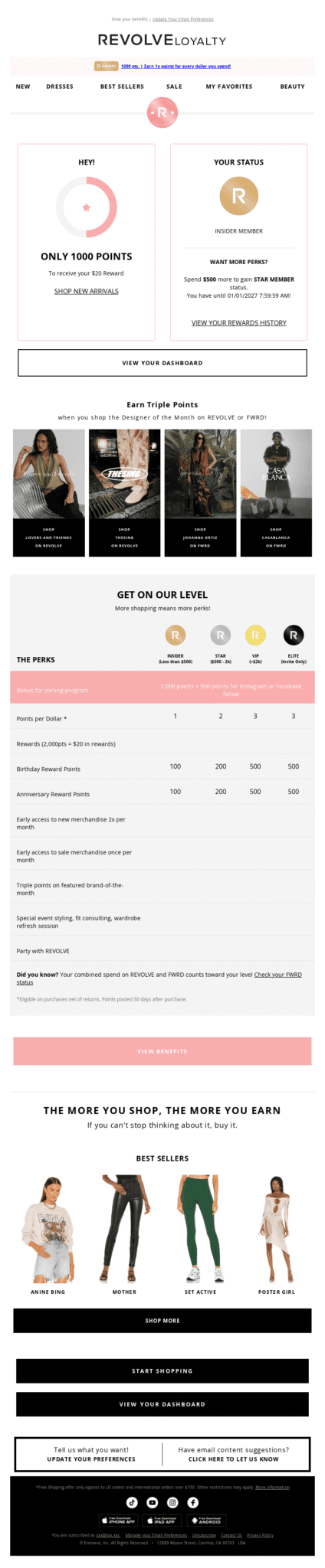
Integrating General Awareness Campaigns: The simplest yet often overlooked first step is dedicated general promotion. Even a basic email message that clearly explains the existence and purpose of your preference center, along with clear instructions on how to access and utilize it, significantly outperforms doing nothing at all. Brands like Chanel have successfully adopted this, sending concise emails explaining how subscribers can tailor their marketing communications to match their specific interests. This builds trust and positions the preference center as a value-add.
-
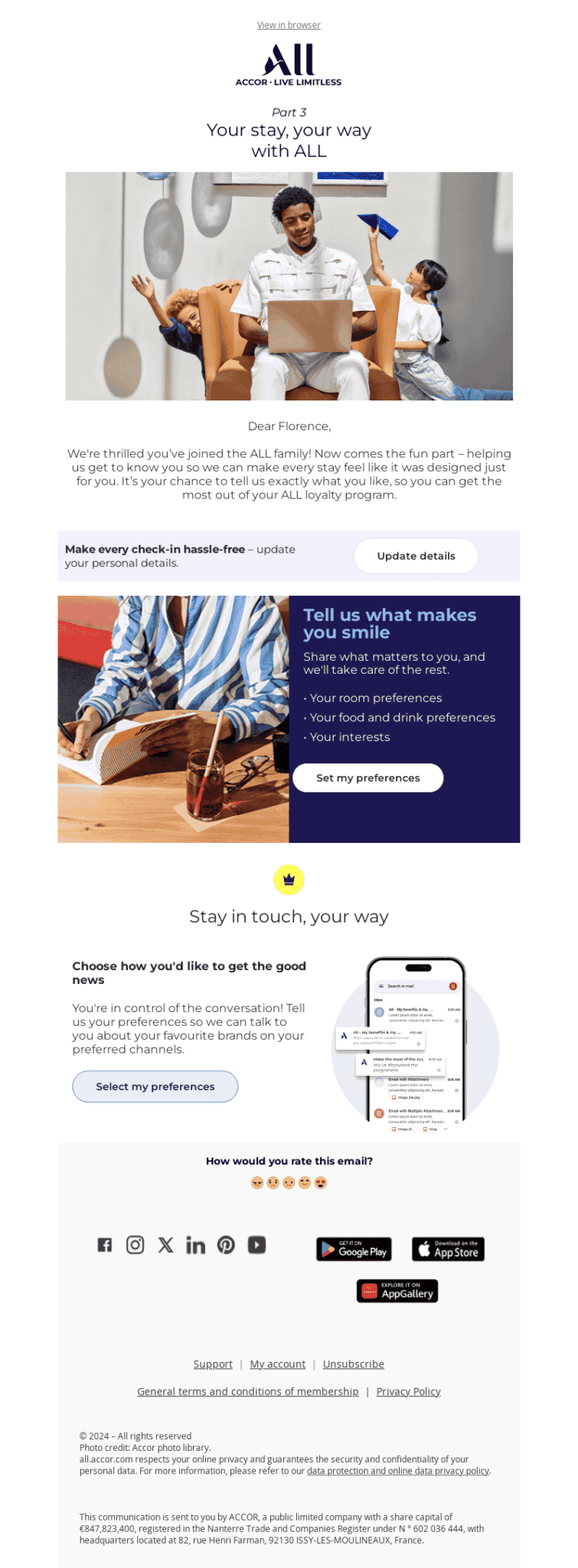
Optimizing Welcome and Onboarding Journeys: The initial moments of a subscriber relationship are prime real estate for preference center promotion. Welcome emails and onboarding series catch new subscribers at their peak engagement, making them most receptive to shaping the future of their communication with the brand. Mizuno, for instance, uses a clever, sports-themed subject line to invite new sign-ups to "be part of the first team, not the reserves," subtly encouraging them to set their preferences and ensure they receive content aligned with their interests. Brands running multi-email onboarding series, like Accor Hotels for new loyalty members, can dedicate an entire message to the benefits of setting preferences, linking it to better check-ins, perfect room selections, and preferred communication channels.
-
Embracing Progressive Profiling: Rather than overwhelming new subscribers with a lengthy form, progressive profiling advocates for building customer profiles gradually. This low-friction approach starts with essential data points and then incrementally gathers richer information through periodic check-ins. Brands should prioritize data that directly impacts relevance. Skyscanner, a travel search engine, smartly prioritizes asking for a customer’s preferred airport, recognizing this as a crucial data point for delivering highly relevant flight deals and travel information. Another excellent target for progressive profiling is the date of birth, which allows brands to send personalized birthday surprises, strengthening the customer relationship while also gleaning valuable insights into age, life stage, and potential buying power.
-
Enhancing Engagement Through Interactivity: Gamification techniques can significantly boost engagement with preference centers. Oceania Cruises, for example, asks subscribers to "Choose which destination interests you most," presenting various options with a running counter showing popular choices. This interactive approach not only makes the process enjoyable but also builds a rich repository of customer insights from every response, which can then be used to segment and personalize future communications.
-
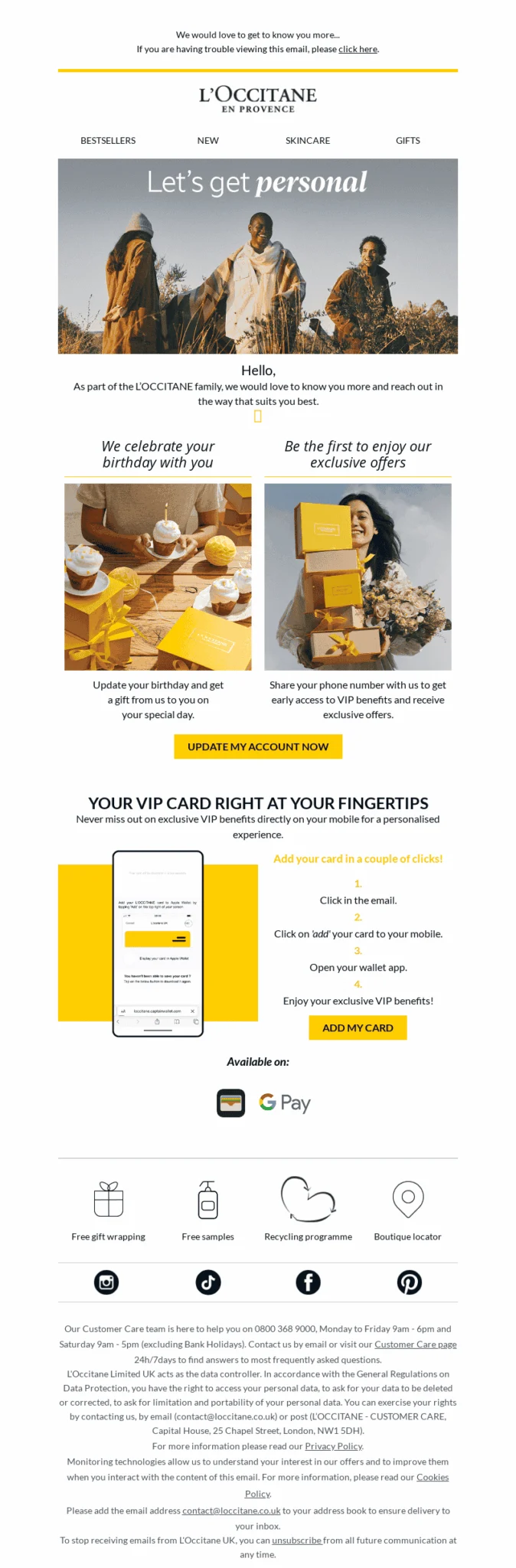
Articulating the Clear Benefits to Subscribers: People are more likely to act when they understand "what’s in it for them." Brands must clearly spell out the advantages of updating preferences. L’Occitane effectively communicates benefits such as early access to exclusive offers and a special birthday gift for those who update their preferences, covering new product alerts, personalized deals, and special event invitations, with additional options to switch to text, post, or WhatsApp. This approach transforms the preference center from a mere settings page into a gateway for enhanced value.
-
Implementing Strategic Incentives: While "soft" benefits like early access are valuable, some subscribers require a more tangible incentive to share their data. Recognizing that customer data holds intrinsic value, brands can offer "harder" proof of return. A discount or a small gift certificate works exceptionally well as an incentive because it not only encourages preference updates but also often leads to a purchase, creating a win-win scenario where the subscriber receives value and the brand generates revenue.
-
Offering Granular Opt-Out Options for Sensitive Content: The practice of allowing subscribers to opt out of emotionally sensitive dates like Valentine’s Day, Mother’s Day, and Father’s Day has become widespread, reflecting a growing brand empathy. However, the sheer volume of these one-off emails can ironically amplify the sensitivity they aim to mitigate. A more streamlined and sustainable approach is to integrate these as permanent, one-time preference center options. Beyond generic holidays, some forward-thinking senders are offering even more specific controls. Interflora allows opt-outs for anniversaries, Bloom & Wild enables subscribers to mute Grandparent’s Day promotions, and Hotel Chocolat permits customers to suppress alcohol-related offers, demonstrating a deep understanding of customer needs and sensitivities.
-
Leveraging Seasonal Peaks for Preference Management: High-volume periods like Black Friday and Cyber Monday are revenue-critical but can also lead to significant subscriber fatigue. Instead of forcing an "all or nothing" approach, offering a temporary "snooze" option for these intense periods is highly effective, as Oracle’s research on unsubscribe reduction clearly showed. Bvlgari successfully implements this strategy, allowing subscribers to temporarily opt out of holiday promotions without permanently unsubscribing. Alternatively, brands can use the run-up to sales events as a prompt for a "relevance check." Spoonflower, for example, leverages the pre-holiday rush with a clever call-to-action: "Curate My Content," reminding subscribers that "no one likes a cluttered inbox!"
-
Boosting Visibility Through Pre-headers and Dedicated Content Blocks: Beyond standalone campaigns, every email should actively work to promote the preference center. Two tactical placements are particularly effective. Firstly, the pre-header: a highly visible element in the inbox. Just as unsubscribe links are increasingly placed here to build trust and reduce spam complaints, a preference center link in the pre-header demonstrates transparency and empowers subscribers from the moment they see the email. Secondly, incorporating a dedicated content block within regular emails ensures that the preference center message is consistently reinforced. Bloom & Wild excels at this, providing a persistent block that allows responders to opt out of multiple events at once, making preference management an ongoing, integrated part of the email experience.
-
Integrating Preference Centers into Re-engagement Strategies: For subscribers who have become inactive, promoting the preference center can serve as a last-ditch effort in win-back campaigns. It offers an alternative to a full unsubscribe, giving dormant subscribers a chance to redefine their relationship with the brand. CVS Pharmacy executes this effectively by restating the benefits of staying subscribed, soliciting feedback, and concluding with a clear, commitment-focused call-to-action: "Yes, I still want emails." This approach provides a pathway for re-engagement based on renewed consent and clarified preferences.
The Strategic Imperative: Zero-Party Data and Future-Proofing Email Marketing
The strategic promotion and utilization of preference centers are inextricably linked to the broader imperative of collecting zero-party data. In an era where third-party cookies are diminishing and privacy regulations are tightening, zero-party data—information that a customer proactively and intentionally shares with a brand—becomes the cornerstone of authentic personalization. Unlike inferred behavioral data, zero-party data provides direct, explicit insights into a subscriber’s intentions, preferences, and desires.
This rich, first-hand data fuels truly personalized marketing efforts, moving beyond generic segments to highly tailored content, offers, and communication cadences. It allows brands to leverage advanced AI-driven content generation and delivery systems with precision, ensuring that messages are not just relevant but also timely and contextually appropriate. The shift from a sender-centric, broadcast mentality to a subscriber-centric, relationship-driven approach is fundamental for building lasting customer loyalty and significantly enhancing brand equity.

The ultimate test of a preference center’s effectiveness lies in its measurable impact on email marketing engagement. Brands must analyze whether subscribers who actively use the preference center exhibit stronger engagement metrics—higher click-through rates, increased website visits, and ultimately, higher lifetime value and spend. If a clear correlation can be established between preference center usage and superior subscriber performance, it provides a robust business case for continued investment in and optimization of the email program as a whole. Tools like Validity Engage, which offer AI-powered email intelligence built on extensive data networks, are becoming essential companions for marketers aiming to optimize their email programs, remove risk, and produce exceptional results by focusing on the best possible subscriber experience.
In conclusion, the era of burying preference center links is over. The confluence of rising unsubscribe rates, stringent privacy regulations, and sophisticated mailbox provider algorithms demands a proactive, transparent, and subscriber-centric approach to email communication. By elevating the preference center from a mere regulatory necessity to a core strategic asset, brands can empower their subscribers, collect invaluable zero-party data, foster trust, and ultimately future-proof their email marketing efforts for sustained success in an increasingly complex digital landscape.


 Ammar Sabilarrohman
 Asro
Asro