In an increasingly saturated digital landscape, a brand’s ability to communicate its unique value, personality, and purpose through words, known as brand messaging, is paramount. While every brand possesses an inherent narrative, the challenge lies in articulating it with clarity, consistency, and memorability to resonate with target audiences and stand apart from competitors. Effective brand messaging is not merely a marketing tactic; it is a strategic imperative that shapes perception, builds trust, and ultimately drives customer loyalty and business growth. This comprehensive guide explores the critical components of a robust messaging framework, best practices for its implementation, common pitfalls to avoid, and strategies for maintaining consistency across all communication channels.
Defining the Linguistic Blueprint: Brand Messaging in Context
Brand messaging serves as the linguistic blueprint for all outward and inward communications. It encompasses the brand’s core narrative, value proposition, key messages, and guidelines for voice and tone. When executed effectively, it ensures that a brand presents a unified identity across every touchpoint, from its website and social media presence to advertising campaigns and customer support interactions. This holistic approach fosters immediate recognition and strengthens brand recall.

It is crucial to differentiate brand messaging from closely related concepts such as brand positioning and brand voice, as these terms often become conflated. Brand positioning defines a brand’s strategic place within the market, outlining who it serves, its competitive category, and the fundamental reasons customers choose it over alternatives. This is primarily an internal strategic document, guiding behind-the-scenes decisions. Brand messaging, conversely, is the outward expression of this positioning, translating strategic intent into tangible words and narratives. It includes the value proposition (what customers gain), key message pillars (the core ideas to convey), and proof points (evidence supporting claims). Brand voice, on the other hand, refers to the personality and style inherent in a brand’s messaging – be it authoritative, playful, empathetic, or innovative. While brand voice dictates how a brand speaks, brand messaging determines what it says. Brand positioning is a long-term strategic commitment, rarely changing, while messaging may evolve occasionally with audience and product shifts. Brand voice, however, remains largely constant, as consistency is its fundamental purpose.
The Strategic Imperative of Effective Messaging
The significance of strong brand messaging extends far beyond mere communication; it profoundly impacts a brand’s market performance and resilience.
-
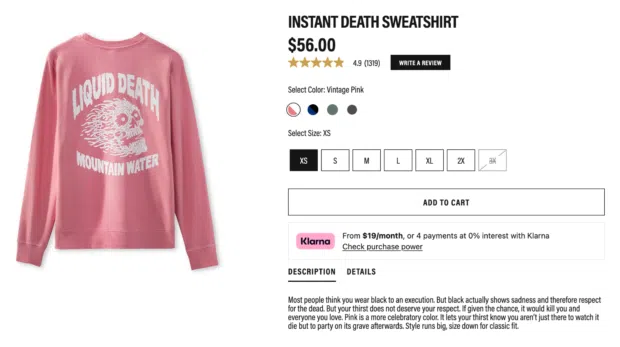
Cultivating a Clear and Consistent Identity: In an era of constant digital noise, a brand’s identity can easily become diluted without a coherent messaging strategy. Clear brand messaging acts as a unifying force, ensuring that all communications, regardless of platform or medium, emanate from the same core identity. Research consistently shows that consistent brand presentation can increase revenue by an average of 23%. Brands like Liquid Death exemplify this, maintaining their irreverent and bold persona even in seemingly mundane product descriptions, ensuring every piece of content is unmistakably "them." This level of recognition is not accidental; it is the direct result of deliberate and consistent messaging.

-
Achieving Distinctive Competitive Differentiation: In many sectors, product features and service offerings can be strikingly similar among competitors. Without compelling messaging, brands risk fading into a sea of generic claims about "great service" or "high quality." Effective brand messaging provides the crucial differentiation factor, enabling a brand to carve out a unique space in the consumer’s mind. Consumers may forget a list of technical specifications, but they remember a distinctive point of view, a relatable voice, or a brand that truly understands their needs. This becomes the tiebreaker in crowded categories, allowing brands to win preference when product parity exists. A useful litmus test: if your homepage copy could seamlessly replace a competitor’s name without sounding out of place, your messaging lacks distinctiveness.
-
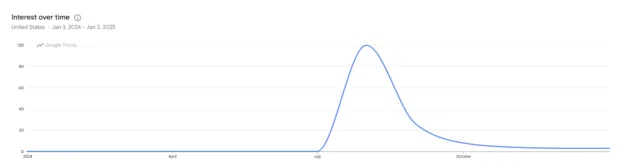
Enhancing Content Creation Efficiency and Agility: A well-defined brand messaging framework eliminates guesswork in content creation. Teams understand the core angles to emphasize, those to avoid, and how to articulate offerings without resorting to empty corporate jargon. This clarity translates directly into faster content production cycles, a critical advantage in the fast-paced social media environment. Trends emerge and dissipate rapidly, demanding quick decisions. With clear guidelines, teams can swiftly assess whether to engage with a trend, ensuring their participation is authentic and on-brand, avoiding missed opportunities or forced, inauthentic attempts. The rapid rise and fall of trends, as illustrated by Google Trends data, underscores the need for agile, yet consistent, content strategies.
-
Building Trust and Fostering Loyalty: Consistency in messaging builds trust. When a brand speaks with a unified voice and presents a clear, unchanging narrative, consumers perceive it as reliable and authentic. This consistency reinforces credibility and helps forge emotional connections, which are foundational for long-term customer loyalty and advocacy.
Anatomy of a Robust Brand Messaging Framework
A comprehensive brand messaging framework serves as a central repository for all critical communication elements, ensuring internal alignment and external coherence. Typically, it comprises seven key components:
-
Mission and Purpose: This is the brand’s overarching reason for existence, extending beyond mere profit generation. It articulates the higher aspiration or impact the brand seeks to achieve. For instance, Sweetgreen’s mission transcends selling salads; it aims to "reimagine fast food for a new era" by "connecting people to real food." This foundational statement guides all subsequent messaging.
-
Value Proposition: This concisely explains the tangible benefits and outcomes customers receive from choosing the brand. It is the brand’s elevator pitch, focusing on solutions to customer problems rather than just product features. Hello Fresh, for example, emphasizes "Whatever your week looks like, dinner’s covered," highlighting the convenience and peace of mind it offers, rather than simply "meal kits delivered weekly."
-
Positioning Statement: An internal document, the positioning statement defines the brand’s unique place in the market – who it targets, its competitive category, and its primary differentiator. It prioritizes honesty and clarity over marketing polish. A statement like "We’re the affordable option for small teams" is effective because it clearly delineates the brand’s niche and competitive advantage, even if it’s not consumer-facing.
-
Target Audience: This section meticulously defines the intended recipients of the messaging, detailing their demographics, psychographics, goals, pain points, and the language they use. Messaging crafted for "everyone" often resonates with no one, making a precise understanding of audience segments crucial. For instance, a project management tool might appeal to managers seeking visibility, executives focused on deadlines, and employees desiring streamlined workflows, each requiring tailored messaging.
-
Key Message Pillars: These are the three to five core ideas or themes that a brand consistently communicates and wants its audience to associate with it. Each pillar typically addresses a significant aspect of the brand’s value, such as innovation, sustainability, affordability, or exceptional customer service. For each pillar, a brief description, supporting points (e.g., automation, templates for "Spend less time on admin"), and proof points (customer success stories, statistics) are essential.
-
Voice and Tone Guidelines: Brand voice is the enduring personality of the brand’s communication (e.g., warm, direct, playful, expert). Tone, however, is dynamic and adapts to specific situations. A playful brand might adopt an upbeat tone for a product launch but a more empathetic tone when addressing a customer complaint, yet still feel like the same brand. Clear guidelines, often using "do’s and don’ts" or "but not" pairings (e.g., "playful but not silly"), prevent misinterpretation and ensure consistency.
-
Proof Points: These are the verifiable facts and evidence that substantiate the claims made in the message pillars. They can include statistics, customer testimonials, case studies, industry awards, expert endorsements, or specific product features. Proof points transform broad claims into credible assertions, preventing messaging from sounding like mere marketing fluff.

Developing the Framework: A Phased Approach
Building an effective brand messaging framework is a structured process involving several key phases:
-
Phase 1: Define Purpose and Positioning: Before any content is drafted, a deep understanding of the brand’s core identity is required. This involves clarifying its mission, vision, and values. Extensive market research, competitive analysis, and internal stakeholder interviews are crucial to define the brand’s unique value proposition and its strategic position in the market. The goal is to articulate the single most important idea or benefit customers should associate with the brand, ensuring it is distinct and defensible. Vague positioning that could apply to multiple competitors is a common pitfall to avoid.
-
Phase 2: Map Audience Segments: Effective messaging is always audience-centric. This phase involves creating detailed buyer personas for each primary audience segment. For each persona, identify their goals, challenges, motivations, preferred communication channels, and the specific language they use to describe their needs. Understanding these nuances allows for the development of highly targeted and resonant messaging.

-
Phase 3: Draft Core Message Pillars: Based on the defined purpose, positioning, and audience insights, develop three to five foundational message pillars. For each pillar, outline its core idea, supporting arguments, and specific proof points. This ensures that every key claim is backed by credible evidence, preventing messages from becoming unsubstantiated.
-
Phase 4: Set Voice and Tone Guidelines: Translate the brand’s personality into actionable voice and tone guidelines. Select three to four core personality traits (e.g., innovative, approachable, bold) and for each, establish a "but not" boundary (e.g., "bold but not aggressive"). Additionally, define how the brand’s tone should adapt across different scenarios, such as product launches, customer service interactions, or crisis communications, ensuring flexibility within the consistent voice.
-
Phase 5: Roll Out and Internalize: A messaging framework is only effective if it is adopted and consistently used by the entire team. Store the framework in an easily accessible central location. Develop internal training materials and workshops to educate all relevant departments (marketing, sales, customer service, product development) on its components and application. Establish clear ownership for the framework and define content approval workflows, which may vary by team size, from a single marketing lead in a small business to a multi-stage process involving brand, legal, and compliance teams in an enterprise.
-
Phase 6: Monitor and Refine: Brand messaging is a living document, not a static artifact. Regular review and refinement are essential to ensure its continued relevance and effectiveness. Leverage sales call transcripts, customer support tickets, social media comments, and performance analytics to gather insights into what resonates and what needs adjustment. Market shifts, new competitors, and evolving customer preferences necessitate periodic updates to the framework, typically every 6-12 months.

Navigating Common Pitfalls in Brand Messaging
Even well-intentioned brands can stumble in their messaging efforts. Experts like Mallika Malhotra of The Brand CEO and Ayo Ogunde, a Brand Strategist and Fractional CMO, highlight common mistakes:
-
Trying to Appeal to Everyone (Genericism): As Malhotra emphasizes, "Most brands lose people because their messaging is so generic, it could describe a dozen other businesses in the same space." The antidote is extreme specificity. A fitness coach stating, "I help women over 40 in menopause who are doing everything right and still not seeing results finally lose weight," is far more memorable and impactful than simply, "I’m a fitness coach for women." Specificity creates resonance and makes a brand inherently referable.
-
Focusing Only on Your Brand (Self-Centricity): Many brands inadvertently make themselves the protagonist of their narrative, neglecting the audience’s perspective. Ogunde observes, "Businesses work hard to stand out but forget to stay relevant. Their content is all about them: their story, their process, and their wins instead of naming what their audience is actually going through." Messaging overly laden with "we," "our," and "us" fails to connect. Shifting the focus to "you" – the customer’s challenges, aspirations, and desired outcomes – fosters understanding and engagement. Malhotra aptly states, "People don’t buy from brands they admire. They buy from brands that make them feel understood."

-
Overestimating Audience Engagement (Distraction): Brands often operate under the false premise that their audience is actively interested and attentive. Ogunde challenges this: "I have never once lain awake thinking about your brand, and neither has anybody else. Most messaging gets written as though the audience arrived interested. They typically didn’t, so you can’t explain your way in." Messaging must be crafted for a distracted audience, quickly conveying value and relevance. It needs to survive the "scroll test," delivering its core message even to a half-listening, casually browsing individual.
-
Prioritizing Volume Over Clarity: When messaging fails to land, the instinct is often to produce more content across more platforms. Malhotra warns, "Brands think the fix is posting more, or showing up on another platform. But if your message isn’t clear, more of it just means more noise." Increased content volume merely amplifies existing clarity or confusion. Before scaling output, brands must rigorously test their core message: Is it clear who it’s for? Does it address a recognizable problem? Is the value immediately obvious? Only once clarity is achieved should the volume be increased.
Sustaining Messaging Integrity in Growth
Maintaining consistent brand messaging as an organization expands is a significant challenge, but achievable through structured processes:

-
Centralized Documentation as an Anchor: The gradual drift of brand messaging often begins with informal communication and a lack of a single source of truth. As Malhotra notes, "Most brand inconsistency isn’t a communication problem – it’s a documentation problem. The second you bring on another person, ‘I’ll just explain it as we go’ stops working." A single, accessible document outlining ideal customers, positioning, niche, and core messaging is vital. This eliminates ambiguity and ensures everyone operates from the same understanding of "on-brand."
-
Streamlined Planning and Approval Workflows: Approvals are a simple yet powerful mechanism for consistency. However, managing feedback across disparate channels like Slack and email creates bottlenecks and inconsistencies. Implementing a centralized social media management tool, such as Hootsuite’s Perch, allows teams to manage content calendars, submit posts for review, and receive feedback within a single platform. This ensures that all content adheres to brand guidelines before publication, preventing off-brand messaging from reaching the public. Linking the messaging framework directly within content briefs further embeds consistency into the creation process.
-
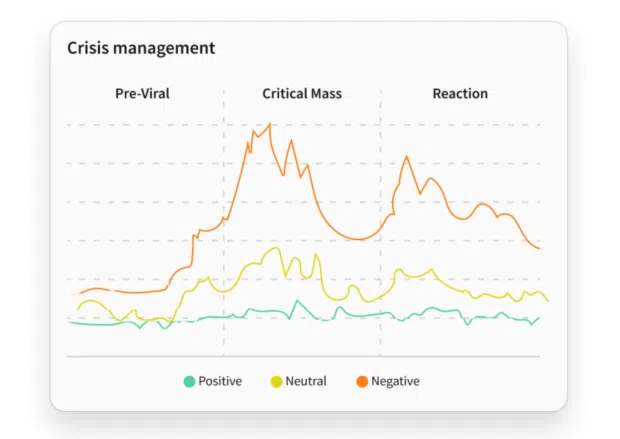
Continuous Monitoring of Audience Perception: Brand messaging is a dynamic entity that requires ongoing evaluation. Social listening tools are indispensable for tracking how messaging is received by the target audience. Tools like Hootsuite’s Lumen can monitor brand mentions, sentiment analysis, share of voice, and competitive conversations across vast data sources. Early detection of shifts in sentiment, misinterpretations of messages, or competitive encroachment allows teams to adapt and refine their messaging in real-time, preventing minor issues from escalating.
The Hootsuite Ecosystem: Tools for Messaging Mastery
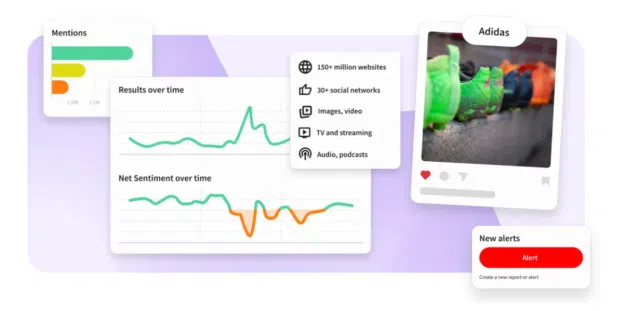
Managing brand messaging effectively at scale often requires integrated technological solutions that connect strategy with execution and analysis. Hootsuite offers a suite of tools designed to streamline this process:
-
Perch for On-Brand Content Planning and Approvals: Hootsuite’s Perch acts as a centralized hub for social media planning and publishing. It enables teams to transform brand messaging frameworks into ready-to-publish content without losing coherence. Features include comprehensive content calendar management, scheduling across major social networks, and robust built-in approval workflows. This allows teams to review captions, visuals, and channel-specific edits in a structured manner, ensuring every piece of content aligns with brand guidelines. Perch also facilitates consistency through shared content libraries, allowing all team members to access and utilize approved assets and templates, guaranteeing a unified brand voice across all posts.
-
Lumen for Monitoring Brand Perception: Once content is disseminated, understanding its impact is crucial. Hootsuite’s Lumen provides advanced social listening capabilities, tracking brand mentions, sentiment trends, and share of voice across over 150 million sources. It also monitors competitor conversations and identifies emerging trends. This real-time intelligence allows brands to gauge audience response to their messaging, detect potential misinterpretations, and identify competitive threats. By surfacing these signals early, Lumen empowers teams to make timely adjustments to their messaging strategy, responding proactively rather than reactively.
-
Wisdom for AI-Powered Tone and Alignment: Hootsuite’s Wisdom, a social-first AI agent, assists teams in implementing their messaging framework with efficiency. It helps overcome the challenge of a blank page by drafting, rewriting, or adapting social copy based on predefined brand voice and objectives. For instance, users can prompt Wisdom to "rewrite this caption to be more playful but not silly," "adapt this product announcement for a Gen Z audience," or "draft five tweets emphasizing our commitment to sustainability." This AI-powered assistance accelerates content creation while ensuring that the output remains aligned with the established brand voice and messaging guidelines. The human team retains control over review, approval, and final publishing, while Wisdom acts as a powerful assistant, fostering both speed and adherence to brand standards.
In conclusion, effective brand messaging is a fundamental strategic asset that drives market perception, customer preference, and long-term profitability. It demands a clear, consistent, and audience-centric approach, supported by a robust framework and continuous monitoring. By mastering the art and science of brand messaging, businesses can build distinctive identities that resonate deeply with consumers, fostering trust and ensuring sustainable growth in an ever-evolving market.

 rifanmuazin
 Pevita Pearce