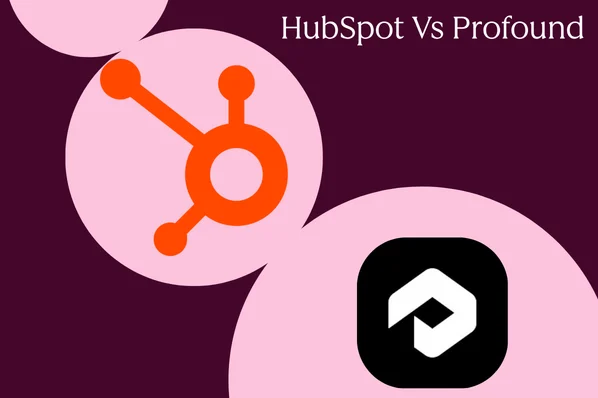
The emergence of generative artificial intelligence has fundamentally reshaped the digital landscape, introducing a new frontier for brand visibility: answer engine optimization (AEO). As search behaviors evolve from traditional keyword queries to conversational prompts answered by AI models, marketers face the critical challenge of ensuring their brand content is accurately represented and prominently cited within these AI-generated responses. In this rapidly developing domain, two prominent tools, HubSpot AEO and Profound, have emerged to address this need, each offering distinct approaches tailored to different operational requirements. The choice between these platforms largely hinges on a core operational question for marketing leaders, SEO strategists, content teams, and RevOps buyers: whether the priority lies in achieving faster insight-to-execution workflows or in securing deeper, more granular AI visibility analysis.
The Rise of Answer Engine Optimization: A New Paradigm for Digital Visibility
The shift towards AI-powered search, epitomized by platforms like ChatGPT, Google’s Gemini, Perplexity, and Google AI Overviews, marks a pivotal moment in digital marketing. Unlike traditional search engines that present a list of links, these AI models aim to provide direct, synthesized answers to user queries. For brands, this means that their content must not only rank high in traditional search results but also be recognized, understood, and accurately referenced by AI systems. This paradigm shift gave birth to Answer Engine Optimization (AEO), a specialized discipline focused on optimizing content for AI-generated answers, brand mentions, and citations within these new interfaces.
The market for AEO tools is a testament to this evolving need. Industry analysts indicate a substantial growth trajectory for AI-powered marketing technologies, with AEO platforms forming a crucial segment. Early adopters and innovators in this space recognize that merely tracking keywords is insufficient; understanding how AI interprets and summarizes information about a brand is paramount for maintaining competitive advantage and controlling brand narrative in the age of AI. The core challenge for many organizations is not just identifying their AI visibility but translating those insights into actionable content and campaign adjustments efficiently.
HubSpot AEO: Bridging Insight and Execution within an Integrated Ecosystem
HubSpot AEO is HubSpot’s dedicated answer engine optimization product, designed primarily to track a brand’s appearance in AI-generated answers and to facilitate direct action on those insights. Its strength lies in its seamless integration within the broader HubSpot ecosystem, making it an attractive option for teams already leveraging HubSpot’s CRM, Marketing Hub, and Content Hub.
The tool monitors how often a brand is featured in AI responses for a predefined set of tracked prompts across key AI platforms such as ChatGPT, Gemini, and Perplexity. Beyond mere tracking, HubSpot AEO distinguishes itself by surfacing prioritized recommendations to enhance AI visibility. These recommendations are not generic; they are designed to be immediately actionable within the HubSpot environment. For instance, if the tool identifies a prompt where a competitor is outperforming a brand, it can link this insight directly to CRM records, contact segments, and existing marketing workflows. This allows a team to swiftly move from identifying a visibility gap to creating new content or optimizing existing campaigns, all without the operational friction of switching between disparate tools. The Smart CRM provides crucial audience context, ensuring that AEO efforts are aligned with specific buyer segments and lifecycle stages, making recommendations meaningful and business-centric.
From an operational standpoint, HubSpot AEO is built for speed and efficiency. Its setup is designed to be user-friendly, requiring minimal technical expertise. Users simply input their brand details, select prompts, and the platform commences tracking. The dashboard presents visibility scores, competitor benchmarks, and actionable recommendations in clear, accessible language, guiding users from data interpretation to content creation or campaign adjustments. This low learning curve fosters cross-functional adoption, enabling content strategists, SEO leads, and RevOps managers to easily interpret and act upon the same data, thereby reducing internal friction and accelerating strategic responses.
For those new to AEO, HubSpot offers a free AEO Grader, a one-time diagnostic tool that provides a baseline measurement of AI search visibility. This Grader generates a snapshot score across popular answer engines, offering a quick and frictionless starting point before committing to ongoing optimization. The paid HubSpot AEO plan is available as a standalone product, starting at $50 per month ($45 per month when billed annually), including 25 tracked prompts and a 28-day free trial. However, to unlock the full integration layer – including CRM-informed recommendations, content workflows, and campaign triggers – teams would typically require Marketing Hub Professional, which starts at approximately $800 per month. This tiered approach allows businesses to scale their AEO efforts in conjunction with their broader marketing infrastructure.
Profound: Unlocking Deep Analytical Insights for Enterprise Brand Management
In contrast to HubSpot AEO’s execution-focused approach, Profound positions itself as an enterprise-focused answer engine optimization platform that prioritizes deep analytical insights. While it also measures brand appearance in AI answers and tracks visibility, its core strength lies in the granularity and breadth of its data analysis.
Profound extends its tracking capabilities beyond the major engines covered by HubSpot AEO, including Google AI Overviews and Claude at its base edition. It offers highly flexible custom prompt tracking across a vast array of topics and queries, allowing enterprises to monitor highly specific or nuanced brand mentions. A significant differentiator is its advanced source and influence mapping, which meticulously identifies which domains and content types are shaping AI responses. This feature is invaluable for understanding the provenance of AI-generated information about a brand. Furthermore, Profound provides sophisticated brand perception analysis, going beyond mere presence metrics to evaluate how AI systems actually describe a brand, including sentiment, tone, and competitive positioning shifts over time.
For large enterprises, particularly those with dedicated SEO, PR, or data analytics teams, Profound offers the comprehensive data required to understand the "why" behind their AI visibility. This depth of analysis is crucial for auditing AI-generated narratives, investigating why competitors are cited more frequently, or proactively managing brand reputation across multiple AI platforms. The platform’s interface, while clean and modern, is designed for users comfortable with detailed visibility data, citation analysis, and competitive share-of-voice metrics. While this caters to specialists, it may present a steeper learning curve for general marketing practitioners without specialized data expertise.
Profound offers a free one-time AEO report as its entry point. Paid plans begin at $99 per month ($82.50 per month billed annually) for the Starter edition, escalating to $399 per month ($332.50 per month billed annually) for the Growth/Standard tier, with custom pricing for Enterprise solutions. Agency plans are also available. This higher price point reflects the depth and breadth of its analytical capabilities, catering to organizations with more complex data requirements and larger budgets.
-2.png)
Comparative Analysis: Execution vs. Analysis
The fundamental distinction between HubSpot AEO and Profound crystallizes when examining their core functionalities across several dimensions:
-
Actionability and Workflows: HubSpot AEO excels in connecting AI visibility data directly to content and campaign execution within a unified platform. When a visibility gap is identified, the platform offers a direct path to content creation or updates, leveraging Marketing Hub and Content Hub. The CRM integration provides crucial audience context, aligning AEO efforts with specific business objectives. This streamlined workflow significantly shortens the cycle from insight to implementation, a critical advantage for teams where speed to market is paramount. Profound, while providing robust improvement recommendations and tools like FAQ generation based on tracked prompts, lacks a built-in content execution layer. Acting on Profound’s insights typically requires taking them into a separate CMS, briefing a content team, and managing the production workflow externally. This adds an extra layer of operational complexity, which might be manageable for organizations with dedicated content operations but could introduce friction for leaner teams.
-
Data Depth and Intelligence: Profound holds a distinct advantage in raw data depth. Its broader AI platform coverage, flexible custom prompt configuration, and granular insights into brand perception, sentiment, and influential sources provide a more comprehensive understanding of AI-generated narratives. This level of detail is invaluable for strategic brand management, public relations, and in-depth competitive intelligence. HubSpot AEO, while providing reliable AI visibility tracking across its supported platforms with daily updates and citation analysis, prioritizes clarity and actionability over exhaustive data complexity. Its data is structured to inform content optimization decisions efficiently, making it highly effective for teams focused on practical application rather than deep investigative analysis.
-
Integrations and Ecosystem: HubSpot AEO’s integration advantage is structural. Being native to the HubSpot platform, it inherently connects AI visibility data to CRM records, campaign workflows, contact segments, and content tools without requiring any additional API setup or middleware. This provides a significant compounding advantage for existing HubSpot users, as AEO becomes an integrated data source within a familiar operational system. Profound offers API access for custom integrations and can connect with external CMS and marketing platforms, making it a flexible option for enterprises with established, often bespoke, data infrastructure. However, this flexibility necessitates technical setup and ongoing maintenance, adding operational overhead that HubSpot AEO largely bypasses.
-
Ease of Use and Adoption: HubSpot AEO is designed for broad marketing team adoption, even those without deep technical expertise in AEO. Its intuitive interface, plain-language recommendations, and guided workflows ensure a low learning curve. Profound, while featuring a modern interface, caters more to users who are proficient with detailed data analysis, citation tracking, and competitive share-of-voice metrics. For teams with dedicated data or SEO specialists, this depth is an advantage; for generalist marketing teams, it might necessitate additional training and slow adoption.
-
Cost and Value Proposition: For SMBs and mid-market teams, HubSpot AEO’s lower standalone entry point and the bundled value of its ecosystem integration can reduce the total cost of ownership and tool sprawl. For enterprise teams that require Profound’s depth of analysis and already have a sophisticated content operations stack, the higher price point is justified by its advanced data capabilities. However, these teams must factor in the potential additional tooling and workflows required to act on Profound’s insights.
Strategic Implications and Future Outlook
The emergence of specialized AEO tools like HubSpot AEO and Profound underscores the increasing importance of managing brand presence within AI-generated content. AEO is rapidly evolving into a distinct discipline within the broader SEO landscape, demanding new strategies for content creation, optimization, and measurement. The choice between an execution-focused platform like HubSpot AEO and an analysis-centric platform like Profound often reflects an organization’s internal structure, existing technology stack, and strategic priorities.
For many organizations, the primary bottleneck in AEO is not data acquisition but rather the efficient conversion of insights into tangible content and campaign actions. HubSpot AEO directly addresses this by embedding AEO within a comprehensive marketing and sales platform, streamlining workflows and enhancing cross-functional collaboration. Conversely, for large enterprises where brand reputation, detailed competitive intelligence, and nuanced sentiment analysis across AI platforms are paramount, Profound’s analytical depth offers unparalleled strategic value. These organizations often have dedicated teams and robust processes to translate deep insights into action, even if it involves external workflows.
The possibility of using both tools together also exists for highly complex enterprise environments. Profound could serve as the strategic intelligence layer for SEO or brand teams, providing deep citation and sentiment analysis to inform overarching strategy. HubSpot AEO could then function as the execution layer for marketing and content teams, translating those strategic insights into actionable content updates and CRM-aligned optimization priorities. This dual-tool approach, while requiring careful integration and workflow management, offers a comprehensive solution for organizations with the resources and complexity to justify it.
Leveraging Free Options for Initial Assessment
Before committing to a paid AEO solution, both platforms offer valuable free entry points. The HubSpot AEO Grader provides a quick, one-time diagnostic, generating a 0-100 composite score across sentiment, presence quality, recognition, share of voice, and market position for ChatGPT, Perplexity, and Gemini. This allows teams to establish an AI search visibility baseline without any subscription. Similarly, Profound offers a free one-time AEO report, providing an initial snapshot of a brand’s AI visibility.
These free diagnostics are crucial for any team new to AEO. They enable organizations to benchmark their current standing, assess the significance of any visibility gaps, and gain a preliminary understanding of their brand’s representation in AI answers. This initial assessment can then inform the decision-making process, guiding teams towards the platform that best aligns with their operational model, budget, and strategic objectives. A practical "pro tip" for evaluation is to use the AEO Grader to benchmark a competitor before starting a paid trial, providing crucial competitive context that can sharpen the focus on prompts and areas worth tracking in any ongoing platform.
In conclusion, the landscape of Answer Engine Optimization is dynamic and critical for modern digital marketing. HubSpot AEO and Profound represent two powerful, yet distinct, solutions addressing this evolving need. HubSpot AEO offers an integrated, execution-focused approach ideal for streamlining workflows within the HubSpot ecosystem, while Profound provides unparalleled depth of analysis for enterprise-level brand and competitive intelligence. The discerning marketer’s choice will ultimately depend on whether their primary challenge lies in the efficiency of acting on insights or the profundity of understanding them.


 Nana
Nana
 Laily UPN