
The e-commerce landscape is experiencing a rapid evolution, driven by a wave of new services and technological advancements aimed at empowering merchants, optimizing operations, and enhancing customer experiences. This latest installment highlights a diverse range of updates, from significant platform releases and AI-powered product discovery to accelerated cross-border logistics and sophisticated marketing automation. These innovations signal a continued push towards more intelligent, efficient, and globally connected online retail.
Evolving E-commerce Platforms and Product Management
Major e-commerce platforms are at the forefront of this innovation surge, introducing features designed to streamline operations and leverage emerging technologies.
WooCommerce 11.0 Enhances Order Management and Checkout Recovery
WooCommerce, a leading e-commerce platform, has released version 11.0, bringing substantial improvements to its order management and customer retention capabilities. The update introduces optimizations to order screens, significantly speeding up query times and reducing instances of timeouts and empty search results. This enhanced performance is crucial for merchants managing large inventories and high volumes of customer orders.
A key feature of this release is the enhanced Checkout Recovery functionality. This tool allows sellers to test and refine their abandoned-cart messaging strategies, providing valuable insights into shopper behavior and responses. By enabling merchants to gauge the effectiveness of their recovery tactics, WooCommerce aims to help businesses reclaim lost sales and improve conversion rates. The company has noted a growing trend in cart abandonment across the e-commerce sector, making robust recovery tools increasingly vital. Industry reports from 2025 indicated that an average of 70% of online shopping carts are abandoned, highlighting the potential impact of effective recovery strategies.
Adobe Commerce Integrates AI for Advanced Product Discovery
Adobe Commerce, built on the robust Magento framework, is integrating artificial intelligence into its platform with the introduction of Catalog Agent. This new feature is designed to enrich product detail pages with structured data, making products more discoverable by AI crawlers and Large Language Model (LLM)-powered discovery systems. Catalog Agent leverages existing Adobe Commerce services, including product attributes, inventory levels, pricing information, and established product relationships, to create a machine-readable layer of product information.
This strategic move by Adobe addresses the growing importance of AI in online search and product discovery. As AI chatbots and virtual assistants become more prevalent in guiding consumer purchasing decisions, the ability for products to be accurately understood and presented by these systems is paramount. The structured data generated by Catalog Agent will enable a more nuanced and effective interaction between AI and product catalogs, potentially leading to higher visibility and more personalized recommendations for consumers. The broader trend of AI-driven product discovery is expected to significantly influence search engine optimization (SEO) and overall online sales performance in the coming years.

AI Bulk Listing Generator Automates Catalog Creation
The launch of AI Bulk Listing Generator marks a significant step forward in automating the often time-consuming process of creating product listings. This platform allows e-commerce sellers to generate thousands of product listings in minutes by importing structured product information from spreadsheets. The tool is designed to maintain brand consistency across extensive product catalogs, a challenge for many growing businesses.
The platform supports a wide array of e-commerce ecosystems, including Shopify, WooCommerce, Etsy, Amazon, eBay, BigCommerce, and Wix, underscoring its broad applicability. This development is particularly impactful for businesses with large SKU counts or those looking to quickly expand their product offerings across multiple marketplaces. The ability to rapidly populate online stores with high-quality, consistent product descriptions can drastically reduce the time-to-market for new products and improve overall operational efficiency. Recent analyses suggest that manual product listing creation can consume up to 15 minutes per item, making automated solutions like this a game-changer for scalability.
Revolutionizing Fulfillment and Global Logistics
The efficiency and reach of e-commerce are being redefined by advancements in fulfillment and cross-border delivery services.
Cainiao Group Launches 3-Day Cross-Border E-commerce Delivery
Cainiao Group, Alibaba’s global logistics arm, has introduced a new 3-day door-to-door parcel delivery service targeting cross-border e-commerce. This service spans 15 international trade lanes, aiming to significantly reduce delivery times for international shipments. The initiative leverages Cainiao’s extensive global logistics network, which encompasses air cargo, ground transportation, customs clearance, and fulfillment capabilities.
This development is a direct response to the increasing consumer demand for faster international shipping. In an era where instant gratification is becoming the norm, expedited cross-border delivery can be a significant competitive advantage for e-commerce businesses. By reducing transit times from weeks to mere days, Cainiao is enabling a more seamless and satisfying international shopping experience. This could unlock new markets for businesses previously deterred by long shipping durations and complex logistics. The global e-commerce logistics market is projected to reach over $1.5 trillion by 2027, with speed and reliability being key growth drivers.
ShipBob Integrates an AI Suite Across its Fulfillment Operations
ShipBob, a prominent supply chain and fulfillment service provider, has unveiled a comprehensive AI suite integrated across its entire technological infrastructure. This includes both the merchant-facing software and the operational robotics within its warehouses. The suite is anchored by ShipBob’s Merchant Control Panel (MCP), which connects AI tools to a merchant’s live operations. This can be achieved through direct integrations with AI assistants like Claude or via "Bobby," ShipBob’s in-dashboard AI agent.
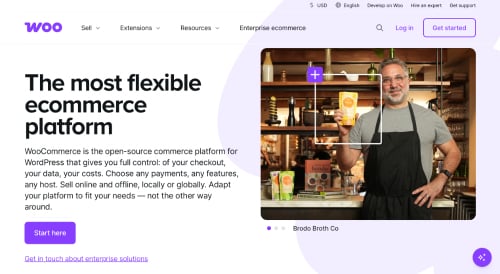
The integration of AI throughout ShipBob’s operations signifies a commitment to enhancing efficiency, accuracy, and scalability in fulfillment. From optimizing warehouse picking routes with AI-powered robots to providing merchants with intelligent insights and automated customer service through Bobby, the goal is to create a more responsive and predictive fulfillment ecosystem. This proactive approach to AI adoption in logistics can lead to reduced errors, faster order processing, and improved inventory management, ultimately benefiting both merchants and their customers. The increasing automation in warehouses is a trend observed globally, with studies predicting a significant rise in robotic systems in fulfillment centers over the next decade.
Emerging AI and Autonomous Marketing Tools
Artificial intelligence continues to be a driving force, powering new tools that automate marketing efforts and enhance customer engagement.
Kibo Commerce Unifies Agentic AI for Commerce Operations
Kibo Commerce, a provider of composable commerce and order management solutions, has launched a new iteration of its agentic AI platform. This advanced framework is designed to connect with any large language model and is structured around five core functions: configure, explain, analyze, engage, and optimize. These functions are intended to address a broad spectrum of use cases across commerce operations and order management.
The unification of agentic AI by Kibo Commerce aims to provide merchants with a more intelligent and adaptable system for managing their online businesses. By enabling AI to perform complex tasks such as configuring settings, explaining processes, analyzing performance data, engaging with customers, and optimizing operations, businesses can achieve greater levels of automation and efficiency. This move aligns with the broader industry trend of leveraging AI to create more responsive and personalized customer journeys, from initial browsing to post-purchase support.
Minty Launches Shopify App for AI-Powered Cashback and Rewards
Minty, an AI tool focused on delivering cashback and rewards to shoppers, has released a new Shopify app. This integration allows merchants to connect their Shopify stores to Minty’s network of shoppers, surfacing cashback offers at the point of purchase intent. Minty’s technology operates across various platforms, including AI chats, mobile devices, and web browsers, aiming to capture shoppers who might otherwise leave without completing a purchase.
The new Shopify app specifically addresses the challenge of engaging shoppers who visit a store but do not convert. By presenting timely cashback incentives, Minty aims to bridge the gap between browsing and buying, potentially recovering lost sales and fostering customer loyalty. This approach to AI-driven engagement at the point of transaction represents a sophisticated strategy for increasing conversion rates and improving customer lifetime value. The integration of AI in loyalty programs and cashback offers is a growing area, with businesses seeking to personalize incentives and maximize their impact.
Wunderkind Partners with Cordial for Autonomous Marketing
Wunderkind, a platform dedicated to transforming anonymous website traffic into revenue, has announced a strategic partnership with Cordial, a cross-channel messaging tool. This collaboration aims to integrate autonomous marketing capabilities with enhanced cross-channel customer engagement. By combining Wunderkind’s proprietary identity graph and AI-driven decisioning for unknown traffic with Cordial’s orchestration and AI predictive models, brands are expected to expand their audience reach and optimize their marketing workflows.
The partnership signifies a move towards more sophisticated and automated marketing strategies. Wunderkind’s ability to identify and understand anonymous visitors, coupled with Cordial’s robust messaging capabilities, allows brands to deliver highly personalized and timely communications across multiple channels. This integrated approach is designed to improve the effectiveness of marketing campaigns, drive higher engagement rates, and ultimately increase revenue by better understanding and targeting customer segments, including those previously considered unknown. The concept of autonomous marketing, where AI takes a significant role in campaign execution and optimization, is gaining traction as businesses seek to streamline their marketing operations.
Wayy.ai Secures Funding and Launches AI Co-Founder Tool
Wayy.ai has successfully closed a $2 million pre-seed funding round, led by Zero to One Ventures. Concurrently, the company has launched an AI-powered tool designed to act as a virtual salesperson for solopreneurs and small business owners. This new tool automates sales workflows, identifies potential prospects, and facilitates outreach to investors and partners, allowing founders to concentrate on their core product and service development.
The funding will be utilized to scale Wayy.ai’s sales efforts and accelerate product development. The launch of an "AI Co-Founder" reflects a growing trend of AI augmenting human capabilities in entrepreneurship. By automating repetitive and time-consuming sales tasks, Wayy.ai empowers small businesses and startups to operate more efficiently and pursue growth opportunities more aggressively. This innovation democratizes access to sophisticated sales support, which was previously only accessible to larger organizations with dedicated sales teams. The market for AI tools designed to assist sales teams and automate outreach is expanding rapidly, driven by the need for increased productivity and competitive advantage.
Social Commerce and Creator Economy Tools Flourish
The intersection of social media and e-commerce continues to be a fertile ground for innovation, with new tools empowering creators and brands.
Markable Launches Advanced Video Editor and 3D Visuals for Social Commerce
Markable, a platform that connects creators with products to promote, has introduced two significant new tools: an advanced AI-powered video editor and 3D visual collages. The video editor allows creators to quickly transform raw footage into shoppable videos, with AI enhancements for creator appearance, backgrounds, and the generation of scripts and voiceovers. The 3D visuals tool utilizes AI to create collages and realistic product photos, turning product information into engaging visual content.
These tools are designed to streamline the content creation process for social commerce, enabling creators to produce higher-quality, more compelling content with greater efficiency. The ability to automatically enhance video quality and generate scripts can significantly reduce the production time and resources required. Similarly, the 3D visual capabilities can create visually appealing product showcases that drive consumer interest. As social commerce continues to grow, platforms like Markable are playing a crucial role in equipping creators with the tools they need to monetize their influence and drive sales for brands. The social commerce market is experiencing robust growth, with projections indicating a significant expansion in the coming years, fueled by influencer marketing and interactive shopping experiences.
Whatnot Secures Substantial Funding for Live Shopping Platform Expansion
Whatnot, a popular live shopping platform, has announced a significant $545 million Series G funding round, co-led by ICONIQ, Lightspeed, and Avra. This substantial investment is earmarked for the development of new seller tools, expanded use of AI technologies, and broader market expansion. The company reported that in August 2026, it surpassed its entire gross merchandise volume for the full year 2025, indicating rapid user adoption and transaction volume.
This funding round underscores the immense growth and potential of the live shopping sector. Whatnot’s focus on seller tools and AI integration suggests a commitment to enhancing the creator experience and leveraging technology to drive engagement and sales. The platform’s success highlights the increasing consumer appetite for interactive and community-driven shopping experiences. As live shopping continues to mature, investments in platforms like Whatnot are crucial for developing the infrastructure and features needed to support a thriving creator economy and evolving consumer purchasing habits.
Cross-Platform Integrations and Global Data Solutions
The trend towards interconnectedness extends to data integration and platform compatibility, enabling broader reach and more sophisticated advertising strategies.
Eyeota and Zeotap Data Integrate Audience Solutions into Amazon DSP
Eyeota, an audience data service, and Zeotap Data, a provider of identity and data tools, have partnered to make Eyeota’s global audience ecosystem accessible within Amazon DSP (Demand-Side Platform). This integration allows advertisers to reach qualified audiences across various channels, including Prime Video and Twitch, in a privacy-compliant manner. Advertisers can leverage intent, interest, and behavioral signals to target specific consumer segments.
This collaboration enhances the capabilities of advertisers using Amazon DSP by providing access to a wider array of audience data. In an era of increasing privacy regulations, the ability to access and utilize audience data responsibly is critical for effective advertising. By integrating Eyeota’s global data with Amazon’s powerful advertising platform, advertisers gain more precise targeting options, potentially leading to improved campaign performance and return on investment. The growing emphasis on privacy-compliant data solutions is shaping the future of digital advertising, making partnerships that facilitate this transition increasingly valuable.
Adobe Launches ChatGPT Plugin for Creative and Productivity Workflows
Adobe has introduced a new plugin for ChatGPT, designed to enhance creativity and productivity by integrating Adobe’s extensive suite of creative and productivity tools directly into the chat interface. This plugin draws upon over 70 tools from Adobe’s creative and productivity offerings, supporting a wide range of workflows, from photo editing and campaign video creation to marketing asset design and PDF generation. Users can now activate the plugin and describe their desired outcomes, allowing Adobe’s tools to execute the tasks.

This integration represents a significant advancement in making creative and productivity tools more accessible and intuitive. By embedding these capabilities within a conversational AI interface like ChatGPT, Adobe is lowering the barrier to entry for complex tasks, enabling users to achieve professional results more easily. This move aligns with Adobe’s broader strategy of leveraging AI and cloud-based services to empower users across various creative and business functions. The plugin has the potential to revolutionize how individuals and teams approach content creation and document management, making powerful tools available through simple natural language prompts.
Rokt Introduces Brain V4 for Real-Time Checkout Decisioning
Rokt, a post-purchase e-commerce platform, has launched Brain V4, an advanced AI engine designed for real-time decision-making during the checkout process. This new AI tool analyzes a comprehensive set of data in real time, including consumer behavior, partner and advertiser data, creative performance, transaction history, and contextual information. Using machine learning, auctions, ranking algorithms, and guardrails, Rokt Brain determines the most relevant content, offers, product recommendations, or experiences to present to each customer during checkout.
The introduction of Brain V4 signifies a sophisticated approach to optimizing the final moments of the customer journey. By personalizing the checkout experience based on real-time data analysis, Rokt aims to increase customer engagement, drive additional sales through relevant offers and recommendations, and enhance overall customer satisfaction. This level of dynamic personalization at checkout can significantly impact conversion rates and average order value, making it a crucial tool for e-commerce businesses looking to maximize revenue from every transaction. The post-purchase phase is increasingly recognized as a critical touchpoint for customer retention and upselling, and AI-driven solutions like Rokt Brain are at the forefront of this evolution.
Conclusion
The ongoing wave of innovation across e-commerce platforms, fulfillment services, AI-driven marketing tools, and social commerce solutions paints a clear picture of the industry’s trajectory. Merchants are being equipped with more powerful, intelligent, and efficient tools than ever before, enabling them to navigate the complexities of global markets, optimize customer interactions, and drive sustained growth. The rapid advancements in AI and automation, coupled with a focus on seamless global logistics and engaging social commerce experiences, are collectively shaping a more dynamic, personalized, and accessible future for online retail. As these technologies continue to mature and integrate, businesses that adapt and embrace these innovations will be best positioned to thrive in the evolving e-commerce landscape.

 Raul Delapena Setiawan
 Ammar Sabilarrohman