

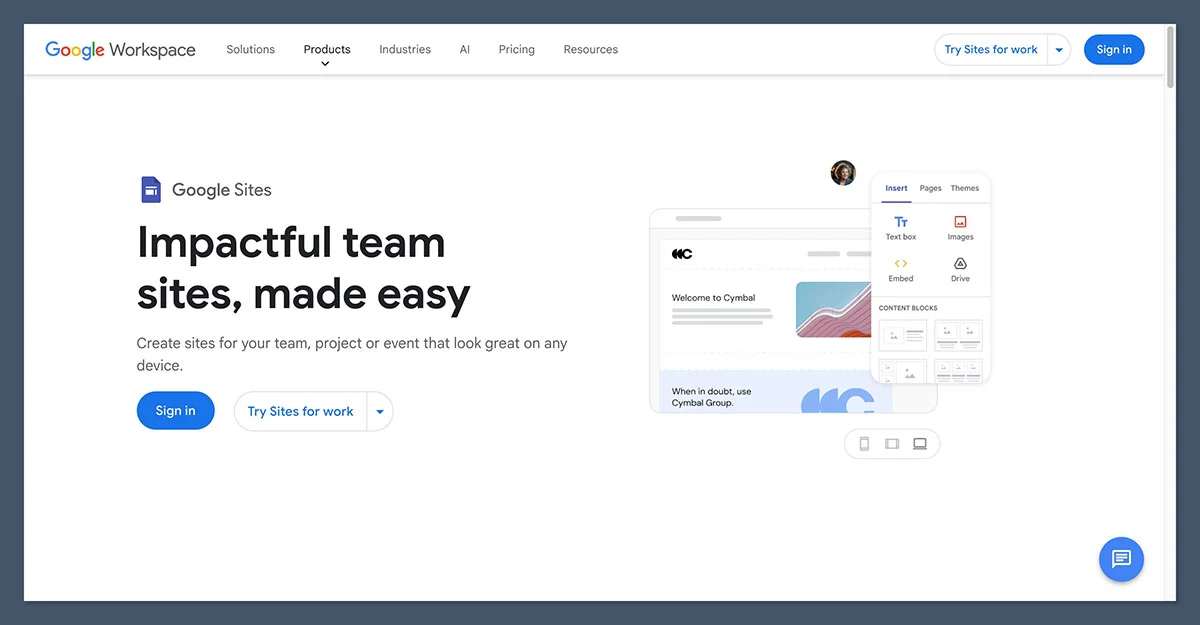
While both Shopify and Google Sites offer individuals and businesses the capability to construct a website, their fundamental purposes and functionalities diverge significantly. Following extensive testing of various website builders and e-commerce platforms, a clear distinction emerges: Shopify stands as the preeminent solution for online sales, whereas Google Sites serves as a viable, free option for basic informational websites devoid of e-commerce capabilities. This comprehensive comparison delves into the nuanced differences between these two platforms, examining their pricing structures, sales features, design aesthetics, search engine optimization (SEO) capabilities, and overall user experience. We will also highlight the specific, albeit limited, scenarios where Google Sites might be the more appropriate choice.
Key Takeaways
- E-commerce Focus: Shopify is purpose-built for online selling, offering a robust suite of e-commerce tools, while Google Sites lacks any native sales functionality.
- Pricing Disparity: Google Sites is entirely free, whereas Shopify operates on a tiered subscription model with monthly fees.
- Feature Richness: Shopify provides extensive features for sales, marketing, design, and support, supported by a vast app marketplace. Google Sites offers a more basic, streamlined experience with limited customization.
- Target Audience: Shopify caters to businesses aiming to establish an online store and scale their sales, while Google Sites is suited for internal projects, educational purposes, or simple informational web presences.
Quick Comparison: Shopify vs. Google Sites
To provide a clear overview, here is a comparative table detailing the core aspects of Shopify and Google Sites:
| Aspect | Shopify | Google Sites |
|---|---|---|
| Core Purpose | Full e-commerce platform for selling products and services | Simple site builder for informational and internal sites |
| Pricing | $29 to $299/month (billed annually) | Free; custom domain via Google Workspace from $7/user/month |
| E-commerce | Native catalog, cart, checkout, payments, inventory | None; external embeds or links only |
| Apps & Integrations | 12,000+ apps, multichannel selling | Google Workspace embeds only (Docs, Sheets, Forms, Calendar) |
| Design | Professional theme store, code access | Limited basic templates, minimal customization |
| SEO | Editable meta tags, blogging, structured data, app support | Basic meta settings, weak blogging, no schema control |
| Support | 24/7 live chat, extensive documentation | Help docs and community forums only |
| Best For | Online stores, DTC brands, multichannel sellers | Intranets, classrooms, project hubs, basic info sites |
1. Best for Pricing: Google Sites
When cost is the primary consideration, Google Sites emerges as the undisputed champion. The platform, along with its hosting, is completely free for anyone with a Google account. There are no subscription tiers, hidden fees, or transaction charges associated with its core functionality.
The only potential expenses arise if a business wishes to use a custom domain name for a more professional appearance and leverage business-grade tools. Acquiring a custom domain typically costs between $10 and $20 annually. For enhanced features such as professional email addresses and administrative controls, a Google Workspace subscription is necessary. The "Business Starter" plan for Google Workspace is priced at $7 per user per month when committed to an annual plan, or $8.40 per user per month on a flexible billing basis.
In stark contrast, Shopify is a paid platform from its inception. Its primary subscription plans range from $29 to $299 per month when billed annually, with varying features and capabilities designed to scale with business growth. Beyond these core plans, Shopify also offers a $5 per month "Starter" plan, ideal for individuals looking to sell through social media links and direct messages. For enterprise-level businesses, Shopify Plus offers comprehensive solutions starting at approximately $2,300 per month. New users can explore Shopify’s offerings through a three-day free trial, and an introductory promotion allows new merchants on annual plans to access the platform for the first three months at a rate of just $1 per month.
Therefore, while Google Sites is unequivocally the more budget-friendly option, it is crucial to recognize that this comparison involves a platform designed for e-commerce against one that is not. If a website’s objective is to generate revenue, Shopify’s monthly investment directly supports essential functions such as checkout processing, payment gateway integration, inventory management, and order fulfillment—features that are entirely absent from Google Sites, regardless of its cost.
The Winner: Google Sites is free, but you get what you pay for
Google Sites secures the victory in terms of cost due to its entirely free builder and hosting. Shopify, with its monthly fees ranging from $29 to $299, is the only platform in this comparison capable of facilitating actual sales transactions.
2. Best for Selling Online: Shopify
This is the decisive category that clearly separates the two platforms. Shopify is recognized as one of the most comprehensive e-commerce platforms available today, offering a full suite of tools specifically designed for online retail. Google Sites, conversely, possesses no native e-commerce capabilities.
Sales Features
Shopify provides robust catalog management, allowing for product variants, real-time inventory tracking across multiple locations, support for digital products, subscription options, the creation of discount codes, and abandoned cart recovery features—all available on its core plans. Furthermore, Shopify Magic, the platform’s integrated AI tool, can generate product descriptions and marketing copy directly within the dashboard, streamlining content creation for merchants.
Google Sites, however, offers none of these functionalities. It lacks a built-in shopping cart, checkout process, or product catalog management system. During testing, the closest one could come to replicating an online store on Google Sites was by creating product pages with images and descriptive text, then linking these pages to external payment gateways or embedding third-party buy buttons. Ironically, a common workaround for this limitation involves embedding Shopify’s own buy buttons into a Google Sites page, a practice that underscores Shopify’s role as the actual e-commerce engine.
Payment Options
Shopify supports an extensive network of over 100 payment providers, including popular options like PayPal, Apple Pay, and Google Pay. Additionally, merchants can utilize Shopify Payments, the platform’s proprietary payment gateway. With Shopify Payments, online credit card processing rates begin at 2.9% + $0.30 for the Basic plan, with rates decreasing on higher tiers. Opting for Shopify Payments also eliminates the additional transaction fees that Shopify imposes when third-party payment gateways are used.
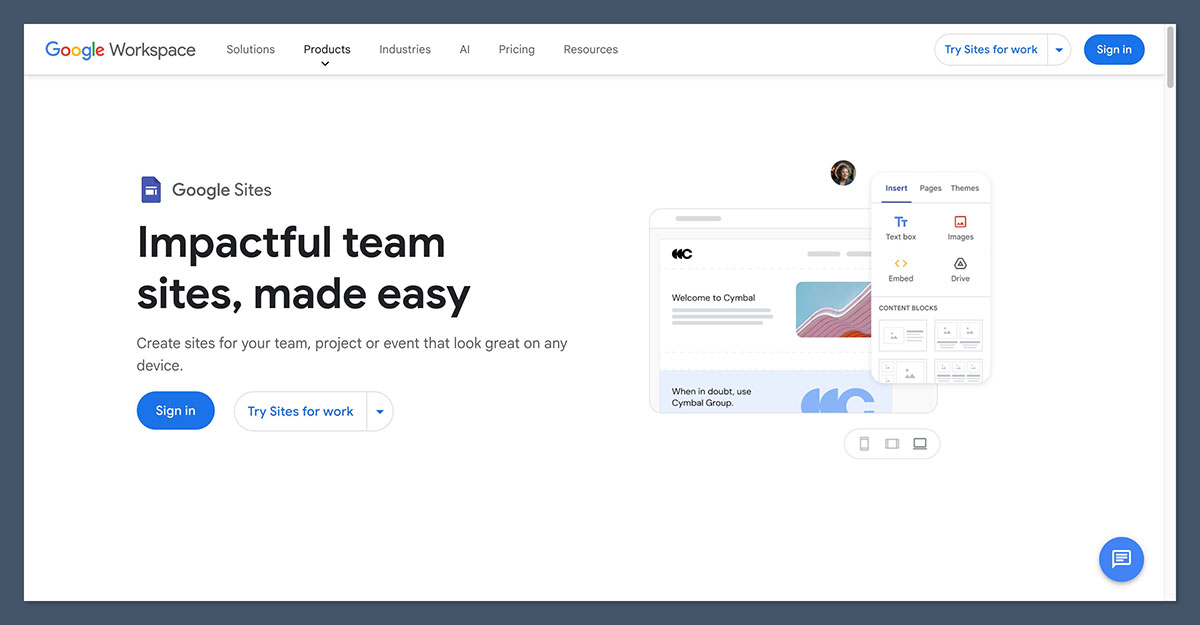
Google Sites has no integrated payment processing capabilities. Any financial transaction must occur through a separate, external platform.
App Market
Shopify boasts an impressive app store with over 12,000 third-party integrations. These apps cover a vast spectrum of business needs, from dropshipping and print-on-demand services to advanced upsell strategies, customer review systems, and shipping automation tools. While some of the most powerful apps may incur additional monthly fees, the sheer breadth of functionality available through the app store is unparalleled.
Google Sites does not feature an app marketplace. Its extensibility is primarily limited to embedding content from Google Workspace applications such as Docs, Sheets, Forms, and Calendar, along with the occasional integration of third-party widgets via embed codes.
The Winner: Shopify is the only real e-commerce option here
Shopify delivers a native product catalog, a streamlined checkout process, over 100 payment gateway options, and access to more than 12,000 apps designed to enhance online sales. While Google Sites can display product information, Shopify is the platform that actually facilitates and processes sales.
3. Best for Marketing and SEO: Shopify
For any business, ensuring potential customers can discover their products is as crucial as the sales process itself. Marketing and Search Engine Optimization (SEO) tools play a pivotal role in driving traffic and increasing visibility.
Marketing Tools
Shopify seamlessly integrates with social media platforms like Instagram and TikTok, enabling direct selling and promotional activities. The official Google & YouTube app synchronizes product feeds with Google Merchant Center, powers Performance Max advertising campaigns, and facilitates YouTube Shopping. Shopify Email provides merchants with the ability to create and send marketing campaigns directly from their dashboard. Furthermore, the extensive app store offers a wide array of tools for SMS marketing, loyalty programs, and marketing automation, addressing any remaining marketing needs.
Google Sites, in contrast, offers virtually no built-in marketing toolkit. It lacks native email marketing capabilities, social selling integrations, and direct advertising platform connectivity beyond manual configurations with external tools.
SEO
Shopify provides essential SEO features, including editable title tags and meta descriptions, SEO-friendly URLs, an integrated blogging platform, and structured data support through its themes and apps. In an era where AI-driven search engines are increasingly influencing website visibility and recommendations, establishing a strong foundation of interconnected content around products is paramount. Shopify’s content management system (CMS) and blogging capabilities facilitate the creation of such content hubs, which are vital for earning organic search rankings.
Google Sites offers basic SEO functionalities. Pages are mobile-friendly by default, and users can set simple meta information. However, it lacks control over schema markup, its blogging feature is rudimentary, and the design constraints make it challenging to develop the kind of in-depth, topic-focused content that performs well in both traditional and AI-powered search environments. Despite being a Google product, Google Sites does not inherently receive any ranking advantages in Google search results.
The Winner: Shopify has the tools to actually get found
With its native SEO controls, integrated blogging, Google Merchant Center integration, and robust multichannel selling capabilities, Shopify provides businesses with the essential tools to achieve genuine online visibility. Google Sites, on the other hand, covers only the most basic requirements.
4. Easiest to Use: Google Sites
Google Sites undeniably excels in user-friendliness, earning significant praise in this regard. It stands out as one of the most intuitive website builders tested. Its drag-and-drop editor is instantly familiar to users of Google Docs, enabling the creation of presentable web pages within minutes. The platform requires no complex configuration, eliminates the need for separate hosting considerations, and facilitates collaboration seamlessly, mirroring the functionality of other Google Workspace applications with its multi-editor support and granular sharing controls.
Shopify, while user-friendly for an e-commerce platform, inherently involves a steeper learning curve due to its comprehensive functionality. The onboarding process guides users through a setup checklist covering product management, payment gateway configuration, shipping logistics, and tax calculations. The section-based theme editor is straightforward once users become familiar with its layout. However, mastering aspects like shipping zone configurations, tax settings, and app integrations inevitably requires a time investment that Google Sites simply does not demand.
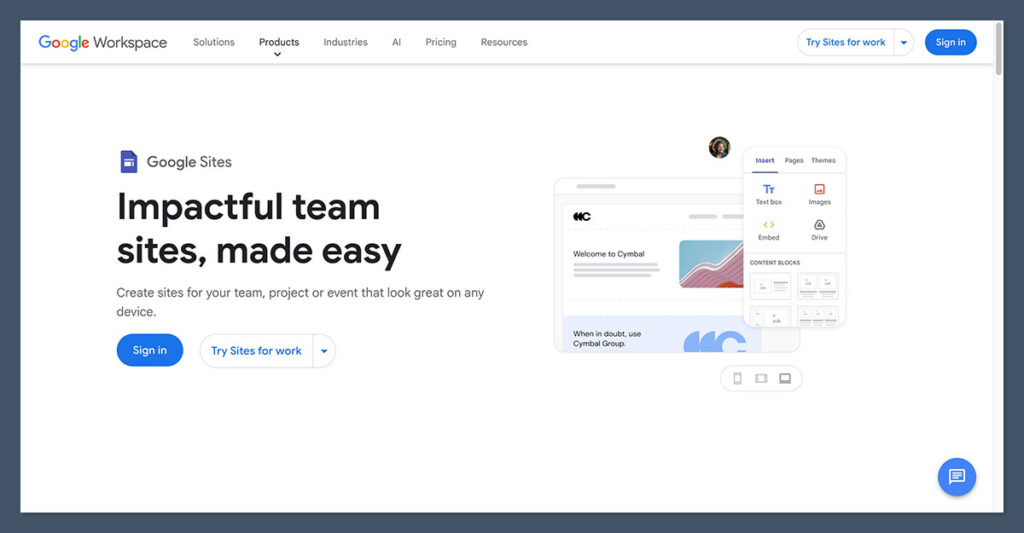
The core difference in ease of use can be attributed to the scope of functionality. Google Sites is simpler because it offers far fewer features. If the objective is to create a basic informational page, this simplicity is a distinct advantage. However, if the goal is to establish an online store, Shopify’s added complexity is a necessary component of the functionality required to operate a successful e-commerce business.
The Winner: Google Sites is effortless for simple pages
Google Sites allows users to go from a blank canvas to a published website in mere minutes with minimal setup. While Shopify is approachable for an e-commerce platform, it cannot match the sheer simplicity offered by Google Sites for basic web page creation.
5. Best for Design and Templates: Shopify
Shopify’s theme store offers a diverse selection of professionally designed templates, categorized by industry. These templates range from free options to premium themes, which are typically priced between $100 and $500 as a one-time purchase. Each theme is highly customizable through the platform’s section-based editor. For developers seeking ultimate control, direct access to Liquid, HTML, and CSS code allows for the creation of entirely bespoke storefronts.
In contrast, Google Sites provides a limited collection of clean, minimalist templates. While these templates offer a tidy appearance, their customization options are significantly restricted. Users face limited layout choices, minimal control over typography and spacing, and a complete absence of a theming system. Consequently, most Google Sites pages tend to exhibit a uniform, recognizable aesthetic.
For internal wikis or basic informational sites, this uniformity may be inconsequential. However, for a brand aiming to cultivate trust and a unique identity with paying customers, these design limitations can be a considerable drawback.
The Winner: Shopify gives your brand a real storefront
Shopify’s extensive theme store and the ability to customize at the code level empower businesses to create distinctive and professional online stores. Google Sites, while maintaining a clean appearance, offers a generic look with very little flexibility for personalization.
6. Best for Support: Shopify
A critical aspect of any platform is the quality and accessibility of its support resources. When evaluating Shopify and Google Sites, a significant disparity emerges in the level of assistance provided.
Shopify Support
- 24/7 Live Chat: Shopify offers round-the-clock customer support via live chat, ensuring immediate assistance for urgent issues.
- Extensive Documentation: A comprehensive library of help articles, guides, tutorials, and video courses is available, covering a vast range of topics from setup to advanced e-commerce strategies.
- Community Forums: Active community forums provide a space for users to connect, share experiences, and find solutions from fellow merchants and Shopify experts.
- Phone Support: While not always prominently advertised, phone support is also available for certain issues and tiers.
Google Sites Support
- Help Documentation: Google provides a knowledge base with articles and FAQs related to Google Sites.
- Community Forums: Users can seek help and share information within the Google Sites Help Community.
- Limited Direct Support: For free users, direct, personalized support is not offered. Assistance is primarily self-service.
The Winner: Shopify backs its merchants around the clock
Shopify’s commitment to its users is evident in its 24/7 live chat support and its deep repository of educational resources. Free users of Google Sites are largely left to navigate their issues independently, relying on help documents and community forums.
When Google Sites Is Actually the Right Choice
It is important to acknowledge that Google Sites was not designed to compete with sophisticated e-commerce platforms like Shopify. There are specific circumstances where Google Sites proves to be a superior and more appropriate tool:
- Internal Team Sites and Project Hubs: For creating collaborative spaces for internal teams, project management, or knowledge bases within an organization, Google Sites offers a free and easy-to-use solution.
- Educational Purposes: Teachers and students can leverage Google Sites for classroom projects, school websites, or as a platform for sharing educational resources.
- Simple Informational Websites: For individuals or small organizations needing a basic online presence to share information, contact details, or a portfolio without any intention of selling products or services, Google Sites is a cost-effective and straightforward option.
- Personal Websites with No Sales: If the primary goal is to share personal information, a resume, or a blog without any commercial intent, Google Sites provides a free and accessible platform.
If your website needs fall into any of these categories, Google Sites is an excellent choice due to its cost-effectiveness, speed of deployment, and ease of use. However, the moment e-commerce functionality becomes a requirement, Google Sites is no longer a viable option.
How We Test E-commerce Website Builders
Our evaluation of website builders and e-commerce platforms is conducted through a rigorous and systematic research process. We assess each platform across seven key areas, with weightings assigned based on their importance to users seeking to build and manage an online presence:
| Testing Area | Weighting | What We Assess |
|---|---|---|
| Sales Features | 40% | The core e-commerce capabilities of each platform. |
| Website Features | 15% | The quality and breadth of website features, including SEO. |
| Help and Support | 12% | The availability and effectiveness of support channels. |
| Design Functionality | 10% | Template variety and design customization options. |
| User Experience | 10% | Hands-on assessment of ease of use and accessibility. |
| Customer Score | 8% | Platform performance and market standing. |
| Value for Money | 5% | Pricing plans and the features offered for the cost. |
Our analysis is grounded in direct, hands-on testing of both Shopify and Google Sites, ensuring that the insights and recommendations provided are based on real-world experience with each platform.

Shopify vs. Google Sites: Our Winner
For any entity aspiring to sell products online, Shopify is the unequivocal winner, and frankly, it wins by default. It provides a comprehensive e-commerce ecosystem, featuring a native checkout process, over 100 payment gateway integrations, conversion-optimized themes, and a vast app marketplace with over 12,000 extensions to enhance store functionality. Google Sites, in its current form, cannot process a single online transaction independently.
Ultimately, the decision between these two platforms hinges on aligning the tool with the specific objective. Google Sites excels as a free, exceptionally easy-to-use builder for internal hubs, educational environments, and simple informational websites. For these specific use cases, it surpasses the need for a paid solution like Shopify. Interestingly, some businesses strategically employ both platforms: utilizing Google Sites for internal documentation and a Shopify store for revenue generation.
If your primary consideration is establishing an online store, the choice is clear. It is advisable to begin with Shopify’s complimentary trial and capitalize on their introductory offer of $1 per month for the first three months on annual plans. Reserve Google Sites for your internal team wiki or other non-commercial web projects.
FAQs
Can You Sell Products on Google Sites?
Directly, no. Google Sites lacks integrated shopping cart, checkout, or payment processing capabilities. While you can showcase products and provide links to external payment pages or embed third-party buy buttons (including those from Shopify), any actual transaction must be handled by another platform.
Is Google Sites Really Free?
Yes, the builder and hosting are provided free of charge with any Google account, and sites are hosted under the sites.google.com domain. To use a custom domain with professional email and administrative features, you will need to purchase a domain and subscribe to a Google Workspace plan, starting at $7 per user per month with an annual commitment.
How Much Does Shopify Cost?
Shopify’s standard plans range from $29 to $299 per month when billed annually, or $39 to $399 when billed monthly. A $5 per month "Starter" plan is available for selling via social channels, and Shopify Plus caters to enterprise businesses from approximately $2,300 per month. New merchants signing up for annual plans can receive their first three months for $1 per month.
Is Google Sites Good for SEO?
Google Sites offers basic SEO features. Pages are mobile-responsive, and simple meta information can be configured. However, it lacks control over structured data, has a very limited blogging function, and does not provide the advanced content and optimization tools necessary for serious SEO efforts. Its ownership by Google does not grant its pages any preferential ranking in search results.
Can I Embed a Shopify Store in Google Sites?
Yes, it is possible to embed elements of a Shopify store into Google Sites. Shopify’s "Buy Button" channel allows users to generate embed code that can be pasted into a Google Sites page, enabling visitors to complete purchases through Shopify’s secure checkout. This functionality, however, requires an active Shopify subscription, meaning most businesses would find it more efficient to build their entire store directly on Shopify.
Which is Better for a Small Business: Shopify or Google Sites?
The answer depends entirely on whether the business intends to sell products online. If e-commerce is a goal, Shopify is the only practical choice between the two. If the requirement is solely for a simple informational website and there is no budget for paid services, Google Sites can fulfill the need for free. However, for a more polished and feature-rich experience at a modest monthly cost, platforms like Squarespace or GoDaddy might be considered.








