
In the dynamic realm of digital publishing, the demand for fresh, engaging, and high-quality content is incessant. Bloggers, content strategists, and marketing teams alike frequently confront the formidable challenge of writer’s block—a creative impasse that can hinder publishing schedules and compromise audience engagement. While the pressure to consistently produce original material can be overwhelming, a diverse array of strategies, encompassing both traditional creative techniques and cutting-edge artificial intelligence tools, offers robust solutions for generating innovative blog post ideas and maintaining a vibrant content pipeline.
The Perpetual Challenge of Content Generation
The ubiquity of content marketing as a core business strategy has intensified the need for continuous content production. Reports indicate that businesses that actively blog experience a significant increase in inbound leads, with some studies suggesting up to 67% more leads than those that do not. This commercial imperative, coupled with the sheer volume of information vying for audience attention, places immense pressure on content creators. Writer’s block, a phenomenon characterized by a temporary inability to begin or continue writing, is a common affliction. It can manifest as a lack of inspiration, an inability to structure thoughts, or a pervasive feeling of creative exhaustion. Addressing this challenge effectively is not merely about overcoming a momentary hurdle; it is central to sustaining digital presence, fostering community, and achieving strategic marketing objectives.
The Evolution of Content Strategy: A Historical Perspective
The journey of content creation has undergone a profound transformation. In the early days of blogging, personal experiences and niche passions often drove content, fostering organic communities built on authentic storytelling. As the internet matured and search engines became primary gateways to information, the focus shifted towards Search Engine Optimization (SEO). Content creators began to understand the importance of keywords, backlinks, and structured data in attracting organic traffic. This era saw the rise of sophisticated SEO tools and methodologies, emphasizing data-driven content decisions.
The advent of advanced artificial intelligence (AI), particularly large language models (LLMs) like ChatGPT, Claude, and Gemini, marks the latest paradigm shift. These tools have revolutionized the brainstorming process, offering capabilities that range from generating initial ideas to drafting comprehensive outlines. This technological evolution has not diminished the need for human creativity but rather augmented it, enabling creators to overcome ideation hurdles more efficiently and focus on refining unique perspectives and authentic voices. The challenge now lies in harnessing these tools responsibly and effectively, ensuring that AI-assisted content maintains originality and adds genuine value.
Leveraging Internal Data and Audience Insights
One of the most potent sources of new content ideas resides within a blog’s existing ecosystem and its audience interactions. By meticulously analyzing feedback and site performance, creators can identify latent content opportunities.
The Power of Audience Engagement:
Direct engagement with readers provides invaluable insights into their interests and pain points. Comment sections on blog posts, contact forms, and social media channels are rich repositories of questions, feedback, and discussion points. While many comments offer simple praise or criticism, specific questions frequently emerge that demand more detailed explanations or are tangential to the original post’s topic. These queries serve as excellent starting points for new articles. For instance, if a reader asks about advanced techniques not covered in a beginner’s guide, it signals a demand for more in-depth content. Beyond passive feedback, proactive measures such as sending out questionnaires or polls to subscribers can directly solicit input on desired topics, ensuring that future content genuinely resonates with the target demographic. Maintaining a structured list of these audience-generated questions is a pragmatic approach to building a robust content backlog.
Google Search Console: Unearthing Audience Intent:
Google Search Console (GSC) remains an indispensable, free resource for content strategists. It provides direct, first-party data on how users discover a site through Google Search. The Performance Report, in particular, reveals the exact search queries that lead users to specific pages, along with crucial metrics such as clicks, impressions, and average ranking positions. This data is instrumental in identifying topics where a site ranks but might not fully satisfy the search intent. For example, if a blog on sustainable living consistently appears for queries like "how to compost in an apartment" but lacks a dedicated, comprehensive guide on the subject, it highlights a clear content gap.
SEO specialists consistently highlight the critical role of GSC in refining content strategy. By analyzing queries where a site ranks on the second or third page of search results, creators can identify "quick win" opportunities for content optimization or expansion. Similarly, queries with high impressions but low click-through rates often indicate that existing content is relevant but perhaps not compelling enough in its title or meta description, or that a more focused article is needed to address the specific intent. Tools like Yoast SEO, when integrated with Google Site Kit, streamline this process by bringing GSC data directly into the WordPress dashboard, allowing creators to access top search queries and performance metrics without navigating multiple platforms. While commercial tools like Ahrefs and Semrush offer broader competitive intelligence, GSC’s direct data from Google remains unparalleled for understanding actual audience search behavior.

AI-Powered Content Planning: The Yoast AI Content Planner:
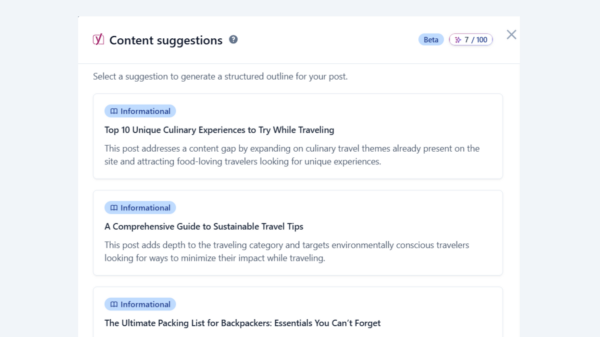
Recognizing the persistent challenge of content ideation, developers have introduced specialized AI tools to assist creators. The Yoast AI Content Planner, a feature included in Yoast SEO Premium products, exemplifies this approach. It operates by analyzing a user’s existing blog content, identifying gaps, and subsequently suggesting five relevant blog post ideas tailored to the site’s niche. This proprietary algorithm moves beyond generic suggestions by basing its recommendations on what the audience is already consuming and what critical information might be missing. For instance, a food blog with extensive content on meal prep but limited coverage of quick vegetarian recipes might receive suggestions for articles addressing that specific culinary segment.
Once an idea is selected, the Yoast AI Content Planner takes efficiency a step further by generating a structured draft, complete with a suggested title, hierarchical headings, and even a meta description. This immediate outline provides a robust framework, significantly reducing the time spent on initial structuring and allowing the writer to focus directly on content creation. The ability to generate new batches of ideas with a single click ensures a continuous flow of inspiration, designed to help creators publish consistently without succumbing to creative stagnation. Industry analysts suggest that the integration of such AI tools marks a significant shift towards more efficient and data-informed content workflows, empowering creators to fill real audience needs with targeted content.
Strategic Keyword Research: Beyond Surface-Level Queries:
Deep-diving into keyword research documents extends beyond simply identifying popular terms; it involves understanding the underlying search intent. Is the user seeking informational content (a "how-to" guide), transactional content (a product review), or navigational content (information about a specific brand)? Tools like Yoast SEO’s Semrush integration, which offers competitive keyword analysis, or even Google’s autocomplete suggestions, are invaluable for deciphering this intent. Furthermore, staying abreast of evolving Search Engine Results Page (SERP) features, such as Google’s AI Overviews or AI Mode answers, provides direct insights into how Google is interpreting and answering user queries, offering clues for content optimization.
Consider the keyword "best running shoes for flat feet." A surface-level approach might lead to a generic review. However, digging deeper reveals multiple facets of user intent:
- "What are the best running shoes for flat feet for marathons?" (Specific use case)
- "How do flat feet affect running form?" (Problem/solution)
- "Are custom orthotics better than stability shoes for flat feet?" (Comparison/alternative solutions)
- "What brands offer the best arch support for flat feet?" (Brand-focused inquiry)
Each of these questions can be expanded into dedicated, highly targeted blog posts, such as "Top 5 Marathon Running Shoes for Flat-Footed Athletes," "Understanding the Biomechanics: How Flat Feet Impact Your Running," or "Stability Shoes vs. Orthotics: A Runner’s Guide to Flat Feet Support." This granular approach ensures content directly addresses specific audience needs, leading to higher engagement and better search performance. Integrating rank tracking tools like Wincher with Yoast SEO allows creators to monitor the performance of these specific keyword-targeted posts over time, providing valuable feedback on content effectiveness.
External Inspiration: Tapping into the Digital Ecosystem
The vastness of the internet itself is a perpetual wellspring of ideas, extending beyond a site’s internal data.
Visual Discovery with Pinterest:
Pinterest, often perceived primarily as a visual discovery engine, is a powerful platform for identifying trends and generating blog ideas, particularly for visually driven niches such as food, DIY, fashion, travel, or home decor. By searching for broad terms like "[niche] blog post ideas" or "[niche] inspiration," creators can quickly uncover popular themes and visual trends. Analyzing top-pinned content within these searches reveals what resonates most with users, offering clues for text-based content that complements visual appeal. While Pinterest can be a "clickbait heaven," demanding caution to prioritize quality over sensationalism, its ability to surface trending topics and underserved content areas makes it a valuable ideation tool.
Creative Prompts from Content Idea Generators:
Tools like Portent’s Content Idea Generator, while not providing ready-to-publish titles, serve as excellent catalysts for creative thinking. By inputting a core keyword, these generators produce quirky or unexpected title suggestions that can jar the mind out of conventional patterns. For instance, entering "house plant" might yield "The 15 Biggest House Plant Blunders," which can be expanded into "Common Houseplant Mistakes and How to Avoid Them" or "Expert Tips for Thriving Indoor Gardens." Similarly, "wine" might generate "17 Unexpected Uses for Wine," prompting ideas like "Beyond the Glass: Creative Ways to Use Leftover Wine." These tools are designed to provoke lateral thinking, often leading to genuinely original content angles through playful exploration.
Harnessing Generative AI for Brainstorming:
Generative AI tools and chatbots like ChatGPT, Claude, and Gemini have become indispensable for content ideation, provided they are used strategically. The key lies in sophisticated prompt engineering—moving beyond generic queries to highly specific requests that provide context about the blog’s niche, target audience, and desired tone. Instead of "Give me blog ideas about parenting," a more effective prompt would be "Generate 10 unique blog post ideas for a parenting blog targeting millennial parents, focusing on sustainable practices and mental wellness."
AI can also be leveraged to refine vague ideas or reverse-engineer competitor strategies. For a broad topic like "healthy eating," AI can be prompted to narrow it down to "5 healthy eating ideas for busy professionals under 30 with dietary restrictions." To analyze competitors, a prompt might be "Analyze the top 5 most popular blog posts from [competitor’s URL] and suggest 3 unique content angles that build upon their success while offering a fresh perspective for my blog on [your niche]." A crucial caveat, however, is to avoid producing "commodity content"—ideas that feel generic or overdone. Content strategists emphasize the need for human oversight to infuse AI-generated ideas with unique perspectives, personal experiences, original data, or distinctive brand voice, ensuring that the final output stands out from the crowd. For example, an AI suggestion of "10 tips for better sleep" could be transformed into "My 3-Month Experiment: How I Hacked My Sleep Cycle with Science-Backed Methods," adding a personal and data-driven dimension.
Calendar-Driven Content: Days Of The Year and Trending Events:
Websites like "Days Of The Year" offer a humorous and often surprisingly relevant source of content inspiration by cataloging a vast array of official and unofficial holidays. From "Unicorn Day" to "Towel Day," these observances can be creatively linked to almost any niche. A travel blogger might use "Towel Day" to discuss "The Ultimate Guide to Packing the Perfect Travel Towel" or "Sustainable Towel Choices for Eco-Conscious Travelers." This approach allows for timely, often lighthearted, content that can engage audiences during specific periods.
Beyond niche holidays, connecting current events to a blog’s core topic is a powerful strategy for relevance. This "newsjacking" requires careful consideration to ensure the link feels natural and adds value. Setting up Google Alerts for industry keywords or subscribing to relevant news feeds can keep creators updated on breaking stories. For instance, a finance blog could turn a new tax policy into "Three Ways the New Tax Rules Affect Your Retirement Savings," offering practical advice. It is imperative to approach sensitive topics with thoughtfulness and objectivity, focusing on how the news impacts the audience rather than simply exploiting a trend. The goal is always to provide high-quality, purposeful content that aligns with the blog’s mission.
Competitive Analysis and Community Engagement:
Observing other successful blogs within a niche or engaging with fellow bloggers provides continuous inspiration. Following industry leaders, analyzing their content strategies, and identifying gaps in their coverage can spark new ideas. Social media groups, online forums, and professional networks dedicated to blogging or specific niches are excellent platforms for discussing ideas, sharing challenges, and fostering collaborative creativity. While learning from peers is encouraged, ethical guidelines dictate that content should never be directly copied. Instead, the focus should be on drawing inspiration to develop unique perspectives and original content.
Personal Wellsprings: Drawing from Life and Mindset
Beyond external data and tools, a creator’s own experiences, observations, and mental state are invaluable sources of inspiration.
Personal Experience and Professional Insights:
Situations encountered in daily life, professional work, or client interactions can form the basis of highly relatable and authentic blog posts. Sharing personal challenges, solutions, or insights into common problems faced by clients or colleagues can resonate deeply with an audience likely experiencing similar issues. A therapist blogging about mental health, for example, could discuss anonymized case studies (with strict privacy protocols, changing names and details) to illustrate common therapeutic approaches. The authenticity derived from personal experience often makes content more engaging and trustworthy, but it is paramount to prioritize privacy and obtain explicit permission when using real-life examples involving others.
The Art of Mental Reset: Combating Creative Fatigue:
Prolonged periods of intense focus can lead to creative stagnation. When faced with a blank screen, stepping away from the desk and engaging in non-work-related activities—such as a short walk, light exercise, or even household chores—can significantly aid in mental rejuvenation. These breaks allow the subconscious mind to process information and often lead to unexpected breakthroughs. A structured approach to clearing one’s head can also be effective: a ten-minute brainstorming sprint, for instance, where the goal is to rapidly generate twenty ideas (five weird, five practical, ten in-between) without self-censorship, followed by a five-minute free-writing session on the most compelling idea. This technique forces a shift in perspective, often unlocking fresh angles and overcoming creative blocks.
Systematic Idea Capture:
Perhaps the simplest yet most effective strategy is maintaining an organized repository of ideas. Inspiration can strike at any moment—during a commute, while reading, or in conversation. Whether it’s a digital note-taking app, a physical notebook, or a dedicated spreadsheet, having a system to quickly capture these fleeting thoughts ensures that no good idea is lost. This list serves as a reliable fallback during periods of low inspiration, transforming moments of spontaneous creativity into a strategic asset for consistent content production.
The Future of Content Creation: A Symbiotic Relationship
Overcoming writer’s block and consistently generating innovative blog ideas in today’s content-saturated environment requires a multifaceted and adaptive approach. The most successful content creators will be those who seamlessly integrate structured, data-driven strategies with fluid, creative methodologies. This involves leveraging advanced AI tools for initial brainstorming and gap analysis, meticulously analyzing audience and search data for precision targeting, and drawing upon personal experiences and external trends for unique perspectives.
The future of content creation is characterized by a symbiotic relationship between human creativity and technological efficiency. AI’s role will likely evolve to become a sophisticated co-pilot, handling routine ideation and structural tasks, thereby freeing human creators to focus on the higher-level cognitive functions of critical thinking, narrative development, ethical consideration, and infusing content with authenticity and emotional resonance. The continuous pursuit of fresh ideas is not merely about filling a publishing schedule; it is about sustaining engagement, building authority, and delivering consistent value to an ever-evolving audience in the digital landscape.