The landscape of digital marketing is undergoing a fundamental shift as artificial intelligence transitions from a generative tool for isolated tasks into a comprehensive ecosystem of autonomous agentic workflows. While the initial adoption of Anthropic’s Claude focused on manual prompting for copy generation or email drafting, the emergence of "Claude Skills" has introduced a more coherent, systemic approach to marketing operations. These skills, often hosted as open-source repositories on GitHub, allow Claude to function not just as a writer, but as a researcher, strategist, and analyst capable of managing research, positioning, channel planning, and quality reporting within a unified framework.
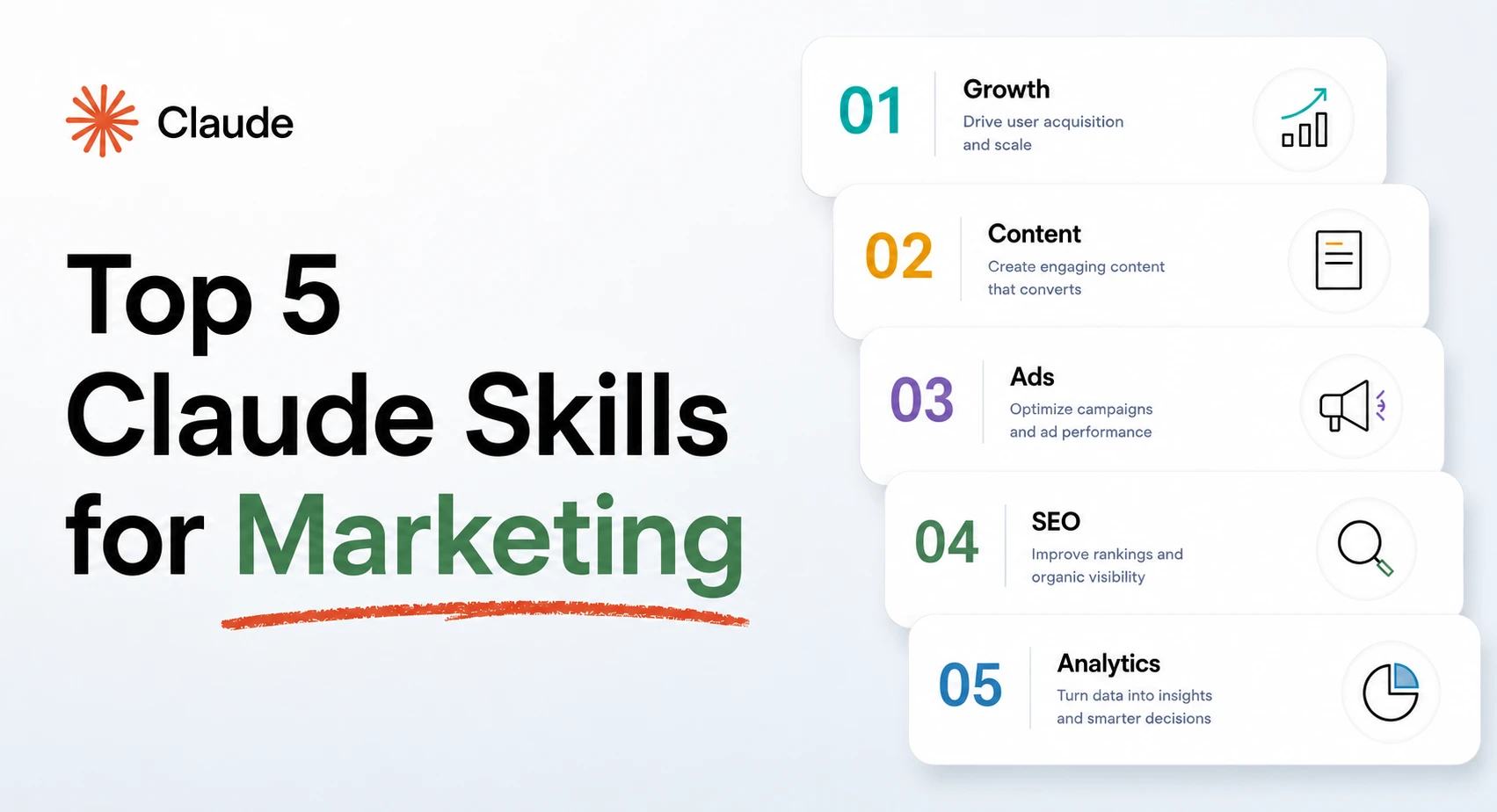
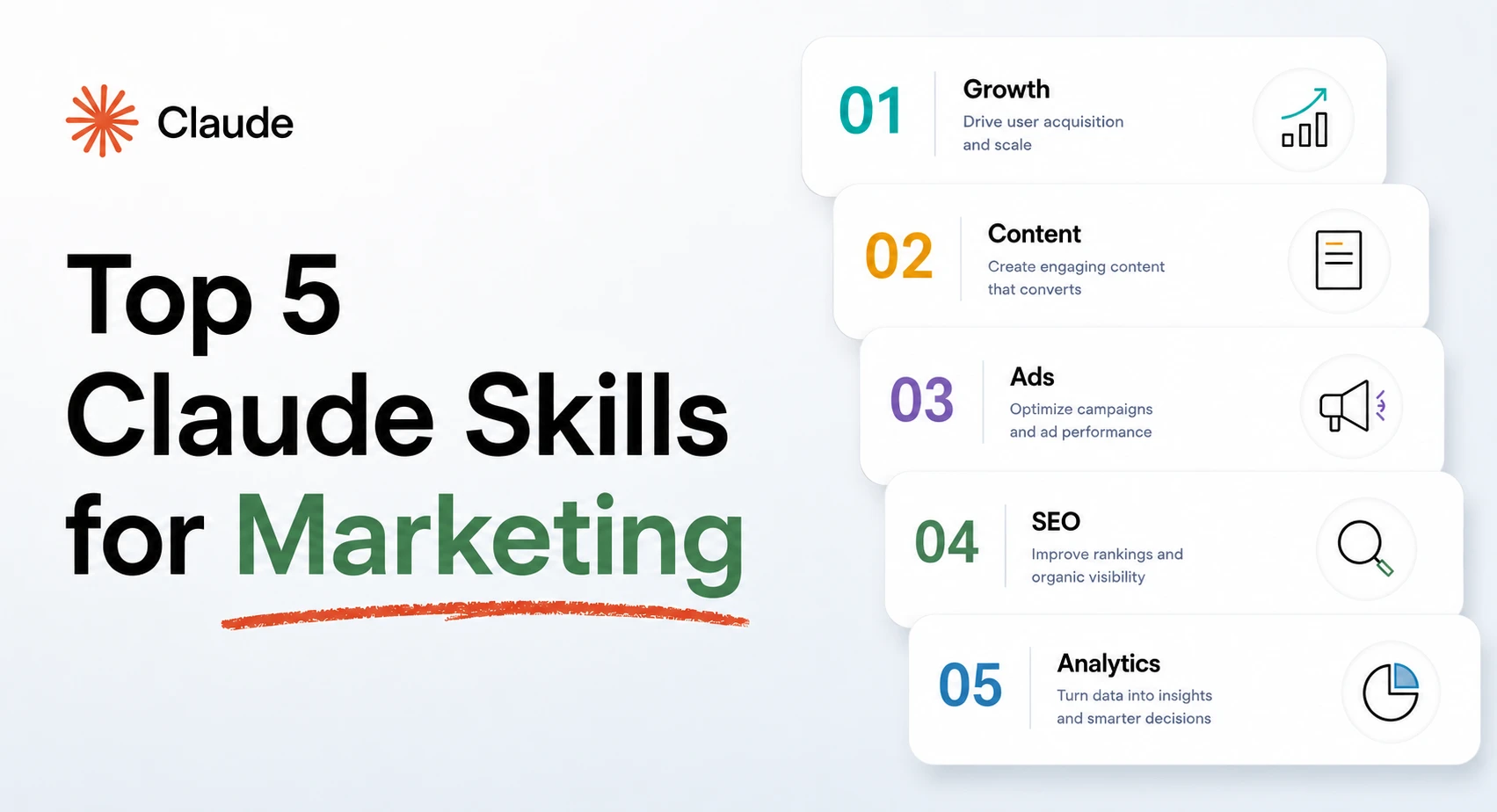
As the industry moves toward 2026, the distinction between general-purpose AI libraries and dedicated marketing repositories has become a critical factor for growth teams seeking efficiency. To provide a clear roadmap for organizations looking to integrate these capabilities, this analysis ranks the five most-starred marketing-specific repositories on GitHub, evaluating their architecture, utility, and role within the modern marketing stack.
The Shift from Generative AI to Agentic Marketing Systems
The history of AI in marketing can be traced through three distinct phases. The first phase, spanning roughly 2022 to 2023, was characterized by "one-shot" prompting, where marketers used models like Claude to generate individual blog posts or social media captions. The second phase, occurring throughout 2024 and 2025, saw the rise of "chain-of-thought" engineering, where users linked multiple prompts together to create more complex outputs. However, these methods remained largely manual and disconnected from broader business data.
The current third phase, characterized by the "Agentic" model, utilizes Claude Skills—reusable instruction packages that give the AI defined workflows, references, and quality checks. This evolution allows marketing departments to treat AI as a digital employee with a specific "skill set" rather than a simple text predictor. By leveraging GitHub repositories, teams can now install pre-configured frameworks that handle the heavy lifting of marketing infrastructure, from SEO schema generation to multi-channel attribution analysis.
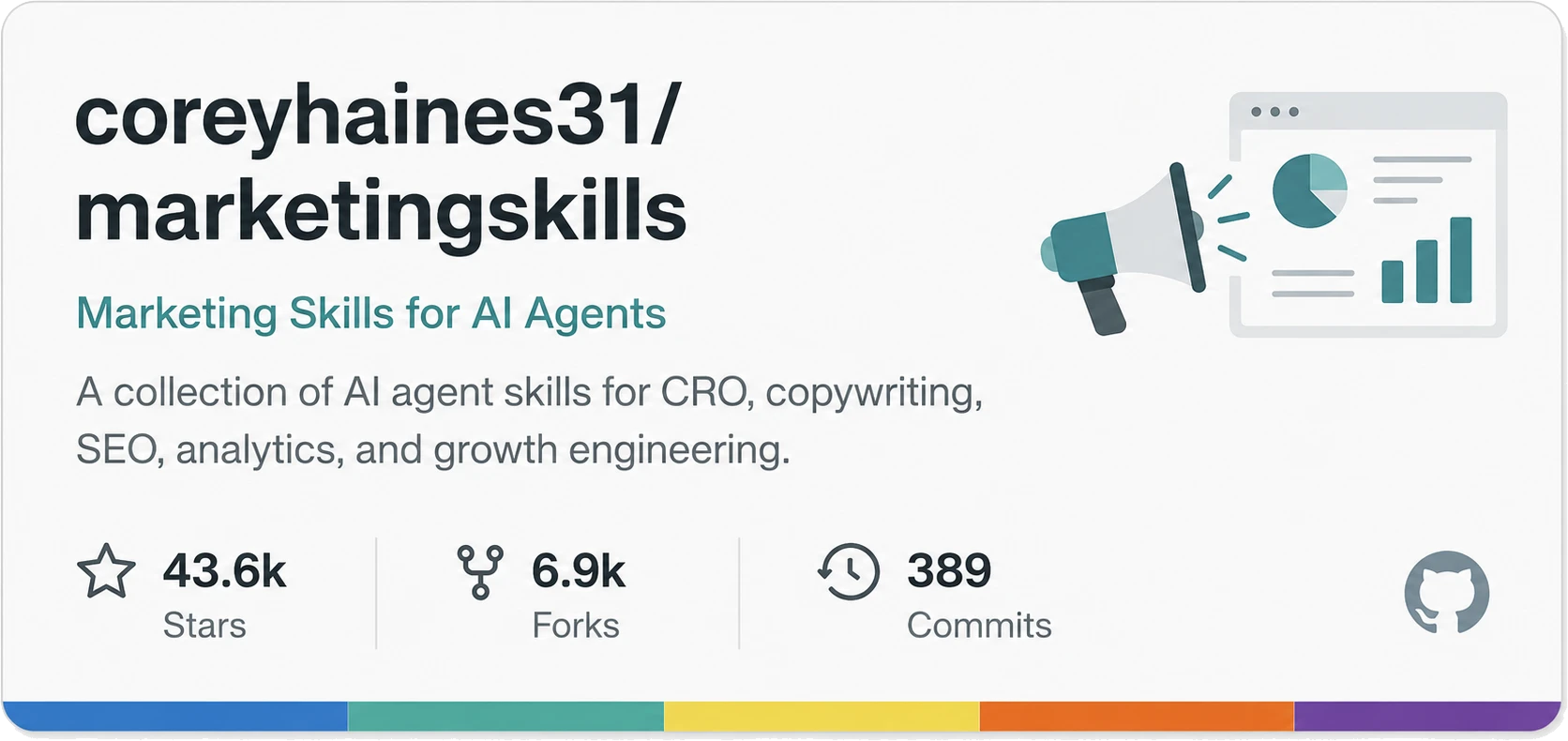
1. Marketingskills by Corey Haines: The Integrated Growth Framework
With over 43,605 stars and nearly 7,000 forks, the marketingskills repository, maintained by Corey Haines, stands as the most comprehensive general-purpose toolkit in the Claude ecosystem. Unlike repositories that focus solely on creative output, this framework addresses the entire marketing funnel, including Conversion Rate Optimization (CRO), copywriting, Search Engine Optimization (SEO), paid media, analytics, customer retention, and Revenue Operations (RevOps).
The architectural strength of marketingskills lies in its "shared context" layer. In traditional AI workflows, a model might generate an ad for a product and then, in a separate session, write a blog post about it, often losing the nuances of the brand’s positioning in the process. Haines’ repository solves this by implementing a central product-marketing layer. This ensures that every sub-skill—whether it is generating schema for SEO or drafting a retention email—references the same core audience data, product story, and brand voice.
Industry analysts suggest that this "one-stop-shop" approach is particularly beneficial for founders and technical marketers who need a coherent system that connects research to execution. By allowing research data to inform multiple downstream workflows, the repository reduces the "drift" often seen in multi-step AI campaigns.
2. Aaron Marketing Skills: The Marketing Operating System
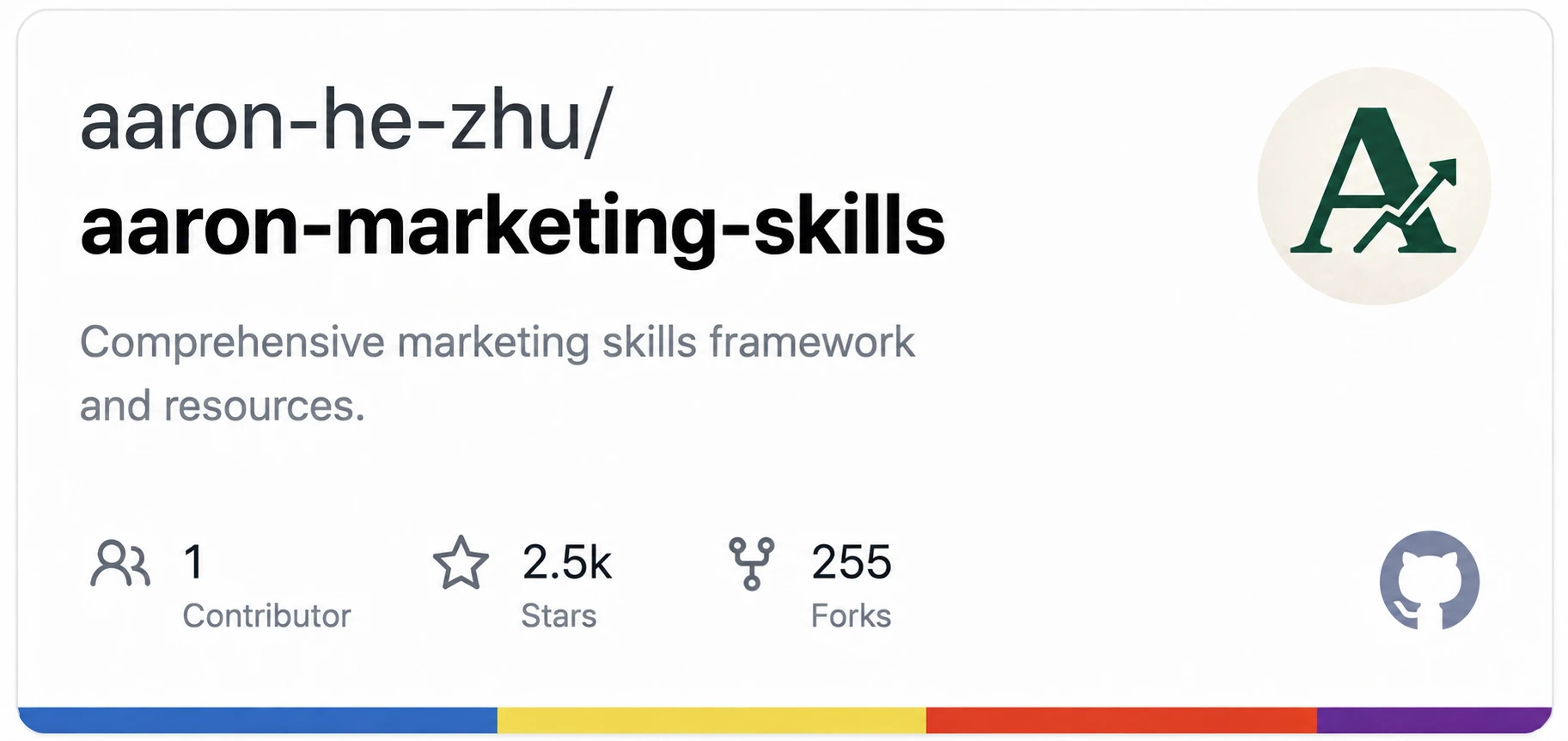
Ranked second with 2,537 stars, aaron-marketing-skills by Aaron He Zhu functions less like a prompt library and more like a structured operating system. It features a massive library of 120 specialized skills categorized across social media, email, influencer relations, and product launches.
The defining feature of this repository is the /aaron-marketing:auto router. This function allows a user to input a high-level goal in plain language—such as "launch a new feature for enterprise users"—and the system automatically routes the request to the appropriate workflow sequence. This reduces the cognitive load on the marketer, who no longer needs to know which specific prompt to use for which task.
Furthermore, the repository introduces "review gates" based on industry standards like CORE-EEAT (Experience, Expertise, Authoritativeness, and Trustworthiness) and ROAS (Return on Ad Spend). It also utilizes a unique memory system categorized into HOT, WARM, and COLD tiers, allowing Claude to remember recent campaign data while maintaining long-term brand guidelines. This makes it an ideal choice for larger marketing teams that require repeatable processes and rigorous quality control.
3. AI Marketing Suite: Packaging Analysis for Agencies
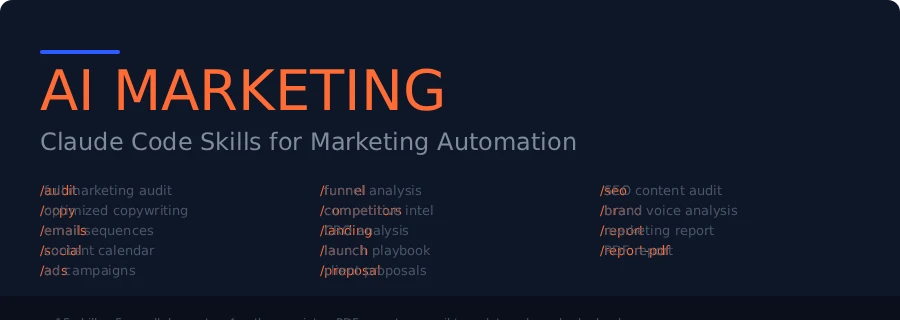
The ai-marketing-claude repository by Zubair Trabzada, currently holding 2,285 stars, is designed specifically for professionals who need finished, client-ready deliverables. While other tools focus on the "how" of marketing, the AI Marketing Suite focuses on the "what," packaging analysis into structured audits, proposals, and campaign plans.
The suite utilizes a main orchestrator backed by 14 specialized sub-skills. It is particularly adept at handling complex agency tasks such as competitor reviews, funnel analysis, and full-scale launch proposals. For freelancers and consultants, this repository provides a way to scale the production of high-value documents without sacrificing analytical depth.
However, technical experts note that while the suite is excellent for direction and strategy, its recommendations are "directional" rather than absolute. The repository is best used as a drafting tool for professionals who can then validate the AI’s suggestions with real-world attribution data and experimental results.
4. ASO Skills: Precision Tools for the Mobile App Ecosystem
Specialization is the hallmark of the aso-skills repository by Eronred. With 1,727 stars, it is the only major repository focused exclusively on App Store Optimization (ASO) and mobile growth. In an era where mobile acquisition costs are skyrocketing, this level of specificity is highly valued by iOS and Android development teams.
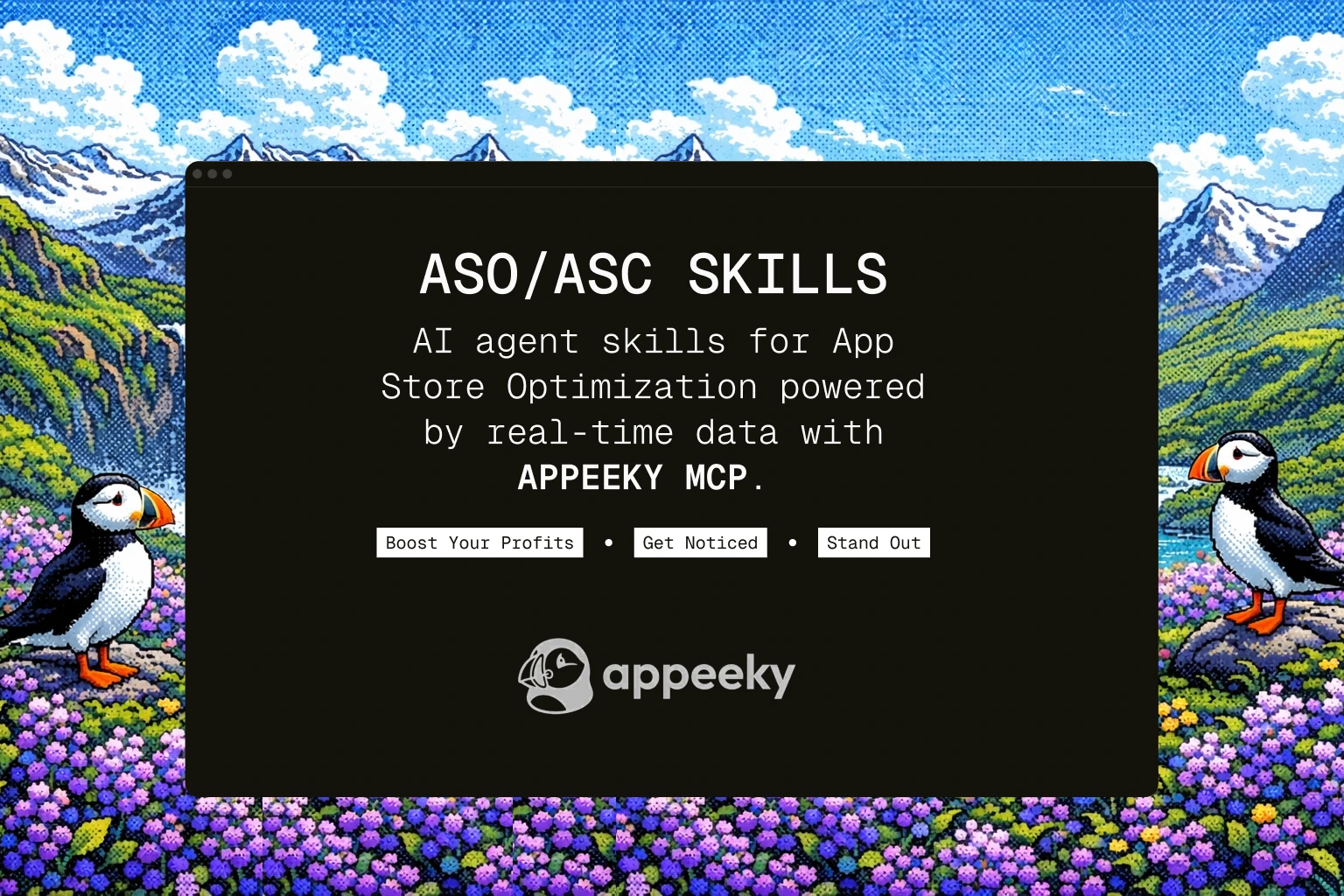
The /aso-skill router connects users to 30+ workflows that cover every aspect of the app lifecycle, from keyword research and metadata optimization to creative localization and review management. Unlike general marketing tools, aso-skills understands the technical constraints of the mobile ecosystem, such as specific character counts for metadata and the nuances of Apple Search Ads (ASA).
A significant advantage of this repository is its ability to integrate with external data. Through the Appeeky platform, it can pull live App Store data, allowing for real-time optimization based on actual market conditions. For mobile-first companies, this repository offers a depth of functionality that broad-spectrum tools cannot match.
5. Claude-blog: Scaling Content Strategy and Editorial Quality
Finally, claude-blog by Agrici Daniel, with 1,600 stars, represents the pinnacle of content-focused Claude skills. While it is often categorized as a writing tool, it earns its place in the marketing ecosystem because it manages the entire strategic framework surrounding a blog, not just the prose.
This repository handles content strategy, topic clustering, internal linking structures, and multilingual publishing. Its most impressive feature is a five-stage delivery gate system. Before a piece of content is finalized, it must pass through automated checks for SEO alignment, house style adherence, and formatting requirements. The output is not limited to text; the system can generate Markdown, HTML, PDFs, and even briefs for hero images or screenshots.
For content teams building search-led publishing engines, claude-blog provides the infrastructure necessary to maintain a high-frequency editorial calendar while ensuring that every post contributes to the broader topic cluster and SEO strategy.
Comparative Data and Adoption Trends
The growth of these repositories reflects a broader trend in the GitHub community toward "Agentic AI." Analysis of fork-to-star ratios suggests that marketingskills and aaron-marketing-skills have the highest levels of active developer contribution, indicating that users are not just "starring" the repos for future use but are actively customizing the code for their specific business needs.
| Repository | Primary Focus | Best For | Key Feature |
|---|---|---|---|
| marketingskills | Full-funnel Growth | Founders/Technical Marketers | Shared Context Layer |
| Aaron Marketing | Campaign Operations | Large Teams/Agencies | Auto-routing & Memory Tiers |
| AI Marketing Suite | Strategy & Audits | Consultants/Freelancers | 14-Subskill Orchestrator |
| ASO Skills | Mobile Growth | App Developers | Live App Store Integration |
| Claude-blog | Content Marketing | SEO Teams/Publishers | 5-Stage Editorial Gates |
Industry Reactions and Strategic Implications
The marketing community’s reaction to these tools has been polarized. On one hand, growth leaders praise the efficiency gains, noting that tasks that once took a week of research can now be drafted in hours. On the other hand, there is a growing conversation regarding the "homogenization" of marketing. If every brand uses the same GitHub repository for their positioning and SEO, the risk of identical-sounding brand voices increases.
"The value is no longer in the ability to generate the output, but in the ability to architect the system," says one senior growth engineer. "These repositories provide the skeleton, but the ‘meat’—the unique customer insights and proprietary data—must still come from the human marketer."
Furthermore, the legal and ethical implications of using open-source AI skills are coming to the forefront. As these tools begin to handle more first-party data through MCP (Model Context Protocol) connections and API integrations, data privacy and security have become paramount. Organizations are encouraged to audit the code within these repositories before connecting them to sensitive customer databases.

Conclusion: Navigating the New Ecosystem
The rise of Claude marketing skills on GitHub signals the end of the "prompt engineering" era and the beginning of the "AI systems" era. For marketing departments, the decision of which repository to adopt depends largely on their specific operational needs. While marketingskills provides the best general foundation, specialized needs in app growth or high-volume content publishing may necessitate the use of ASO Skills or claude-blog.
The consensus among experts is clear: do not over-complicate the stack. Starting with one broad system and only adding specialized skills when a repeated workflow demands it is the most effective way to build leverage without creating noise. As AI agents become more autonomous, the marketers who succeed will be those who can best manage these digital systems to deliver consistent, high-quality results across the entire customer journey.