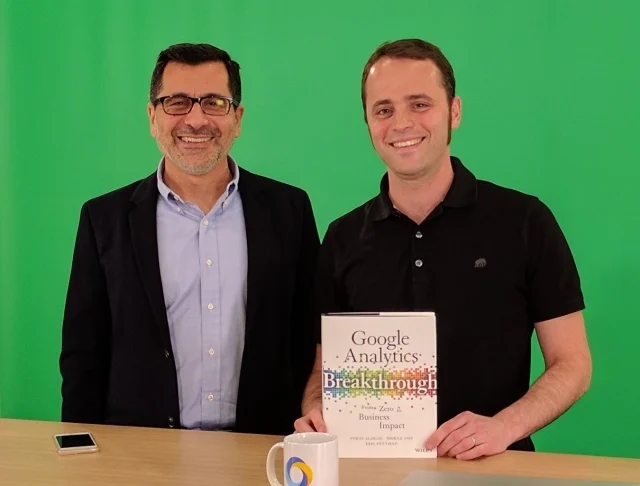
In an era defined by the exponential growth of digital information, the transition from raw data collection to actionable business intelligence has become the primary differentiator for successful enterprises. Feras Alhlou, Co-Founder and Principal Consultant at E-Nor and a prominent figure in the field of digital measurement, recently outlined a comprehensive framework for organizations seeking to leverage analytics as a core business process. As the co-author of the seminal text Google Analytics Breakthrough, Alhlou’s insights reflect a decade of observing the shift from simple web tracking to a complex, multi-layered optimization strategy. This evolution is not merely technical but represents a fundamental shift in how organizations perceive the relationship between consumer behavior and bottom-line performance.
The contemporary landscape of digital analytics is characterized by a move away from "vanity metrics"—such as simple page views or session counts—toward a more integrated approach that Alhlou describes as a structured business process. This methodology emphasizes that data, in isolation, lacks value; its utility is unlocked only when it is contextualized within a broader organizational strategy that includes rigorous auditing, strategic reporting, and iterative testing.
The Strategic Framework: Analytics as a Continuous Business Process
The core of the methodology proposed by Alhlou and the team at E-Nor revolves around a multi-stage optimization framework. This framework is designed to move an organization through a maturity model, progressing from foundational data integrity to advanced personalization. The process begins with a dual-layered audit. This audit is not limited to technical implementation—ensuring that tracking codes are firing correctly—but extends to a business-side assessment. This involves engaging stakeholders across various departments to identify the specific Key Performance Indicators (KPIs) that align with overarching corporate goals.
Once the technical and strategic foundations are established, the framework moves into the reporting layer. Effective reporting is defined not by the volume of data presented, but by its clarity and relevance to the decision-makers. Following the establishment of reliable reporting, the process shifts to the analysis phase. It is at this stage that analysts attempt to extract "actionable insights"—observations that directly lead to a change in business tactics or strategy. The final, and perhaps most impactful, stage of the framework is testing and personalization. By utilizing the insights gained from historical data, organizations can begin to tailor user experiences in real-time, directly influencing conversion rates and customer loyalty.
The Chronology of Digital Measurement Evolution
To understand the current state of analytics, it is necessary to examine the timeline of its development. In the early 2010s, the primary challenge for marketers was the "single-device" paradigm. Data collection was largely centered on desktop browser sessions, and the path to conversion was relatively linear. However, as mobile penetration accelerated and social media platforms became primary drivers of traffic, the complexity of the "customer journey" increased exponentially.
By 2015, the introduction of Universal Analytics by Google allowed for better cross-device tracking, yet many organizations struggled to integrate this with backend CRM data. The interview between Alhlou and his industry peers highlights a critical turning point where the focus shifted from "what happened" to "why it happened" and "what will happen next." This shift necessitated the creation of a data roadmap—a strategic plan that allows businesses to scale their analytical capabilities in tandem with technological advancements.
Supporting Data: The Rising Complexity of the Data Ecosystem
The necessity for a structured approach like E-Nor’s Optimization Framework is supported by broader industry trends. According to reports from the International Data Corporation (IDC), the global "datasphere" is expected to grow to 175 zettabytes by 2025. For the average enterprise, this means managing data from dozens of disparate sources. Research from Gartner indicates that while 80% of organizations believe they are data-driven, only a small fraction successfully utilize that data to predict future consumer trends.
The challenge is further compounded by the proliferation of touchpoints. A decade ago, a consumer might have interacted with a brand twice before making a purchase. Today, that number can exceed 20 interactions across multiple devices and platforms. This fragmentation makes the "context" mentioned by Alhlou essential. Without understanding whether a user is interacting via a mobile device during a commute or a desktop at work, the data remains a collection of disconnected signals rather than a coherent narrative of customer intent.
Implementing a Scalable Data Roadmap
For organizations overwhelmed by the sheer volume of available information, Alhlou advises the implementation of a phased data roadmap. This strategic progression ensures that the organization does not overextend its technical capabilities before establishing a solid data foundation.
- Owned Data Mastery: The first step involves perfecting the collection and interpretation of web and mobile analytics. This is the data the company has the most control over and serves as the baseline for all future analysis.
- Data Augmentation: Once owned data is reliable, organizations should begin integrating external signals, such as basic social media metrics. This provides a broader view of brand sentiment and reach beyond the company’s primary digital properties.
- Qualitative Integration: To move beyond quantitative "what," companies must adopt qualitative measures. Tools such as Google Surveys have revolutionized this space, making it cost-effective to gather "the voice of the customer" directly. This allows businesses to conduct market research with the same agility they apply to their digital tracking.
This roadmap addresses a common pitfall in digital transformation: the tendency to invest in expensive "black box" AI or machine learning tools before the underlying data quality has been verified. By following a structured path, firms ensure that their advanced analytics are built on a bedrock of accurate, contextualized information.
The Role of Qualitative Insights and Market Research
One of the more significant shifts in recent years is the democratization of market research tools. Historically, large-scale consumer surveys were the exclusive domain of major corporations with massive research budgets. The introduction of platforms like Google Surveys has shifted this dynamic, allowing mid-sized and even small enterprises to perform targeted research.
Alhlou emphasizes that these tools are not just for measuring satisfaction on existing properties; they are powerful instruments for broader market research. By targeting specific demographics or user behaviors, companies can validate new product ideas or marketing messages before a full-scale launch. This integration of qualitative and quantitative data allows for a 360-degree view of the customer, bridging the gap between digital footprints and human psychology.
Broader Impact and Industry Implications
The implications of this structured approach to analytics extend far beyond the marketing department. When analytics is treated as a business process, it breaks down the traditional silos between IT, marketing, and executive leadership. A technical audit requires the cooperation of developers, while a business audit requires the input of C-suite executives. This cross-functional alignment is often a catalyst for broader digital transformation within an organization.
Furthermore, the emphasis on testing and personalization reflects a shift in the global economy toward the "experience economy." As products and services become increasingly commoditized, the quality of the digital experience becomes the primary competitive advantage. Organizations that can successfully navigate the transition from data collection to personalized interaction are positioned to capture a larger share of the market.
In conclusion, the insights provided by Feras Alhlou underscore a vital truth for the modern enterprise: data is not a byproduct of business; it is the fuel for business growth. However, like any fuel, it requires a sophisticated engine—a framework of audits, strategic reporting, and iterative testing—to convert it into forward momentum. As the digital landscape continues to grow in complexity, the organizations that thrive will be those that view analytics not as a series of reports, but as a fundamental, ongoing business process.