The landscape of social media marketing is undergoing a profound transformation, driven by the accelerating integration of artificial intelligence. In 2026, the notion of a marketer crafting every piece of content from scratch has become largely antiquated, with an estimated 85% of industry professionals now leveraging AI tools for content generation. This widespread adoption underscores a fundamental shift from manual creation to AI-augmented workflows, raising a critical question for teams: which AI solutions genuinely deliver tangible value and efficiency? This comprehensive analysis explores the premier AI tools currently available for social media content creation, alongside expert insights on their strategic implementation and broader implications for the industry.

The Proliferation of AI in Content Strategy
The rapid evolution of artificial intelligence has propelled it from a niche technological curiosity to an indispensable component of modern marketing. Social media, with its insatiable demand for fresh, engaging, and personalized content across diverse platforms, has emerged as a prime beneficiary of AI’s capabilities. Marketers today face unprecedented pressure to maintain brand consistency, optimize for various platform algorithms, and engage increasingly discerning audiences. AI tools address these challenges by automating repetitive tasks, generating creative variations, and providing data-driven insights, thereby enabling teams to scale their output and enhance content quality with unprecedented confidence.

This technological wave has not only streamlined operations but also redefined the role of the social media professional. Instead of solely focusing on manual execution, marketers are increasingly becoming strategists, curators, and editors, guiding AI models to produce highly effective campaigns. The efficiency gains are significant; studies indicate that AI can reduce content creation time by up to 40% for routine tasks, allowing human talent to focus on higher-level strategy, creative direction, and authentic community engagement. This shift is particularly crucial as the volume of social media content continues to explode, with platforms like TikTok, Instagram Reels, and YouTube Shorts demanding a constant stream of short-form video, while traditional channels require sophisticated text and image-based narratives.
AI for Precision Text Generation and Copy Optimization
The foundation of compelling social media lies in its messaging. AI tools have become instrumental in crafting on-brand copy, generating engaging captions, and optimizing text for maximum impact. Three prominent platforms lead this segment: Jasper, Anyword, and Claude.
Jasper: Enterprise-Grade Content Scaling
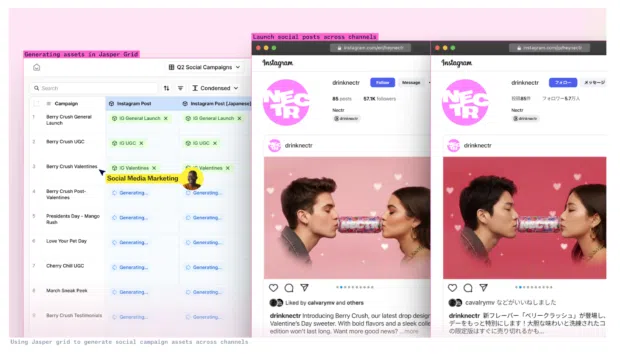
Jasper stands as a robust AI writing assistant tailored for large-scale marketing operations. Its core strength lies in its ability to maintain brand voice and tone consistency across vast content ecosystems, making it ideal for enterprise teams managing multiple brands, geographical regions, or linguistic requirements. Jasper’s standout feature, "Marketing Agents," comprises over 100 specialized AI modules designed to handle various stages of the content pipeline, from initial ideation to final drafting. This modular approach allows for highly customized content generation, ensuring that outputs align precisely with specific campaign objectives and brand guidelines stored within the system. The platform, priced from $69 per month per seat (billed annually), is positioned as a comprehensive solution for companies seeking to scale their content creation without compromising on brand integrity. However, it’s important to note that Jasper primarily focuses on content generation and requires integration with separate scheduling and publishing tools.
Anyword: Data-Driven Copy Performance
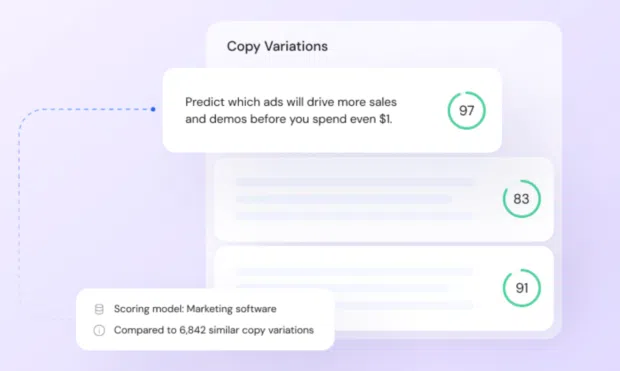
For social and performance marketing teams that prioritize data-backed decision-making, Anyword offers a distinct advantage. This AI copywriting tool differentiates itself by providing predictive performance scores for generated copy variations before publication. This feature allows marketers to select content based on anticipated engagement and conversion rates, moving beyond subjective judgments to evidence-based choices. Anyword’s algorithms analyze vast datasets to forecast how different headlines, calls to action, and body copy will resonate with target audiences, significantly reducing the guesswork in A/B testing. With plans starting at $39 per month (billed annually), Anyword emphasizes optimization, though performance predictions may be capped on lower-tier subscriptions, requiring consideration for high-volume users.
Claude: Flexible Multipurpose AI Assistance
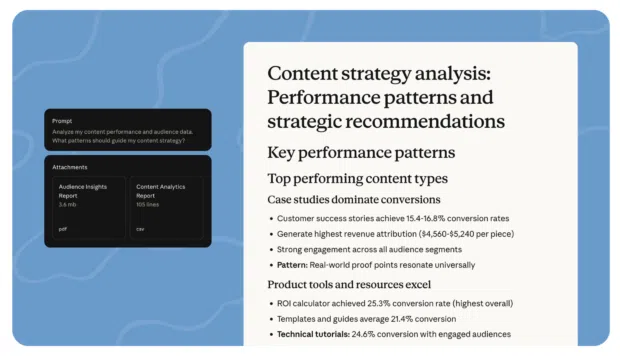
Claude, a general-purpose AI assistant, has garnered significant traction among solo marketers and teams seeking a versatile tool for writing and research. Renowned for its natural-sounding language generation, Claude excels at facilitating brainstorming sessions and producing coherent first drafts. Its "Projects" feature is particularly valuable, allowing users to upload and store brand guidelines, tone-of-voice rules, and reference materials. Claude then leverages this stored knowledge to ensure that all generated content adheres strictly to established brand parameters, simplifying the process of maintaining consistency. Offering a free tier and paid plans from $17 per month (billed annually), Claude provides accessibility, though its effectiveness is heavily reliant on the quality and specificity of the input prompts provided by the user.
Revolutionizing Visual Content: AI in Design
The visual appeal of social media content is paramount, and AI has made significant strides in democratizing graphic design, allowing marketers without specialized design skills to create stunning visuals. Canva, Adobe Express, and Ideogram are at the forefront of this revolution.

Canva (Magic Studio): Accessible Design for All
Canva, already a staple in many marketing toolkits, has significantly enhanced its capabilities with "Magic Studio," integrating AI into nearly every facet of its design process. This suite of AI features empowers users to generate images from text prompts, intelligently resize designs for optimal display across various social platforms (e.g., transforming an Instagram carousel into a Facebook Reel), and perform advanced photo edits without the need for complex professional software. The "Magic Layers" feature is particularly innovative, converting AI-generated images into editable components, allowing for precise adjustments to elements and text within the visual. Canva offers a free plan, with paid options starting at $12 per month (billed annually), though the number of AI image generations is subject to monthly caps, which may impact heavy users.
Adobe Express (with Firefly): Commercially Safe AI Visuals
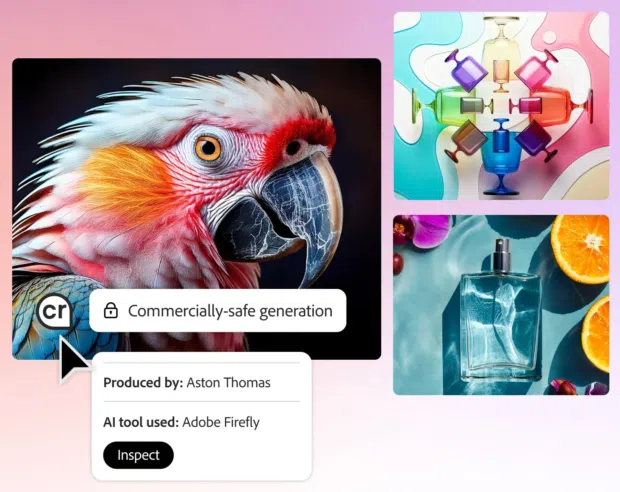
Adobe Express, powered by its generative AI, Firefly, addresses a critical concern for brands: the commercial safety of AI-generated images. Firefly is trained on licensed content, primarily Adobe Stock, making it a reliable choice for marketing teams wary of potential copyright issues associated with other AI image generators. This integration allows users to generate commercially safe images directly within their designs using simple text-to-image prompts. Adobe Express also boasts "Generative Fill," enabling seamless object removal or addition, and "Text to Template," which instantly transforms text prompts into editable templates. Available with a free plan and paid tiers from $9.99 per month, Adobe Express offers a user-friendly interface comparable to Canva, providing a robust solution for brands prioritizing legal compliance in their visual assets. While more advanced Firefly features reside in professional Adobe products like Photoshop, Express makes powerful AI design accessible.
Ideogram: Mastering Text-Heavy Graphics
Ideogram specializes in a niche yet crucial area of social media visuals: graphics that prominently feature text. Traditional AI image generators often struggle with rendering legible and accurate text within images, a challenge Ideogram has largely overcome. This tool excels at creating visuals where words are an integral design element, making it invaluable for event promotions, memes, quotes, and other social graphics where clear, integrated text is essential. Its strength in "Text Rendering" ensures that generated visuals accurately incorporate the specified text. Ideogram offers a free plan, with paid subscriptions starting at $15 per month (billed annually). A key consideration for users of the free plan is that all generated content is publicly displayed in Ideogram’s gallery, necessitating a paid tier for private campaign development.
Streamlining Video Repurposing for Multi-Platform Engagement

The dominance of short-form video on platforms like TikTok, Instagram Reels, and YouTube Shorts has made video repurposing a strategic imperative. AI tools are now automating the labor-intensive process of converting long-form content into engaging, bite-sized clips. OpusClip and Riverside are leading the charge in this domain.
OpusClip: Rapid Long-Form to Short-Form Conversion
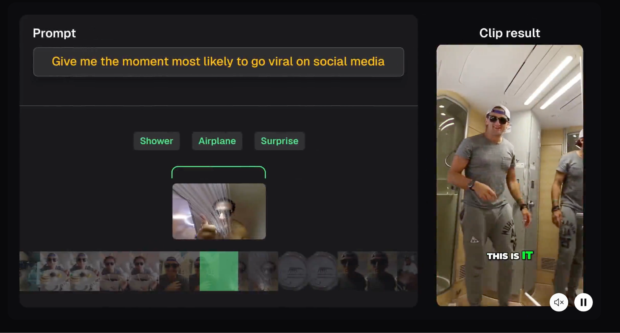
OpusClip is an AI-powered video repurposing tool designed to efficiently transform lengthy videos, such as webinars, podcasts, or presentations, into a steady stream of short-form clips optimized for various social channels. Its "ClipAnything" feature allows users to prompt the AI to identify and extract specific, high-impact moments from long videos. The tool then automatically trims these segments, adds dynamic captions, and optimizes them for vertical viewing formats, significantly reducing manual editing time. This makes OpusClip an ideal solution for content creators, solo marketers, and teams with substantial libraries of long-form video seeking to maximize their content’s reach. OpusClip offers a free plan (with watermarked exports) and paid plans from $15 per month (billed annually), operating on a credit-based system that users must monitor carefully for longer videos.
Riverside: Integrated Recording and Repurposing
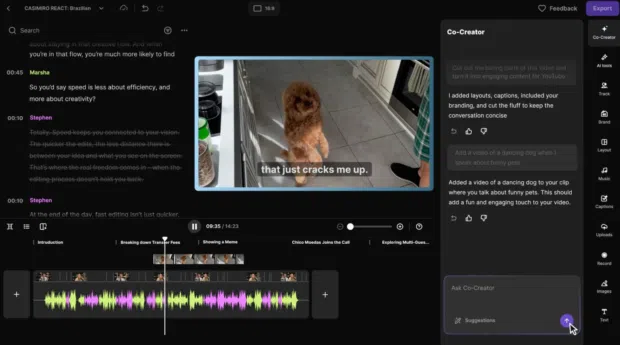
Riverside distinguishes itself by combining high-quality video recording capabilities with robust AI-driven repurposing features. Primarily a recording studio, Riverside allows users to capture podcasts, interviews, and webinars in resolutions up to 4K. Its integrated AI editing agent, "Co-Creator," then takes these recordings and generates short clips, compelling thumbnails, and various promotional assets. This end-to-end functionality makes Riverside an excellent choice for video and podcast teams that prefer a single platform for both content creation and its subsequent adaptation for social media. Available with a free plan and paid options starting at $24 per month (billed annually), Riverside’s full value is realized when utilized for both recording and repurposing, making dedicated repurposing tools potentially simpler for those with existing video libraries.
Integrated Platforms for End-to-End Workflow Efficiency
For marketing teams seeking a holistic solution that combines AI content creation with scheduling, publishing, and analytics, integrated social media management platforms are becoming indispensable. Perch by Hootsuite, Buffer, and SocialBee represent this advanced category.
Perch by Hootsuite: The All-in-One Social AI Hub
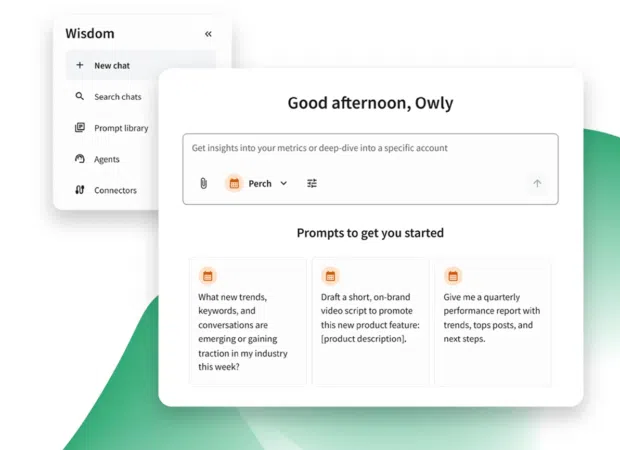
Perch by Hootsuite stands out as a comprehensive content creation, planning, and publishing platform, deeply integrated with Hootsuite’s proprietary AI, "Wisdom." Wisdom acts as a social-first AI agent, leveraging brand guidelines to brainstorm ideas, draft contextually relevant social copy, and suggest trending topics within specific industries. This unique integration allows teams to transition seamlessly from AI-generated ideas and drafts directly into their content calendar, eliminating the need to toggle between disparate tools. Perch further enhances workflow by integrating with popular design platforms like Canva and Adobe Express, facilitating the creation of on-brand visuals with ease. Priced from $99 per month per user, Perch caters to social teams of all sizes, offering a unified workflow from ideation to performance tracking, making it a powerful contender for those prioritizing efficiency and integration. While robust, video clipping functionalities are managed outside Perch, suggesting complementary use with video repurposing tools.

Buffer: Simplified AI-Assisted Scheduling
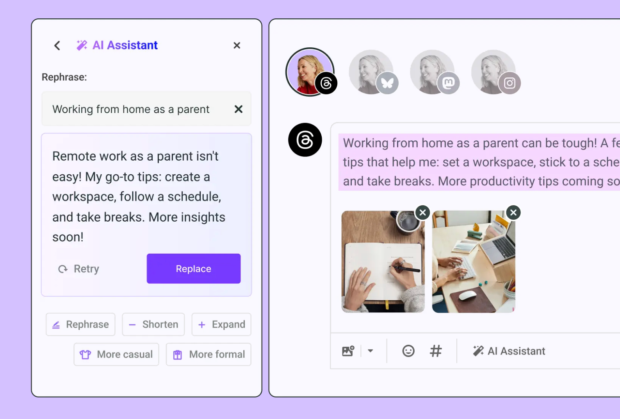
Buffer provides an AI-assisted social media scheduling tool designed for simplicity, making content creation and publishing accessible for solo marketers and small businesses. Its "AI Assistant" helps users brainstorm post ideas and adapt copy for different platforms and tones, ensuring messages are optimized for each channel. Buffer’s strength lies in its user-friendly interface and straightforward approach to content scheduling across a limited number of social channels. With a free plan and paid options starting at $5 per month per channel (billed annually), Buffer offers a cost-effective solution, though pricing scales with the number of connected social accounts, which can increase costs for larger operations.
SocialBee: Strategic Evergreen Content Recycling
SocialBee is a social media management tool built on the principle of maximizing the lifespan of high-performing content. It empowers solopreneurs, small teams, and agencies to maintain a consistent posting rhythm by organizing and recycling evergreen content on a predetermined schedule. The "Copilot" feature assists in building a comprehensive social strategy, including content pillars and a detailed posting plan. By automating the recycling of proven content, SocialBee ensures that social media queues remain consistently active, reducing the pressure to constantly generate new material. Starting at $24 per month (billed annually), SocialBee requires a more structured setup with content categories and recurring queues compared to simpler "write-and-schedule" tools, but delivers significant long-term efficiency for evergreen strategies.
Strategic Adoption: Expert Tips for AI Tool Selection
Choosing the right AI tool is a critical decision that impacts workflow, productivity, and content quality. Industry professionals emphasize a methodical approach, focusing on specific needs and integration capabilities.

Problem-First Approach: Kayla Bautista, Senior Manager, Social Media at NP Digital, advises, "The first question I ask is always, ‘What problem are we trying to solve?’ If a tool can streamline a repetitive task, improve collaboration, or help the team produce stronger work without unnecessary complexity, I think it’s worth exploring." This perspective stresses evaluating tools against existing workflow bottlenecks rather than adopting technology for technology’s sake.
Social-First Intelligence: Christina Botte, Director of Social Media at EGC Group, highlights the importance of social media specificity. "The first thing I check is whether it actually understands social, not just content in general," she states. "Does it know platform features, what’s trending, does it understand that TikTok and LinkedIn aren’t the same animal? If it’s giving me generic captions with zero context, I’m out." This underscores the need for AI that comprehends the nuances of different social platforms and their respective audiences.

Built-In Brand Controls: For larger teams, maintaining brand consistency is paramount. Lindsey Wallace, Director of Marketing at IntraTEM, emphasizes, "One thing we cannot compromise on is AI having the ability to have a design system in which your brand kit is already embedded company-wide. An entire team having access to the same design system with our fonts already uploaded, colors, brand guidelines, and everything in between is invaluable." Tools offering robust brand kit functionalities ensure uniformity across all generated content.
Accuracy vs. Cleanup Time: Sarah Bell, Founder and Head of Marketing at Personalized Creative, offers a pragmatic view on AI output: "It needs to be mostly accurate (we all know AI makes mistakes) and make our workflow move faster and more seamlessly. If it’s going to be more work than it’s worth to fix, we’re not using it." This suggests that efficiency gains must outweigh the effort required for human refinement. A practical tip during free trials is to assign the AI a real task and measure the editing time needed to reach publication quality.
Seamless Tech Stack Integration: Alexandra Novikava, B2B Marketer at Truck1, stresses the importance of integration: "I focus on the seamless integration into our tech stack – our CRM, scheduling tools, etc. That way, my team members won’t spend extra time constantly switching between tabs or manually entering information into different apps." Compatibility with existing tools is crucial to avoid creating new workflow inefficiencies.
Broader Impact and Future Outlook

The widespread adoption of AI in social media content creation heralds a new era for marketing. Beyond mere automation, these tools are fostering greater consistency in branding, enabling data-driven content decisions, and significantly boosting productivity. Marketers are now empowered to experiment with more creative ideas, analyze performance with greater granularity, and personalize content at scale, which was previously unfeasible.
The implications extend to the very structure of marketing teams. While some fear job displacement, the more prevalent outcome is a redefinition of roles, with marketers evolving into strategic orchestrators of AI, focusing on prompt engineering, ethical AI use, and the human element of storytelling that AI cannot replicate. The demand for critical thinking, creative direction, and analytical skills will intensify, complementing the AI’s generative capabilities.

Looking ahead, the integration of AI is expected to deepen, with more sophisticated models capable of understanding complex emotional nuances, predicting viral trends with higher accuracy, and even simulating audience reactions. The synergy between human creativity and artificial intelligence will continue to drive innovation, pushing the boundaries of what is possible in social media engagement. As these tools become more refined, the competitive advantage will increasingly go to teams that not only adopt AI but master its strategic application within a comprehensive, human-centric marketing framework.
In conclusion, the current generation of AI social media tools offers a powerful suite of capabilities, from generating compelling copy and stunning visuals to efficiently repurposing video and managing entire content calendars. For marketers navigating the dynamic world of social media, understanding and strategically deploying these AI innovations is no longer an option but a prerequisite for sustained success and competitive relevance in 2026 and beyond.