Yoast, a leading name in search engine optimization (SEO) tools for WordPress, has released Yoast SEO Premium version 27.6.1, a critical update addressing a security vulnerability found in the Redirect Manager component. This vulnerability, while significant in its potential impact, is reported to affect only a small subset of the plugin’s vast user base. The update is crucial for maintaining the integrity and security of WordPress websites, particularly those configured with specific redirect management settings.
The vulnerability, identified as an authenticated user .htaccess injection flaw, could allow a logged-in user with appropriate permissions to insert malicious configurations into a website’s .htaccess file. Depending on the nature of the injected code, the consequences could range from causing a complete site crash to, in the most severe scenarios, enabling remote code execution (RCE). Remote code execution is one of the most dangerous types of vulnerabilities, granting an attacker the ability to execute arbitrary commands on the server, potentially leading to full compromise of the website and underlying server infrastructure. Yoast has emphasized that despite the severity of the potential impact, internal reviews of affected configurations have found no evidence of exploitation, and no known cases of abuse have been reported to date.
Understanding the Technical Vulnerability
The core of the issue lies within Yoast SEO Premium’s Redirect Manager when it is configured to use .htaccess mode. The .htaccess file is a powerful, distributed configuration file used by Apache web servers to control various aspects of a website’s operation, including URL rewriting, access restrictions, custom error pages, and server-side configurations. Its power stems from its ability to override global server settings on a per-directory basis, making it an invaluable tool for website administrators but also a critical security point if compromised.
The vulnerability specifically allowed an authenticated user – meaning someone with a legitimate login to the WordPress site, even if not necessarily an administrator – to inject unexpected configuration directives into the .htaccess file. This was possible by including special characters within a redirect URL, which the Redirect Manager failed to properly sanitize or escape before writing to the configuration file. An attacker leveraging this flaw could, for instance, insert directives to redirect all traffic to a malicious site, disable security features, or even execute arbitrary server-side scripts. The path to remote code execution typically involves injecting specific commands that the Apache server would then interpret and execute, granting the attacker control over the server environment.
Yoast’s Assessment of User Impact
Yoast has provided a clear set of criteria to determine if a website is potentially at risk. The vulnerability only affects sites where all three of the following conditions are met:
- The website is running Yoast SEO Premium, Yoast WooCommerce SEO, or Yoast SEO AI+.
- The Redirect Manager feature within the plugin is actively being used.
- The Redirect Manager is specifically configured to operate in
.htaccessmode.
The company estimates that "the vast majority of users are not impacted," indicating that many users either do not use the Redirect Manager or have it configured in a different mode (e.g., PHP redirects, which would not interact with the .htaccess file in the same vulnerable way). This distinction is crucial for understanding the scope of the immediate threat. However, for those meeting these three conditions, the risk is substantial, necessitating prompt action.

The Remedial Measures: What’s Fixed in 27.6.1
Yoast’s engineering team responded swiftly to address the vulnerability, implementing a multi-layered defense strategy in version 27.6.1. The patch includes three primary layers of protection designed to prevent similar injections and bolster the overall security of the Redirect Manager:
- Strict Input Validation and Sanitization: The update introduces more robust validation and sanitization processes for all input entered into the Redirect Manager, particularly for URL paths and targets. This ensures that any special characters that could be misinterpreted as
.htaccessdirectives are properly neutralized or rejected. - Enhanced Escaping of Special Characters: When writing redirect rules to the
.htaccessfile, the plugin now employs more sophisticated escaping mechanisms. This ensures that characters intended as literal parts of a URL or path are treated as such, preventing them from being interpreted as executable commands or configuration directives by the Apache server. - Improved Internal Logic and Error Handling: The plugin’s internal logic for constructing and managing
.htaccessrules has been fortified. This includes checks and balances designed to prevent the formation of malformed or potentially malicious directives, even if some unusual input were to bypass initial validation layers. This proactive error handling aims to safeguard the.htaccessfile from unexpected modifications.
These comprehensive fixes aim to close the injection vector entirely, protecting websites from the serious implications of a compromised .htaccess file.
Call to Action and User Guidance
Yoast strongly urges all users of Yoast SEO Premium, Yoast WooCommerce SEO, and Yoast SEO AI+ to update their plugins to version 27.6.1 immediately. The update process is straightforward and can be completed from the WordPress plugins screen by a site administrator in under two minutes.
For users who meet the three aforementioned conditions (using premium Yoast products, Redirect Manager active, .htaccess mode enabled), updating "as soon as possible" is critical. Even for those who do not meet these specific criteria, Yoast recommends updating as a general best practice for plugin maintenance. Keeping all plugins, themes, and the WordPress core up-to-date is a fundamental aspect of website security, patching known vulnerabilities and improving overall performance.
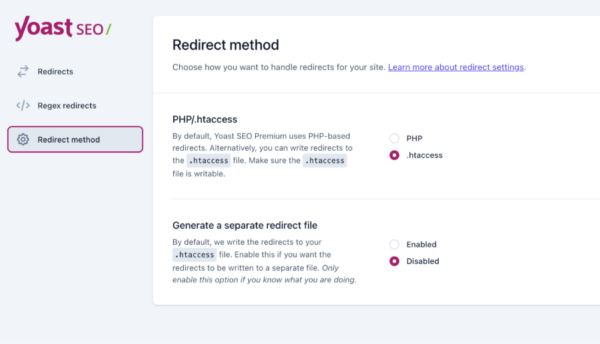
To ascertain whether a site is affected, administrators can navigate directly to their redirect settings page: [www.yoursite.com]/wp-admin/admin.php?page=wpseo_redirects#/redirect-method. If the "Redirect Method" setting does not show .htaccess mode as enabled, the site is not at risk from this specific vulnerability. However, the general recommendation to update still stands. Yoast has also confirmed that a full security advisory detailing the vulnerability and its remediation will be published soon, providing further technical insights for security professionals and interested parties. In the interim, their support team remains available for any questions or concerns.
The Broader Context: WordPress Security Landscape
This incident highlights the ongoing challenges in maintaining security within the vast and dynamic WordPress ecosystem. With WordPress powering over 43% of all websites globally, its security is a paramount concern for millions of site owners. The platform’s extensibility, primarily through plugins and themes, is both its greatest strength and its most significant security challenge. Yoast SEO, with over 5 million active installations for its free version alone, represents a critical component of many WordPress sites, making any vulnerability in its premium offerings a matter of widespread attention.
Plugin vulnerabilities are a common attack vector for WordPress sites. Statistics consistently show that out-of-date or poorly coded plugins account for a significant percentage of website breaches. This is why reputable plugin developers like Yoast invest heavily in security audits, responsible disclosure processes, and rapid patching mechanisms. The .htaccess file, in particular, has been a target for attackers due to its immense power in controlling server behavior. Malicious modifications can lead to search engine de-listing, spam injections, malware distribution, or complete site hijacking.
Chronology of Events (Inferred)
- Pre-27.6.1 Release: The vulnerability existed in previous versions of Yoast SEO Premium, Yoast WooCommerce SEO, and Yoast SEO AI+.
- Discovery: Yoast’s internal security team or an external security researcher likely identified the
.htaccessinjection vulnerability. The proactive review of sites post-discovery suggests an internal finding or a responsible disclosure from a security professional. - Vulnerability Assessment & Patch Development: Upon discovery, Yoast’s engineering team would have conducted a thorough assessment of the vulnerability’s scope and potential impact, then initiated development of the necessary patches. This includes implementing the three layers of protection outlined.
- Testing & Quality Assurance: Rigorous testing would have been performed to ensure the patch effectively resolves the vulnerability without introducing regressions or new issues to the plugin’s functionality.
- May 2024: Release of Yoast SEO Premium 27.6.1, containing the security fix, accompanied by an urgent communication to users.
- Near Future: Publication of a comprehensive security advisory, offering detailed technical information about the vulnerability, its fix, and potentially any external security researchers involved in its discovery.
Industry Perspectives and Expert Commentary
Cybersecurity experts consistently advocate for a proactive approach to website security, a message underscored by incidents like this. Recommendations often include:
- Regular Updates: Keep all software components – WordPress core, themes, and plugins – updated to their latest versions. This is the single most effective defense against known vulnerabilities.
- Reputable Plugins: Use plugins and themes from trusted developers with a strong track record of security and regular maintenance.
- Layered Security: Implement multiple layers of security, including strong passwords, security plugins (firewalls, malware scanners), regular backups, and secure hosting environments.
- Principle of Least Privilege: Grant users only the minimum necessary permissions. This limits the potential damage if an authenticated user account is compromised. In this specific case, even an authenticated user with limited permissions could potentially exploit the flaw if they had access to the Redirect Manager.
- Security Audits: Periodically perform security audits or penetration testing to identify and remediate vulnerabilities before they can be exploited.
Implications for Website Administrators and the Ecosystem
For website administrators, this incident serves as a stark reminder of the continuous vigilance required in managing online assets. The rapid response from Yoast is commendable, demonstrating their commitment to user security. However, the responsibility ultimately rests with site owners and administrators to implement these updates promptly. Failure to do so could lead to significant business disruption, reputational damage, data loss, or even legal repercussions if customer data is compromised.
Beyond individual websites, such vulnerabilities have broader implications for the WordPress ecosystem. They highlight the collective responsibility of developers, hosting providers, and users to maintain a secure environment. Continuous investment in secure coding practices, thorough security reviews, and transparent communication about vulnerabilities are essential for fostering trust and ensuring the long-term health of the platform. Yoast’s swift action, transparent communication, and clear guidance for users reinforce its position as a responsible and trustworthy vendor in the competitive plugin market.
In conclusion, the release of Yoast SEO Premium 27.6.1 is a critical security update that addresses a serious .htaccess injection vulnerability. While the immediate impact is limited to a specific configuration, the potential for remote code execution makes it imperative for affected users to update without delay. For all other users, updating remains a fundamental best practice in maintaining a secure and robust online presence. This event underscores the dynamic nature of web security and the perpetual need for vigilance and timely action from all stakeholders in the digital landscape.