

Digital marketing landscapes are undergoing a significant shift as brands move away from broad-spectrum advertising toward more personalized, first-party data collection methods. At the center of this transition is the website popup, a tool often maligned by users but increasingly vital for lead generation and e-commerce stability. While many industry reports offer recycled figures, a deep dive into primary source data reveals a complex reality where the difference between a high-converting asset and a brand-damaging intrusion lies in timing, design, and technical execution.
The Current State of Popup Conversion Benchmarks
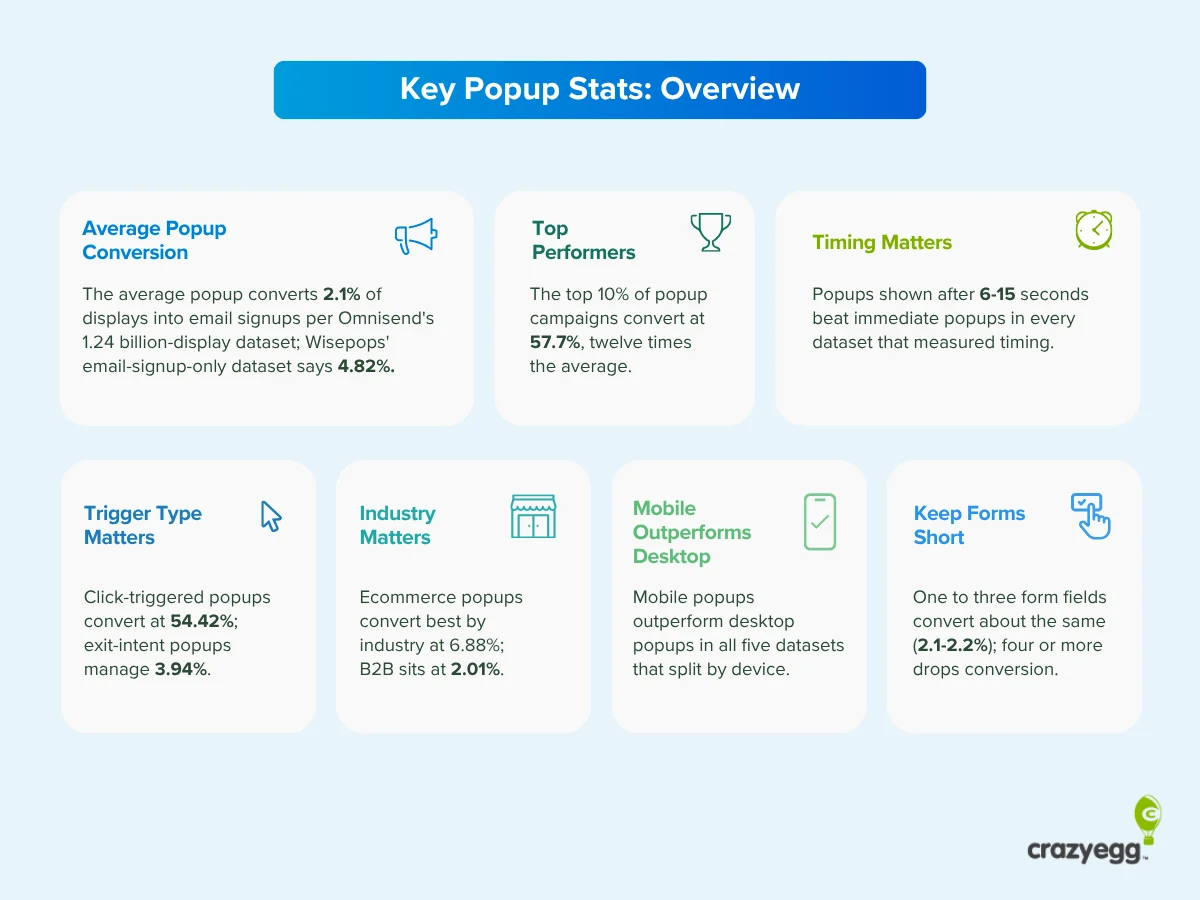
Recent data indicates that the average email popup conversion rate fluctuates between 0.25% and 5%. This broad range is largely dictated by the specific metric being measured. When calculating conversions based on every single page view or display, the numbers typically hover in the low single digits. However, when the denominator is narrowed to include only those visitors who actively engaged with the popup or remained on the page long enough to process the message, conversion rates often triple.
Industry analysts suggest that a "good" conversion rate for a standard newsletter popup falls within the 1.5% to 5% range. While top-tier campaigns occasionally see double-digit returns, these are often considered outliers resulting from highly specific, time-limited offers or "gamified" elements. For example, spin-to-win wheels and other interactive widgets have been shown to convert at rates 2 to 10 times higher than static forms.
Chronology of the Popup: From Intrusion to Interaction
The history of the popup window is one of constant friction between marketing goals and user experience.
- The Early Era (1990s – 2000s): Invented by Ethan Zuckerman at Tripod.com, the original popup was designed to link advertisements to content without implying an endorsement. This era was defined by "un-closable" windows and aggressive browser-level exploits.
- The Suppression Era (Mid-2000s): Browser manufacturers like Mozilla and Google introduced native popup blockers, leading to the rise of "pop-unders" and eventually the modern "modal" window, which exists within the webpage’s code rather than a separate browser instance.
- The Mobile Revolution (2010s): As traffic shifted to mobile, intrusive interstitials became a primary point of frustration, leading Google to issue its first major mobile interstitial penalty in 2017.
- The Privacy Era (2020 – Present): With the decline of third-party cookies and the implementation of GDPR and CCPA, popups have evolved into essential tools for gathering "zero-party data"—information that customers intentionally and proactively share with a brand.
Sector-Specific Performance and Behavioral Triggers
Data segmented by industry reveals a stark divide in how users interact with overlays. E-commerce platforms generally see the highest engagement, with conversion rates often exceeding 3.75%. In contrast, B2B (business-to-business) services see lower averages, typically around 1.04%. This disparity is attributed to the "immediate gratification" factor of e-commerce, where a popup often offers a tangible discount code that can be used instantly.
The timing of a popup is perhaps the most critical factor in its success. Journalistic analysis of user behavior shows that popups appearing immediately upon page load are frequently dismissed as "digital noise." Conversely, popups delayed by 6 to 10 seconds tend to outperform immediate ones. Even more effective are "engagement-triggered" popups. Click-triggered popups—those that appear only after a user clicks a specific link or button—reportedly convert 13 times better than exit-intent popups. This is because the user has already demonstrated a high level of intent before the form appears.
The Design Variable: Complexity and Visual Cues
Design datasets often present conflicting views on what drives conversion, but several consistent trends have emerged. Multi-step popups, which ask for a small initial commitment (like clicking "Yes, I want a discount") before asking for an email address, consistently outperform single-step forms. This psychological phenomenon, known as the "Zeigarnik Effect," suggests that people are more likely to finish a process once they have started it.
Other key design findings include:
- Visual Assets: Popups featuring high-quality imagery tend to see higher engagement, though the impact varies by industry.
- Countdown Timers: These create a sense of "Loss Aversion," a cognitive bias where the pain of losing out on a deal is more powerful than the joy of gaining it.
- Field Count: There is an inverse relationship between the number of input fields and the conversion rate. Each additional field beyond a name and email address typically results in a measurable drop-off in completions.
Mobile Performance and Regulatory Compliance
In a surprising turn for many desktop-first marketers, mobile popups often outperform their desktop counterparts in terms of raw conversion percentages. However, this comes with significant technical and SEO risks. Google’s Search Central documentation, updated as recently as 2025, warns that intrusive interstitials that obstruct a user’s view of the primary content can severely hurt search rankings.
To mitigate this risk, modern digital strategies have shifted toward "sticky bars" or "slide-ins" on mobile devices. These elements occupy less screen real estate and do not trigger the same algorithmic penalties as full-screen takeovers. The industry consensus is that mobile popups must be easily dismissible and should ideally be triggered by user action rather than automated timers.
The Psychological Impact: Brand Sentiment vs. Conversion
While the raw data supports the effectiveness of popups for lead generation, qualitative studies from organizations like the Nielsen Norman Group and the Baymard Institute highlight a growing "overlay overload." A 2021 study found that competing or stacked popups leave users so frustrated that their overall opinion of the brand degrades significantly.
In usability testing of major e-commerce sites, many users were observed reflexively closing newsletter popups without even reading the headline. Some participants categorized these interactions as "spam," regardless of the value of the offer. This suggests that while a popup might successfully capture an email address, it could simultaneously increase the "bounce rate" or decrease the lifetime value of a customer by creating a negative first impression.
Technical Optimization: The Three-Step Framework
For brands looking to balance conversion with user experience, industry experts recommend a rigorous optimization loop:
1. Baseline Measurement: Marketing teams must move beyond "vanity metrics." A true conversion rate should be calculated as (Submissions ÷ Displays) and must be segmented by device, traffic source, and specific page URL.
2. Behavioral Analysis: Utilizing heatmaps and session recordings is essential for diagnosing friction. "Rage clicks"—where a user clicks rapidly on a non-responsive area or struggles to find the "X" to close a window—are a primary indicator that a popup is poorly designed or timed.
3. Controlled A/B Testing: Professional newsroom analysis of marketing trends suggests that testing one variable at a time is the only way to achieve statistical significance. Variables typically tested include the headline, the primary call-to-action (CTA) button color, and the specific incentive offered (e.g., "10% off" vs. "Free Shipping").
Implications for the Future of Digital Marketing
The business impact of popups extends far beyond the initial opt-in. A lead’s true value is determined by downstream behavior. For instance, if an e-commerce site has a 4.82% popup conversion rate but a low campaign click-through rate, they may need upwards of 12,000 popup views to generate a single sale.
The shift toward "Cart Recovery" popups represents the most direct link to revenue. Recent Shopify-specific studies suggest that the median recovered order value from a well-timed cart-abandonment popup is approximately $98. However, analysts caution that these figures must be weighed against the cost of the discounts provided to entice the customer back.
As we move further into 2025, the role of the website popup will likely continue to transition from a broad-reaching "interruption" to a highly targeted "assistance" tool. The most successful brands will be those that treat the popup not as a way to force an interaction, but as a way to provide value at the exact moment a user requires it. In the competitive landscape of digital attention, the goal is no longer just to get a click, but to maintain a relationship without sacrificing the integrity of the user experience.







