

The digital marketing ecosystem is undergoing a significant transformation, placing unprecedented emphasis on subscriber control and data privacy. A recent forecast for email in 2026 highlighted a growing trend: more brands are dedicating resources to promote their preference centers, recognizing the imperative to empower subscribers with greater autonomy over their communication frequency and content. This strategic shift is not merely a best practice; it has become a critical necessity for maintaining engagement and combating rising unsubscribe rates.
The Shifting Sands of Email Engagement: A Chronology of Change
The landscape of email marketing has been profoundly reshaped by a series of pivotal developments. Historically, email campaigns often prioritized volume over relevance, a strategy that is increasingly unsustainable. The introduction of Apple’s Mail Privacy Protection (MPP) in September 2021 marked a watershed moment. MPP, which effectively masks users’ IP addresses and pre-loads email content, made traditional pixel-based open rate tracking less reliable. This pushed email marketers to pivot away from simplistic engagement metrics and focus on more substantive indicators like click-through rates and conversions, inherently requiring a deeper understanding of subscriber intent.
Further accelerating this trend, research from Mailerlite revealed a stark reality: year-on-year unsubscribe rates more than doubled from 2024 to 2025. This dramatic increase is largely attributed to proactive changes implemented by major mailbox providers (MBPs) like Gmail. In early 2024, Gmail, followed by Yahoo, rolled out stringent new sender requirements, including a one-click unsubscribe option prominently displayed in the email header for bulk senders. This user-centric enhancement, while beneficial for subscriber control, simultaneously lowered the barrier to opting out, forcing brands to re-evaluate their engagement strategies. The primary drivers behind these opt-outs and spam complaints remain consistent: "too many emails" and "messages not relevant." Paradoxically, a significant portion of these departing subscribers would have preferred to adjust their email frequency or content preferences rather than severing ties entirely, had they been adequately empowered to do so.
Adding another layer of complexity, AI-fueled developments across MBPs are making inbox engagement more important than ever. AI algorithms are increasingly sophisticated at discerning user preferences and filtering out irrelevant content, meaning emails that consistently fail to resonate risk being shunted to spam folders or de-prioritized. In this environment, the ability to deliver hyper-relevant content, tailored to individual subscriber tastes, is paramount.
The Underutilized Asset: Why Preference Centers Fall Short
Despite the clear benefits, many brands continue to underutilize their email preference centers. A prevalent issue identified by industry practitioners is that the link to the preference center is often buried in the tiny, inconspicuous footer text of emails, severely limiting its organic discovery. The consensus among marketers is not a lack of subscriber interest in customizing their experience, but rather a profound lack of awareness regarding the existence and utility of these tools. This oversight represents a significant missed opportunity, as preference centers are not just a compliance mechanism but powerful engines for personalization and data collection.
The Tangible Rewards of Empowerment: Data-Driven Success
The payoff for actively promoting and utilizing preference centers is unequivocally proven. A study published by Single Grain highlighted an e-commerce client who, after implementing a tiered preference center, achieved a remarkable 189% increase in email engagement and a substantial 76% decrease in unsubscribes. This demonstrates a direct correlation between giving subscribers control and fostering a more active, loyal audience. Similarly, research conducted by Oracle revealed that senders who incorporated a "snooze" option into their email preference centers saw an average reduction of 82% in unsubscribes. The ability to temporarily pause communications, rather than permanently opting out, acts as a crucial safety net for subscriber relationships. These figures underscore a fundamental truth: when subscribers feel respected and in control, they are more likely to remain engaged and value the brand’s communications.
This strategic imperative means email senders must transition from passively offering preference centers to proactively promoting them and actively encouraging subscriber interaction. The goal is to transform these centers into dynamic interfaces that unlock valuable zero-party data—information directly and willingly provided by the customer—which is increasingly vital in a world moving beyond third-party cookies.
Strategic Approaches to Elevating Preference Center Awareness and Usage
Effective promotion of preference centers requires a multi-faceted approach, integrating awareness campaigns with strategic placement and clear value propositions.
1. General Promotion: The Foundational Message
Even the simplest message, dedicated to raising awareness of your preference center and guiding subscribers to its location, is a significant improvement over inaction. Brands like Chanel have adopted this approach, providing a straightforward explanation of how subscribers can leverage the tool to tailor their marketing communications to align with their specific interests. This foundational step ensures that the option is at least known.
2. Welcome Email and Onboarding Series Integration
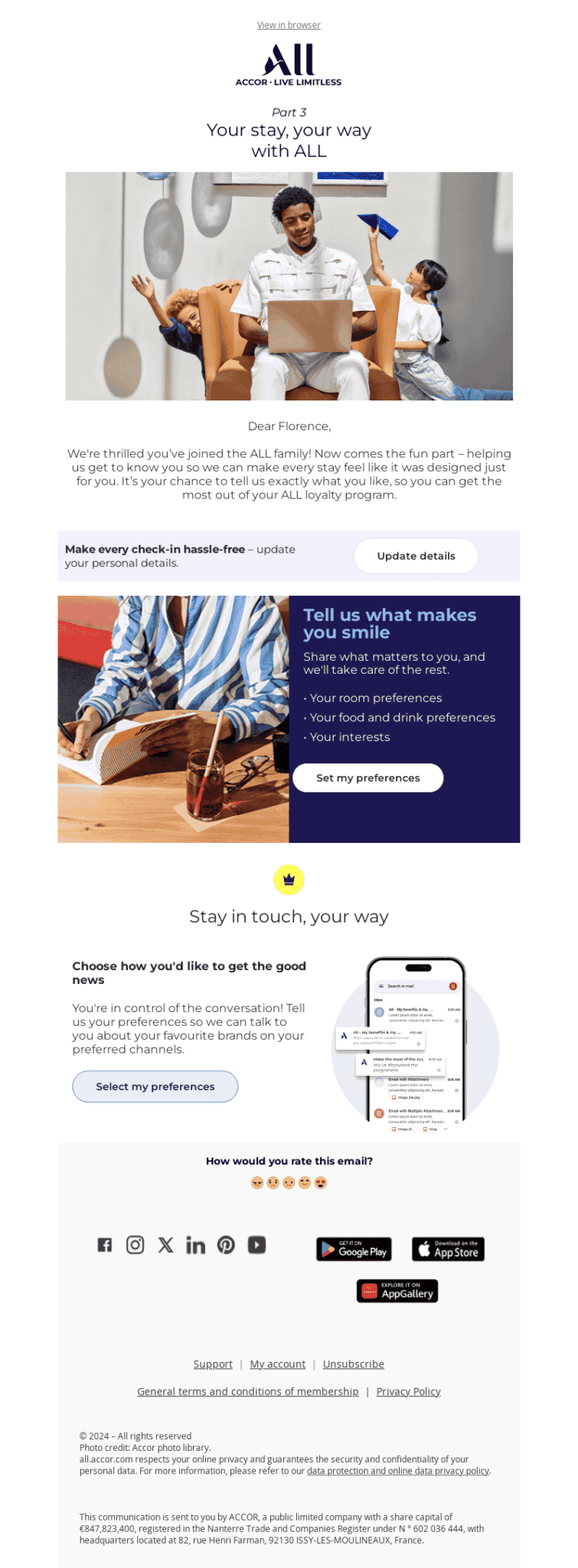
The welcome email, often the first interaction a new subscriber has with a brand, represents prime real estate for preference center promotion. New subscribers are typically at their peak engagement and most receptive to shaping the nature of their ongoing relationship. Mizuno, for instance, ingeniously uses a sporting theme in its subject line, inviting new subscribers to "be part of the first team, not the reserves," subtly encouraging them to customize their experience. Brands with more extensive onboarding series, such as Accor Hotels for new loyalty members, can dedicate an entire message to the benefits of setting preferences, linking it to better check-ins, perfect room selections, and preferred communication channels. This early intervention establishes a precedent for personalized engagement.
3. Progressive Profiling: Building Data Over Time
Progressive profiling is a sophisticated strategy that mitigates subscriber fatigue by not attempting to collect all preference data at once. Instead, brands build customer profiles gradually, starting with essential information and enriching it over time through periodic, focused check-ins. The key is to prioritize data points most critical for immediate relevance. Skyscanner, for example, understands that a customer’s preferred airport is a fundamental piece of information for delivering relevant travel deals, making it an initial profiling target. Similarly, capturing a subscriber’s date of birth provides an excellent opportunity for personalized birthday surprises, strengthening the customer relationship while also yielding valuable insights into age, life stage, and potential buying power.
4. Interactive Engagement: Gamification for Data Capture
Incorporating interactive elements, or gamification, can significantly boost engagement with preference centers. Oceania Cruises exemplifies this by asking subscribers to "Choose which destination interests you most," accompanied by a running counter showing the popularity of each option. This playful approach not only captures valuable insights into subscriber interests but also makes the data submission process more enjoyable and less like a chore. Over time, these interactive polls build a rich, self-declared body of customer data.
5. Explaining the Benefits: The "What’s In It For Me?" Factor
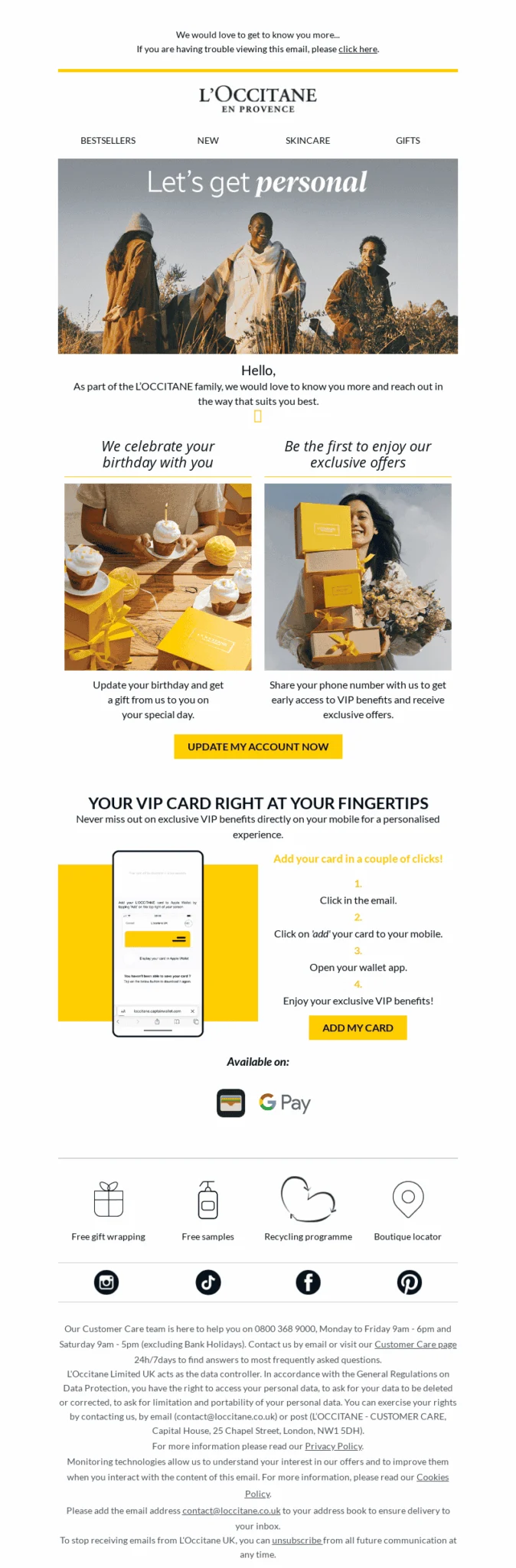
Subscribers are more likely to act when they clearly understand the personal benefits. L’Occitane effectively communicates the value proposition by highlighting "early access to exclusive offers" and a "birthday gift" for those who update their preferences. They further elaborate on the scope of customization, covering new products, personalized offers, special events, and even alternative communication channels like text, post, or WhatsApp. This comprehensive explanation frames the preference center as a gateway to enhanced value and convenience.
6. Providing Incentives: Hard Proof of Value
While "soft" benefits like early access are appealing, some subscribers require more tangible incentives to share their data. Recognizing that their data has intrinsic value, these subscribers expect something in return. A discount or a small gift with purchase serves as an effective incentive. This strategy offers a dual benefit: it encourages preference center engagement, and the discount itself typically only pays off with a subsequent purchase, ensuring a win-win for both the subscriber and the brand.
7. Opting Out from Emotionally Sensitive Events
A growing trend involves emails inviting subscribers to opt out of emotionally sensitive dates such as Valentine’s Day, Mother’s Day, or Father’s Day. While well-intentioned, the sheer volume of these pre-emptive opt-out emails can inadvertently amplify the very sensitivities they aim to mitigate. A more integrated and less intrusive approach is to build these as one-time, permanent options within the preference center. Brands are becoming increasingly specific: Interflora offers an anniversary opt-out, Bloom & Wild allows subscribers to mute Grandparent’s Day, and Hotel Chocolat enables customers to suppress alcohol-related promotions. This empowers subscribers with discrete control without the need for repetitive, potentially triggering emails.
8. Holiday Season Management: Temporary Snooze Options
Revenue-critical periods like Black Friday and Cyber Monday often lead to a significant increase in email volume, which can overwhelm some subscribers. Offering a temporary "snooze" option for these intense periods, as demonstrated by Bvlgari, is far more effective than forcing subscribers into a permanent "unsubscribe from all." As Oracle’s research confirms, a short-term pause preserves the long-term subscriber relationship. Alternatively, the run-up to sales can be used as an opportunity for a relevance check. Spoonflower, for example, proactively engages subscribers with the message "no one likes a cluttered inbox!" and a smart call-to-action: "Curate My Content."
9. Increased Visibility: Pre-headers and Dedicated Content Blocks
Beyond dedicated campaigns, every email should contribute to promoting the preference center. Two tactical placements stand out for their impact:
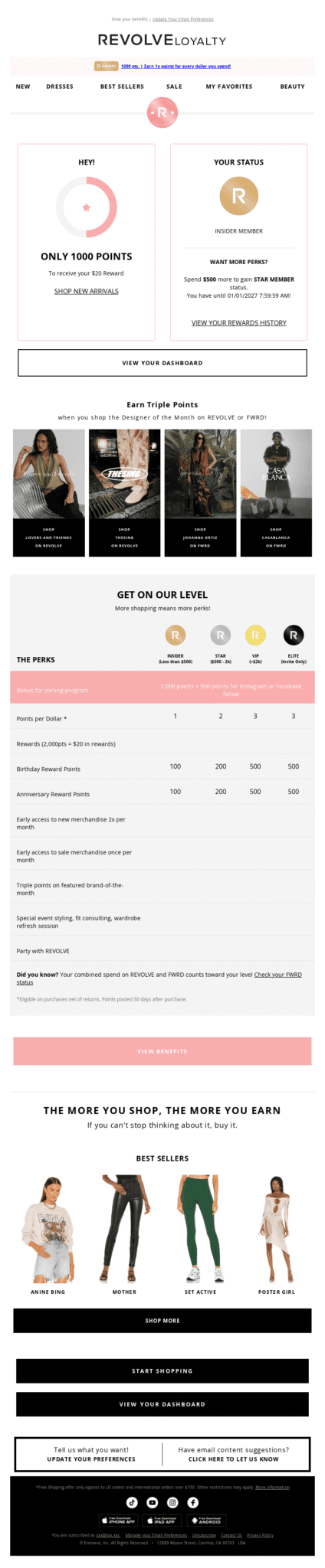
- Pre-headers: Historically recommended for unsubscribe links to build trust and reduce spam complaints, the pre-header is equally effective for preference center promotion. Its prominent placement ensures visibility even before the email is fully opened. REVOLVE effectively integrates a preference link in its pre-header, linking it to loyalty status updates.
- Dedicated Content Blocks: Incorporating a consistent content block within regular emails ensures that the preference center message is continuously reinforced. This approach, exemplified by Bloom & Wild, allows subscribers to easily manage multiple event opt-outs or content preferences without waiting for a specific promotional email.
10. Re-engagement Campaigns: A Last Opportunity
For subscribers who have become disengaged, promoting the preference center as part of a win-back campaign offers a crucial alternative to outright unsubscribing. It provides a final opportunity for the subscriber to tailor their experience before leaving permanently. CVS Pharmacy effectively implements this by restating the benefits of remaining subscribed, inviting feedback, and concluding with a commitment-oriented call-to-action: "Yes, I still want emails." This strategy transforms a potential loss into a renewed, more personalized relationship.
Strategic Implementation: Building a Personalization Engine
The most effective preference centers function as sophisticated personalization engines, acting as the initial conversation starter for gathering zero-party data. To maximize their potential, brands should focus on:
- Clarity and Simplicity: Ensure the preference center is intuitive, easy to navigate, and clearly explains the impact of each choice.
- Tiered Options: Offer varying levels of control, from frequency adjustments to specific content categories, catering to different subscriber needs.
- Mobile Optimization: Guarantee a seamless experience across all devices, as a significant portion of email consumption occurs on mobile.
- Feedback Mechanisms: Include options for subscribers to provide qualitative feedback, offering deeper insights into their preferences.
- Dynamic Updates: Ensure that changes made in the preference center are immediately reflected in future email communications.
The ultimate measure of success for a preference center lies in its demonstrable link to stronger email marketing engagement. If the subscribers who actively utilize the preference center exhibit higher click-through rates, increased spend, and improved overall engagement metrics, it provides a robust business case for continued investment in and optimization of the email program. This data-driven validation transforms preference centers from mere compliance tools into strategic assets for fostering long-term customer relationships and driving commercial success.
In an era defined by heightened privacy concerns and evolving algorithmic intelligence, prioritizing the subscriber experience through robust and well-promoted preference centers is no longer optional. It is a fundamental pillar of sustainable and effective email marketing. Tools like Litmus Personalize offer capabilities to create engaging, dynamic emails that leverage these preferences, while platforms such as Validity Engage provide AI-powered email intelligence to remove risk and boost performance, ensuring brands can navigate this complex landscape with confidence and deliver exceptional results.








