Global digital ad spend is on an unprecedented trajectory, projected to surpass $740 billion by 2026. This escalating investment underscores the critical role of digital advertising, but it also highlights a significant operational challenge: the proliferation of marketing channels outpaces the ability of most teams to effectively coordinate them. Enter cross-channel marketing, a strategic discipline designed to bridge this gap by orchestrating customer engagement across paid, owned, and earned media. This approach ensures that data from each channel informs the messaging and timing of others, transforming individual campaign elements into a cohesive, continuous customer experience rather than a series of disjointed repetitions.
For over a decade, professionals immersed in the complexities of marketing departments of varying scales have grappled with the inherent challenges and opportunities presented by cross-channel marketing. This comprehensive guide delves into the foundational principles of cross-channel marketing, outlines practical execution strategies, and provides illustrative examples to contextualize its impact.
At its core, cross-channel marketing is a synchronized strategy for customer engagement that spans multiple interconnected channels—paid, owned, and earned. The defining characteristic is the dynamic interplay of data, where insights gleaned from one channel actively shape the communication and timing on others. This synergy ensures that a campaign feels like a singular, unfolding narrative rather than a cacophony of disparate messages. Operationally, a successful cross-channel campaign is built upon three foundational pillars: a unified audience definition disseminated across all platforms, a consistent creative system that adapts natively to each channel’s unique requirements, and a singular measurement framework that aggregates channel-level data to address a unified return on investment (ROI) objective. The absence of any of these three elements often relegates a campaign to mere multichannel marketing, a strategy that, while offering broad reach, lacks the sophisticated coordination that defines cross-channel success.
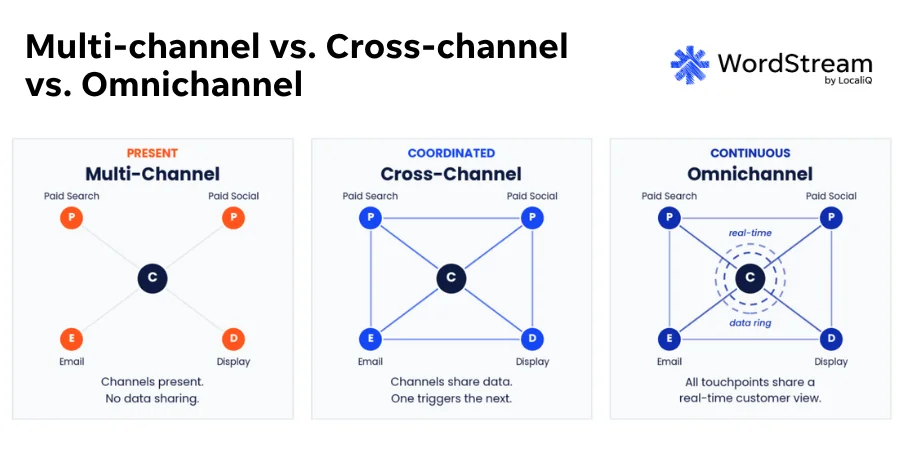
The "multichannel trap" refers to the common pitfall of running advertisements across various platforms like Google, Meta, and email lists without establishing data sharing or signal integration between them. This approach, while expanding coverage, falls short of true cross-channel coordination. Multichannel marketing is about presence; cross-channel marketing is about purposeful integration and intelligent sequencing.
Cross-Channel vs. Multichannel vs. Omnichannel Marketing: A Strategic Distinction
A frequent source of confusion in the marketing landscape lies in differentiating between cross-channel, multichannel, and omnichannel strategies. A simplified heuristic suggests: multichannel equates to presence, cross-channel signifies coordination, and omnichannel represents an all-encompassing experience that seamlessly integrates offline and online touchpoints.

A more detailed examination reveals the nuanced differences:
| Dimension | Multi-Channel | Cross-Channel (Recommended) | Omnichannel |
|---|---|---|---|
| Channels share data? | No | Yes (channel to channel) | Yes (every channel, in real time) |
| Customer view | Per-channel | Unified for campaign | Unified across all marketing, service, and commerce |
| Trigger logic | Channel-by-channel | One channel’s behavior triggers another | Any touchpoint can trigger any other, including non-marketing (support, in-store) |
| Tech requirement | Ad platforms + email tool | Marketing automation + CDP-lite + shared audiences | Full CDP + identity resolution + service / commerce integration |
| Realistic for SMBs? | Yes | Yes (focus of this guide) | Aspirational for most SMBs |
| Example | Google Ads, Meta, and an email newsletter that don’t talk to each other. | A search ad click triggers a Meta retargeting impression, then a triggered email at hour 24. | A retail customer browses the app, gets a push, walks into a store, and the associate sees their cart. |
For most small and medium-sized businesses (SMBs) and mid-market enterprises, the strategic goal should be to achieve cross-channel integration. Omnichannel, while the ultimate aspiration for a fully unified customer experience, often requires a robust data infrastructure and technological sophistication that may be beyond the immediate reach of many organizations. The journey toward omnichannel typically begins with mastering cross-channel coordination.
The Building Blocks of a Cross-Channel Marketing Mix
The specific composition of a cross-channel marketing mix is highly dependent on the unique characteristics and objectives of a business. It is fundamentally a blend of multiple channels that are designed to share audiences and signals dynamically. While marketers currently utilize an average of 10 customer engagement channels, high-performing marketers are adept at personalizing experiences across approximately six of these channels, according to Salesforce’s State of Marketing Report. The gap between the number of channels utilized and the number effectively coordinated represents the core of the cross-channel challenge. As the channel landscape continues to expand, the critical differentiator remains the ability to achieve meaningful coordination.
It is important to note that cross-channel marketing does not necessitate the implementation of every available channel. Instead, it mandates that the channels chosen for a campaign are integrated in terms of audience sharing, trigger mechanisms, and unified measurement. This principle is particularly relevant for small businesses operating with limited resources. A highly effective cross-channel mix for such entities might consist of just a few carefully coordinated channels.
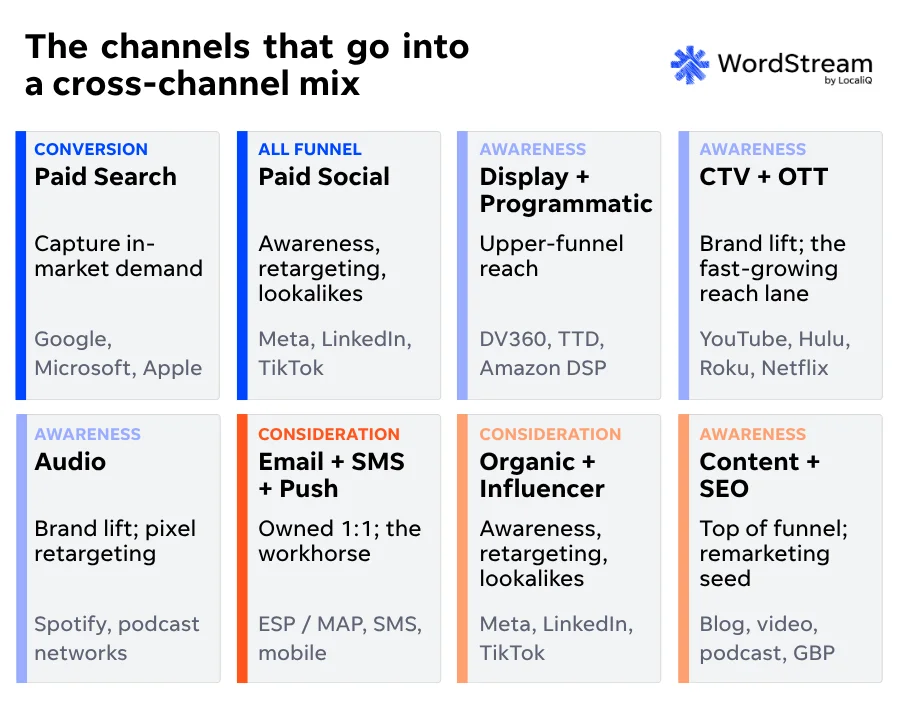
The channels that contribute to a robust cross-channel mix can be broadly categorized by their role within the marketing funnel:
| Bucket | Channels | Primary Cross-Channel Job |
|---|---|---|
| Conversion (Paid Search/Shopping) | Google Ads, Microsoft Ads, Apple Search Ads | Capture in-market demand; feed audiences downstream |
| All Funnel (Paid Social) | Meta, LinkedIn (B2B), TikTok, Pinterest, Reddit, X | Awareness + retargeting; lookalike seed |
| Awareness (Display/Programmatic/CTV/OTT) | DV360, The Trade Desk, Amazon DSP, retail media | Upper-funnel reach; CTV / OTT is a key growth area |
| Awareness (Audio) | Spotify, podcast networks, programmatic audio | Brand lift + retargeting via pixel-enabled hosts |
| Owned (Email + SMS + Push) | ESP / MAP, SMS platform, mobile app | Owned 1:1 communication; the core of the feedback loop |
| Earned (Organic Social + Influencer) | Brand handles, creators, affiliates | Earned validation + retargeting pool |
| Top of Funnel (Content/SEO) | Blog, video, podcast | Top of the funnel engagement; remarketing seed |
| Offline | Direct mail, OOH / DOOH, events, in-store | Reach lift; measurable with QR codes, unique URLs, promo codes |
The strategic selection of channels should align with the business’s specific funnel objectives, rather than attempting to encompass every possible avenue. The essence of a cross-channel approach lies in the shared data and signal flow between the selected channels, not merely the quantity of channels employed.
Tangible Benefits of Cross-Channel Marketing
Implementing a cross-channel marketing strategy requires dedicated effort and careful planning. Understanding the potential gains and limitations is crucial for setting realistic expectations. While cross-channel marketing may not be the primary driver for immediate, raw incremental leads or sales, its strength lies in optimizing the efficiency and impact of existing spend. It focuses on achieving greater yield from current resources through enhanced coordination, rather than solely expanding reach.
The primary benefits of cross-channel marketing include:
- Enhanced Customer Experience: By creating a seamless and relevant journey across touchpoints, businesses can foster stronger customer relationships and improve satisfaction.
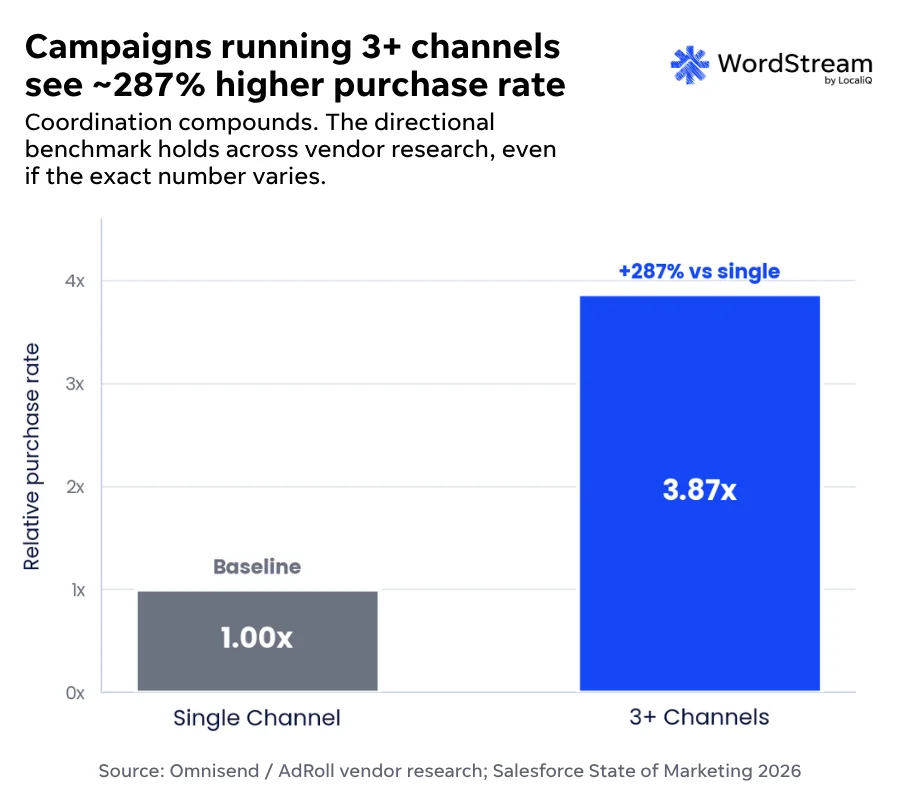
- Increased Conversion Rates: Coordinated messaging and timely follow-ups reduce friction in the customer journey, leading to higher conversion rates.
- Improved ROI: Optimizing ad spend by avoiding message repetition and ensuring relevance across channels can lead to a more efficient allocation of marketing budgets.
- Deeper Customer Insights: The integration of data across channels provides a more holistic view of customer behavior, enabling more precise targeting and personalization.
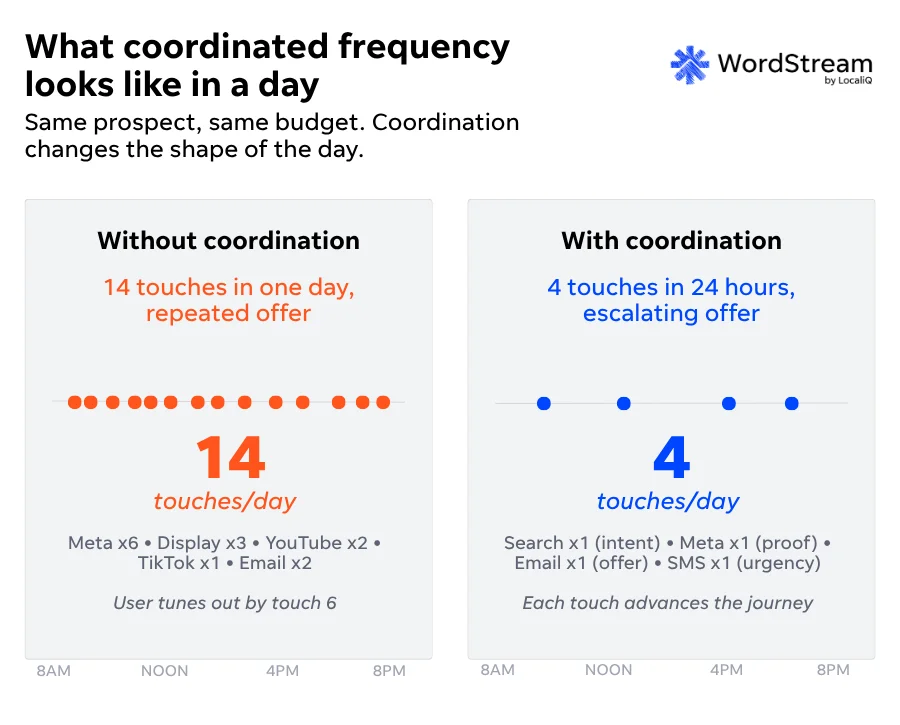
- Reduced Ad Fatigue: By capping frequency across channels, businesses can prevent overexposure and maintain positive brand perception.
Building a Robust Cross-Channel Marketing Strategy
The development of an effective cross-channel marketing strategy begins with a clear definition of the target audience. From this foundational understanding, the appropriate channels are selected, creative assets are mapped to these channels, and a system for cross-channel management and tracking is established.
1. Define a Singular Audience: The process should commence with establishing a unified audience definition, independent of individual ad platforms. This "source of truth" can be a Customer Relationship Management (CRM) system, a Customer Data Platform (CDP), or even a meticulously organized spreadsheet. This consolidated audience profile is then systematically deployed across all relevant platforms, including Google Ads Customer Match, Meta Custom Audiences, email service providers, and demand-side platforms.
2. Map the Journey to Channels, Not Channels to Budget: A customer-centric approach dictates mapping the customer journey first—identifying the stage, the most effective channel for that stage, the appropriate message, and the subsequent best action. Many teams reverse this process, starting with last quarter’s budget allocation and then attempting to integrate journey logic.
3. Establish One Creative System: Consistency in creative execution, offers, and the overall brand experience across all channels is paramount. A singular campaign-level promise, encompassing a unified offer and proof point, should serve as the guiding principle. This overarching message is then adapted into channel-native executions.
4. Implement Identity and Signal Sharing: Ensuring that every advertising platform is aware of key customer actions, such as purchases, form submissions, or phone calls, is critical for accurate reporting. Breakdowns in this data flow can lead to misleading performance metrics. Two essential, often overlooked, "free fixes" for small businesses are enabling Enhanced Conversions in Google Ads and implementing the Conversions API in Meta. These actions represent significant data upgrades achievable within a short timeframe. Furthermore, if a developer or agency offers server-side tagging, it is a valuable enhancement that streamlines data flow.
5. Set Frequency Caps Across Channels, Not Within: A significant budgetary advantage of cross-channel marketing is the prevention of over-exposure. Instead of bombarding a prospect with multiple ads from a single platform, cross-channel frequency capping ensures a unified limit across all touchpoints. Most teams default to channel-specific capping, which fails to account for the cumulative impact of ads across different platforms. Implementing cross-channel frequency capping typically requires a unified user ID, a function of identity resolution.
6. Define Measurement Frameworks Before Launch: Clearly articulating what constitutes "success" prior to campaign initiation is essential. Identify the one or two key marketing KPIs (e.g., cost per lead, return on ad spend, sales generated within a defined period) that will be used to evaluate the campaign’s performance. Documenting these objectives before launch prevents the temptation to cherry-pick favorable metrics from various dashboards post-launch.
Illustrative Cross-Channel Marketing Examples
The practical application of cross-channel marketing can be observed across diverse business types. The unifying threads in each example are a single, cohesive audience, a shared signal that drives action, and the coordinated engagement of three or more channels.
Example 1: B2C E-commerce
An apparel brand integrates its browse-abandon and cart-abandon audiences from a central customer data source into Meta, Google Ads, and Klaviyo. A customer browsing the website triggers a retargeting ad, capped at a combined total of three impressions across all three platforms. A follow-up email is sent at the 24-hour mark, and for opted-in users, an SMS message is dispatched at 48 hours. This coordinated approach, driven by a unified identity match, ensures that the same prospect does not receive an overwhelming number of ads and emails, thereby preventing ad fatigue and optimizing budget allocation.
Example 2: B2B SaaS/Account-Based Marketing (ABM)
In the B2B realm, purchasing decisions often involve a group of stakeholders, with research indicating an average of six to 10 individuals influencing a purchase, each requiring approximately 15 to 20 marketing touches before a deal closes. This complexity highlights the cross-channel imperative. An Account-Based Marketing (ABM) platform can monitor engagement signals across channels like LinkedIn ads, display advertising, and the company’s website for target accounts. When a specific account exhibits increased engagement, the system can automatically trigger direct mail campaigns to that account. Conversely, if an account becomes less engaged, the system can alert the sales team to shift focus to more receptive prospects. This ensures that every channel operates in concert, driven by a unified understanding of account engagement.
Example 3: Local and Multi-Location SMBs
A local auto-service shop leverages Local Services Ads, Google Ads, Meta, organic Google Business Profile listings, and email marketing. The cross-channel mechanism is established by feeding phone-call conversions from Google Ads back into Meta as custom conversion events. Consequently, a searcher who initiated a call for a brake quote might then receive a Meta retargeting ad offering an oil change, a more relevant message than a generic "schedule service" ad they may have previously ignored. This level of coordination, often facilitated by server-side tagging and a marketing services partner, allows SMBs to achieve cross-channel effectiveness without the need for an extensive data team or a full-fledged CDP.
Measuring the Impact of Cross-Channel Marketing
The landscape of marketing measurement has undergone significant shifts. Multi-touch attribution coverage has declined from over 90% to between 30% and 60% in post-cookie environments. Furthermore, the increasing use of AI platforms and agents for brand research can disrupt the trackable customer funnel. Consequently, traditional measurement models often miss a substantial portion of conversions.
Combating this leakage requires a layered measurement stack:
- Server-Side Tracking: Essential for clean data inputs from all channels.
- Google Analytics 4 (GA4) Data-Driven Attribution: Provides day-to-day optimization insights, requiring a minimum of 400 conversions per 28 days.
- Media Mix Modeling (MMM): Crucial for strategic budget allocation decisions.
- Quarterly Incrementality Tests: Offer causal validation of marketing efforts.
Single-touch attribution and platform-reported ROAS are no longer sufficient as standalone measurement metrics.
Key KPIs that truly matter for cross-channel marketing include:
- Customer Lifetime Value (CLTV): Reflects the total value a customer brings over their relationship with the brand.
- Cross-Channel Return on Ad Spend (ROAS): Measures the overall revenue generated against the combined ad spend across coordinated channels.
- Cost Per Acquisition (CPA) by Cohort: Tracks the cost to acquire a customer within specific, cross-channel-influenced groups.
- Customer Journey Completion Rate: Assesses the effectiveness of the coordinated journey in guiding customers to desired outcomes.
- Unified Audience Engagement Metrics: Tracks how a singular audience interacts across the various touchpoints.
Common Cross-Channel Marketing Pitfalls to Avoid
Several recurring mistakes can undermine cross-channel marketing efforts:
- Channel Silos: Operating channels independently without data sharing.
- Inconsistent Messaging: Presenting conflicting or disjointed messages across touchpoints.
- Lack of Unified Audience Definition: Targeting different segments on each channel, leading to fragmented experiences.
- Ignoring Frequency Capping: Over-exposing individuals to ads across multiple platforms.
- Inadequate Measurement: Relying on outdated or channel-specific metrics that don’t reflect the holistic impact.
- Failure to Integrate Offline and Online: Treating offline channels as separate entities rather than part of a cohesive strategy.
Frequently Asked Questions About Cross-Channel Marketing
What is cross-channel marketing in simple terms?
Cross-channel marketing is a coordinated strategy for reaching customers across multiple connected channels (e.g., paid search, social media, email, SMS, display, CTV). Data from one channel informs the next, creating a continuous and relevant customer experience rather than a series of isolated interactions.
What’s the difference between cross-channel and multichannel marketing?
Multichannel marketing involves using multiple channels, but each operates independently. Cross-channel marketing synchronizes these channels, allowing data from one to trigger actions on another, fostering a connected customer journey. Multichannel is about broad reach; cross-channel is about intelligent coordination.
Is cross-channel marketing the same as omnichannel?
No. Cross-channel coordinates marketing channels around specific campaigns or journeys. Omnichannel extends this integration to encompass all brand touchpoints, including customer service, in-store experiences, and commerce, providing a unified, real-time view of the customer. While omnichannel is the ultimate goal, cross-channel is a more attainable and practical strategy for many SMBs and mid-market businesses.
What are examples of cross-channel marketing campaigns?
Examples include an e-commerce brand coordinating browse-abandoned audiences across Meta, Google, and email with shared frequency caps; a B2B team running synchronized LinkedIn ads, display ads, and direct mail campaigns against target account lists; or a local business retargeting Google Ads searchers with tailored offers on Meta.
How do you measure cross-channel marketing in 2026?
Measurement in 2026 will increasingly rely on a layered stack: server-side tracking for data integrity, GA4 data-driven attribution for optimization, Media Mix Modeling for budget allocation, and incrementality testing for validation. Single-touch attribution and platform-reported ROAS will be insufficient.
Do SMBs need a customer data platform (CDP) for cross-channel marketing?
Not necessarily. For businesses using two to three channels with a CRM and an email tool, a well-configured email service provider, server-side tagging, and shared custom audiences can deliver significant cross-channel value. A CDP becomes more critical for organizations operating four or more paid channels at scale and requiring real-time identity resolution.

Conclusion: Harnessing Cross-Channel Marketing for Growth
Cross-channel marketing emerges as a potent catalyst for lead generation and conversion by harmonizing creative messaging, technological application, and an understanding of buyer psychology. Its scalability allows businesses of all sizes, from fast-growing multi-location enterprises to local service providers, to tailor its implementation to their specific objectives. By embracing a coordinated approach across their marketing channels, businesses can significantly enhance customer engagement, optimize their advertising spend, and ultimately drive sustainable growth in an increasingly complex digital ecosystem.