

The digital landscape of 2024 has reached a critical juncture where the sheer volume of data often obscures the very human behaviors it seeks to measure. In this climate, the discipline of Conversion Rate Optimization (CRO) has transitioned from a niche marketing tactic into a sophisticated blend of behavioral science, data engineering, and strategic communication. To explore this evolution, Convert.com sat down with Dzifa Mensah, a Conversion Optimization Specialist whose career spans over a decade and across multiple continents. Mensah’s professional trajectory—moving through web development, growth marketing, and experimentation—offers a comprehensive view of how businesses are currently navigating the complexities of user experience (UX) and data-driven decision-making.
Mensah’s expertise is unique in its breadth, covering three distinct and often conflicting sectors: Software as a Service (SaaS), e-commerce, and the non-profit (charity) sector. According to Mensah, these industries represent different psychological frameworks for the user. While e-commerce is often driven by transactional convenience and SaaS by utility and retention, the charity sector operates on a foundation of empathy and trust. Navigating these varied landscapes requires a rigorous adherence to the scientific method—observation, hypothesis, testing, and analysis—while maintaining an acute sensitivity to the nuances of human interaction.
The Professionalization of Experimentation
The field of CRO has undergone a significant transformation since its inception. In the early 2010s, optimization was often synonymous with “button color testing” or minor aesthetic tweaks. Today, as Mensah explains, it is a high-stakes environment where practitioners must secure buy-in for complex test designs and manage stakeholders who are often wary of results that contradict their intuition. The modern CRO specialist is no longer just an analyst; they are a system builder who creates scalable frameworks for experimentation.
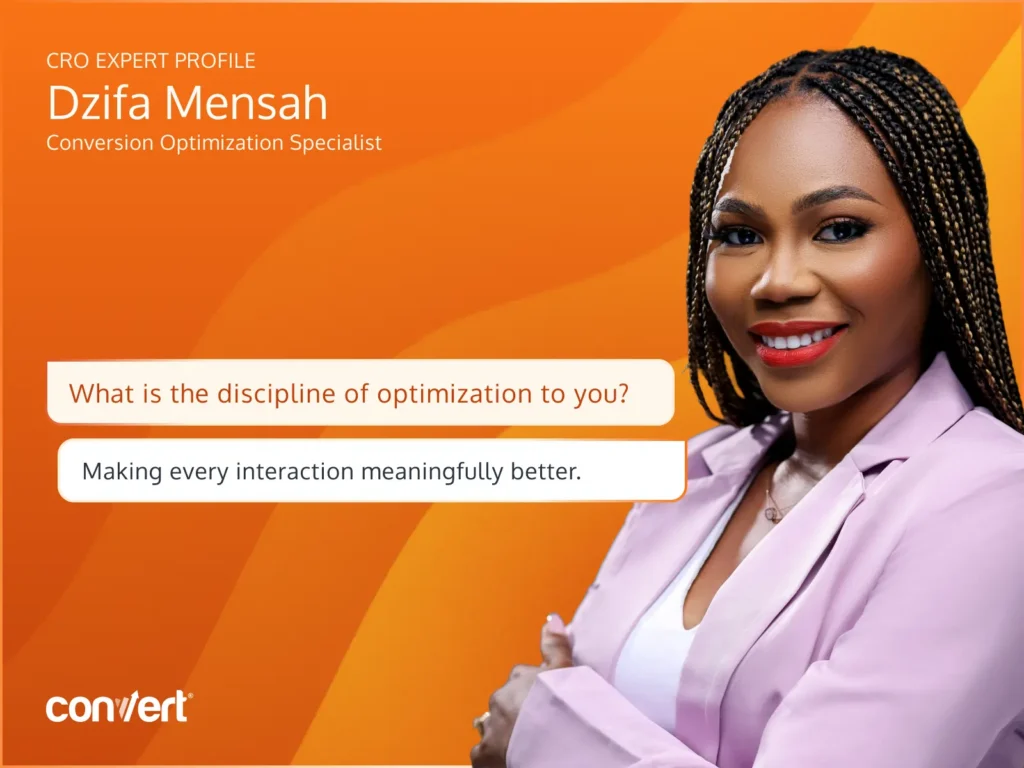
Industry data supports this shift. Recent market analysis suggests that the global Conversion Rate Optimization software market is projected to grow at a Compound Annual Growth Rate (CAGR) of over 10% through 2030. This growth is driven by the increasing cost of customer acquisition (CAC), which has forced brands to maximize the value of their existing traffic. As Mensah notes, the goal of optimization is “making every interaction meaningfully better,” a definition that moves beyond mere percentage lifts and into the realm of long-term brand equity.
The Role of Artificial Intelligence in the Experimentation Workflow
One of the most pressing topics in the tech industry is the integration of Artificial Intelligence (AI) into professional workflows. For Mensah, AI is not a replacement for the human analyst but a “thinking partner” that excels in the pre-test phase. The traditional workflow of a CRO specialist involved hours of manual data consolidation—sifting through quantitative metrics from platforms like Google Analytics and qualitative feedback from heatmaps or user surveys.

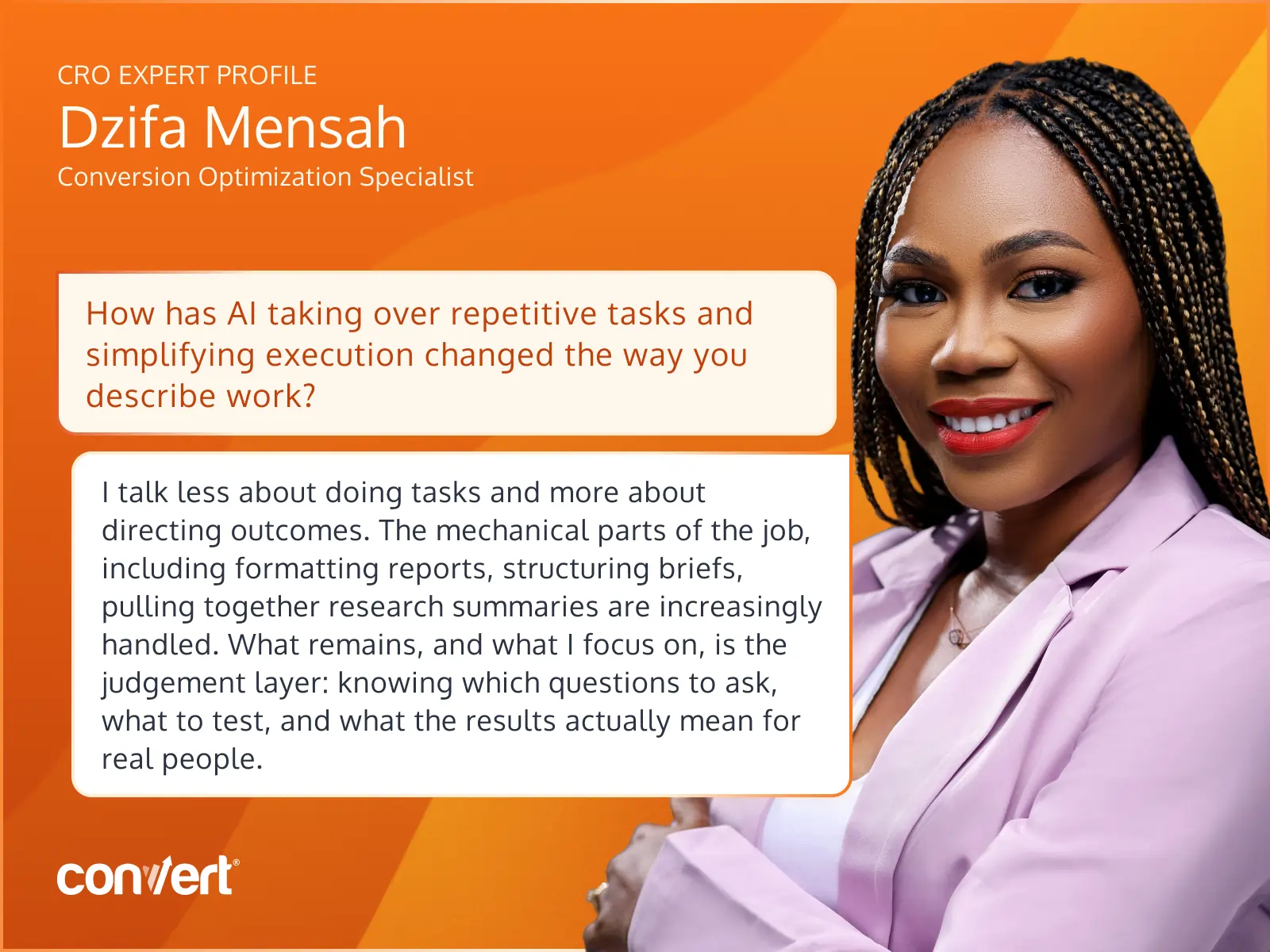
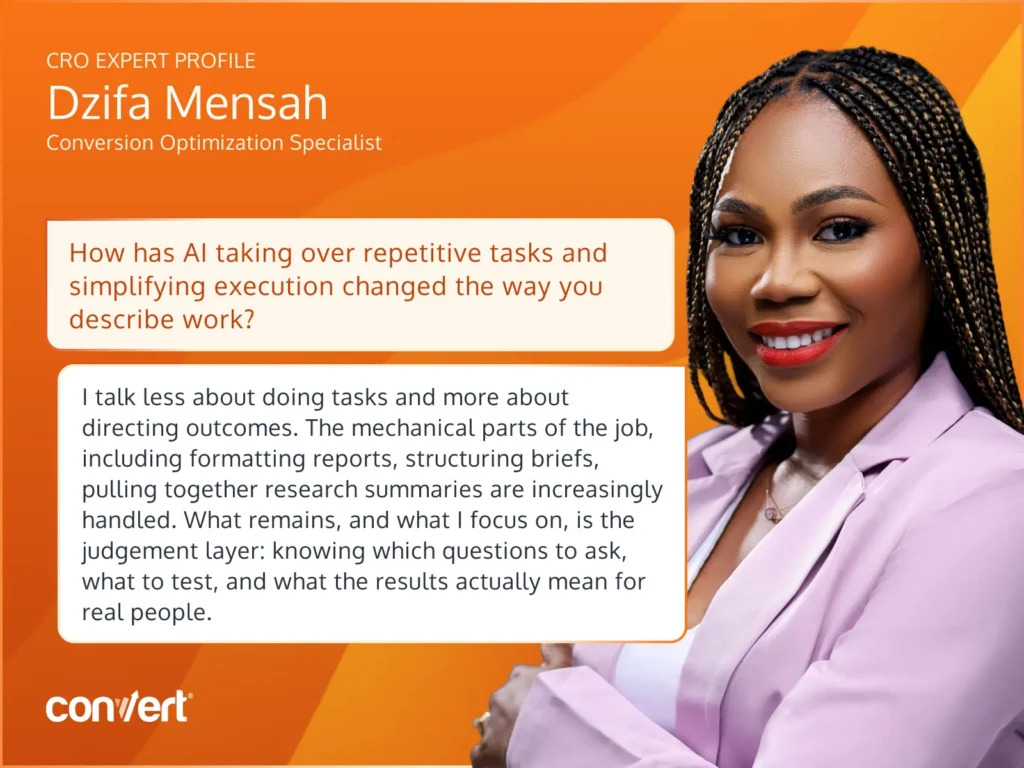
Mensah highlights that AI now allows for the rapid identification of patterns and contradictions within these datasets. This acceleration enables the practitioner to move from data to hypothesis much faster. Furthermore, the role of AI extends into stakeholder management. By using AI to draft test announcements and translate technical reports into readable summaries for non-technical executives, Mensah is able to focus more on high-level strategy. “The goal is to spend less time formatting and more time thinking,” she observed. This transition from “doing tasks” to “directing outcomes” marks a fundamental change in how digital professionals describe their labor.
The Localization Fallacy: A Case Study in Cultural Context
A pivotal moment in Mensah’s career serves as a cautionary tale for global brands. While running a multivariate experiment across French, English, and German versions of a website, the team assumed that because the product proposition was identical, the user response would be uniform. However, the results told a different story: only the English-language site reached statistical significance.
This outcome underscores the reality that localization is not merely a matter of translation. Cultural context dictates how users interpret information, how they perceive trust signals, and how they react to call-to-action (CTA) language. This phenomenon is supported by cross-cultural psychological frameworks, such as Hofstede’s Cultural Dimensions, which suggest that users in different regions have varying levels of uncertainty avoidance and individualism. Mensah’s experience proves that a “one size fits all” approach to global experimentation often fails because it ignores the deep-seated cultural nuances that drive decision-making.
Optimizing for Altruism: The Charity Sector Challenge
The transition from commercial optimization to the charity sector requires a fundamental shift in metrics. In e-commerce, a “conversion” is a clear-cut financial transaction often spurred by convenience or price. In the non-profit world, the “conversion” is an act of generosity. Mensah notes that this work sits at the intersection of emotion, empathy, and trust—metrics that are notoriously difficult to quantify in a standard dashboard.
Research into “altruistic behavior” in digital spaces suggests that social proof and the “identifiable victim effect” play significant roles in donation rates. However, Mensah emphasizes that over-optimizing for these triggers can sometimes feel manipulative if not handled with care. The challenge lies in creating a user journey that feels authentic and transparent, fostering a sense of partnership between the donor and the cause. In this context, CRO becomes a tool for ethical storytelling as much as it is a tool for revenue growth.
The Future of CRO: Critical Thinking as the Final Competitive Advantage
As automation and AI tools become more ubiquitous, the barrier to entry for running basic A/B tests is lowering. However, Mensah argues that this makes critical thinking and rigorous analysis more valuable than ever. While AI can process data at scale, it lacks the “human understanding” required to interpret the subtle hesitations in a user’s voice during qualitative research or the cultural subtext of a specific design element.
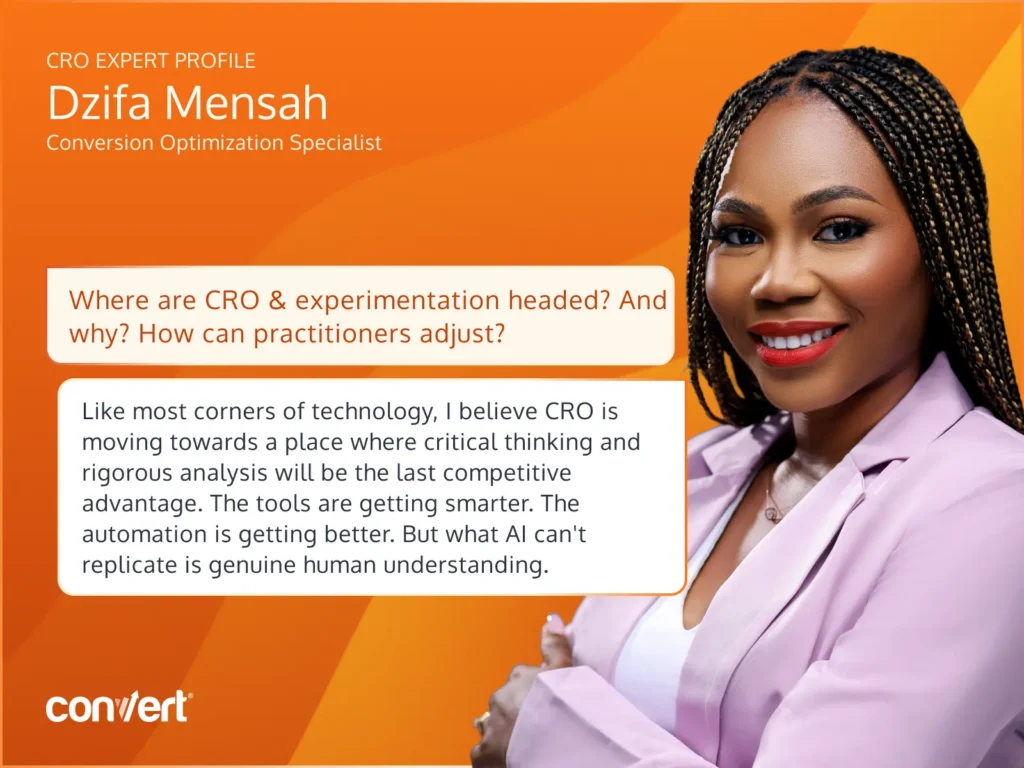
The future of the discipline, according to Mensah, belongs to practitioners who double down on their analytical instincts and remain curious about user psychology. The “judgement layer”—knowing which questions to ask and understanding why a result occurred—cannot be easily replicated by algorithms. This perspective aligns with broader industry trends suggesting that as “execution” becomes a commodity, “strategy” and “empathy” become the primary differentiators for successful businesses.
Broader Impact and Industry Implications
The insights shared by Mensah have significant implications for how companies structure their growth and marketing teams. There is an increasing need for “T-shaped” professionals who possess deep expertise in experimentation but also understand the broader business context, from web development to psychology.
Furthermore, the interview highlights a growing movement toward “human-centric data.” As privacy regulations like GDPR and CCPA limit the amount of third-party data available to marketers, first-party data gathered through direct experimentation becomes the gold standard. Companies that invest in building a “culture of experimentation”—where failure is seen as a learning opportunity rather than a wasted resource—are better positioned to adapt to changing market conditions.
Mensah’s career trajectory and her approach to optimization suggest that the most successful digital strategies are those that treat the user not as a data point, but as a complex human being with specific cultural, emotional, and psychological needs. Whether optimizing a SaaS platform for retention or a charity site for donations, the core principle remains the same: use the data to see the human, then use the science to make their experience better.
Chronology of Professional Evolution in CRO
To understand the current state of the industry as described by Mensah, one must look at the timeline of experimentation technology:
- 2000s – The Early Web: Optimization was largely manual, involving “split testing” that required significant developer intervention.
- 2010 – 2015 – The Rise of Visual Editors: Tools began to allow marketers to make changes without code, leading to an explosion of “low-impact” aesthetic testing.
- 2015 – 2020 – The Integration Era: CRO began to integrate with CRM and personalization engines, allowing for more targeted experimentation.
- 2021 – Present – The AI and Privacy Pivot: The focus has shifted to server-side testing, first-party data, and using AI to synthesize qualitative and quantitative insights.
Conclusion
The conversation with Dzifa Mensah reinforces the idea that while tools and technologies evolve, the fundamental goal of optimization remains constant: the pursuit of truth through the scientific method. As AI continues to absorb the repetitive and mechanical aspects of the job, the role of the CRO specialist is being elevated to that of a strategic architect. For businesses looking to thrive in an increasingly crowded digital marketplace, the message is clear: the most meaningful lifts in conversion come from a deep, empathetic understanding of the human on the other side of the screen. Critical thinking, cultural intelligence, and ethical design are the new frontiers of the digital economy.







