The global digital marketing landscape is undergoing a fundamental shift as organizations move away from traditional, high-stakes campaign launches toward a model of continuous, data-driven refinement known as iterative testing. This methodology, which has long been a staple of software engineering and product development, is now being adopted by high-growth marketing teams to mitigate the risks of "slow leaks"—the incremental loss of budget due to unoptimized assets. Rather than treating an A/B test as a singular event with a definitive end date, iterative testing establishes a perpetual cycle of experimentation where each result serves as the foundation for the next hypothesis. This shift reflects a broader trend toward Agile marketing, where speed, evidence-based decision-making, and user-centricity take precedence over intuition-led creative direction.
The Strategic Shift from Big Bets to Incremental Wins
Historically, marketing departments operated on a "launch and leave" basis. Campaigns were developed over months, launched with significant fanfare, and evaluated only after the budget was exhausted. The rise of sophisticated conversion rate optimization (CRO) tools has rendered this approach obsolete. Industry data suggests that the majority of marketing failures are not spectacular collapses but rather a steady erosion of ROI caused by misaligned messaging or friction in the user journey.
Iterative testing addresses this by breaking down the optimization process into manageable, evidence-based cycles. By focusing on "base hits"—small, consistent improvements—rather than "home runs," firms can achieve a compounding effect on their conversion rates. For instance, a 5% improvement in conversion rate across four consecutive testing cycles results in a total improvement of over 21%, a figure that often eludes teams attempting to overhaul an entire landing page in a single go.
Chronology of the Testing Revolution: From Statistics to Automation
The roots of iterative testing can be traced back to the early 20th century with the work of Ronald A. Fisher in agricultural statistics, which laid the groundwork for the randomized controlled trial. In the digital age, the practice was popularized by tech giants like Google and Amazon. Google’s famous "41 shades of blue" experiment in 2009, while often cited as an extreme example of data-driven design, proved that even the most minute changes could yield millions of dollars in additional revenue.
By the mid-2010s, the emergence of no-code landing page builders and A/B testing platforms democratized these capabilities. Previously, a single test required a developer, a data scientist, and a designer. Today, the timeline for launching a test has shrunk from weeks to hours. The current era, beginning around 2023, is defined by the integration of artificial intelligence and machine learning. Modern platforms now offer "Smart Traffic" solutions that can begin optimizing traffic distribution after as few as 50 visits, a significant reduction from the thousands of data points required for traditional frequentist statistical models.

Supporting Data: The 2024 Conversion Benchmark Insights
Recent data from the 2024 Conversion Benchmark Report provides a compelling case for the necessity of iterative testing. One of the most significant findings involves the correlation between language complexity and user behavior. The report indicates that landing pages written at a 5th-to-7th-grade reading level convert at a rate of 11.1%, which is more than double the conversion rate of pages utilizing professional or academic-level writing.
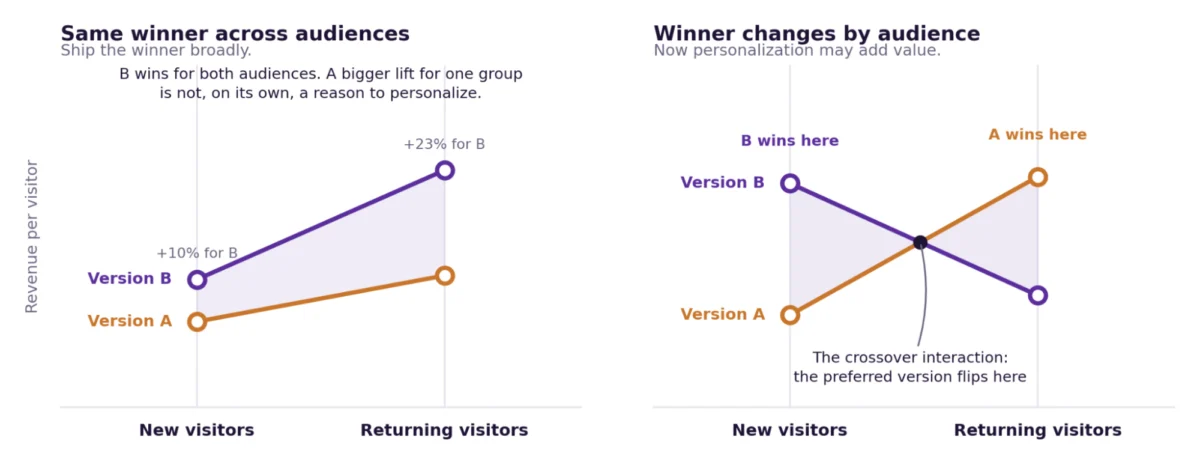
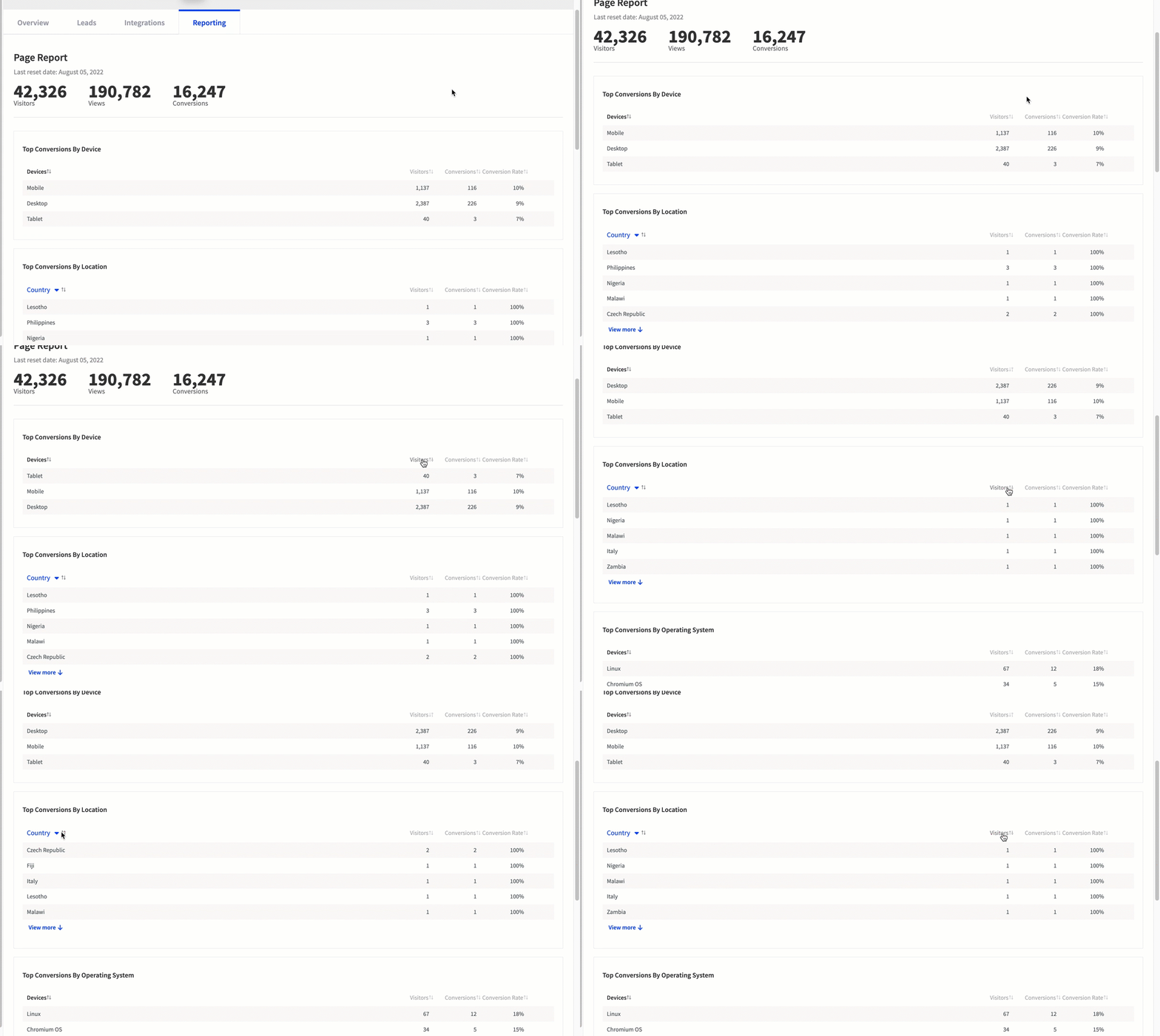
Furthermore, the report highlights a critical disconnect in device-specific performance. While approximately 83% of all landing page visits now occur on mobile devices, desktop sessions continue to convert at a rate 8% higher on average. This discrepancy suggests that many mobile experiences are simply shrunken versions of desktop sites rather than mobile-optimized environments. An iterative testing framework allows marketers to isolate these variables, testing device-specific messaging and layout changes to bridge the conversion gap.
Additional data points from the report reveal:
- Word Complexity: There is a -24.3% negative correlation between high word complexity and conversion rates, reinforcing the need for clarity over cleverness.
- Social Proof: The impact of testimonials varies wildly by industry, suggesting that a "one-size-fits-all" approach to social proof is ineffective.
- Form Length: While shorter forms generally perform better, the quality of leads often improves with the addition of specific qualifying questions, a balance that can only be found through repeated testing.
The Six-Step Framework for Iterative Optimization
To implement a successful iterative testing program, industry experts recommend a structured, six-step approach that prioritizes speed and clarity.
1. Hypothesis Formulation
A test without a clear hypothesis is merely a random change. A professional hypothesis must be specific and measurable, such as: "By changing the CTA from ‘Submit’ to ‘Get My Free Audit,’ we expect to increase click-through rates by 10% because it clarifies the value proposition."
2. Impact vs. Effort Prioritization
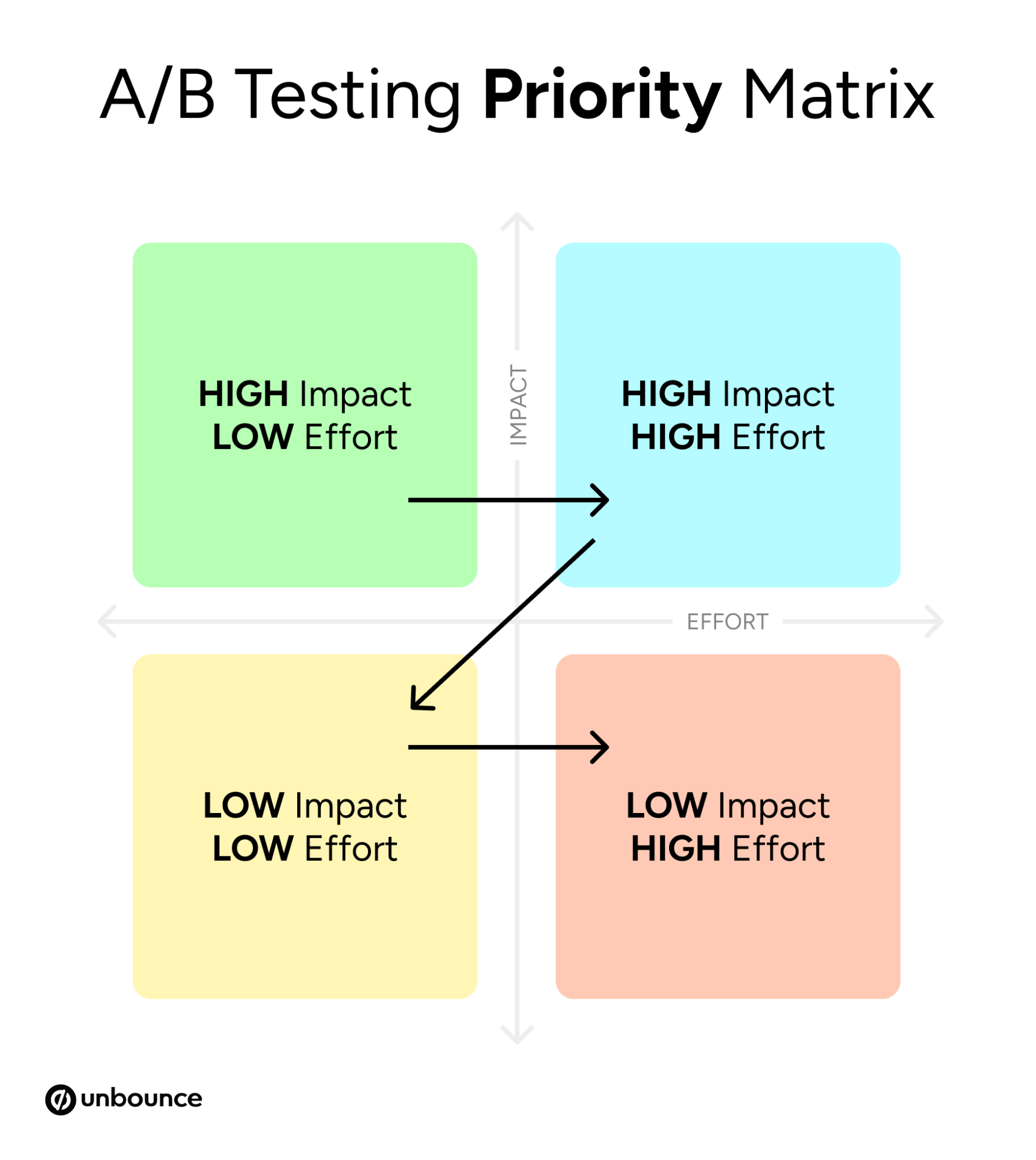
Resource allocation is a primary concern for marketing leaders. Using a 2×2 matrix, teams categorize potential tests based on the expected impact on revenue and the technical effort required to implement them. High-impact, low-effort changes—often referred to as "low-hanging fruit"—are prioritized to build organizational momentum.

3. Minimal Testable Variation
The concept of the "Minimum Viable Product" applies here. Instead of redesigning a whole page, marketers should isolate one variable (e.g., the hero image or the headline) to ensure that the resulting data can be attributed to a specific change.
4. Data Collection and Statistical Significance
The integrity of a test depends on its statistical significance. Marketing analysts generally look for a 95% confidence level before declaring a winner. This ensures that the results are not due to random chance or external factors like seasonal traffic spikes.
5. Extraction of Actionable Insights
Analysis must go beyond identifying the "winner." If a simplified headline performed better, the insight isn’t just about that specific page; it suggests that the target audience values directness. This insight can then be applied to email subject lines, ad copy, and social media content.
6. Scaling and Evolution
Successful tests are not the end of the process. A winning variant becomes the new "control," and the cycle begins again with a new hypothesis. Successful learnings are then scaled across other marketing channels to ensure brand-wide optimization.
Expert Perspectives and Industry Responses
Marketing analysts suggest that the greatest barrier to iterative testing is not technology, but culture. Josh Gallant, a prominent figure in the SaaS growth space, emphasizes that "marketing budgets aren’t getting any bigger," and therefore, "every dollar must be accounted for through evidence-based changes."
Industry reaction to the rise of iterative testing has been largely positive, though some caution against "testing fatigue." Creative directors have expressed concern that an over-reliance on data can lead to a "race to the bottom" where brand identity is sacrificed for short-term conversion bumps. However, the consensus among growth officers is that data does not replace creativity; rather, it provides a sandbox in which creativity can be proven effective.
Broader Impact and Future Implications
The implications of iterative testing extend far beyond the marketing department. When organizations adopt an iterative mindset, they often see a breakdown of traditional silos. Support teams provide insights into customer pain points, which become test hypotheses. Sales teams provide feedback on lead quality, which informs form optimization.
As we look toward the future, the integration of Generative AI will likely accelerate this process. AI tools can now generate dozens of test variations in seconds, while machine learning algorithms can predict which variations are most likely to succeed based on historical data. This "predictive testing" could further reduce the time and budget required to achieve optimal conversion rates.
In conclusion, iterative testing represents the professionalization of digital marketing. By moving away from guesswork and toward a systematic, data-driven methodology, firms can ensure that their marketing assets are not static documents but evolving tools that adapt to the ever-changing behaviors of the modern consumer. The organizations that thrive in the coming decade will be those that view every customer interaction as an opportunity to learn, test, and improve.