In an increasingly data-driven marketing landscape, the personalized birthday email stands out as a potent, yet often underutilized, tool for fostering customer loyalty and driving significant commercial impact. While many consumers, much like the author who maintains two birth dates – a genuine one and an "email birthday" for brand sign-ups – navigate a deluge of digital communications, the thoughtfully crafted birthday message possesses a unique ability to resonate, build emotional connections, and reliably outperform generic promotional campaigns. A recent "celebration" of an email birthday saw over fifty brands dispatch greetings, providing a compelling real-world case study into what constitutes effective birthday marketing and why its strategic role in the customer journey is indispensable.
The Evolution of Personalized Marketing and the Birthday Hook
The journey of email marketing has evolved dramatically from mass-blast newsletters to highly segmented and personalized communications. In this evolution, the customer’s date of birth (DOB) emerged as a cornerstone of personalization, offering a natural and universally acknowledged occasion for direct, individualized outreach. This shift reflects a broader consumer expectation for brands to not just sell products, but to understand and acknowledge their customers on a more personal level. The "email birthday" phenomenon itself underscores this dynamic: consumers are willing to share personal data, but they expect tangible value and a respectful engagement in return. When brands fail to deliver on this implicit contract, they risk not only missed opportunities but also a erosion of trust and data integrity.
Unlocking Value: Who Benefits from Birthday Data?
The collection and judicious application of customer birthday data presents a symbiotic relationship, yielding substantial benefits for both brands and consumers.
For Brands:
Birthday emails serve as a powerful catalyst for enhancing life-stage segmentation and personalization strategies. By knowing a customer’s age, brands can tailor product recommendations, content, and offers that are highly relevant to their specific demographic and life stage, thereby improving the predictive accuracy of purchasing behavior. Crucially, empirical evidence consistently demonstrates that birthday messages achieve significantly higher open and click-through rates compared to standard promotional campaigns, making them an exceptionally high-performing touchpoint in the customer lifecycle. This translates directly into improved engagement metrics and, ultimately, stronger conversion rates.
For Consumers:
The appeal for consumers is straightforward: birthday rewards are genuinely anticipated. These can manifest as exclusive discounts, complimentary products, bonus loyalty points, or even access to age-restricted benefits. Beyond the tangible incentives, there’s an inherent human pleasure in feeling recognized and valued. Birthday marketing, when executed authentically, deepens the emotional connection between a consumer and a brand, fostering a sense of belonging and appreciation that transcends transactional interactions.
The Alarming Gap: Data Collection vs. Data Utilization
Despite the clear advantages, a significant disconnect often exists between data collection and data utilization. Recent data from Validity underscores this critical failure point: out of 124 anticipated birthday emails based on collected DOBs, only 43 (a mere 35%) were actually triggered and delivered. This statistic is alarming, highlighting a widespread inefficiency in marketing automation and customer relationship management (CRM) systems. Brands that meticulously gather sensitive personal data like birth dates, only to fail to act upon it, are not merely missing an opportunity; they are actively undermining customer trust and squandering valuable resources. The implicit message to the consumer is clear: if you collect data, you must commit to using it effectively and ethically. Failing to do so represents a significant operational oversight and a missed chance to capitalize on a high-intent engagement moment.
A Spectrum of Celebration: Effective and Ineffective Birthday Tactics
Birthday email campaigns typically fall into several distinct categories, ranging from purely thoughtful gestures to direct monetary incentives. An analysis of recent campaigns reveals a diverse landscape of approaches, some proving more effective than others.
-
The Thoughtful Message: More common among premium brands, this tactic emphasizes brand affirmation and recognition over direct discounts. For high-net-worth clientele, the gesture itself often holds more weight than a freebie. However, some brands dilute this approach by subtly embedding suggestions to purchase more products, which can undermine the sincerity of the message. The key here is authenticity; the message should genuinely celebrate the customer, not immediately pivot to a sales pitch.
-
The Direct Discount: This remains by far the most prevalent tactic. Birthday discounts usually come with a minimum spend requirement but often lack an upper limit, encouraging larger purchases. The efficacy of this approach hinges on the generosity of the offer. A token discount can feel insincere and fail to motivate action. For instance, a 10% discount on a high-value item might be appreciated, but a similar percentage on a low-cost item might be perceived as negligible. Brands must ensure the discount is compelling enough to be perceived as a genuine gift.
-
The Free Product Offer (with caveats): Restaurant brands frequently employ this tactic, offering a complimentary birthday dessert, typically contingent on the purchase of an entrée. While seemingly a "free" gift, an analysis of average entrée and dessert prices reveals the true effective discount for the consumer.
- Seasons 52: Avg. Entrée $28, Avg. Dessert $4-$9, Effective Discount: 12-24%
- Olive Garden: Avg. Entrée $18.50, Avg. Dessert $12, Effective Discount: ~39%
- Yard House: Avg. Entrée $21, Avg. Dessert $10, Effective Discount: ~32%
- Cheddar’s: Avg. Entrée $18, Avg. Dessert $7.50, Effective Discount: ~29%
- LongHorn Steakhouse: Avg. Entrée $26, Avg. Dessert $11, Effective Discount: ~30%
- Applebee’s: Avg. Entrée $17, Avg. Dessert $6, Effective Discount: ~26%
Viewed through this lens, the average discount across these establishments hovers around a healthy 30%, with Olive Garden standing out as offering the most significant value at approximately 39%. These offers successfully incentivize foot traffic and incremental sales, making them a win-win when structured appropriately.
-
Extended Redemption Windows and Multi-Stage Campaigns: Smart brands understand that a birthday is not just a single day. Most provide a redemption window, often 30 days, to allow customers flexibility. The most effective strategies extend this into a sequenced campaign. Calvin Klein, for example, sends an advance warning, followed by an on-the-day message, and then a reminder. This multi-touch approach significantly maximizes the likelihood of the gift being redeemed, leveraging the psychological principle of repetition and gentle urgency.
-
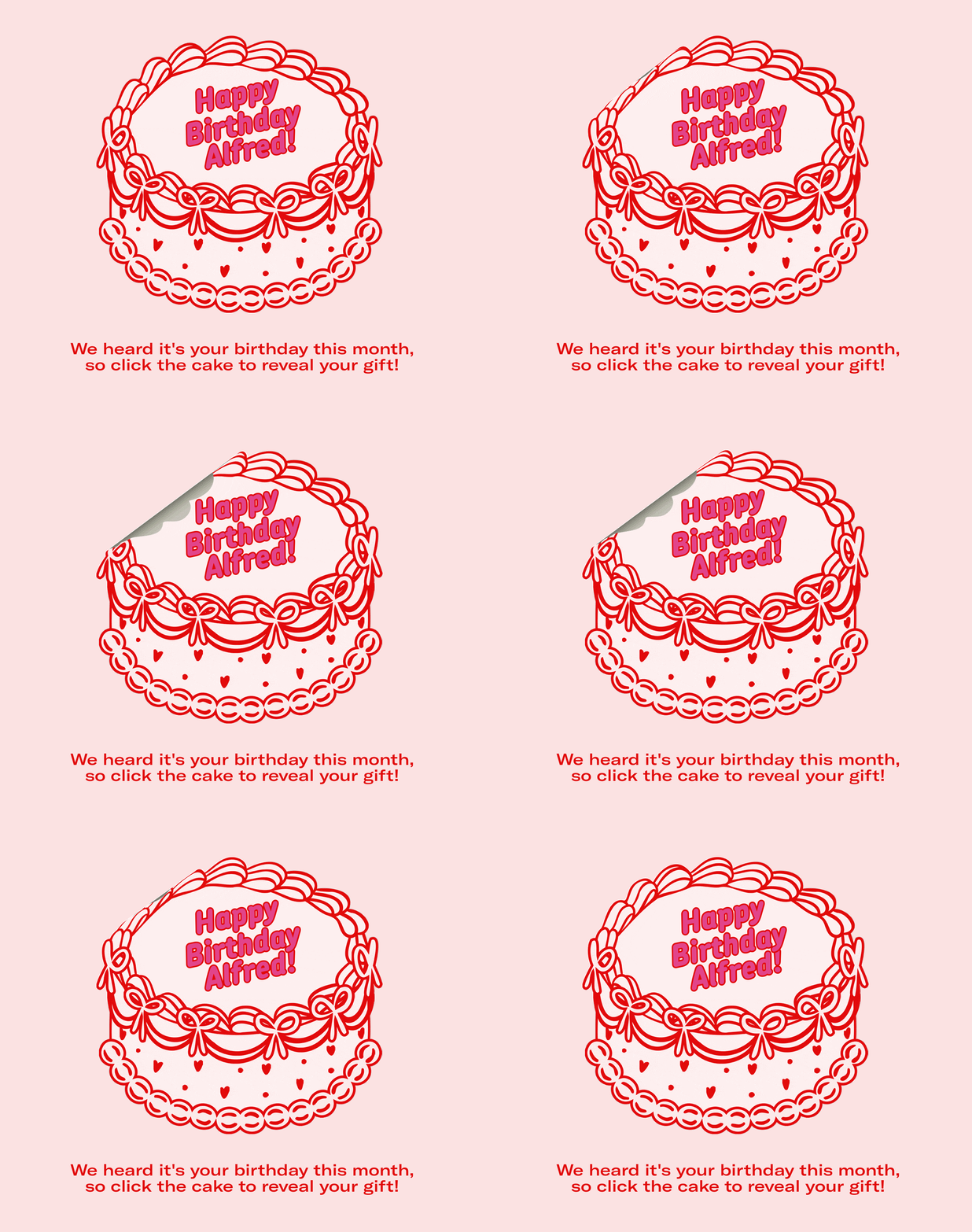
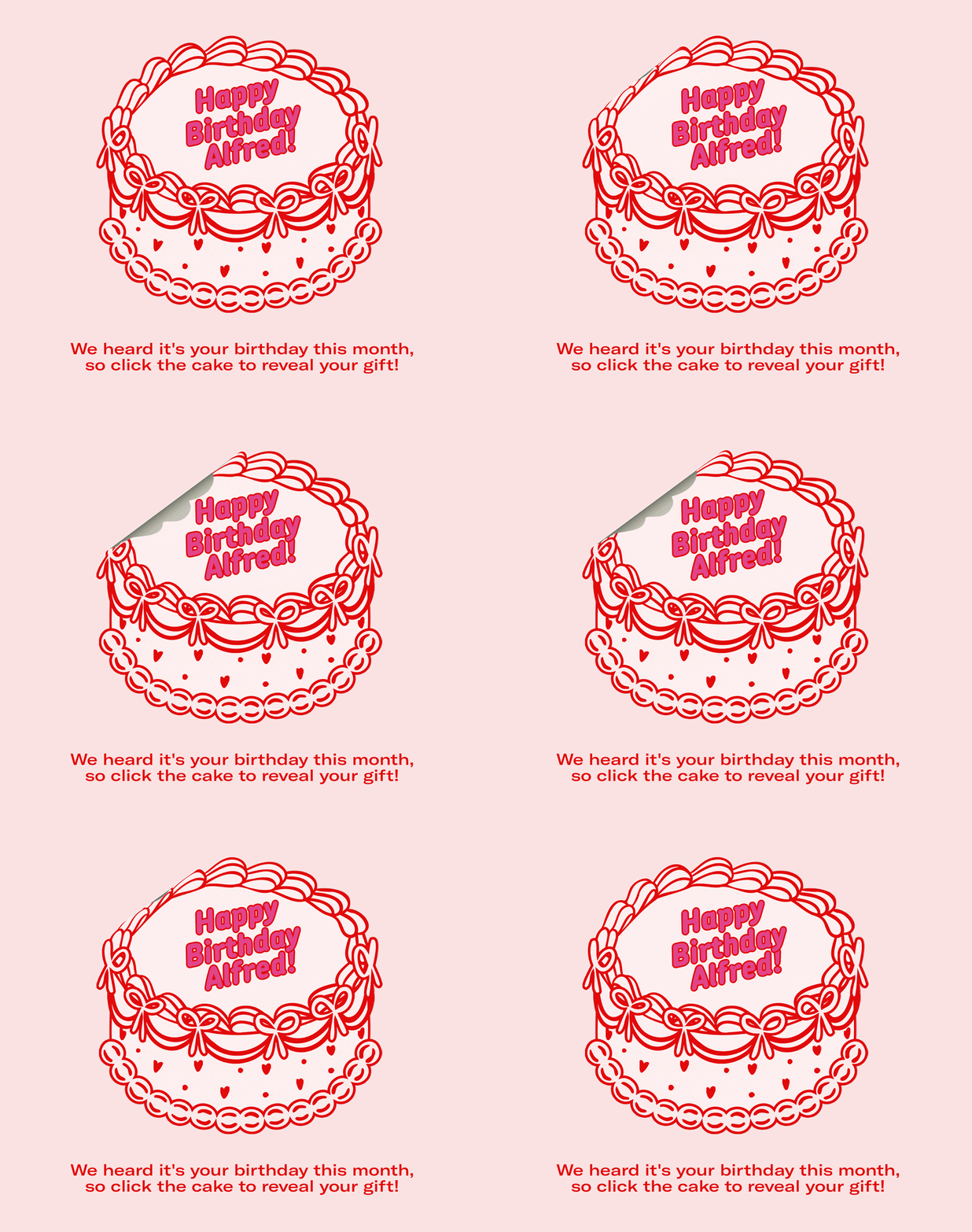
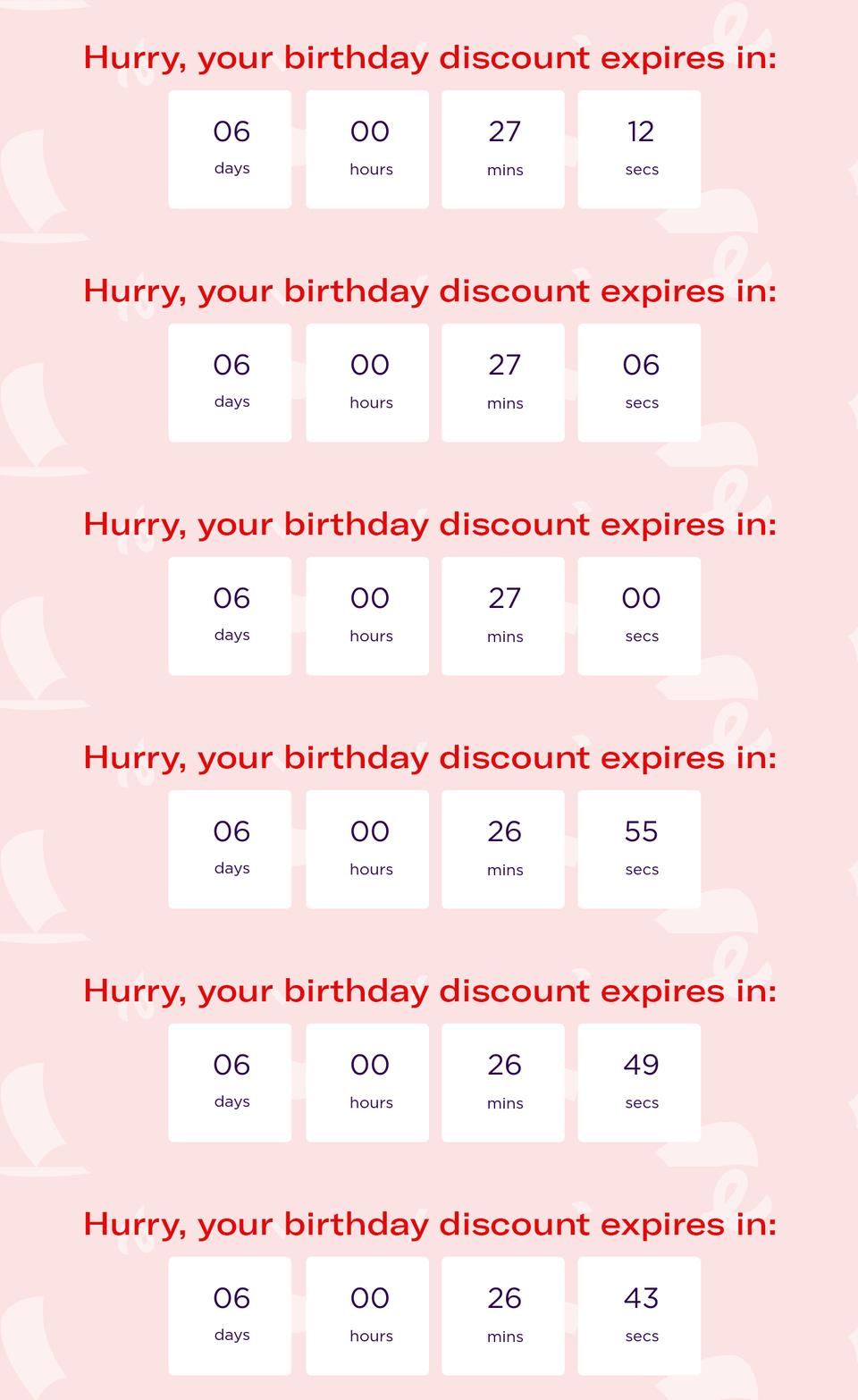
Dynamic Content and Interactivity: Surprisingly, few brands fully exploit the potential of animation and dynamic content in birthday emails, despite the natural fit for celebratory visuals like flickering candles or "open your present" interactivity. Virgin Australia serves as a prime example of excellence in this area. Their on-the-day email features an engaging animated cake that reveals the discount, while a follow-up message incorporates a countdown timer, adding a layer of urgency and excitement that encourages immediate action. Such innovative use of visual elements enhances engagement and memorability.
The Gold Standard of Birthday Gifting
Amidst a flurry of "here’s your discount" emails, certain brands manage to cut through the noise by offering truly valuable and straightforward gifts. Burger King’s "Enjoy a free bday Whopper" stands out as a clear winner. Its appeal lies in its simplicity and lack of conditions – no minimum spend, no additional purchases required. This gesture resonates deeply, feeling like a genuine gift rather than a thinly veiled sales tactic.
Honorable mentions in the realm of effective birthday marketing often go to brands that combine generosity with thoughtful presentation. These include:
- Starbucks: Often provides a free drink or food item, cementing loyalty through tangible rewards.
- Ulta Beauty: Offers bonus points or a free gift, appealing to beauty enthusiasts with direct value.
- Anthropologie: Delivers a significant discount, often 15-20%, which is substantial enough to encourage a purchase from their higher-priced inventory.
- Sephora: Provides a choice of free mini-products, allowing customers a personalized selection.
These brands understand that the best birthday presence is one that offers clear, desirable value without unnecessary hurdles, reinforcing positive brand sentiment.
The Commercial Imperative: Justifying Investment in Birthday Rewards
Analyzing the commercial impact reveals a compelling business case for robust birthday email strategies. Across the surveyed campaigns, the average discount or equivalent value stood at 18%. While this might seem modest, particularly for businesses operating on tight net margins (e.g., a restaurant at 4% net margin), viewing it purely as a cost overlooks its strategic investment potential in customer relationships.
The financial benefits of customer retention are well-established. Research from the Harvard Business Review indicates that acquiring a new customer can cost five times more than retaining an existing one. Further, Bain & Company found that a mere 5% increase in customer retention can lead to a profit boost of up to 75%. This underscores that investing in active customers, even through discounts, is far more cost-effective than attempting to reactivate dormant ones, which falls somewhere between acquisition and retention in terms of cost.
The performance metrics for birthday emails are exceptionally strong. Experian’s Birthday Emails report found that these personalized messages generate a staggering 481% more transactions and 342% more revenue per email compared to standard promotional campaigns. This contrasts sharply with win-back emails, which, according to Dotdigital research, redeem at just over 2%, even with aggressive offers.
This data presents a clear economic argument: it is far more beneficial to invest proactively in customer loyalty through a generous birthday gesture than to reactively attempt to win back disengaged customers later. Brands routinely offer 25-40% discounts in often futile attempts to reactivate dormant accounts. By shifting a portion of this "win-back" budget to enhance birthday offers, brands can leverage a moment of high engagement and strong emotional connection, potentially preventing disengagement altogether. The case for prevention, in this context, makes itself unequivocally.
Crafting an Effective Subscriber Birthday Email Strategy
Given the compelling business case, making subscriber birthday emails truly effective requires meticulous planning and execution. It’s not just about sending an email; it’s about creating a meaningful, positive interaction that reinforces the brand experience. Poorly executed campaigns – those sent for the sake of it, offering no real value, or built on inaccurate data – can do more harm than good, eroding trust and wasting marketing efforts. Here are ten essential tips for getting birthday email marketing right:
- Collect Data Ethically and Transparently: Clearly state why you’re asking for a birth date and how you plan to use it (e.g., "to send you a special birthday treat!"). Transparency builds trust.
- Ensure Data Accuracy and Hygiene: Regularly cleanse your database to remove outdated or incorrect birth dates. The 35% delivery rate highlights the criticality of this step. Integrate DOB collection with preference centers where users can update their information.
- Personalize Beyond Just the Name: While using a customer’s name is basic, true personalization involves tailoring offers or content based on their past purchase history, preferences, or demographic data derived from their age.
- Offer Genuine and Compelling Value: The reward should feel like a true gift, not a token gesture. A free item, a significant percentage discount, or bonus loyalty points are often more impactful than a small percentage off.
- Implement Multi-Stage Campaigns: Leverage the anticipation. Send a "heads-up" email a week or two before the birthday, the main offer on the day, and a friendly reminder before the offer expires.
- Leverage Dynamic Content and Interactivity: Incorporate animated GIFs, personalized videos, or interactive elements (e.g., scratch-off reveals) to make the email more engaging and memorable, as seen with Virgin Australia.
- Optimize for Mobile: A significant portion of emails are opened on mobile devices. Ensure your birthday emails are fully responsive, load quickly, and are easy to read and act upon on smaller screens.
- Test and Optimize Offers and Creatives: A/B test different offers, subject lines, calls to action, and visual elements to understand what resonates best with your audience. Continuously refine your strategy based on performance data.
- Integrate with Loyalty Programs: If you have a loyalty program, integrate birthday rewards seamlessly. Offering bonus loyalty points or exclusive tier benefits on a birthday can significantly boost engagement and perceived value.
- Measure Performance and Iterate: Track key metrics such as open rates, click-through rates, conversion rates, and average order value from birthday campaigns. Use these insights to continuously improve your strategy.
By meticulously implementing these best practices, brands can transform a simple birthday message into a meaningful, positive interaction that strengthens brand experience, fosters deeper customer loyalty, and drives measurable commercial results. Customers may not always make an immediate purchase, but the goodwill generated increases the likelihood of future engagement and transforms them into stronger brand advocates over time.
For organizations looking to refine their data management and ensure year-round accuracy in segmentation and personalization, solutions like Validity’s Intelligence Network offer AI-powered email intelligence to remove risk and boost performance, ensuring that every collected birth date translates into an exceptional customer engagement opportunity.