
Embarking on the journey of establishing an online presence, whether for a personal blog or a thriving e-commerce store, invariably leads to the fundamental requirement of web hosting. While the creation of a website itself is a significant step, its actual accessibility to the global internet audience hinges entirely on a robust and reliable web hosting service. This guide delves into the multifaceted world of web hosting, dissecting its core components, types, selection criteria, and its profound implications for a website’s performance, security, and search engine visibility.
Understanding the Digital Foundation: What is Web Hosting?
At its core, web hosting is a specialized service that provides the infrastructure necessary to make a website accessible on the internet. Imagine a website as a digital building, comprising various files, images, code, and databases. These components cannot simply float in cyberspace; they require a physical location, a "digital plot of land," where they can reside and be served to visitors. This location is a server – a powerful, dedicated computer owned and maintained by a web hosting company. These servers are housed in secure, climate-controlled data centers with high-speed internet connectivity, ensuring constant availability.
When an internet user types a website’s domain name into their browser, a request is sent across the internet to the server where the website’s files are stored. The server then retrieves and sends these "files" back to the user’s browser, allowing the website to be displayed. Essentially, web hosting companies rent out space on their servers, along with the necessary bandwidth and resources, enabling individuals and businesses to establish their digital footprint. Without this essential service, a website, no matter how meticulously designed, remains an inaccessible collection of files.
The significance of web hosting extends beyond mere accessibility. It forms the backbone of a website’s overall performance, directly influencing speed, security, and uptime. These factors are not just conveniences for users; they are critical determinants of a website’s credibility and its standing with search engines. A sluggish or frequently unavailable website not only frustrates visitors, leading to high bounce rates, but also signals to algorithms that the site may not be a trustworthy or high-quality resource. Conversely, reliable hosting contributes to a positive user experience, fostering trust and encouraging engagement, which in turn can positively impact search engine optimization (SEO) rankings.
The Evolving Landscape of Web Hosting: A Brief History and Modern Imperatives
The concept of web hosting has evolved significantly since the early days of the internet. In the 1990s, when the World Wide Web was still nascent, hosting was often a rudimentary affair, with individuals and small businesses managing their own servers or relying on very basic, often unreliable, shared services. As the internet grew, so did the demand for more sophisticated and scalable hosting solutions. The early 2000s saw the rise of dedicated hosting providers, offering more robust options for growing online ventures.
The mid-2000s ushered in the era of virtualization and cloud computing, revolutionizing the hosting industry. Cloud hosting, which distributes website data across multiple interconnected servers, offered unprecedented scalability, flexibility, and disaster recovery capabilities. Today, the global web hosting services market is a multi-billion dollar industry, projected to continue its substantial growth. According to reports, the market size was valued at over $80 billion in 2023 and is expected to exceed $150 billion by 2030, driven by the continuous expansion of e-commerce, digital marketing, and the proliferation of online content.
This rapid evolution has made web hosting a complex ecosystem with diverse offerings. Modern imperatives for web hosting include not only speed and reliability but also advanced security protocols, global content delivery networks (CDNs), and environmentally conscious "green hosting" options that utilize renewable energy sources for data centers. The increasing sophistication of cyber threats has also placed a premium on hosting providers that offer robust security features, making the choice of a host more critical than ever.
Navigating the Hosting Spectrum: Fully-Hosted vs. Self-Hosted Models
A fundamental decision for any website owner is whether to opt for a fully-hosted or self-hosted solution. The distinction lies primarily in the level of control and responsibility the user undertakes.
Fully-Hosted Platforms: These services provide an all-in-one solution where the platform itself handles all aspects of hosting. Examples include e-commerce giants like Shopify or website builders such as WordPress.com (distinct from WordPress.org) and Wix. With fully-hosted platforms, users typically subscribe to a service that includes website creation tools, hosting, maintenance, security, and often domain registration. The primary advantage here is convenience: the platform takes care of all technical intricacies, allowing users to focus solely on content creation or sales. This model is often ideal for small businesses, startups, or individuals seeking a quick and hassle-free online launch. However, this convenience often comes with trade-offs, including less control over the underlying server environment, limited customization options, and platform-specific restrictions on plugins, themes, or code access. Data ownership can also be a point of concern, as the website and its data are intrinsically tied to the platform’s ecosystem.
Self-Hosted Solutions: In contrast, self-hosting provides maximum control and flexibility. A prime example is WordPress.org, where users download the WordPress software and then independently choose a web hosting company to store their website files. This approach requires the user to manage their own hosting environment, including server configuration, security updates, and backups. While this demands a greater level of technical proficiency or the willingness to learn, it offers unparalleled freedom. Users gain full access to the website’s codebase, allowing for extensive customization, integration of any plugin or theme, and complete data ownership. This model is favored by developers, large enterprises, and anyone requiring a highly customized or scalable solution without vendor lock-in. The initial setup and ongoing maintenance might be more involved, but the long-term benefits in terms of flexibility and control are significant.

Strategic Selection: Key Factors in Choosing a Web Hosting Provider
With thousands of hosting companies vying for attention, selecting the right provider requires careful consideration of several critical factors. A well-informed decision at this stage can significantly impact a website’s performance, user experience, and long-term success.
1. Performance and User Experience:
- Server Location: The geographical proximity of the hosting server to the target audience is a critical determinant of website speed. Data transfer takes time, and a shorter physical distance between the server and the visitor reduces latency, resulting in faster load times. For instance, a website targeting a primarily European audience would benefit significantly from a server located in Europe, rather than North America or Asia. Many providers offer data centers in various global regions, allowing users to optimize for their primary audience.
- Speed and Uptime Guarantees: Beyond location, the overall speed of the server infrastructure and the guaranteed uptime are paramount. Users expect websites to load almost instantly; studies consistently show that even a few seconds of delay can lead to significant visitor abandonment. Hosting providers typically offer uptime guarantees (e.g., 99.9% or 99.99%), indicating the percentage of time their servers are operational. A robust hosting environment often includes solid-state drives (SSDs) for faster data access, optimized web servers (like LiteSpeed or Nginx), and potentially integration with Content Delivery Networks (CDNs) that cache website content at various global locations, further accelerating delivery to users worldwide.
2. Resource Allocation and Scalability:
- Storage Space: The amount of storage required is directly proportional to the size and complexity of the website. A simple blog with text and a few images will need minimal storage (e.g., 5-10 GB), whereas a large e-commerce site with thousands of product images, videos, and a vast database could require hundreds of gigabytes or even terabytes. It is crucial to anticipate future growth and choose a plan that offers sufficient storage or allows for easy upgrades.
- Bandwidth: Bandwidth refers to the amount of data that can be transferred from the server to visitors over a given period. Every page view, every image loaded, and every video streamed consumes bandwidth. While a new website might have low initial traffic, a successful site will see increasing visitor numbers, directly impacting bandwidth consumption. Many hosting plans offer "unmetered" bandwidth, which usually implies fair usage policies, or specify a monthly data transfer limit. Understanding the expected audience size and content type is crucial for selecting an appropriate bandwidth allocation.
- RAM and CPU: These resources dictate the server’s processing power and ability to handle multiple requests simultaneously. For complex applications, high-traffic websites, or those with dynamic content, sufficient RAM and CPU cores are essential to prevent slowdowns or crashes during peak loads.
3. Security and Reliability:
- SSL Certificates: An SSL (Secure Sockets Layer) certificate encrypts data transferred between a user’s browser and the website server, protecting sensitive information like login credentials and payment details. It is now a fundamental requirement for all websites, not just e-commerce, for both user trust and SEO (Google flags non-HTTPS sites as "not secure"). Many hosts offer free SSL certificates (e.g., Let’s Encrypt) with their plans.
- Automated Backups: Data loss can be catastrophic. Reliable hosting providers offer automated daily or weekly backups, allowing for quick restoration of a website in case of accidental deletion, hacking, or other unforeseen issues. Understanding the backup frequency, retention period, and ease of restoration is vital.
- DDoS Protection and Malware Scanning: Distributed Denial of Service (DDoS) attacks can overwhelm a server, making a website unavailable. Malware can compromise a site, stealing data or injecting malicious code. Robust hosting includes measures like DDoS mitigation and regular malware scanning to protect against these threats.
- Firewalls: Server-level firewalls act as a barrier against unauthorized access and malicious traffic, adding another layer of security.
4. Support and Management:
- Customer Service: Technical issues are almost inevitable at some point. The quality and availability of customer support (24/7 via chat, phone, email) are critical. A responsive, knowledgeable, and helpful support team can be invaluable in resolving problems quickly.
- Managed vs. Unmanaged Hosting: Managed hosting means the provider handles server maintenance, updates, security patching, and other technical tasks, freeing up the user’s time. Unmanaged hosting puts the responsibility squarely on the user. While unmanaged is often cheaper, managed hosting is ideal for those lacking technical expertise or wanting to focus on their core business.
5. Additional Services and Features:
- Many hosting companies bundle additional services, which can add significant value. These include:
- Domain Name Registration: Often offered for free for the first year.
- Email Hosting: Professional email addresses (e.g., [email protected]).
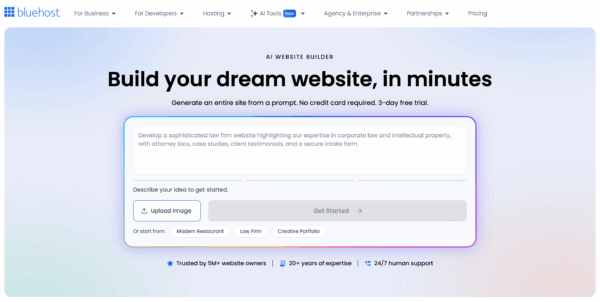
- Website Builders: Tools like the Bluehost AI Website Builder, mentioned in the original article, can dramatically simplify website creation for beginners. These builders typically use intuitive drag-and-drop interfaces or AI prompts to generate initial designs, requiring no coding skills. While excellent for quick launches and simpler sites, their customization options may be limited for more complex functionalities like custom membership portals.
- One-Click Installers: For popular CMS platforms like WordPress, Joomla, or Drupal, simplifying the installation process.
- Staging Environments: A safe, private copy of a website where changes can be tested before going live.
Unpacking Hosting Types: Shared, VPS, Dedicated, and Beyond
The hosting industry offers a variety of solutions tailored to different needs and budgets. Understanding the distinctions between these types is crucial for making an informed choice.
1. Shared Hosting: This is the most common and often the most affordable type of hosting. In a shared hosting environment, multiple websites reside on a single physical server, sharing its resources (CPU, RAM, disk space, bandwidth). While each website has its own isolated space, the collective activity of all sites on the server can impact individual site performance. For example, a sudden surge in traffic to one website on the server could potentially slow down others. Shared hosting is ideal for small blogs, personal websites, and new businesses with low traffic volumes, offering an economical entry point into the online world.
2. Dedicated Hosting: At the other end of the spectrum is dedicated hosting, where a user leases an entire physical server solely for their website or applications. This provides unparalleled control, performance, and security, as all server resources are exclusively allocated. Dedicated hosting is suitable for large enterprises, high-traffic e-commerce sites, or complex web applications that require maximum power, security, and customization. The cost is significantly higher than shared or VPS hosting due to the exclusive use of hardware and often includes managed services.
3. VPS Hosting (Virtual Private Server): VPS hosting bridges the gap between shared and dedicated hosting. A single physical server is partitioned into several isolated virtual machines, each functioning as an independent server with its own dedicated allocation of CPU, RAM, and disk space. While multiple VPS instances share the same physical hardware, each VPS operates with its own operating system and resources, ensuring that one website’s activity does not directly impact others. VPS offers greater control, flexibility, and scalability than shared hosting, at a more affordable price point than dedicated hosting. It’s an excellent choice for growing businesses, medium-traffic websites, and developers who need root access and custom server configurations.
4. Cloud Hosting: A more modern and highly scalable option, cloud hosting distributes a website’s data across an interconnected network of virtual servers, rather than a single physical server. If one server fails, other servers in the network seamlessly take over, ensuring high availability and minimal downtime. Cloud hosting is known for its extreme scalability – resources can be easily increased or decreased on demand, making it ideal for websites with fluctuating traffic or unpredictable growth. Users typically pay only for the resources they consume, making it a cost-effective solution for dynamic needs.
5. Managed WordPress Hosting: Specifically designed for websites built on WordPress.org, managed WordPress hosting optimizes the server environment for this popular content management system. These plans often include automatic WordPress installation, core updates, plugin updates, enhanced security features, daily backups, and specialized WordPress support. This allows users to leverage the power of WordPress without having to manage the underlying server infrastructure, offering a balance of control and convenience for WordPress users.
SEO and Business Growth: The Undeniable Link to Web Hosting
The choice of web hosting directly impacts a website’s search engine optimization (SEO) and, by extension, its visibility and business growth. Search engines like Google prioritize user experience, and a website’s hosting plays a critical role in delivering that experience.
- Website Speed: Page load time is a confirmed ranking factor for Google. Slow websites lead to higher bounce rates, lower user engagement, and ultimately, poorer search rankings. Quality hosting with fast SSD storage, ample RAM, optimized server software, and global data centers can significantly reduce load times.
- Uptime and Reliability: Search engines cannot crawl or index a website that is frequently offline. Consistent uptime is crucial for maintaining search engine visibility and ensuring that users can always access the site. Chronic downtime can lead to de-indexing or a significant drop in rankings.
- Security: With an increasing emphasis on online safety, search engines favor secure websites. An SSL certificate, provided by most reputable hosts, is a fundamental security measure and a minor ranking signal. Furthermore, robust hosting security features (firewalls, malware scanning, DDoS protection) prevent hacking attempts that could lead to blacklisting by search engines or removal from search results.
- Server Location (for geo-targeting): As mentioned, server location can influence speed, which in turn affects SEO. For businesses targeting specific geographical regions, hosting servers in those regions can offer a marginal SEO advantage by providing faster access to local users.
The cumulative effect of these factors means that investing in high-quality, reliable hosting is not merely a technical requirement but a strategic business decision. It underpins user satisfaction, builds trust, and directly supports efforts to achieve higher search engine rankings, ultimately driving organic traffic and business success.
Expert Perspectives and Industry Outlook
Industry analysts consistently emphasize that while cost is an initial consideration, reliability, scalability, and security should be paramount when selecting a web host. "The cheapest option is rarely the best in the long run," advises a leading digital infrastructure expert. "Downtime, slow speeds, and security breaches can cost businesses far more in lost revenue and reputation than the savings from a low-cost host." Many experts recommend looking for providers with a proven track record, transparent pricing, and comprehensive customer support.
The future of web hosting is anticipated to be shaped by several emerging trends. Cloud hosting will continue its dominance, with further advancements in serverless computing, where developers can run application code without provisioning or managing servers. Artificial intelligence and machine learning are increasingly being integrated into hosting management, offering predictive analytics for resource allocation, automated security responses, and intelligent optimization. Furthermore, sustainability is becoming a key differentiator, with more hosting providers investing in green data centers powered by renewable energy, aligning with global environmental concerns.
Conclusion: A Foundational Investment
Web hosting is not merely a technical prerequisite; it is a foundational investment in a website’s success. From ensuring basic accessibility to influencing SEO performance, user experience, and security, the choice of a hosting provider and plan carries significant weight. By carefully evaluating factors such as server location, storage, bandwidth, security features, support quality, and the various hosting types available, individuals and businesses can make an informed decision that aligns with their specific needs and long-term objectives. A robust hosting infrastructure safeguards digital assets, enhances user satisfaction, and ultimately empowers online ventures to thrive in an increasingly competitive digital landscape. Neglecting this crucial aspect can undermine even the most meticulously crafted online presence.
Frequently Asked Questions
Q: After reading this, I realize I might need a better host. Is it possible to switch hosts?
A: Yes, switching web hosts is entirely possible, though the process can vary in complexity depending on your current setup and the new host. Most reputable hosting providers offer migration services or comprehensive guides to assist users in transferring their website files, databases, and configuration settings. It’s highly recommended to contact the support team of your prospective new host to understand their migration process and the level of assistance they provide. They can guide you through moving your domain, website files, and any associated databases.
Q: There are many hosting options out there. Is there a tool that lets me enter my data and help me choose?
A: While no single tool can perfectly automate the decision, several online resources and comparison websites offer detailed reviews and feature comparisons of various hosting providers. These tools can help filter options based on specific criteria like price, hosting type, and included features. However, it’s crucial to conduct your own research, read independent reviews, and directly engage with potential hosting companies’ sales or support teams. Consider your budget, specific feature requirements (e.g., website builder, email hosting), and discuss your expected traffic and growth with their staff to ensure the plan fits your needs.
Q: I’m just starting out with my site and don’t know how many visits I’ll get. What should I look for in terms of bandwidth?
A: It’s prudent to consider bandwidth even for a new site, but don’t let uncertainty paralyze your choice. Many beginner-friendly hosting plans, particularly shared hosting, offer "unmetered" bandwidth, which usually means they provide sufficient capacity for typical small-to-medium websites under a fair usage policy. For new sites, it’s often best to start with a plan that provides adequate initial resources and, more importantly, offers clear pathways for scalability. Research how different hosting companies handle upgrades and the pricing structure for increased bandwidth or resource allocation. You can start small and easily upgrade your plan as your website traffic grows, ensuring you only pay for what you need.
Q: What about "green hosting"? Is it a viable option?
A: Green hosting is a viable and increasingly popular option. Many hosting providers are committed to reducing their environmental impact by powering their data centers with renewable energy sources, optimizing energy efficiency, and engaging in carbon offsetting programs. While the core hosting services remain the same, choosing a green host aligns your online presence with sustainable practices. This can also be a positive selling point for your brand, appealing to environmentally conscious customers. When evaluating, look for certifications or clear statements from providers regarding their green initiatives.
Q: What is the role of a Content Delivery Network (CDN) in relation to hosting?
A: A Content Delivery Network (CDN) is a network of geographically distributed servers that work together to provide faster delivery of internet content. While web hosting stores your primary website files on a single server, a CDN caches copies of your static website content (images, videos, CSS, JavaScript) on servers located around the world. When a user visits your site, the CDN delivers the content from the server closest to them, significantly reducing load times and improving user experience, especially for global audiences. CDNs also enhance website security by absorbing DDoS attacks and can reduce the load on your primary hosting server. Many hosting providers offer CDN integration as an add-on or bundle it with higher-tier plans.