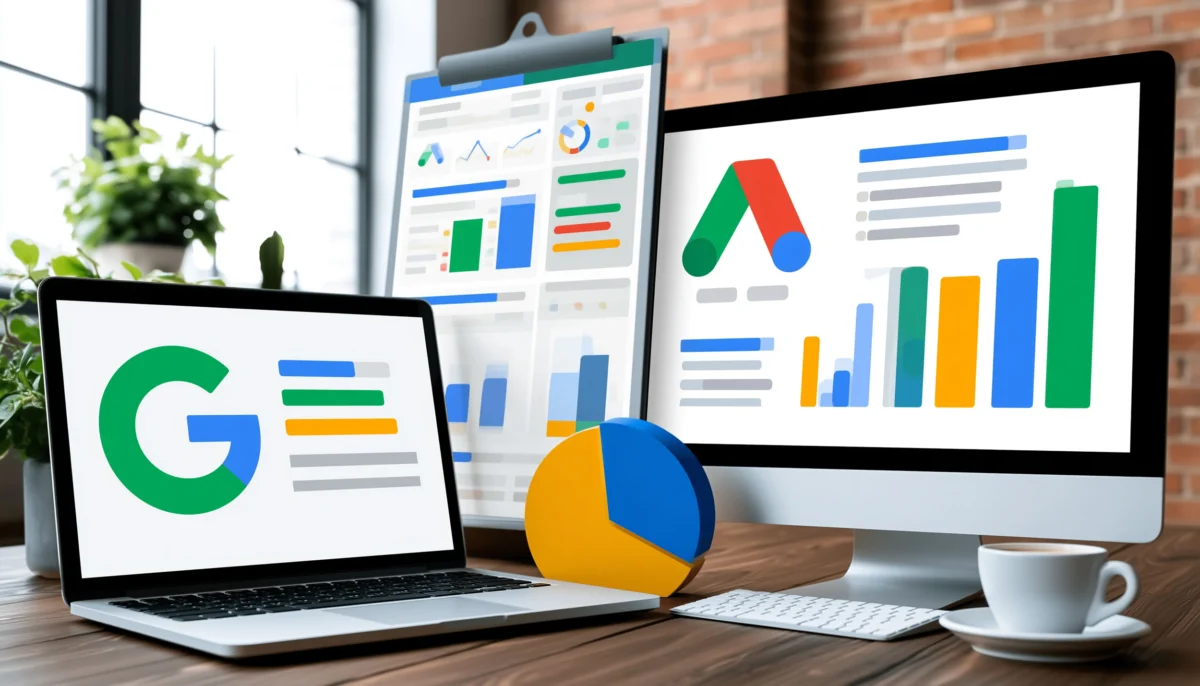
Google Ads has implemented a significant enhancement to its Performance Max product-level reporting, effective June 15, 2026. This crucial update means that the product performance report now aggregates data from all Performance Max networks, a substantial expansion from the previously limited subset of networks it covered. This change promises to provide advertisers with a more comprehensive and accurate understanding of their product performance across Google’s extensive advertising ecosystem.
The shift was first identified and shared by Bia Camargo on LinkedIn, subsequently highlighted by PPC News Feed. The official communication from Google detailed the expansion: "Starting in June 2026, product reporting has expanded. Previously, product performance metrics such as cost and conversions were only available for products included in Performance Max ads serving on Search networks and Standard Shopping campaigns. You’ll now find a comprehensive set of metrics for your products across certain campaigns that use Google Merchant Center. This includes data for all networks in Performance Max campaigns, as well as metrics for video, app and Demand Gen campaigns. This may cause a one-time increase in metrics such as impressions, clicks and more for Performance Max campaigns only." Camargo succinctly translated this technical notice for advertisers, stating, "a bunch of accounts are about to show a one-time jump in impressions and clicks. Not because performance changed. Because the reporting scope did." This interpretation underscores the critical distinction between a change in actual campaign performance and an adjustment in data aggregation.
The Evolution of Performance Max and Its Reporting Challenges
To fully appreciate the significance of this reporting update, it’s essential to understand the context of Google Ads Performance Max (PMax) campaigns. Introduced in late 2021 and fully rolled out by 2022, Performance Max was designed as an all-in-one, goal-based campaign type that allows advertisers to access all Google Ads inventory from a single campaign. Leveraging Google’s sophisticated AI and machine learning capabilities, PMax campaigns aim to maximize conversions and value by finding customers across all Google channels, including Search, Display, Discover, Gmail, YouTube, and Maps.
The premise of PMax was revolutionary: simplify campaign management while optimizing for performance across a vast array of placements. For advertisers, this meant potentially higher efficiency and broader reach without the need to manage separate campaigns for each network. However, the very nature of its automated, AI-driven approach also introduced challenges, particularly concerning transparency and granular reporting. Early feedback from advertisers often cited a "black box" effect, where the extensive automation, while effective, made it difficult to ascertain specific performance drivers, especially at the product level and across individual networks. Advertisers struggled to understand precisely where their budget was being spent and which specific products were performing best on which specific Google property.
Prior to this update, product performance metrics within PMax were primarily confined to products featured in ads served on Search networks and Standard Shopping campaigns. This limitation meant that advertisers running PMax campaigns, which inherently span all Google networks, were receiving an incomplete picture of their product-level effectiveness. For instance, a product might be performing exceptionally well on YouTube or Discover feeds, driving significant impressions and conversions, but these crucial data points were either not fully attributed or not visible in the product-level reports. This fragmented view hindered accurate optimization, budget reallocation, and strategic decision-making, particularly for e-commerce businesses heavily reliant on detailed product analytics.
Detailed Implications of "All Networks" Reporting
The expansion to include "all networks" fundamentally transforms how advertisers can analyze and optimize their Performance Max campaigns. This now encompasses:
- Search Network: The traditional text and shopping ads on Google Search results pages.
- Display Network: A vast network of millions of websites, news sites, and blogs, where visual ads are served.
- Discover: Personalized feeds on Google apps (like Google Search app) and the Google.com mobile homepage, showing content and ads tailored to user interests.
- YouTube: The world’s largest video-sharing platform, where video ads can reach a massive audience.
- Gmail: Ads appearing in users’ inboxes within Gmail.
- Maps: Local search results and navigation, where businesses can appear with relevant ads.
By consolidating data from all these diverse channels into a single product-level report, advertisers gain an unprecedented holistic view. This means they can now see, for example, that a particular product is not only selling well via Search ads but is also garnering significant engagement and conversions through video ads on YouTube or visually appealing placements on the Display Network or Discover feeds. This level of comprehensive attribution is vital for several reasons:
- Accurate ROI Attribution: Advertisers can now precisely attribute costs and conversions to individual products across the entire PMax campaign, leading to a much clearer return on investment (ROI) calculation per product.
- Enhanced Product Strategy: Understanding which products resonate on specific networks can inform broader marketing and product development strategies. A product that performs exceptionally well on YouTube might warrant more video creative investment, while one thriving on Discover might suggest stronger visual asset creation.
- Optimized Budget Allocation: With a complete data set, advertisers can make more informed decisions about budget allocation within their PMax campaigns. If certain products are underperforming overall but show strong potential on specific niche networks, this data can guide adjustments to asset groups or product feed optimizations.
- Improved Performance Diagnostics: The expanded reporting allows for more granular troubleshooting. If overall campaign performance dips, advertisers can now pinpoint whether the issue is concentrated on specific products or networks, rather than speculating about the campaign as a whole.
- Benchmarking and Forecasting: While the initial data might show a "one-time increase," establishing new baselines with this comprehensive data will enable more accurate future performance benchmarking and forecasting.
Understanding the "One-Time Increase" in Metrics
Bia Camargo’s "translation" regarding the one-time jump in impressions and clicks is crucial for advertisers to internalize. The Google notice explicitly states: "This may cause a one-time increase in metrics such as impressions, clicks and more for Performance Max campaigns only." This is not an indication of a sudden surge in actual campaign performance, but rather a correction in the data being reported. Essentially, Google is now showing advertisers the full scope of activity that was already happening but was previously invisible or unattributed in product-level reports.
For example, if a product was generating 1,000 impressions daily through YouTube ads within a PMax campaign, but these impressions were not being reported at the product level, they will now suddenly appear. This will cause the reported impression count for that product to jump. The product was always receiving those impressions; it’s just that the reporting system wasn’t reflecting them comprehensively.
This distinction is vital for advertisers and agencies to communicate clearly to their clients and internal stakeholders. Misinterpreting this data shift could lead to erroneous conclusions about campaign effectiveness, potentially resulting in premature celebration or misguided strategic changes. It necessitates a careful re-evaluation of historical performance trends. Advertisers comparing post-June 15, 2026, data with pre-June 15, 2026, data will need to account for this change in reporting scope. For accurate year-over-year or month-over-month comparisons, it may be necessary to either adjust historical benchmarks or focus analyses on trends after the reporting change took effect.
The Broader Context: Google’s Commitment to Transparency and Advertiser Control
This reporting update is not an isolated event but rather fits into a larger pattern of Google’s ongoing efforts to address advertiser feedback regarding Performance Max. Since its launch, PMax has been lauded for its efficiency but also criticized for its "black box" nature. In response, Google has progressively introduced more transparency features and reporting capabilities. These have included:
- Expanded Insights: Providing more detailed insights into audience segments, top-performing creative assets, and search categories driving performance.
- Exclusion Capabilities: Offering more controls for brand safety and content exclusions.
- Diagnostic Tools: Enhancing tools to help advertisers understand campaign setup and potential issues.
The expansion of product-level reporting to all networks is another significant step in this direction. It signals Google’s commitment to evolving PMax from a purely automated system to one that offers a better balance between AI-driven optimization and advertiser visibility and control. In an increasingly complex digital advertising landscape, where businesses invest heavily in multi-channel strategies, granular and accurate reporting is paramount. Advertisers need data not just to prove ROI, but to genuinely understand customer journeys, identify market opportunities, and refine their product offerings.
Impact on Digital Marketing Professionals and Agencies
For digital marketing professionals and agencies managing Google Ads campaigns, this update presents both opportunities and responsibilities.
- Opportunities:
- Deeper Insights: The ability to uncover previously hidden performance drivers for individual products across diverse networks.
- Improved Client Reporting: Agencies can now provide more detailed, accurate, and comprehensive reports to clients, showcasing the true cross-channel impact of their PMax campaigns.
- Strategic Advantage: Agencies that quickly adapt to and leverage this new reporting capability can gain a competitive edge by offering superior optimization and strategic guidance.
- Responsibilities:
- Client Communication: Proactively inform clients about the reporting change and explain the "one-time increase" to prevent confusion or misinterpretation.
- Dashboard Adjustments: Update internal and client-facing dashboards to reflect the expanded data and potentially re-baseline historical data where feasible or necessary.
- Analytical Refinement: Develop new analytical frameworks to leverage the richer data, focusing on cross-network product performance and optimizing asset groups more effectively.
- Training: Ensure that teams are fully aware of the changes and proficient in interpreting the new, comprehensive reports.
The Future of Performance Max Reporting
As digital advertising continues to evolve, the demand for transparency and granular control within automated systems like Performance Max will only grow. This update to product-level reporting is a testament to the ongoing dialogue between platform providers and advertisers. While PMax offers immense power through its AI capabilities, its utility is maximized when advertisers have clear visibility into its operations and outcomes.
The move to integrate data from video, app, and Demand Gen campaigns within this comprehensive reporting framework further underscores Google’s ambition to provide a unified view across its entire ad ecosystem. As advertisers increasingly adopt holistic marketing strategies, the tools they use must reflect this interconnectedness. This reporting expansion positions PMax as an even more formidable tool for e-commerce and lead generation businesses, enabling them to make smarter, data-driven decisions at the most granular level – that of the individual product. The digital advertising industry will undoubtedly watch for further refinements, but for now, the ability to truly see product performance across all Google networks marks a significant stride forward in campaign intelligence.