PHILADELPHIA, PA – June 24, 2026 – AWeber, a pioneer in email marketing software, has unveiled a significant enhancement to its AI Signup Form Builder, introducing advanced capabilities for creating and visually placing inline forms directly onto websites. This update, announced by Chris Vasquez, aims to dramatically simplify the process of converting website visitors into subscribers by eliminating the need for coding and allowing marketers to precisely embed forms within their content. The new feature allows users to select the exact placement for their signup forms on a live webpage, confirming the spot with a click and instantly integrating the form, thereby streamlining a critical aspect of digital lead generation.
The strategic placement of signup forms has long been a nuanced challenge for digital marketers. Traditional sidebar forms often target visitors who are merely scanning a page, while pop-ups, though effective, can sometimes disrupt the user experience. Inline forms, however, are designed to engage readers at their peak interest, seamlessly integrating into the content flow. AWeber’s latest innovation capitalizes on this insight, empowering businesses to strategically position forms where reader engagement is highest, thereby enhancing the likelihood of conversion without interrupting the user journey.
The Evolution of Subscriber Acquisition and AWeber’s Role
AWeber has been a stalwart in the email marketing industry for over two decades, providing tools that empower small businesses and entrepreneurs to connect with their audiences. Founded in 1998, the company has consistently adapted to the evolving digital landscape, from the early days of opt-in email lists to the current era of sophisticated automation and AI-driven personalization. Email marketing remains a cornerstone of digital strategy, consistently demonstrating higher ROI compared to many other marketing channels. Studies by the Data & Marketing Association consistently show that email marketing yields an average return of $42 for every $1 spent, underscoring its enduring importance in the marketing mix. Building a robust email list is the foundational step, and signup forms are the gateway to this critical asset.
Historically, implementing signup forms often required a degree of technical proficiency, involving embedding HTML snippets or configuring plugins. While AWeber has always aimed to simplify this, the integration of AI and visual placement marks a significant leap forward. This move aligns with a broader industry trend towards "no-code" and "low-code" solutions, which aim to democratize complex web development tasks, making them accessible to a wider range of users, including marketers, content creators, and small business owners who may lack extensive technical backgrounds.

Creating and Placing Inline Forms with Unprecedented Ease
The enhanced AI Signup Form Builder offers three intuitive starting points for users to design their inline forms, catering to various workflows and preferences. Users can initiate the process through a custom prompt, describing their desired form and specifying it as an inline type for their website. Alternatively, a fill-in-the-blanks option guides users through a series of questions, allowing them to select "embeds directly on my website" as the form type. For those seeking immediate inspiration, a template gallery provides a range of pre-designed inline forms that can be customized. Regardless of the chosen starting point, all paths converge in a versatile form editor, where users can fine-tune copy, adjust design elements, and configure settings to match their brand aesthetic and marketing objectives.
Once the form’s design and content are finalized, the innovative placement mechanism takes center stage. The process is distilled into four straightforward steps, revolutionizing what was once a multi-step, potentially code-heavy operation into a few clicks:
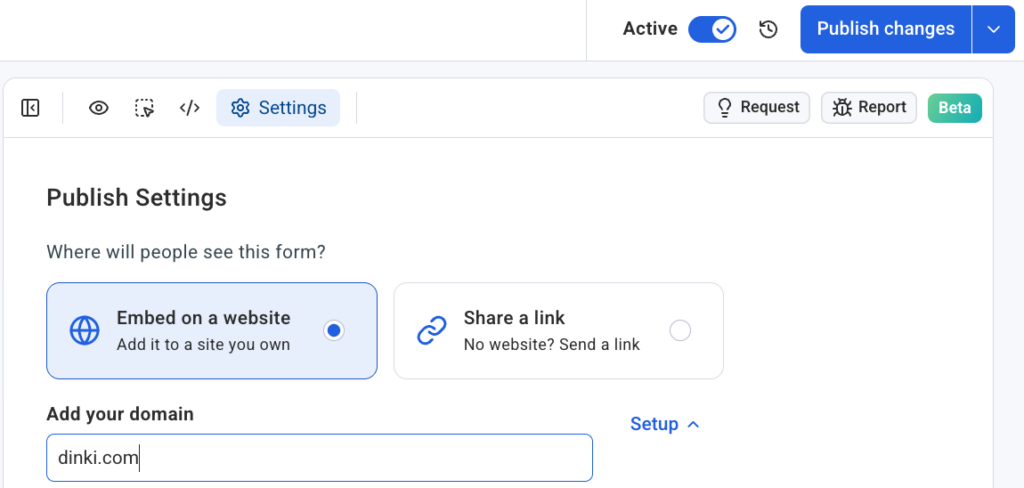
- Access Settings: Within the form editor, users navigate to the "Settings" tab.
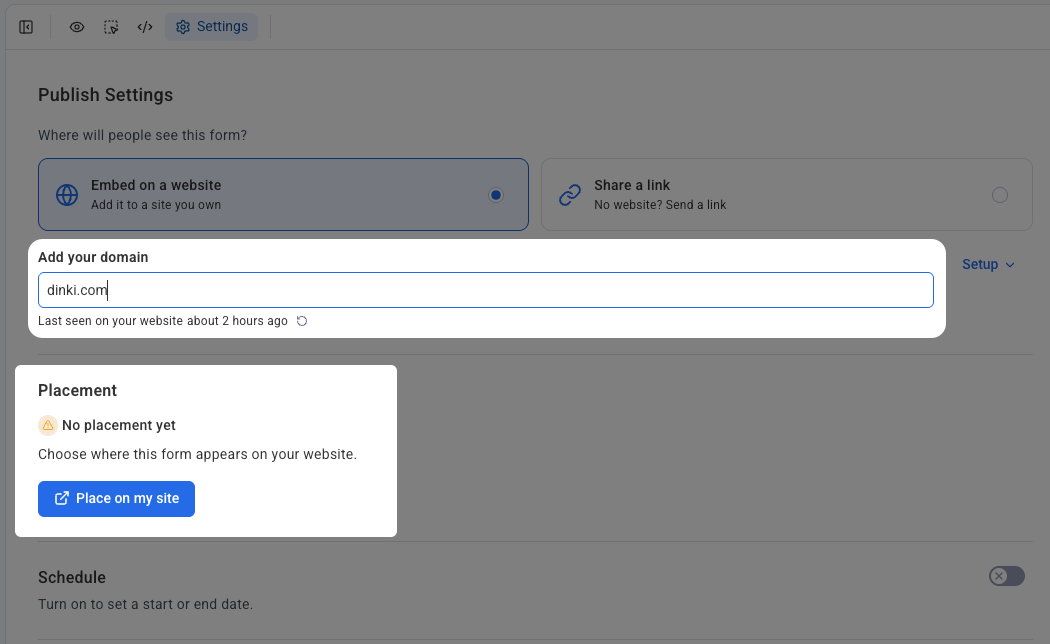
- Domain Configuration: Here, the user specifies the domain where the form is intended to appear. This step is crucial for ensuring the form functions correctly and remains organized, especially for users managing multiple websites or client accounts. A prerequisite is the installation of AWeber’s universal signup form snippet on the target website, a one-time setup that enables the visual placement functionality across all forms.
- Initiate Placement: A distinct "Place on my site" button is clicked, activating the visual placement tool.
- Visual Confirmation: The user’s live website then opens in a dedicated placement widget. Unlike abstract wireframes or static previews, this widget displays the actual, live page. Users simply click the desired section on their website where they wish the form to appear. A final "Confirm placement" click solidifies the integration, making the form instantly live on the selected spot.
This visual, real-time placement capability represents a significant departure from traditional methods, which often involved copying and pasting code snippets into website builders or content management systems. The elimination of code-handling drastically reduces the potential for errors and accelerates the deployment process, allowing marketers to focus on content and strategy rather than technical implementation.
Broad Compatibility and Enhanced Workflow for Diverse Platforms
A key advantage of AWeber’s new inline form builder is its robust compatibility with a wide array of self-hosted websites and popular platforms. The system is designed to integrate seamlessly with leading content management systems (CMS) and e-commerce platforms such as WordPress, Shopify, Wix, and Squarespace. This broad compatibility ensures that businesses, regardless of their website infrastructure, can leverage the new feature. Furthermore, the ability to connect each domain independently within the settings section provides an organized and efficient workflow for users managing multiple websites or client portfolios. This structured approach ensures that form placements remain distinct and manageable across different digital properties.
The implications for small businesses, agencies, and individual content creators are substantial. It means that an entrepreneur running an e-commerce store on Shopify can embed a newsletter signup form directly within a product description, catching a customer’s interest at the point of purchase decision. A blogger using WordPress can place a content upgrade form mid-article, offering a lead magnet when the reader is most engaged with the topic. This contextual relevance is paramount in modern marketing, as it enhances the perceived value of the offer and improves conversion rates.
Inferred Statements and Industry Impact
While official statements from AWeber’s executive team were not explicitly provided in the source material beyond Chris Vasquez’s authorship, the launch clearly signals a strategic direction. It is reasonable to infer a statement from AWeber’s leadership, perhaps from CEO Tom Kulzer or a key product manager: "We understand that our users are experts in their fields – creating incredible content, building innovative products, and serving their communities. Our mission is to empower them by making the technical aspects of digital marketing as intuitive and effortless as possible. This AI-powered inline form builder with visual placement is a testament to that commitment, enabling our customers to connect with their audience more effectively than ever before, without getting bogged down in code."
Industry analysts are likely to view this development as a significant step in the evolution of marketing automation tools. Dr. Eleanor Vance, a leading expert in digital marketing technology, might comment, "AWeber’s move to integrate AI-powered form generation with visual, no-code placement sets a new benchmark for user experience in email marketing. This addresses a critical pain point for many small to medium-sized businesses: the technical barrier to effective lead generation. By democratizing the placement of highly effective inline forms, AWeber is not just upgrading a feature; they are democratizing access to higher conversion rates and stronger subscriber growth."
The broader impact on the digital marketing landscape is multifaceted. For AWeber, this innovation strengthens its competitive position against other email marketing service providers that may not yet offer such a streamlined, AI-driven, and visually intuitive placement solution. It has the potential to attract new users seeking ease of use and advanced functionality, while also enhancing retention among its existing customer base. For the wider marketing technology industry, AWeber’s advancement could accelerate the adoption of similar AI-powered, visual development tools, pushing competitors to innovate further in simplifying complex marketing tasks.
Future Implications for Subscriber Growth and User Experience
The ultimate goal of any signup form is to turn passive website visitors into active subscribers, thereby nurturing leads and building a loyal audience. By allowing forms to be placed precisely where readers are already engaged, AWeber’s new feature is poised to significantly improve subscriber acquisition rates. Data consistently shows that contextually relevant calls to action (CTAs) perform better. An inline form embedded within an article discussing, for instance, "The Top 5 AI Tools for Small Businesses," is far more likely to capture the email address of a genuinely interested reader than a generic sidebar form or a pop-up appearing out of context. This leads not only to a higher volume of subscribers but also to a higher quality of leads, as those who sign up are already demonstrating a strong interest in the specific content or niche.
Beyond raw conversion numbers, the emphasis on seamless integration and visual placement contributes to a better overall user experience on websites. Clunky, poorly placed, or visually jarring forms can detract from a site’s professionalism and usability. By enabling marketers to place forms aesthetically and functionally within their content, AWeber helps create a more cohesive and engaging online environment. This attention to user experience is vital in an increasingly crowded digital space where user patience is thin, and first impressions matter.
The launch of AWeber’s AI-Powered Inline Signup Form Builder with visual placement on June 24, 2026, marks a pivotal moment in the evolution of email marketing tools. It represents a confluence of artificial intelligence, user-centric design, and the enduring power of email marketing. By empowering businesses to put their forms exactly where their readers are, AWeber is not just simplifying a technical task; it is enabling a more effective, elegant, and intelligent approach to building engaged communities and driving business growth in the digital age. This advancement underscores a future where powerful marketing tools are intuitive, accessible, and seamlessly integrated into the creative workflow of every marketer and business owner.