
OpenAI, the San Francisco-based artificial intelligence research and deployment company, has significantly advanced its commercial advertising platform, ChatGPT Ads, with the introduction of a new ‘Overview’ tab and a strategic geographical expansion into the vital markets of Japan and South Korea. These updates, communicated via an official email on [yesterday’s date, or specific date if known], underscore OpenAI’s aggressive push to monetize its highly popular conversational AI model and establish a formidable presence in the global digital advertising landscape. The enhancements are designed to provide advertisers with more robust tools for campaign management and to unlock new audiences in key Asian economies.
Evolution of ChatGPT Ads: A Strategic Imperative
The journey of OpenAI from a non-profit research lab to a commercial entity has been marked by a series of strategic product releases and monetization efforts, with ChatGPT Ads emerging as a critical component of this evolution. Initially gaining widespread public attention with the launch of ChatGPT in November 2022, OpenAI quickly moved to explore various revenue streams beyond its API services and premium subscriptions (ChatGPT Plus). The integration of advertising capabilities into its AI models represents a natural progression, leveraging the vast user engagement and data insights derived from millions of daily interactions.
The development of ChatGPT Ads has been incremental yet purposeful. Early iterations focused on foundational ad serving capabilities, allowing businesses to place promotional content within or alongside AI-generated responses. This was followed by the introduction of more sophisticated features, which the recent email from OpenAI specifically highlighted. These include advanced audience targeting options, enabling advertisers to reach specific demographics and interest groups based on inferred user preferences and interactions within the ChatGPT environment. Another significant stride has been the implementation of AI-generated ads, where OpenAI’s models assist in crafting ad copy and creative assets, streamlining the advertising process and potentially improving campaign effectiveness. Furthermore, the platform has refined its ad labeling system, moving from explicit "Sponsored" tags to more integrated and subtle indicators, aiming for a less disruptive user experience while maintaining transparency. These previous updates, extensively covered by industry observers, laid the groundwork for the current significant enhancements.
The New ‘Overview’ Tab: A Centralized Command Center for Advertisers
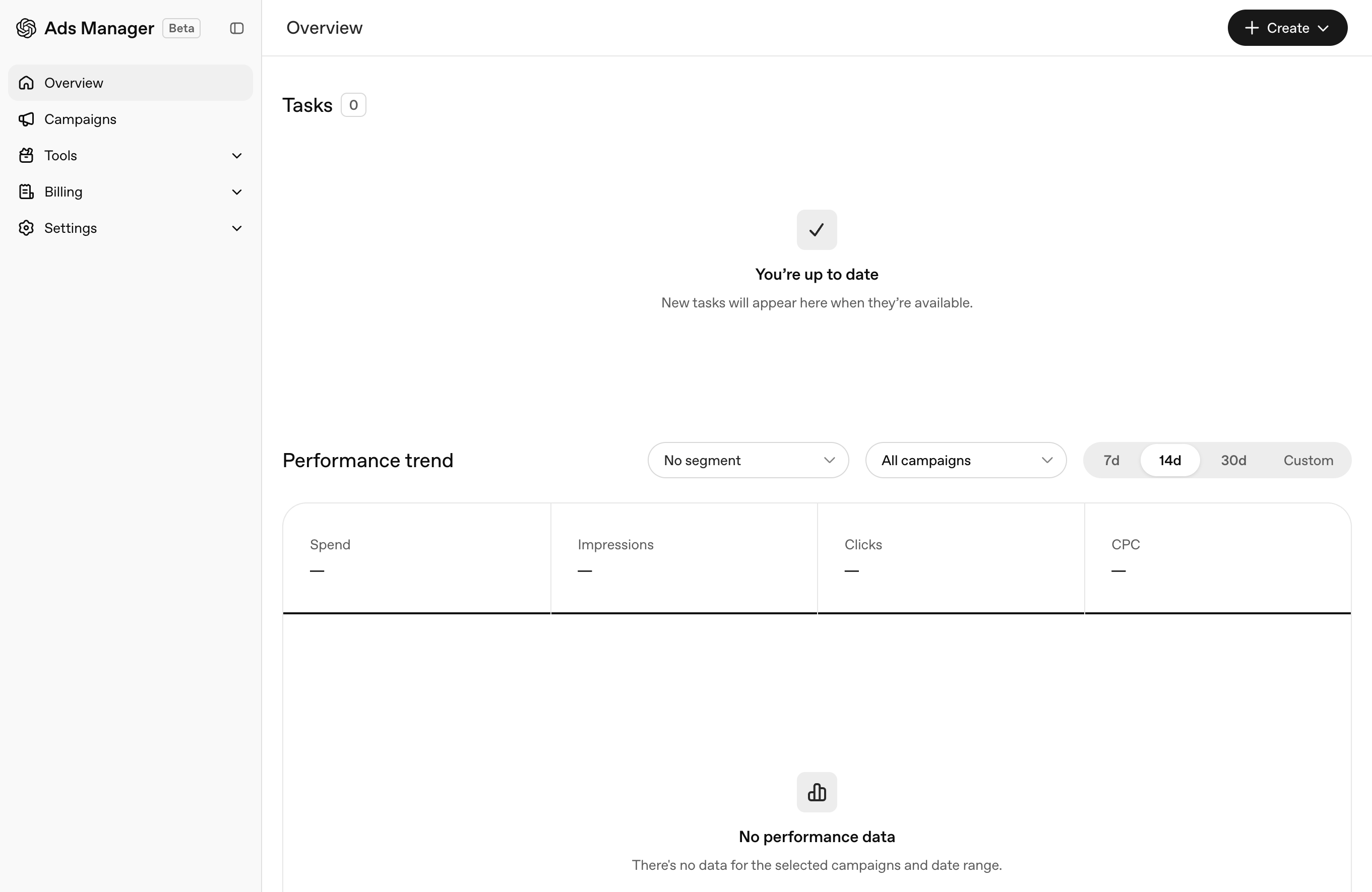
At the heart of the latest platform improvements is the introduction of the ‘Overview’ tab. This new feature is designed to serve as a centralized dashboard, offering advertisers a comprehensive and immediate snapshot of their campaign performance and account health. OpenAI’s official communication detailed its core functionalities:

- Account Health Monitoring: Provides advertisers with real-time insights into the operational status and potential issues affecting their ad campaigns. This proactive monitoring helps identify and address problems swiftly, preventing unnecessary expenditure or missed opportunities.
- Recommended Tasks for Performance Improvement: The tab leverages OpenAI’s AI capabilities to analyze campaign data and offer actionable recommendations. These suggestions might range from adjusting bidding strategies and optimizing ad creatives to refining audience segments, all aimed at maximizing campaign performance and return on investment (ROI).
- Key Performance Metrics (KPIs) in Flexible Trend Charts: Advertisers can now visualize crucial metrics such as impressions, clicks, conversions, and spend over customizable timeframes. The ‘larger, more flexible trend chart’ promises a more intuitive and detailed analytical experience, enabling advertisers to spot trends, measure effectiveness, and make data-driven decisions more efficiently.
The visual representation shared by OpenAI, even without live data, suggests a clean, intuitive interface, reminiscent of established ad platforms like Google Ads or Meta Ads Manager. This strategic design choice indicates OpenAI’s ambition to provide a user experience that is familiar and robust, catering to advertisers accustomed to industry-standard tools. The ‘Overview’ tab is a clear signal that OpenAI is not merely offering an ad placement service but is committed to building a full-fledged, sophisticated advertising ecosystem that empowers businesses to manage and optimize their campaigns effectively.
Strategic Expansion: Tapping into High-Growth Asian Markets
Perhaps equally significant to the platform enhancements is the strategic geographical expansion of ChatGPT Ads into Japan and South Korea. This move allows advertisers to now target users in these two economically powerful and technologically advanced nations, dramatically expanding their potential reach.
The selection of Japan and South Korea is highly strategic. Both countries represent mature, highly digitalized markets with substantial digital advertising expenditures and a high rate of technological adoption, including a strong affinity for AI-driven solutions.
- Japan: As the world’s third-largest economy, Japan boasts a massive and affluent consumer base. Its digital advertising market is robust, with projected spending reaching into the tens of billions of dollars annually. Japanese consumers are highly engaged with digital platforms, and the e-commerce sector is thriving. The integration of AI into daily life and business operations is also gaining significant traction. For ChatGPT Ads, entering Japan offers access to a sophisticated market where precision targeting and innovative ad formats can yield substantial returns. Japanese businesses, from global conglomerates to niche local enterprises, are keen to leverage cutting-edge tools to reach their audiences.
- South Korea: Known globally for its hyper-connectivity and rapid technological innovation, South Korea presents another lucrative market. It consistently ranks among the top countries for internet penetration and smartphone usage. The digital advertising market in South Korea is dynamic, characterized by high mobile ad spending and a significant focus on social media and influencer marketing. South Koreans are early adopters of new technologies, making them an ideal demographic for an AI-powered ad platform. The competitive landscape, dominated by local players like Naver and Kakao alongside global giants, means that ChatGPT Ads will need to demonstrate clear value propositions, which its AI-driven features could provide.
This expansion offers significant advantages for advertisers:
- Increased Reach: Businesses looking to enter or strengthen their presence in the Asia-Pacific region can now directly leverage ChatGPT Ads to connect with users in these key markets.
- Localized Engagement: The ability to target users within Japan and South Korea allows for more culturally relevant and effective advertising campaigns, potentially leading to higher engagement and conversion rates.
- Early Mover Advantage: For some advertisers, being among the early adopters of ChatGPT Ads in these regions could provide a competitive edge in reaching a potentially less saturated ad inventory compared to more established platforms.
Broader Implications and Market Dynamics
OpenAI’s continuous development of ChatGPT Ads, particularly with the introduction of a comprehensive ‘Overview’ tab and strategic geographical expansion, carries significant implications for the broader digital advertising industry and OpenAI’s strategic positioning.
OpenAI’s Monetization Strategy:
The aggressive rollout of ad features underscores OpenAI’s commitment to building a sustainable and diversified revenue model. While API access and premium subscriptions contribute significantly, advertising offers a scalable path to generate substantial income from its free-tier users. This is crucial for funding ongoing research and development into advanced AI models, which are inherently resource-intensive. The ‘Overview’ tab, by improving advertiser experience and campaign efficiency, aims to attract more ad spend to the platform, signaling a long-term commitment to the advertising business.
Competitive Landscape:
The digital advertising market is fiercely competitive, dominated by giants like Google (Google Ads, YouTube Ads), Meta (Facebook Ads, Instagram Ads), Amazon Ads, and Microsoft Ads. OpenAI’s entry and rapid development of ChatGPT Ads position it as a new, formidable contender. Its unique selling proposition lies in its foundational AI capabilities, which can power more intelligent ad targeting, creative generation, and performance optimization. The challenge for OpenAI will be to differentiate itself effectively and convince advertisers to allocate budget from established platforms to a newer entrant. The expansion into Japan and South Korea also puts it in direct competition with strong local players in those markets, necessitating a robust localization strategy beyond mere language support.
The Future of AI in Advertising:
ChatGPT Ads is at the forefront of demonstrating how generative AI can transform the advertising workflow. From automating ad copy creation and visual asset generation to dynamic audience segmentation and real-time bid optimization, AI’s role is set to expand exponentially. The ‘Overview’ tab’s recommendation engine is a prime example of AI assisting advertisers in making better decisions, moving beyond simple analytics to prescriptive insights. This trend is likely to accelerate, leading to more personalized, efficient, and potentially more ethical advertising practices, provided data privacy and algorithmic biases are carefully managed.
Advertiser Adoption and Industry Reaction:
Advertisers, particularly those with a focus on innovation and data-driven marketing, are likely to view these updates positively. The promise of an AI-powered platform with sophisticated management tools and access to new, high-value markets is compelling. Industry analysts suggest that these developments solidify OpenAI’s position as a serious player in the ad tech space, moving beyond experimental features to a robust commercial offering. The ability to manage campaign health and performance from a single, intuitive dashboard is a crucial factor for adoption, particularly for larger agencies and enterprises.
Challenges and Considerations:
Despite the promising outlook, OpenAI will face several challenges:
- Data Privacy: As an AI company handling vast amounts of user data, maintaining stringent privacy standards and transparency will be paramount, especially in markets with strong data protection regulations.
- Ad Quality and Relevance: Ensuring that ads delivered through ChatGPT are high-quality, relevant, and non-intrusive will be critical for user experience and platform integrity. Over-monetization or irrelevant ads could lead to user fatigue.
- Measurement and Attribution: Providing advertisers with robust and transparent measurement tools to attribute conversions accurately across different touchpoints will be essential for demonstrating ROI and attracting significant ad spend.
- Market Share Acquisition: Breaking into established ad markets, even with innovative technology, requires sustained investment in sales, support, and continuous platform improvement to chip away at the dominance of incumbents.
Conclusion
OpenAI’s latest enhancements to ChatGPT Ads, featuring the intuitive ‘Overview’ tab and strategic expansion into Japan and South Korea, mark a pivotal moment in its commercial journey. These moves not only bolster its monetization efforts but also position it as a serious contender in the highly competitive digital advertising arena. By providing advertisers with more powerful management tools and access to key international markets, OpenAI is signaling its long-term ambition to leverage its advanced AI capabilities to redefine the future of advertising. The coming months will be crucial in observing how advertisers adopt these new features and how ChatGPT Ads carves out its niche amidst the industry giants, further solidifying the role of AI at the core of digital marketing strategies worldwide.