

Digital marketing platforms, sophisticated software tools designed to streamline, execute, and measure marketing initiatives across a multitude of channels, have become indispensable for businesses in the rapidly expanding digital realm. As the landscape of consumer engagement diversifies and the number of marketing touchpoints – from email and SMS to social media, search engines, and emerging interactive experiences – continues its exponential growth, manual campaign management has transitioned from challenging to virtually impossible. This increasing complexity underscores the pivotal role of integrated platforms in achieving marketing efficacy and sustained business growth.
By 2026, the leading digital marketing platforms are distinguished by their profound reliance on advanced automation, intelligent AI-powered functionalities, and deeply integrated analytics and reporting capabilities. These platforms are engineered to transcend rudimentary task management, undertaking repetitive workflows, facilitating hyper-personalized messaging at unprecedented scale, and significantly enhancing customer engagement across the entire lifecycle. Critically, they also provide granular insights into revenue attribution, empowering marketing teams to allocate more time to strategic planning and less to operational minutiae. While no singular tool can perfectly address every marketing exigency, this comprehensive guide delves into ten prominent platforms spanning diverse categories, including email and SMS marketing, broader marketing automation, search engine optimization (SEO), social media management, graphic design, analytics, and landing page optimization. The optimal choice for any organization ultimately hinges on its specific objectives and long-term growth trajectory.
The Genesis and Evolution of Digital Marketing Platforms
The journey of digital marketing platforms mirrors the broader evolution of the internet and digital commerce. In the early 2000s, digital marketing was largely fragmented, with businesses employing disparate tools for individual channels: a standalone email sender, a basic website analytics tool, and manual updates for nascent social media profiles. This siloed approach created significant operational inefficiencies, data inconsistencies, and a disjointed customer experience. Marketers often struggled to gain a holistic view of their campaigns or understand the cumulative impact of their efforts.
The mid-2000s saw the emergence of rudimentary marketing automation systems, primarily focused on email drip campaigns. However, the true inflection point arrived with the proliferation of social media, mobile technology, and the advent of big data analytics in the early 2010s. Businesses recognized the urgent need for integrated solutions that could consolidate various marketing functions, provide a unified customer view, and automate complex workflows across multiple channels. This period gave rise to the first generation of comprehensive marketing suites, often incorporating CRM functionalities and offering a broader array of tools for content management, lead nurturing, and performance tracking.
The AI Revolution and the 2026 Landscape
The current era, particularly leading into 2026, is defined by the profound integration of Artificial Intelligence (AI) and Machine Learning (ML) into marketing platforms. Initially, AI applications were limited to predictive analytics, such as identifying customer churn risk or optimizing email send times. However, the rapid advancements in generative AI, particularly large language models (LLMs) and image generation capabilities, have fundamentally reshaped the functionalities of modern platforms. Today, AI assists in drafting compelling ad copy, personalizing website experiences in real-time, predicting customer purchasing behavior with high accuracy, and even automating sophisticated campaign optimizations. This integration allows platforms to move beyond mere execution to proactive intelligence, enabling marketers to anticipate trends and tailor interactions on an unprecedented scale.
Industry analysts predict that the global digital marketing software market, valued at over $60 billion in 2023, will continue its robust growth, potentially exceeding $150 billion by 2030, driven largely by the accelerating adoption of AI and automation. This growth underscores the increasing reliance of businesses, irrespective of size, on these advanced technological solutions to navigate competitive landscapes and connect effectively with increasingly discerning consumers.
Defining a Digital Marketing Platform
At its core, a digital marketing platform is a unified software system designed to centralize and optimize an organization’s marketing activities. It serves as a single operational hub, eliminating the need to juggle multiple, disparate tools for each marketing channel. These platforms typically integrate a combination of automation, analytics, and audience management capabilities, empowering businesses to execute campaigns, monitor their performance meticulously, and iteratively refine strategies over time.
The necessity for such platforms stems directly from the multi-channel nature of contemporary marketing, encompassing email, SMS, social media, search engine marketing, and proprietary websites. By consolidating these touchpoints, platforms ensure consistent brand messaging and seamless customer engagement. A robust platform automates repetitive yet critical tasks, such as triggering welcome email sequences for new subscribers or scheduling social media posts across various networks. Crucially, it then provides actionable reporting on what strategies are yielding results, thereby informing data-driven decision-making. In 2026, AI and deep personalization capabilities are no longer optional but central to most leading platforms, enabling functions from automated content drafting to predicting customer intent and tailoring communications to individual behavioral patterns.
It is important to differentiate between a “digital marketing tool” and a “digital marketing platform.” A tool typically performs a single, specialized function – for instance, a graphic design application or a keyword research tool. A platform, conversely, integrates multiple functionalities – campaign management, automation, analytics, and audience segmentation – into a cohesive ecosystem, allowing for a more comprehensive and synergistic approach to marketing.
Summary of Leading Digital Marketing Platforms in 2026
Despite the rise of new channels, email and SMS continue to demonstrate some of the highest returns on investment in digital marketing, according to recent industry statistics. However, the “best” platform remains contingent on an organization’s specific channel focus and budgetary constraints. The following table provides a concise comparison of top platforms recognized for their capabilities in campaign management, automation, analytics, and customer engagement.
| Tool | Best for | Trial Info | Starting Price (as of June 2026) |
|---|---|---|---|
| Omnisend | Email and SMS marketing (e-commerce) | Free plan | From $16/month |
| HubSpot | Marketing automation and CRM | Free tools | From $9/seat/month |
| ChatGPT | AI marketing assistant | Free tools | From $8/user/month |
| Google Marketing Platform | Analytics and advertising | Free (GA4, Tag Manager) | Free / 360 by quote |
| Sprout Social | Social media management | 30-day trial | From $79/seat/month |
| Ahrefs | SEO and content research | Free tools | From $29/month |
| Canva | Graphic design | Free plan | From ~$15/month |
| Google Search Console | Search visibility | Free | Free |
| Hotjar | User behavior analytics | Free plan | From $39/month |
| Unbounce | Landing pages and CRO | 14-day trial | From $29/month |
Detailed Review of 10 Top Digital Marketing Platforms
Below is an in-depth examination of the ten leading digital marketing platforms, frequently lauded by businesses for their ability to manage campaigns, provide insightful analytics, and foster robust customer engagement. Each entry provides a detailed overview of its strengths, core features, advantages, potential trade-offs, and current pricing structure as of June 2026, enabling a nuanced comparison based on critical operational details.
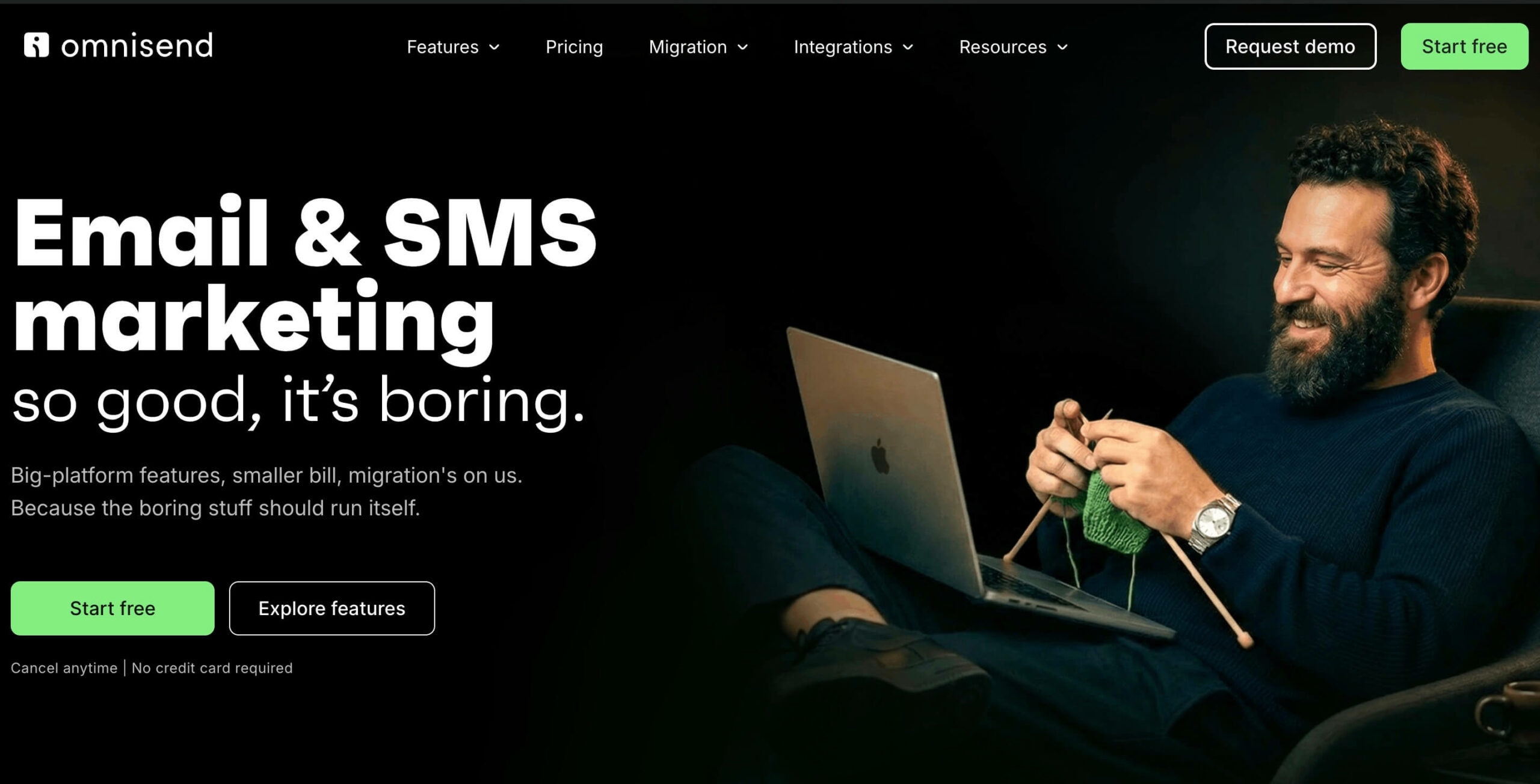
1. Omnisend – Email & SMS Marketing
- Best for: E-commerce and Direct-to-Consumer (DTC) brands seeking an integrated email, SMS, and web push platform with a highly functional free plan.
- Overview: Omnisend is purpose-built for e-commerce, consolidating email, SMS, and web push notifications within a single, intuitive dashboard. Its comprehensive suite of e-commerce marketing features centers on pre-configured automation workflows, advanced audience segmentation, and effective signup forms. The platform’s billing model is based solely on actively marketed contacts, ensuring cost-efficiency. Industry analysts frequently cite Omnisend as a go-to solution for e-commerce brands seeking robust email and SMS capabilities without extensive technical overhead, particularly praising its generous free tier which allows startups to scale.
- Key Features: Integrated email, SMS, and web push campaigns; pre-built automation workflows (e.g., cart abandonment, welcome series); advanced segmentation based on customer behavior and lifecycle stage; customizable signup forms and pop-ups; AI features for content generation and campaign optimization.
- Pros: Highly generous free plan with core functionalities; native integration of SMS and web push, eliminating the need for third-party vendors; 24/7 customer support across all plans; free done-for-you migration services.
- Cons: Primarily optimized for e-commerce, making it a weaker fit for B2B models; costs escalate proportionally with list growth.
- Pricing: Free (up to 250 contacts, 500 emails/month); Standard (from $16/month); Pro (from $59/month, includes unlimited emails and bonus SMS credits).
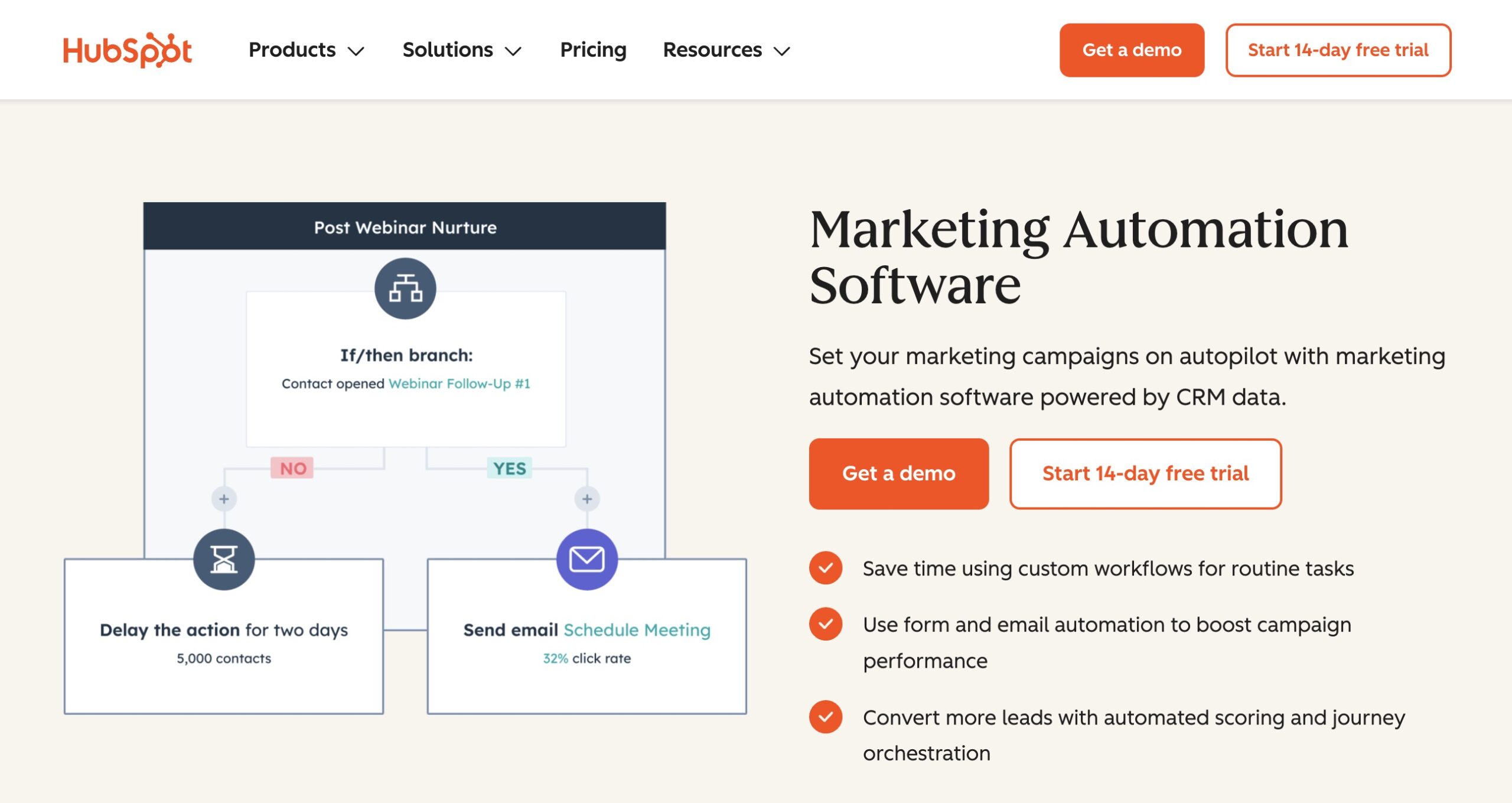
2. HubSpot – Marketing Automation
- Best for: Growing teams requiring sophisticated marketing automation deeply integrated with a comprehensive CRM, sales, and service ecosystem.
- Overview: HubSpot stands as a holistic customer platform, seamlessly unifying CRM, marketing automation, sales, and customer service tools. Its Marketing Hub module encompasses email marketing, landing page creation, forms, ad management, workflow automation, and analytics. HubSpot’s “all-in-one” philosophy and origins in inbound marketing make it an attractive option for businesses aiming for a unified approach to customer engagement. Marketing directors often laud HubSpot’s integrated approach for streamlining workflows and establishing a single source of truth for customer data across various departments, crucial for scaling operations.
- Key Features: Advanced marketing automation and lead scoring workflows; robust CRM and contact management; email marketing, landing page, and form builders; SEO and social media tools (on higher tiers); detailed analytics and revenue attribution.
- Pros: Offers substantial free CRM and marketing tools to begin; deep, native integration across marketing, sales, and service modules; powerful automation capabilities that scale with business growth; extensive app and integration marketplace.
- Cons: Professional and Enterprise pricing tiers escalate steeply; onboarding fees apply for higher-tier plans; certain advanced tools possess a considerable learning curve.
- Pricing: Free tools ($0 for up to two users); Marketing Hub Starter (from $9/seat/month, billed annually); Professional (from $800/month plus onboarding); Enterprise (from $3,600/month).
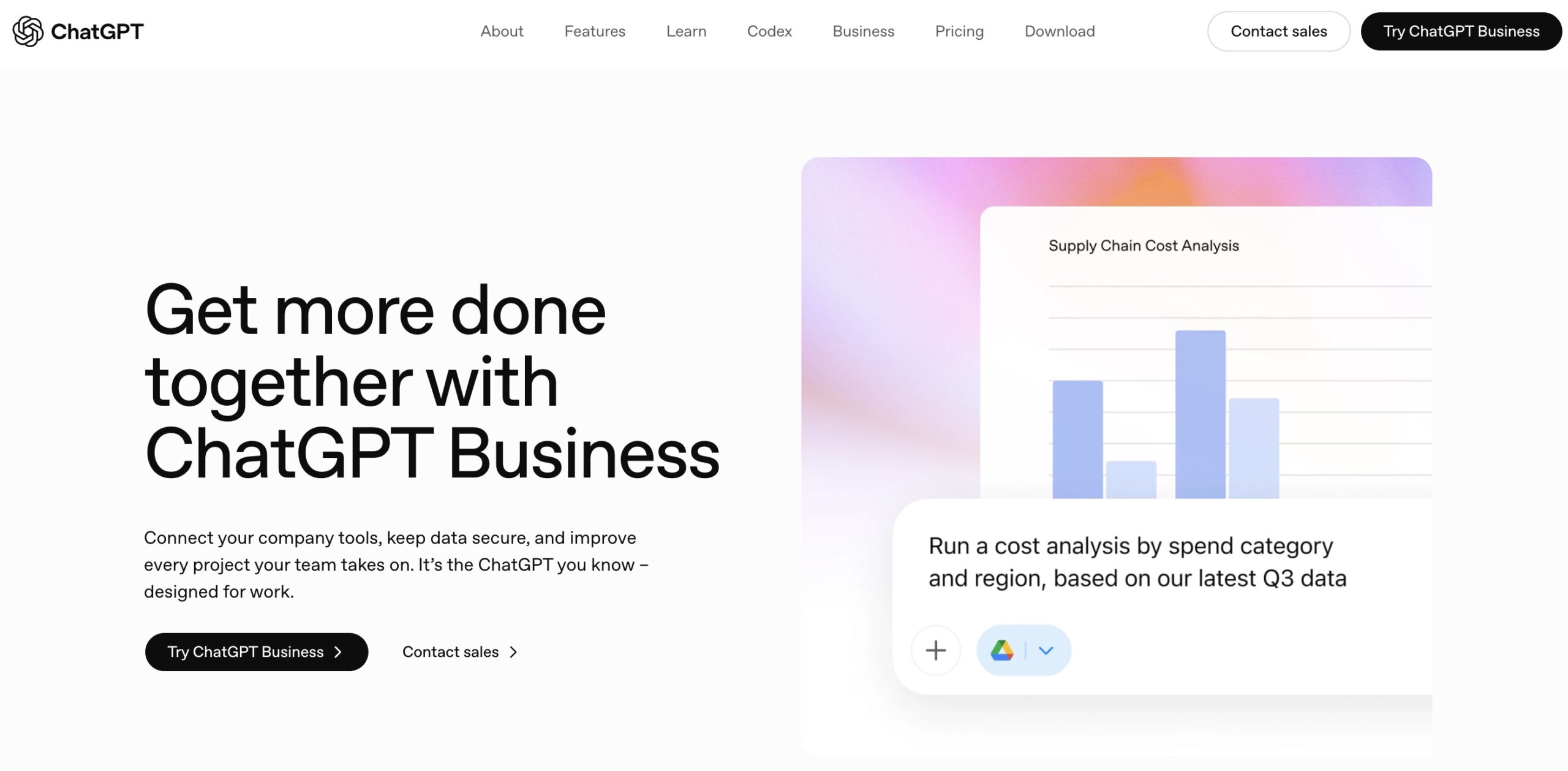
3. ChatGPT – AI Marketing Assistant
- Best for: Marketers seeking a versatile AI assistant for content generation, ideation, research, and data analysis.
- Overview: ChatGPT, OpenAI’s flagship AI assistant, has rapidly become an indispensable tool in marketing for tasks ranging from drafting compelling copy and brainstorming campaign concepts to summarizing research and analyzing complex data sets. It operates on OpenAI’s cutting-edge models and integrates with widely used tools like Slack and Google Drive. While not a traditional marketing platform, ChatGPT’s emergence has fundamentally reshaped how marketers approach various tasks, prompting widespread integration of AI assistants for enhanced efficiency and creative augmentation. Marketers using platforms like Omnisend can even integrate ChatGPT to query campaign performance directly.
- Key Features: Content drafting, brainstorming, and summarization; advanced data analysis and research capabilities; extensive app connectors (Slack, Google Drive); ability to build and share custom GPTs; dedicated Business and Enterprise workspaces with administrative controls.
- Pros: Functional free plan suitable for daily marketing tasks; transparent, flat per-user pricing; vast ecosystem of connectors and custom GPTs.
- Cons: Not a marketing-specific platform, lacking native campaign delivery features; premium models and advanced features are restricted to paid tiers.
- Pricing: Free ($0 for individuals); Go (from $8/month); Plus (from $20/month); Business (from $100/month); Enterprise (by quote).
4. Google Marketing Platform – Analytics & Advertising
- Best for: Businesses prioritizing integrated analytics and advertising tools, with robust free options for smaller teams and enterprise solutions for large advertisers.
- Overview: Google Marketing Platform consolidates Google’s extensive portfolio of analytics and advertising products. It offers powerful free tools like Google Analytics (GA4) and Google Tag Manager, complemented by an enterprise-grade “360” suite tailored for larger advertisers requiring higher data limits and dedicated support. For businesses heavily reliant on paid advertising and in-depth website analytics, Google Marketing Platform remains an indispensable suite, with its 360 offerings providing enterprise-grade solutions for complex campaigns and invaluable first-party data insights.
- Key Features: Google Analytics (GA4) for comprehensive website and app analytics; Google Tag Manager for streamlined tag deployment without code; Campaign Manager 360 and Display & Video 360 for cross-channel advertising management; Search Ads 360 for scalable search campaign management.
- Pros: Provides powerful core analytics and tag management functionalities at no cost; offers tight, native integration across Google’s entire ad and analytics product ecosystem; scales to accommodate extremely large data volumes through the 360 tier.
- Cons: Pricing for the paid 360 products is not publicly disclosed; advertising tools are primarily targeted at large agencies and enterprise-level advertisers.
- Pricing: Google Analytics and Tag Manager (free); 360 suite (including Analytics 360 and Search Ads 360, paid, by quote).
5. Sprout Social – Social Media Management
- Best for: Mid-market and enterprise teams seeking an all-in-one platform for social media publishing, engagement, analytics, and listening.
- Overview: Sprout Social is a comprehensive social media management platform that encompasses scheduling, a unified Smart Inbox for multi-network engagement, detailed analytics, and review management. Social listening and employee advocacy modules are available as add-ons. Social media managers consistently praise Sprout Social for its comprehensive features that allow not just scheduling but deep engagement tracking and sentiment analysis, which are crucial for proactive brand reputation management in today’s dynamic social landscape.
- Key Features: Unified Smart Inbox for streamlined engagement across all connected social networks; advanced publishing tools with optimal send-time scheduling; in-depth profile and post-level analytics and reporting; AI Assist for composing and replying to social content; robust review management and keyword monitoring capabilities.
- Pros: Features a strong, unified inbox and a comprehensive reporting suite; integrates AI features directly into everyday workflows; scales effectively from single users to large enterprise teams.
- Cons: Per-seat pricing can become expensive for larger teams; advanced listening and premium analytics functionalities incur additional costs.
- Pricing: Essentials (from $79/seat/month); Standard (from $199/seat/month); Professional ($299/seat/month); Advanced ($399/seat/month).
6. Ahrefs – SEO & Content Research
- Best for: SEO professionals and agencies requiring extensive backlink and keyword data within a unified toolset.
- Overview: Ahrefs is a leading comprehensive SEO platform built upon one of the internet’s largest web crawlers. It offers robust tools for backlink analysis, in-depth keyword research, rank tracking, technical site audits, and competitive content research. It also includes specialized tools for monitoring visibility in AI search environments. SEO specialists consistently rank Ahrefs among the top tools for competitive intelligence and in-depth keyword research, emphasizing its vast data index as a key differentiator in a constantly evolving search landscape.
- Key Features: Site Explorer for comprehensive backlink and competitor analysis; Keywords Explorer for in-depth keyword research; Rank Tracker for monitoring search engine positions; Site Audit for identifying technical SEO issues; Brand Radar for tracking AI-search visibility.
- Pros: Provides exceptionally deep backlink data and extensive crawler depth; features rapidly growing AI-search functionalities; offers access to extensive backlink and keyword data across all plans; includes free tools and a free tier for site owners.
- Cons: Generally expensive across most tiers; presents a steep learning curve for new users due to its advanced functionalities.
- Pricing: Starter (from $29/month); Lite ($129/month); Standard ($249/month); Advanced ($449/month); Enterprise (from $1,499/month).
7. Canva – Graphic Design
- Best for: Marketers and non-designers needing to create professional, on-brand visuals quickly and efficiently without specialized design software.
- Overview: Canva is an intuitive drag-and-drop design platform featuring millions of templates suitable for social media posts, advertisements, presentations, and print materials. It combines an easy-to-use editor with a vast library of stock assets and a growing suite of AI-powered design tools. Canva’s user-friendly interface and extensive template library have empowered countless marketers to produce high-quality visual content rapidly, significantly reducing reliance on dedicated design teams for everyday needs and democratizing design capabilities.
- Key Features: Intuitive drag-and-drop editor with access to millions of templates; Brand Kits for maintaining consistent brand identity; premium tools like Background Remover and Magic Resize; integrated content scheduling and team collaboration features; AI design tools for image and copy generation.
- Pros: Exceptionally easy for complete non-designers to use; boasts a massive template and asset library; offers a robust free plan; includes built-in AI tools across paid plans.
- Cons: Heavy AI usage is subject to an allowance cap; provides less pixel-level control compared to professional design software.
- Pricing: Free plan available; Pro (from ~$18/month/person); Business (from $25/month/person); Enterprise (custom pricing).
8. Google Search Console – Search Visibility
- Best for: Any website owner or marketer seeking free, direct insights into their site’s performance within Google Search.
- Overview: Google Search Console is a complimentary tool provided by Google that offers direct feedback on how a website performs in Google Search results. It delivers reports on search queries, top-performing pages, and clicks driving traffic, identifies indexing problems, and allows users to submit sitemaps and inspect individual URLs. Webmasters and SEO teams consider Google Search Console non-negotiable for monitoring website health and performance in Google Search, providing critical first-party data directly from the search engine itself.
- Key Features: Performance report detailing clicks, impressions, and search position; URL Inspection tool for index status and indexing requests; Page indexing report for diagnosing crawl and index issues; sitemap submission and monitoring; Core Web Vitals and structured-data reports.
- Pros: Completely free, provided directly by Google; offers first-party search data that no other tool can fully replicate; highly effective for diagnosing and resolving indexing problems.
- Cons: Covers only Google Search data and only for verified sites; provides approximately 16 months of historical data, with sampled query data.
- Pricing: Free, with no paid tiers.
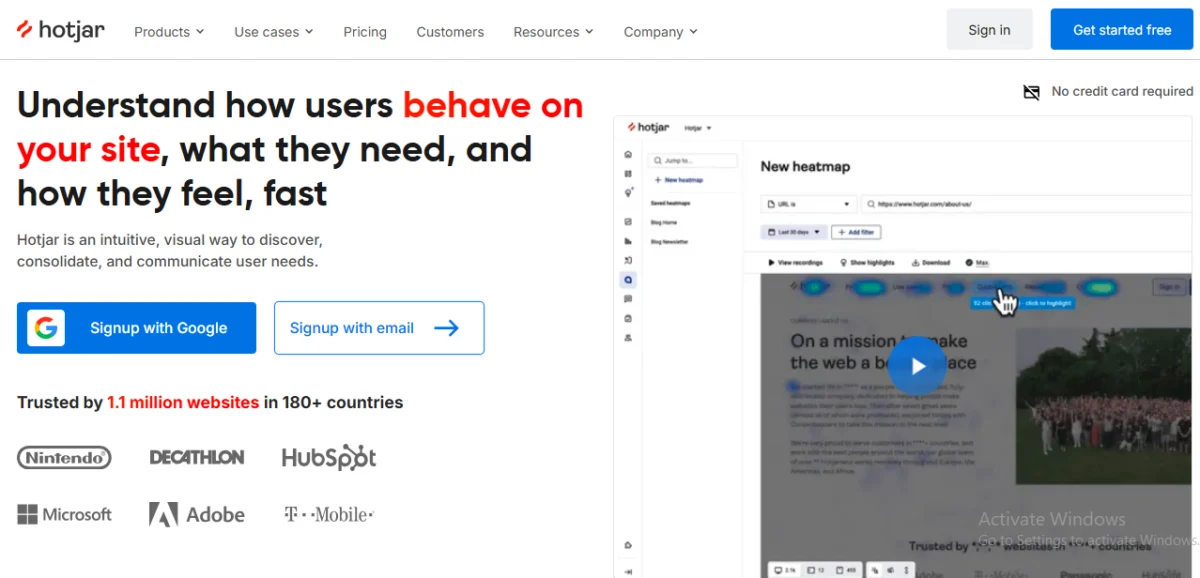
9. Hotjar – User Behavior Analytics
- Best for: Teams aiming to visualize and understand actual visitor behavior on their website through heatmaps, session recordings, and user feedback.
- Overview: Hotjar is a behavior-analytics platform, now owned by Contentsquare, renowned for its heatmaps, session recordings, and on-site surveys that illustrate where users click, scroll, and encounter friction. It helps businesses understand why users behave in specific ways, moving beyond quantitative data to qualitative insights. Conversion Rate Optimization (CRO) experts frequently recommend Hotjar for its ability to visualize user behavior through heatmaps and session recordings, offering invaluable insights beyond traditional analytics into user intent and pain points.
- Key Features: Heatmaps showcasing clicks, taps, and scroll depth; session recordings of actual user journeys; integrated surveys and feedback widgets; funnel analysis and error tracking; AI-assisted analysis of sessions and feedback.
- Pros: Offers a generous free plan accommodating up to 200,000 monthly sessions; includes heatmaps, recordings, and surveys across all plans; now backed by Contentsquare’s more profound analytics capabilities.
- Cons: The brand and platform are currently undergoing a transition to Contentsquare, which may involve changes; higher tiers are custom quote-only.
- Pricing: Free ($0 for up to 200,000 monthly sessions); Growth (from $39/month, billed yearly); Pro (custom pricing); Enterprise (custom pricing).
10. Unbounce – Landing Pages & CRO
- Best for: Marketers and agencies managing paid campaigns who need to build high-converting landing pages without requiring developer assistance.
- Overview: Unbounce is a specialized landing page builder featuring a drag-and-drop interface, robust A/B testing capabilities, and AI-powered tools for copy generation and intelligent traffic routing. It is specifically designed for marketers focused on maximizing conversion rates for paid advertising, lead generation, and e-commerce campaigns. Performance marketers often turn to Unbounce for its specialized features in creating and optimizing high-converting landing pages, acknowledging its direct impact on campaign return on investment (ROI) through continuous optimization.
- Key Features: Intuitive drag-and-drop landing page builder with an extensive template library; unlimited A/B testing on higher plans; Smart Traffic feature to route visitors to their best-match page; Smart Copy AI for generating page copy; integrated pop-ups, sticky bars, and over 1,000 integrations.
- Pros: Purpose-built specifically for conversion optimization and testing; offers unlimited conversions on every plan; leverages AI-powered tools for copy creation and visitor routing; provides a 14-day trial without requiring a credit card.
- Cons: Plans are capped by monthly traffic limits; lower tiers impose restrictions on the number of users and domains.
- Pricing: 14-day trial (no credit card); Starter (from $29/month); Build (from $99/month); Experiment (from $149/month); Optimize (from $249/month); Agency (custom pricing).
Methodology for Platform Evaluation
This curated list was developed by meticulously evaluating platforms across the full spectrum of marketing functions commonly employed by businesses, rather than focusing on a single, narrow category. The primary objective was to identify tools that demonstrably assist in managing, automating, and optimizing digital marketing efforts, proving their efficacy in real-world applications. Our review process prioritized the following criteria:
- Usability: Assessment of setup complexity, learning curve, and overall user experience.
- Features: Depth of functionality, sophistication of automation capabilities, and integration of AI-powered tools.
- Integrations: Effectiveness of connections with e-commerce platforms, CRMs, analytics tools, and social networks.
- Scalability: Suitability for small teams and the capacity to accommodate growing demands.
- Reporting and Analytics: Quality of performance tracking, depth of insights, and actionable data.
- Pricing and Value: Evaluation of free plans, trial availability, and overall value proposition.
- Reputation: Market presence, user reviews, and industry adoption rates.
The platforms were not scored or ranked head-to-head, as the optimal tool is inherently dependent on an individual business’s specific goals. Instead, the focus was on highlighting each platform’s unique strengths and ideal use cases, enabling businesses to align them with their specific priorities and primary marketing channels. This methodology resulted in a shortlist of top marketing platforms that offer a balanced blend of features, ease of use, and overall value for businesses aiming to foster growth.
Strategic Selection: Choosing the Best Digital Marketing Platform
The notion of a universally “best” digital marketing platform is a fallacy. The most effective choice is highly individualized, contingent upon an organization’s distinct marketing goals, its primary operational channels, available budget, and the realistic capacity of its team to manage and leverage the chosen solution. The ideal marketing platform will seamlessly align with all four of these critical factors. Businesses should consider the following six elements before making a commitment:
- Define Your Marketing Goals: Clearly articulate what you aim to achieve—be it lead generation, customer retention, brand awareness, or direct sales growth. Some platforms excel in specific areas, such as e-commerce email marketing and retention, while others specialize in SEO, social media engagement, or advanced analytics.
- Identify Primary Marketing Channels: Determine where the majority of your marketing effort and budget is concentrated, whether it’s email, social media, SEO, paid advertising, or SMS. The chosen platform must provide robust support for your most critical channels.
- Assess Integration Capabilities: Verify how well a platform integrates with your existing technology stack, including your CRM, e-commerce platform, primary analytics tools, and social networks. Strong, native integrations are paramount for automating workflows, ensuring data consistency, and eliminating manual data transfer.
- Evaluate Ease of Use: Consider the platform’s learning curve, the simplicity of its setup process, and the intuitiveness of its user interface. Even the most powerful tool will fail to deliver value if your team finds it cumbersome or confusing to operate, leading to underutilization.
- Examine Automation and AI Capabilities: Prioritize platforms that offer advanced workflow automation, AI-driven content creation, sophisticated audience segmentation, and predictive insights. These features are crucial for handling operational heavy lifting and enabling scalable growth without proportional increases in manual effort.
- Analyze Pricing and Scalability: Compare free plans, trial periods, and how pricing structures evolve with increased usage (e.g., more contacts, higher traffic). Ensure the platform is not only affordable today but also sustainable as your business and marketing demands grow.
Conclusion
Digital marketing platforms are increasingly vital for businesses aiming to consolidate campaigns, data, and channels into a unified system, thereby enhancing marketing efficiency and minimizing the time spent toggling between disparate tools. As this detailed overview illustrates, the market offers a diverse array of platforms, each specializing in different facets of digital marketing—from email and SMS to automation, SEO, social media, design, and analytics.
The optimal choice for any given organization is intrinsically linked to its unique goals, dominant channels, budgetary constraints, and overall business size. Most businesses, particularly those with multifaceted marketing strategies, ultimately adopt a synergistic approach, combining several platforms—for example, pairing a robust email and SMS marketing solution with a dedicated SEO suite and a versatile design application.
In the rapidly evolving landscape of 2026, automation and AI are no longer merely desirable features but fundamental differentiators that elevate a good platform to an exceptional one. The most powerful options seamlessly integrate both, but the ultimate “right choice” is the platform that most closely aligns with a business’s specific objectives, preferred channels, budget, and operational requirements. The most prudent strategy involves identifying the channels that yield the highest value for your business and then constructing a complementary stack of platforms around those core strengths.
Frequently Asked Questions
What is a digital marketing platform?
A digital marketing platform is a comprehensive software solution designed to manage and measure various marketing activities across multiple digital channels, such as email, SMS, social media, and search engines. It typically integrates automation, analytics, and audience management functionalities into a single, cohesive system.
What is the difference between a digital marketing platform and a digital marketing tool?
A digital marketing tool typically serves a singular, specialized purpose (e.g., a specific graphic design application or a keyword research utility). In contrast, a digital marketing platform integrates multiple functions—campaign management, automation, analytics, and audience management—allowing businesses to conduct a broader range of their marketing activities from one centralized system.
What is the best digital marketing platform for small businesses?
The “best” platform for a small business depends heavily on its primary marketing channel and goals. For e-commerce brands utilizing email and SMS, Omnisend is a strong contender. Canva is excellent for visual content creation, while Google Search Console and Google Analytics 4 (GA4) provide essential search and website analytics at no cost.
How much do digital marketing platforms cost?
The cost of digital marketing platforms varies significantly, ranging from completely free options to several hundred or even thousands of dollars per month. For instance, Google Search Console is free, Omnisend’s paid plans start from $16 per month, while an enterprise-level platform like Sprout Social can cost $399 per seat per month as of June 2026. Many platforms also offer free tiers or trial periods.








