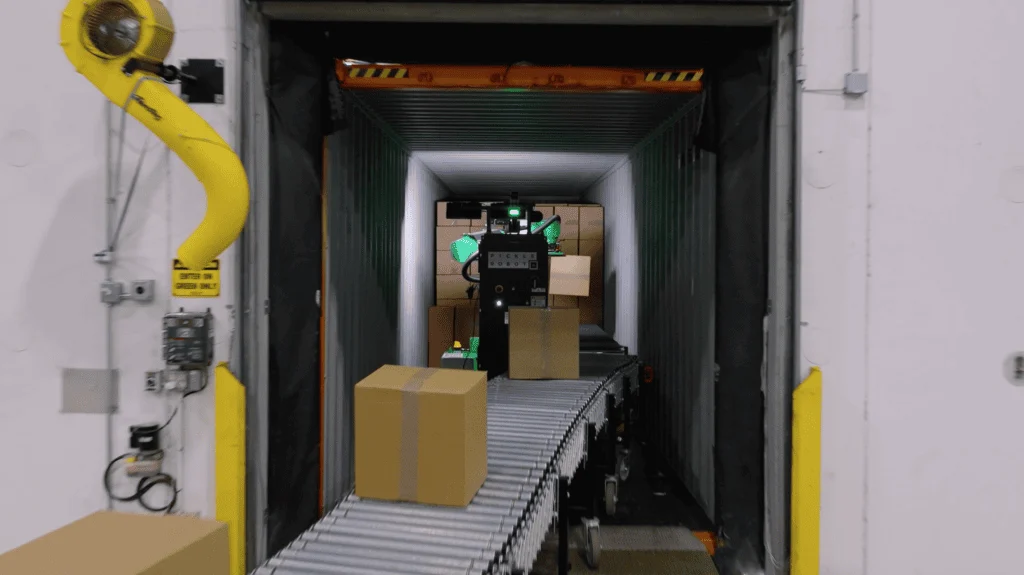
The logistics and retail sectors are witnessing a significant leap forward in operational efficiency with the announcement of a groundbreaking integration between Ambi Robotics and Pickle Robot Company. This collaboration has resulted in a fully automated package movement system, powered by sophisticated artificial intelligence (AI) that spans from trailer unloading to pallet stacking and warehouse receiving. The solution is engineered to address the escalating demands of Fortune 500 retail and logistics operators, promising a seamless, end-to-end automated workflow that tackles labor-intensive processes.
The partnership aims to revolutionize how goods are handled within distribution centers, a critical bottleneck in the supply chain. By combining the specialized AI-driven robotic capabilities of both companies, the new system offers a comprehensive solution designed to significantly reduce manual intervention, increase throughput, and improve overall operational accuracy. This initiative underscores a growing trend in the automation industry towards interoperability and the integration of specialized AI systems to create more powerful and versatile solutions.
Background Context: The Evolving Landscape of Warehouse Automation
The warehousing and logistics industry has been grappling with a confluence of challenges in recent years. A persistent labor shortage, coupled with the exponential growth of e-commerce, has placed immense pressure on distribution centers to operate more efficiently and at higher volumes. Traditional automation methods, while effective for specific tasks, often fall short of providing end-to-end solutions. This has spurred a surge in investment and innovation in robotics and AI, with a focus on creating more adaptable, intelligent, and integrated systems.
Ambi Robotics has established itself as a provider of AI-powered robotics for commercial operations, focusing on solutions that can adapt to dynamic environments. Their technology is designed to learn and improve over time, a crucial aspect for optimizing warehouse operations. Pickle Robot Company, on the other hand, leverages AI for supply chain applications, with a particular expertise in automated truck unloading. Their robots are designed to generate vast amounts of real-world data, which is then utilized to refine system performance through machine learning algorithms. This data-centric approach is vital for ensuring that automated systems can continuously adapt to the ever-changing nature of inbound freight.
The demand for such integrated solutions is not abstract. Reports from various industry analyses indicate a substantial increase in the adoption of warehouse automation technologies. For instance, according to a 2023 report by Statista, the global warehouse automation market was valued at approximately $25 billion in 2022 and is projected to reach over $60 billion by 2030, showcasing a compound annual growth rate (CAGR) of over 12%. This growth is driven by the need for increased speed, accuracy, and reduced labor costs. Fortune 500 companies, with their vast operational scales, are at the forefront of adopting these advanced technologies to maintain their competitive edge.
The Integration: A Synergistic Approach to Package Handling
The newly unveiled system represents a sophisticated convergence of Ambi Robotics’ AmbiStack multi-purpose stacking solution and Pickle Robot’s trailer-unloading robots. This deployment is meticulously designed to create a continuous and autonomous flow of packages from the moment they arrive in inbound trailers to their organized placement on pallets, ready for subsequent warehouse operations.
The process begins with Pickle Robot’s specialized units, which efficiently unload cases from trailers. Once unloaded, these packages are seamlessly transferred via a conveyor system to Ambi Robotics’ AmbiStack. This intelligent stacking solution is capable of identifying, scanning, and precisely stacking the incoming freight. The companies describe this integrated workflow as "fully autonomous processing from the dock door to the pallet," a significant advancement over traditional methods that often involve multiple manual touchpoints.
A key aspect of this integration is its adaptability. Ambi Robotics and Pickle Robot emphasize that their shared solution is designed to work with existing warehouse infrastructure and systems. This means that businesses can implement this advanced automation without requiring major facility redesigns, a significant cost and time saving. This approach minimizes disruption and accelerates the return on investment for customers.
The synergy between the two AI systems is particularly noteworthy. Pickle Robot’s systems continuously gather data on trailer unloading, which feeds into Ambi Robotics’ AI for optimizing stacking patterns and improving the overall efficiency of the downstream processes. Conversely, data from the AmbiStack system can inform Pickle Robot’s unloading strategies, creating a feedback loop that drives continuous improvement across the entire workflow. This "Physical AI" approach, as coined by Ambi Robotics, focuses on the application of AI in real-world physical systems, enabling them to learn, adapt, and self-optimize.
Official Statements: A Vision for Collaborative Automation
The leaders of both companies have expressed strong optimism about the implications of this integrated solution. Jim Liefer, CEO of Ambi Robotics, highlighted the importance of interoperability in the evolving landscape of warehouse automation.
"Warehouse operators shouldn’t have to choose between top-tier technologies or smooth integration," Liefer stated. "As Physical AI transforms supply chains, interoperability will become increasingly important. We believe the future of warehouse automation will be built on collaboration across the industry, where specialized systems work together to solve complex operational challenges. This deployment demonstrates that the next generation of automation will be built on interoperable Physical AI systems that combine the strengths of specialized technologies to create greater value for customers."
This statement underscores a strategic vision that moves away from monolithic automation systems towards a more modular and collaborative ecosystem. By allowing specialized technologies to work in concert, businesses can leverage the best-in-class solutions for each stage of their operations.
AJ Meyer, founder and CEO of Pickle Robot, echoed this sentiment, emphasizing the practical benefits for warehouse operators. "Customers want automation that improves real-world throughput while fitting into existing operations," Meyer said. "This collaboration shows how robotic unloading can integrate seamlessly with downstream automation systems to help move goods more efficiently through the warehouse, and it sets the stage for orchestrating multi-robot processes that can self-improve and self-correct over time."
Meyer’s emphasis on "self-improvement and self-correction" points to the advanced AI capabilities at play. These systems are not static; they are designed to learn from their environment and performance data, making them increasingly effective over time. This predictive and adaptive capability is a hallmark of true AI-driven automation.
Broader Implications and Analysis: The Future of Logistics
The integration of Ambi Robotics and Pickle Robot’s systems has far-reaching implications for the logistics and retail industries. Firstly, it directly addresses the critical need for labor-saving solutions in warehouses. By automating the physically demanding and often repetitive tasks of unloading and stacking, these companies are not only enhancing efficiency but also potentially improving working conditions for human employees, allowing them to focus on more complex or supervisory roles.
Secondly, the emphasis on interoperability signals a shift towards a more open and collaborative automation ecosystem. This approach can accelerate innovation by allowing different technology providers to build upon each other’s strengths. For businesses, it means greater flexibility in choosing and integrating automation solutions that best suit their specific needs, rather than being locked into proprietary systems.
The "Physical AI" concept is particularly significant. It suggests a future where AI is not just a software layer but an integral part of the physical machinery that operates within our world. This has the potential to unlock new levels of performance, adaptability, and intelligence in a wide range of industries, from manufacturing and healthcare to transportation and beyond.
The successful deployment of this integrated system by Fortune 500 clients will serve as a powerful case study, likely encouraging wider adoption of similar collaborative AI-driven automation solutions. As e-commerce continues its upward trajectory, the ability of supply chains to adapt and scale efficiently will be paramount. Technologies like the one developed by Ambi Robotics and Pickle Robot are not just incremental improvements; they represent a fundamental transformation in how goods are moved and managed, paving the way for a more resilient, efficient, and intelligent global supply chain.
The companies’ commitment to leveraging existing infrastructure also lowers the barrier to entry for adopting advanced automation, making it more accessible to a broader range of businesses. This democratization of sophisticated technology can have a ripple effect, enabling smaller and medium-sized enterprises to compete more effectively in an increasingly automated marketplace.
In conclusion, the partnership between Ambi Robotics and Pickle Robot is a significant development in the field of warehouse automation. By integrating their AI-powered systems, they are offering a comprehensive solution that promises to streamline package movement from trailer to pallet. This initiative not only addresses current industry challenges but also offers a glimpse into the future of intelligent, collaborative, and adaptable automation, driven by the power of Physical AI. The implications for efficiency, labor, and the overall evolution of supply chain operations are profound and will likely shape the industry for years to come.