rifanmuazin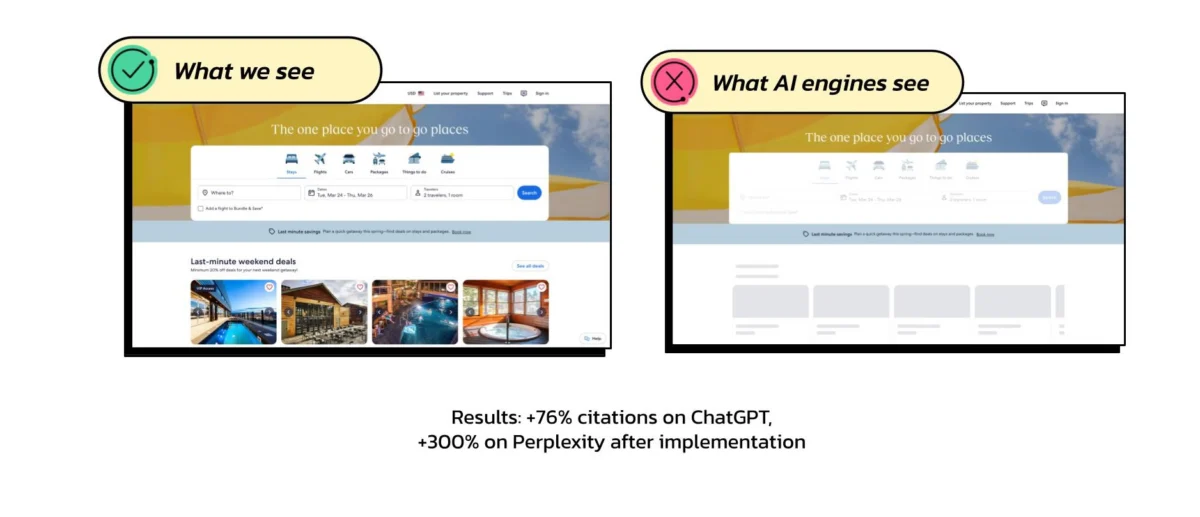
The marketing landscape is undergoing a seismic shift, with Artificial Intelligence (AI) no longer a nascent curiosity but a formidable force shaping consumer interactions and search behaviors. For marketing teams, the conversation has decisively moved beyond the theoretical “should we be thinking about AI visibility?” to the pragmatic “what concrete steps can we take?” This pivot, however, has revealed a significant hurdle: a pervasive challenge in coordinating efforts across departments to capitalize on AI-driven opportunities. While the potential gains are substantial, their realization hinges on a level of inter-team synergy that many organizations have yet to master. The pursuit of AI visibility is not solely an SEO concern; it is an intricate web requiring the active participation of engineering, development, product, paid media, creative, social, community, and public relations teams.
The initial stages of navigating AI search, while seemingly daunting, often present "quick wins" that may already be present on existing SEO wishlists. However, the critical realization is that nearly all impactful AI plays exist at the intersection of multiple departmental responsibilities. Identifying ownership is as crucial as understanding the strategic imperative. The traditional siloed approach is no longer tenable; an SEO team, for instance, cannot achieve meaningful success in AI visibility independently. This analysis delves into the foundational pillars of AI visibility and outlines the collaborative frameworks necessary for their effective implementation.
Ensuring AI Can "See" Your Website: The Criticality of Server-Side Rendering
A fundamental prerequisite for any AI visibility strategy is ensuring that AI search engines can accurately access and interpret a brand’s digital presence. This might seem rudimentary, but it is an area frequently overlooked precisely because websites often appear functional to human users. AI search engines operate differently from human browsers. They primarily rely on server-side rendering (SSR) to access content. If a website heavily utilizes client-side rendering (CSR) powered by JavaScript to dynamically load content, AI agents may be presented with an incomplete or even inaccurate representation of the brand’s information.
Consider the process when a user queries an AI engine. The AI does not navigate the website in real-time as a human would. Instead, it processes the version of the webpage delivered directly from the server, before any JavaScript executes. This means that crucial elements such as navigation menus, product descriptions, or core content that only appear after the page has loaded and scripts have run may be invisible to AI crawlers. Consequently, AI engines may form conclusions about a brand’s offerings and narrative based on partial data, leaving the brand unaware of this critical information gap.
The technical implementation to address this challenge falls squarely within the purview of engineering and development teams, not SEO specialists. While SEO teams can conduct audits to identify affected pages and define necessary changes, the actual remediation requires development resources. This necessitates that AI visibility initiatives be prioritized alongside other product development objectives, often requiring advocacy from leadership. Paid media teams can also play a vital role in this phase, as they often possess clear insights into which pages drive the highest commercial value, thereby informing prioritization efforts for development sprints. The financial implications of this oversight are significant; a study by Semrush in 2023 highlighted that websites with poor technical SEO, including rendering issues, could experience a 20-30% drop in organic visibility.
Building Trust: Freshness and Credibility Signals for AI Engines
Once AI can effectively read a website, the subsequent challenge is establishing trust in the content it encounters. AI answer engines prioritize and cite content that demonstrates recency and authority. One of the most potent mechanisms for conveying these signals is through schema markup. While the term "schema markup" may sound technical, its underlying concept is straightforward. It involves adding small, invisible snippets of code to a website that provide structured data to search engines and AI. This markup can communicate specific details about content, such as its last updated date, author, and format.
For multimedia content, such as videos, schema markup is particularly impactful. It can explicitly inform AI that a video exists on a page, detail its subject matter, and indicate its production date. Without this explicit signaling, videos, despite their presence, may be overlooked by AI visibility algorithms. The primary reason for the limited adoption of schema markup by many brands is not inherent difficulty, but rather its placement in the organizational gap between SEO and development, with neither team formally owning the deployment process.
Establishing a standing workflow is the solution. The SEO team should identify the necessary schema types for various pages and define their implementation. The development team can then integrate this markup as part of routine content publishing cycles, rather than treating each addition as an ad-hoc project. Creative and social media teams are also integral to this process, as they are the creators of the video and multimedia content that benefits most from accurate schema implementation. The lack of structured data can lead to AI engines misinterpreting or ignoring valuable content, potentially costing brands visibility in AI-generated summaries.
Shifting Paradigms: Optimizing for Topics, Not Just Keywords
Perhaps the most significant unlock in the current AI search landscape is the imperative to move beyond keyword-centric optimization towards a topic-based approach. This necessitates a fundamental re-evaluation of how marketing teams collaborate. AI engines do not rank pages based on individual keywords in the same manner as traditional search engines. Instead, they reward content that is comprehensively organized around themes and demonstrates deep expertise across a subject area. A website with numerous pages that each superficially touch upon a topic, without achieving sufficient depth to establish authority, is likely to be outperformed by competitors whose content is structured to showcase genuine subject matter mastery.

The key technique for discerning which themes AI engines are actively favoring is embeddings analysis. This advanced analytical method allows AI to understand language by mapping words and concepts into clusters based on their semantic relationships. Embeddings analysis provides a visual representation of these clusters, enabling marketers to identify the themes and content structures that AI treats as authoritative within a specific category and to pinpoint where their own content aligns or falls short.
The outcome of this analysis is a data-backed topic framework – a roadmap for content organization designed to enhance visibility in AI-generated answers. However, the value of this framework is entirely contingent on its adoption as a shared operational logic across content, social media, and public relations teams. It must transcend the status of another SEO document confined to a digital folder. When PR teams pitch stories, they should align with these identified themes. Similarly, social media teams should build their editorial calendars around these priority topics. While SEO may lead the analysis, the resulting framework must be a collaborative asset, owned by all relevant departments. A 2023 report by Google indicated that users are increasingly turning to AI for complex queries, underscoring the need for comprehensive topic coverage.
Beyond the Website: The Holistic View of AI Search
A paradigm shift in understanding AI search involves recognizing that a brand’s digital footprint extends far beyond its owned website. AI answers are synthesized from a multitude of sources, including websites, social media discussions, video platforms like YouTube, online forums, and publisher coverage. The AI-driven narrative of a brand is thus shaped by the entirety of its online presence, not solely by content under direct organizational control.
The practical implication is that a brand with an impeccable website and highly optimized content can still falter in AI search if the broader online conversation surrounding it is fragmented, contradictory, or lacking in substance. Achieving success in this environment requires a continuous dialogue between SEO teams and their social media and community counterparts. This collaboration ensures that insights into which topics AI is surfacing and rewarding inform platform-specific content creation, fostering alignment with overarching priorities. This is not about SEO dictating to other channels, but rather about ensuring coherence across the digital signals that AI engines process.
Public Relations in the Age of AI: A New Mandate for Credibility
The final, and perhaps most transformative, strategic imperative for AI visibility involves a fundamental redefinition of public relations objectives. AI answers synthesize sentiment from a brand’s PR coverage, community mentions, and publisher citations simultaneously. A single negative or inaccurate mention, regardless of its source, does not remain isolated; it can be incorporated into the information AI provides to potential customers.
Consequently, the primary objective shifts from merely earning links from high-authority publications to actively increasing positive and accurate mentions across the sources that AI engines frequently cite. Furthermore, it involves the critical task of correcting inaccurate information wherever it appears within the digital ecosystem. This represents a significant departure from traditional PR briefs. Prestigious, yet paywalled, coverage often fails to serve the AI visibility objective, as AI engines cannot access and process the content to cite it.
To facilitate this, SEO teams must equip PR departments with data identifying the specific sources that Large Language Models (LLMs) are actively referencing and highlighting areas where brand mentions are inaccurate or absent. PR teams can then act upon this intelligence. Partnership teams are also crucial collaborators in this effort, as co-created content and third-party endorsements provide the kind of open, accessible signals that build AI credibility far more effectively than paywalled feature articles. A 2024 analysis by the Pew Research Center indicated that a growing percentage of consumers rely on AI-generated summaries for product research, making the accuracy and sentiment of these summaries critically important.
The Unifying Element: Cross-Functional Execution
None of the strategies outlined above are revolutionary or shrouded in secrecy. The underlying techniques are established, the data is accessible, and the necessary fixes are generally understood. What is conspicuously absent in many organizations is a robust, cross-functional process to translate this understanding into tangible action. An SEO team can identify rendering issues or analyze embeddings, but they cannot implement a rendering fix without engineering support, deploy schema markup without development resources, align content calendars without the content team’s active participation, or redirect PR targeting without a shared measurement framework.
The brands that are currently gaining traction in AI search are not necessarily employing more sophisticated techniques. Instead, they are the organizations that have elevated AI visibility to a shared organizational priority, rather than relegating it to the responsibility of a single department. This transformative shift commences with a willingness to engage in more challenging internal discussions – not solely about the potential of AI search, but critically, about the ownership and accountability for executing the necessary strategies. The future of marketing success in the AI era is inextricably linked to breaking down silos and fostering a truly collaborative approach to digital strategy.