
 rifanmuazin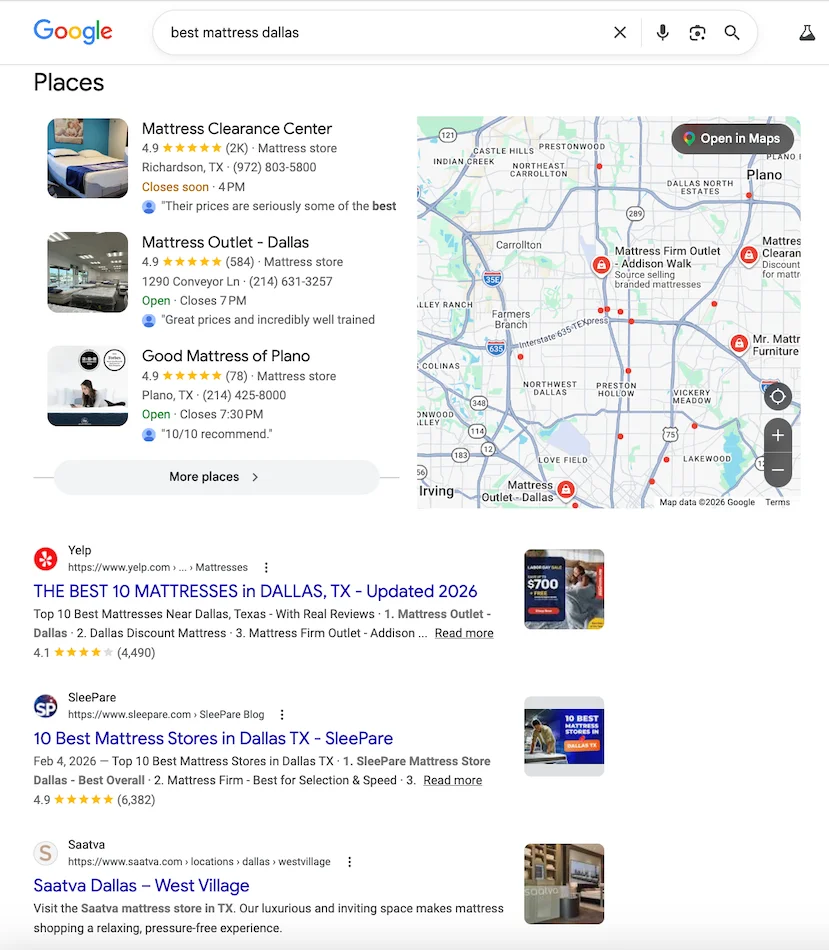
For years, businesses relied on a predictable content marketing playbook: create valuable content, optimize it for search engines, and watch as interested prospects navigated through the sales funnel, their understanding of the product or service deepening with each click and page view. This model was effective because search engines operated in a manner that encouraged detailed exploration. Users would actively seek out information, compare options across multiple pages, and gradually build their knowledge base, often within the confines of a single website. However, the advent of artificial intelligence, particularly in search, has fundamentally altered this dynamic, prompting a critical reassessment of long-held content strategies.
AI’s impact on search is not merely an incremental change; it represents a paradigm shift. Explanations are now synthesized and summarized by AI systems, related queries are often merged into a single, comprehensive answer, and crucially, the initial impression a potential customer forms about a business can be constructed before they ever visit the company’s website. This does not signify the demise of content marketing, but rather necessitates an update to the underlying assumptions that have guided it for years. Businesses must now understand how AI search influences the customer journey and adapt their strategies to ensure their content continues to shape decisions rather than merely reacting to them. This article delves into three significant ways AI search is impacting content strategies and outlines the necessary adjustments businesses must make to remain competitive.
The Diminishing Returns of Pure Thought Leadership in AI Search
For an extended period, thought leadership has been lauded as the pinnacle of content marketing. The strategy involved cultivating a strong, often contrarian, point of view, challenging established norms, and leading with unique perspectives to capture audience attention. This approach proved highly effective in a click-driven search environment, where a distinctive voice could cut through the noise and establish brand authority. Once a user landed on a website, sharp insights were instrumental in differentiation and trust-building. However, AI search fundamentally alters where and how this explanation occurs.

The core issue is not that thought leadership has lost its intrinsic value, but that AI systems are engineered to provide clear explanations rather than to persuade or win arguments. When a user poses a query, AI models are designed to aggregate information from multiple sources, synthesizing a single, unambiguous answer that directly addresses the user’s intent. They do not prioritize the most provocative or opinionated take. Instead, they seek consensus and clarity.
The Mechanics of AI Synthesis
AI systems achieve this synthesis by prioritizing content that offers:
- Definition: Clear, factual explanations of concepts and terms.
- Context: Information that provides background and sets the stage for understanding.
- Specificity: Data, numbers, and conditions that reduce ambiguity.
- Comprehensiveness: Answers that integrate various facets of a query.
Opinion-led content, by its nature, often requires interpretation and may present conflicting viewpoints. A typical thought leadership piece might follow a pattern of:
- Assertion/Claim: A bold statement or unique perspective.
- Argumentation: Supporting evidence, often with subjective reasoning.
- Conclusion/Call to Action: A summary that reinforces the initial viewpoint.
The more interpretation a piece demands, the more challenging it becomes for AI to integrate it seamlessly with other sources. AI models tend to avoid statements that could introduce conflict or judgment when synthesizing information from disparate websites.
Consider the difference between these two statements regarding HVAC system replacement:
- Version 1 (Opinion-Led): "If your AC is over ten years old, you’re likely throwing money away on energy bills and should upgrade immediately to save costs and improve home comfort."
- Version 2 (Definition-First): "HVAC systems typically last 15-20 years. Replacement is often recommended when repair costs exceed 50% of a new unit’s price, or when efficiency drops significantly, leading to higher energy bills. Factors like system age, maintenance history, and available budget influence the decision."
The second version is far more amenable to AI reuse. It delineates specific conditions, provides quantifiable metrics (50% repair cost threshold), and outlines factors that influence the decision, thereby reducing ambiguity. The first version, while potentially persuasive to a human reader, makes a claim followed by subjective judgment, making it harder for AI to merge cleanly with other sources that might offer different timelines or cost-benefit analyses.
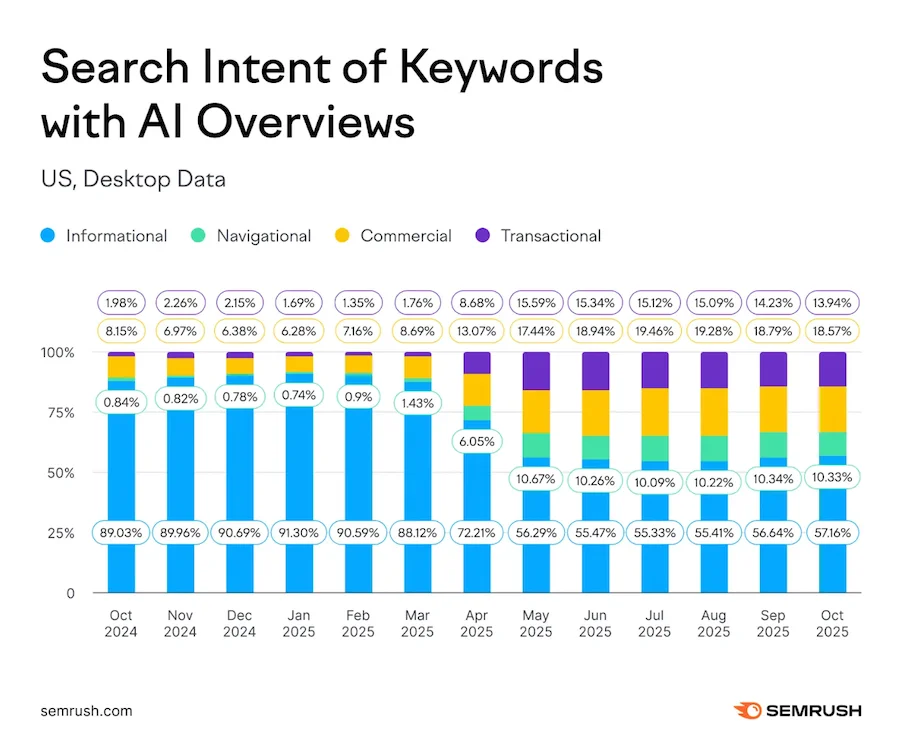
When AI constructs a composite answer from multiple websites, it defaults to explanations that align consistently across those sources. This is why definition-first content often garners greater reuse, even if opinion-led content ranks highly in traditional search results. Research supports this observation: a study by Semrush on AI Overviews revealed a consistent pattern where AI favors low-ambiguity explanations over subjective perspectives. Queries with AI summaries often displayed a preference for content that provided clear, factual information, directly addressing the search intent without extensive interpretation.
Expert Perspectives on the Shift
Industry experts are observing this trend firsthand. Maeva Cifuentes, Founder & CEO of Flying Cat Marketing, notes a significant alteration in the SEO landscape: "For a long time, the SEO formula was simple: more traffic meant more leads, and you could calculate it almost linearly. AI broke that correlation. It took over the informational layer of search, the research, the synthesis, the ‘what should I think about this’ questions, and started answering them directly." This informational layer was historically the domain of thought leadership, crucial for capturing researchers and nurturing top-of-funnel awareness.
Cifuentes further explains, "What changed technically is that content is still being used, it’s just not generating the value exchange it used to. We see client pages getting cited in AI responses, which means the content was useful enough to reference, but the user got the answer inside the AI and never clicked through. The citation replaced the click." This reframing highlights the critical shift: content’s usefulness remains, but the point of value exchange has moved. Your explanations may still shape understanding, but they might do so without driving traffic to your site.
Claudia Bird, Senior Content Writer at Grizzle.io, adds nuance, observing that thought leadership can still perform well in AI environments, but only under specific conditions. "One of our enterprise clients got a ton of citations and traffic from content that was only meant to be a thought leadership and sales enablement play. But it spoke directly to a crucial pain point for their audience." This suggests that authority and clarity, coupled with direct relevance to a significant pain point, can still resonate, but the format alone is not the sole determinant. Bird cautions against oversimplification, stating, "It’s not as simple as a standalone format that ‘does or doesn’t work.’ There’s a lot more happening in the background—based on perceived authority—that impacts performance."
The underlying structural issue remains: thought leadership is not obsolete, but if its explanations are weak, fragmented, or buried beneath excessive commentary, AI systems will bypass it in favor of clearer, more direct sources. When AI skips your explanation layer, it constructs the upstream understanding from other, more accessible content.
Strategic Adjustments for Businesses
Businesses whose content strategies heavily rely on opinion-led thought leadership without a strong foundation of clear explanation risk losing control over how their brand is initially perceived. While ranking may still occur, AI might synthesize its summary from a competitor’s more straightforward explanation. This is problematic because, by the time a buyer reaches your website, they may already possess a synthesized understanding of your offerings, shaped by external sources. If your brand’s voice did not contribute to this initial explanation, you inherit generic expectations.
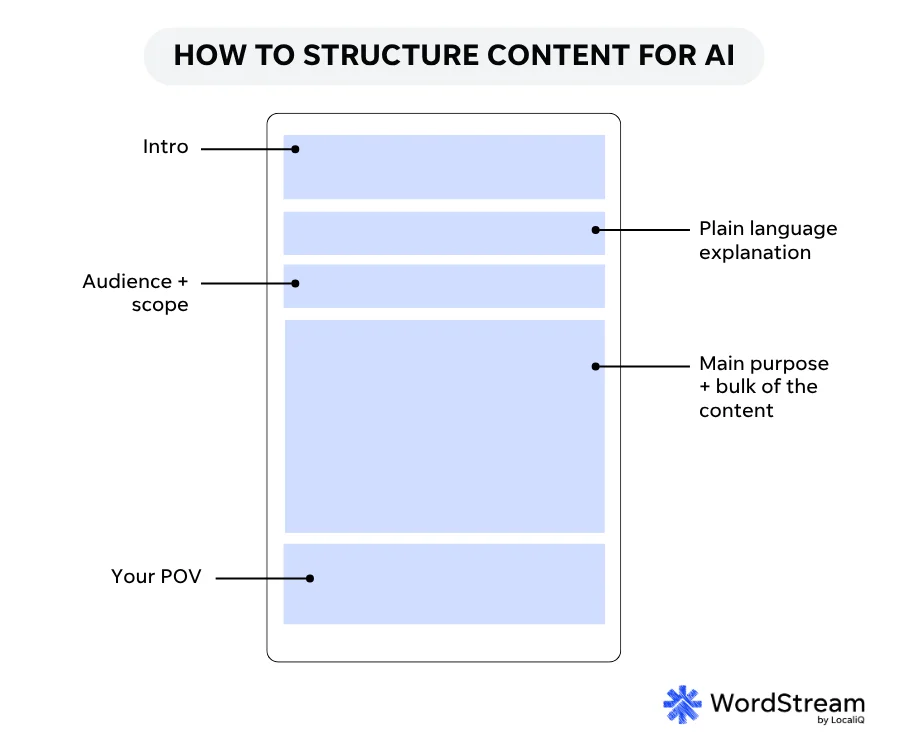
To counteract this, businesses should not abandon perspective but rather reorder its presentation. The strategy should prioritize a plain-language explanation first: clearly define the scope of the service, identify who it serves and who it doesn’t, and explain the mechanics before introducing critique or unique viewpoints. This approach allows AI systems to safely reuse your explanatory content while still providing human readers with your differentiated perspective.
For instance, instead of opening with a headline like "Why Most Agencies Waste Your Marketing Budget," a business should begin by detailing what marketing agencies typically do, how retainer models are structured, factors influencing pricing, and scenarios where agency support is genuinely beneficial. After laying this foundational groundwork, the critique can be introduced. This sequence serves a dual purpose: it enables AI to reuse your explanations reliably and allows human readers to engage with your unique insights once they have a clear understanding of the basics. Maintaining distinct sections for explanation and commentary, anchoring viewpoints in specific scenarios (e.g., the unique economics for a small HVAC company versus a large enterprise), and prioritizing specificity to reduce ambiguity are crucial. In the AI search environment, clear explanation earns visibility first, and differentiated perspective earns distinction second. Reversing this order means your content might persuade visitors once they arrive, but it may fail to shape the foundational understanding that brought them there.
The Erosion of the One-Page-Per-Intent Model
For years, effective SEO was synonymous with discipline: identify keyword intent, map a single web page to that specific intent, and develop tightly focused content designed to answer that particular query type. Each page had a singular purpose, a structure that made sense in a "blue-links" environment where users were accustomed to fragmented journeys. They would search, click, return to the search engine results page (SERP), refine their query, click again, compare information across multiple sites, and gradually piece together their understanding over several visits.
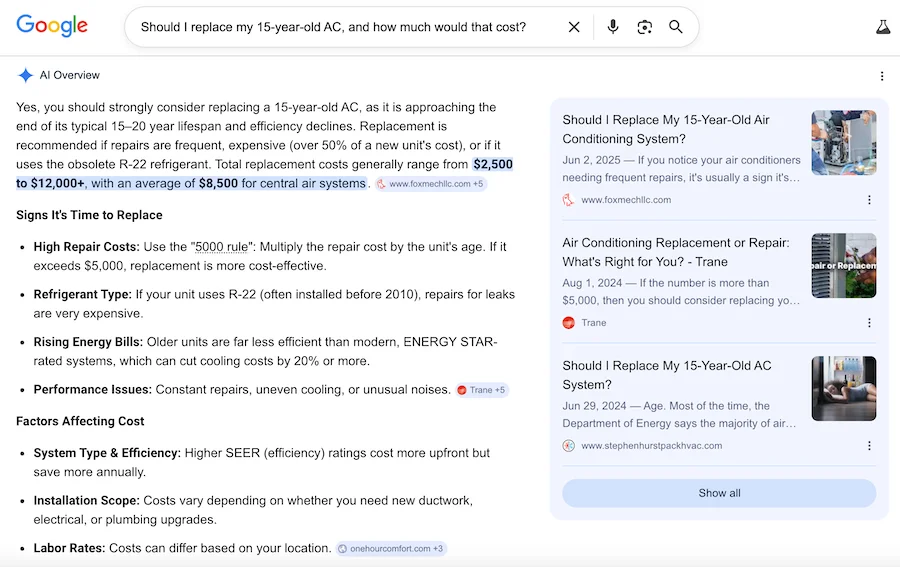
However, AI search operates differently, disregarding these traditional page-level segmentations. When a user asks a complex question, such as, "Should I replace my 15-year-old AC, and how much would that cost?" an AI system is unlikely to provide three separate answers. Instead, it synthesizes a single, consolidated explanation that integrates lifespan expectations, repair thresholds, cost drivers, timelines, and trade-offs. Definition, suitability, pricing, and comparison are all blended into one response, signaling the breakdown of the old SEO model.
The Rise of Zero-Click Searches
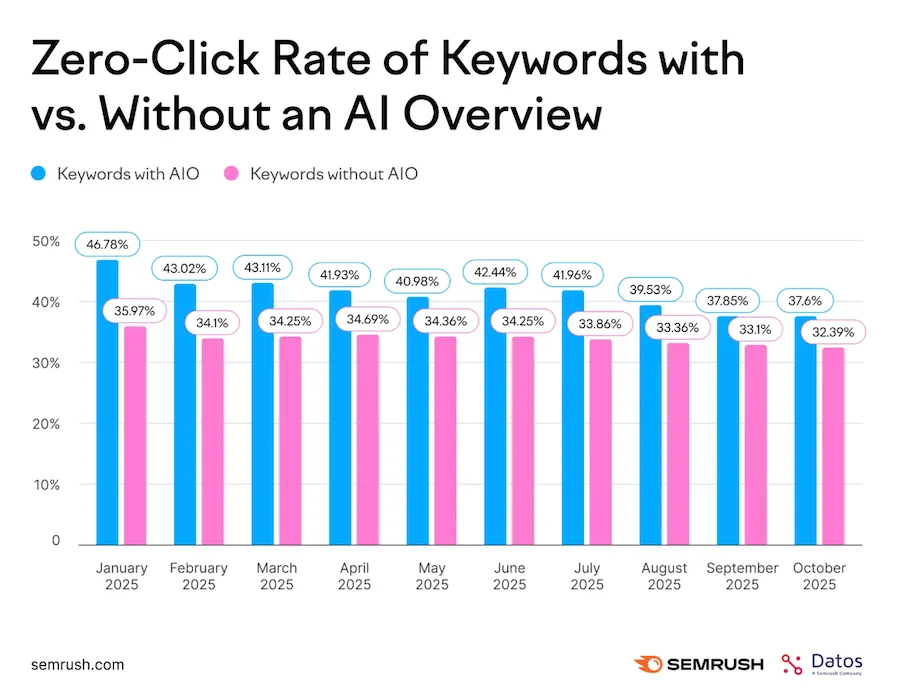
This shift is profound. Clickstream research, such as that conducted by SparkToro, indicates that a significant percentage of Google searches now result in zero clicks, with users obtaining their answers directly from the SERP. This trend is amplified by AI Overviews. Semrush’s research on keywords triggering AI Summaries found that these queries experience a higher rate of zero-click searches compared to those without an AI presence.
In practical terms, this means that a growing number of users are forming their understanding and making initial judgments about businesses and their offerings before ever visiting a website. If a company’s core information is scattered across multiple, loosely connected URLs, AI systems will merge these fragments. This synthesis process can lead to the dilution of nuances. The AI might pull the definition from one source, pricing averages from another, eligibility criteria from a third, and general best practices from a fourth, reconciling them into a generalized, consensus-driven explanation. This tendency towards consensus can subtly flatten differentiation, a consequence that can be particularly costly for smaller businesses.
Competitive Implications of Intent Collapse
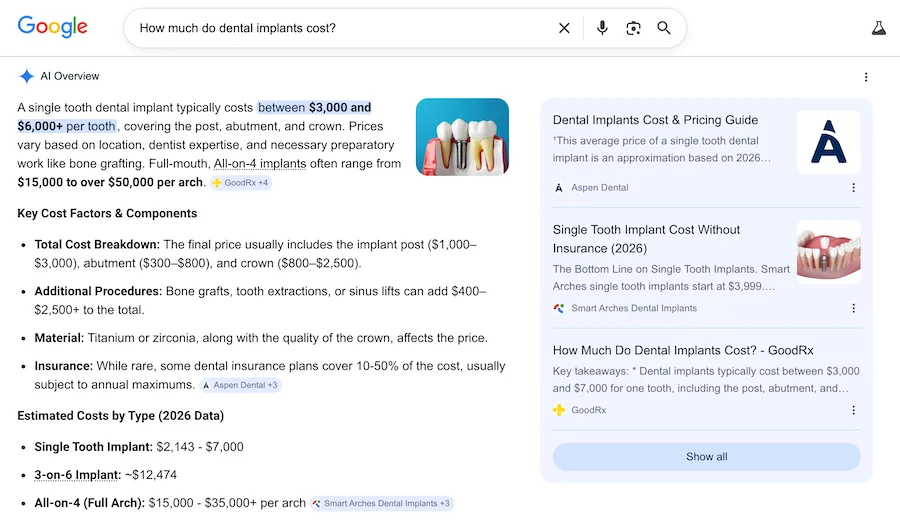
The core issue is not merely the collapse of distinct intents, but the impact this has on competitive strategy. In a traditional search environment, competition was largely page-by-page. Ranking for "dental implant cost" meant influencing how pricing was understood; ranking for "HVAC repair vs. replacement" meant framing that critical tradeoff. Each query offered a discrete moment of influence.
AI fundamentally reshapes this competitive landscape. When multiple intents are merged into a single synthesized answer, businesses are no longer competing for individual keywords. Instead, they are competing to have their specific positioning survive within a compressed summary that draws input from numerous sources. Compression, by its nature, rarely preserves nuance. When AI combines definition, pricing, eligibility, and comparison into one explanation, it gravitates towards what is broadly consistent across multiple websites. It does not inherently prioritize edge cases, niche specializations, or highly specific boundaries unless these elements are clearly integrated into the core narrative.
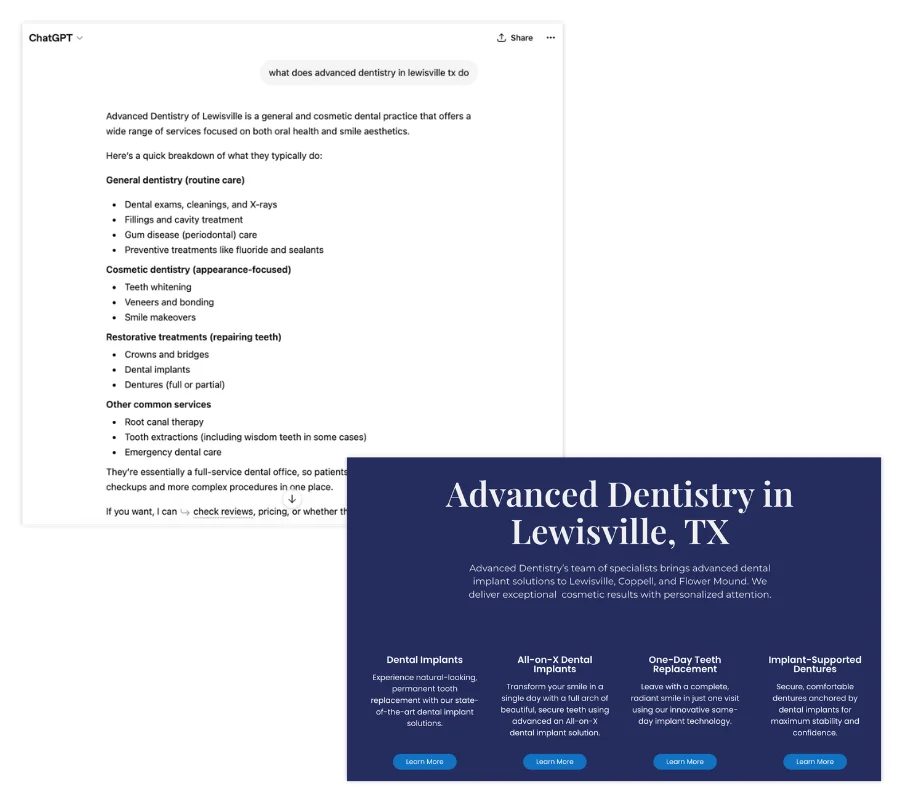
This is where competitive consequences emerge. Expertise residing in secondary pages, scattered blog posts, or isolated FAQs may not survive this synthesis process. AI models tend to favor the center of the market, not the margins where differentiation often resides. A dental practice specializing in complex surgical implant cases might be summarized simply as a "general dental implant provider." An HVAC company focusing on high-efficiency systems for older homes might be framed as a standard replacement provider. Over time, this subtle flattening shifts buyer perception even before engagement occurs. Instead of competing on specialization, businesses risk competing on category averages. Instead of standing out through unique positioning, they may blend into generalized language. The deeper cost of intent collapse lies not primarily in rankings or traffic, but in the erosion of differentiation within the crucial explanation layer that forms upstream. Once this differentiation erodes, the impact manifests as longer sales cycles, increased price sensitivity, and initial conversations laden with generic assumptions rather than informed interest.
Adapting Page Structure for AI Synthesis
Rethinking page structure is not about creating more content, but about redefining the responsibility of a single page. Historically, separating definition, pricing, eligibility, comparison, and objection handling into distinct URLs made sense, with each page targeting a specific query and the buyer piecing the information together over time. This fragmented stitching process is no longer the norm.
When AI collapses multiple intents into a single answer, it expects content to function as a cohesive explanation. If a core service’s logic is dispersed across several thin or loosely connected pages, AI will assemble that logic for the user, potentially relying on external sources to fill gaps. Therefore, the most critical service pages must evolve into comprehensive decision hubs rather than isolated keyword targets. A high-value service page should clearly articulate what the service entails, who it is intended for, factors influencing pricing, typical timelines, existing trade-offs, and alternative options. It should also proactively address common objections, rather than relegating them to separate FAQs or blog posts. This does not necessitate creating excessively long or bloated pages, but rather acknowledging that buyers and AI systems now encounter offerings as complete narratives, not as a series of disconnected answers. If pricing variability causes confusion, that explanation belongs within the main narrative. If repair versus replacement is a recurring decision point, that logic should be integrated into the core service page. Qualification rules that determine fit should be explicit and readily visible. When complete context resides together, the synthesized explanation is more likely to reflect the business’s authentic positioning. Conversely, fragmented context forces AI to reconstruct the story using external averages and generalized advice, diminishing the business’s control over its narrative.
The Website as Validation, Not Introduction
In an increasing number of scenarios, potential customers no longer initiate their understanding of a product or service on a company’s website. Instead, they begin by posing broad questions to AI, receiving a synthesized answer that integrates definition, pricing context, comparisons, and trade-offs. This AI-generated summary becomes their foundational understanding. By the time they click through to a business’s site, they are not learning from scratch; they are seeking validation for what they have already learned.
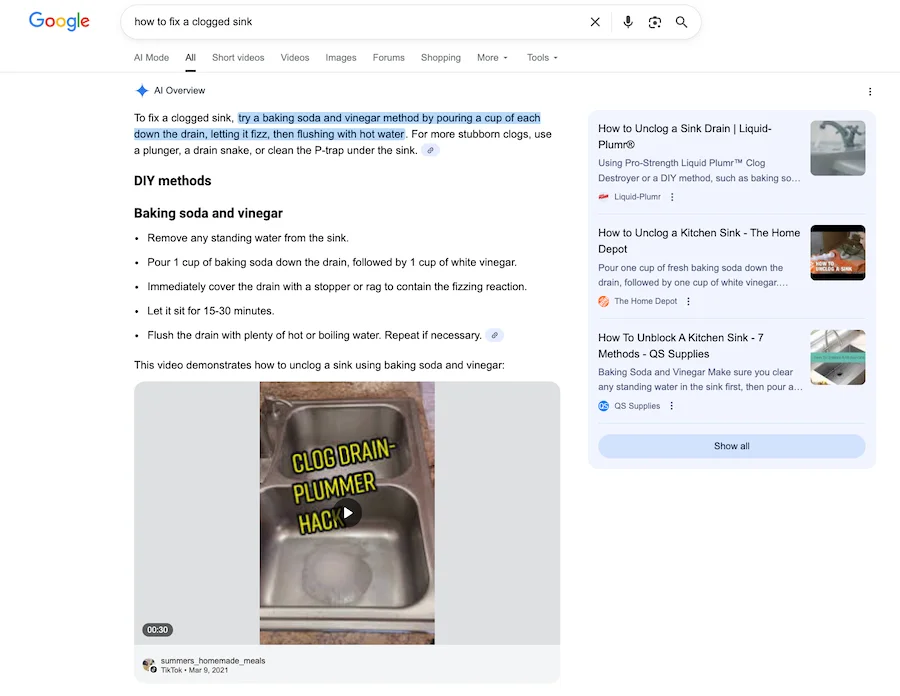
Stephanie Yoder, Director of Content at Rebrandly, observes this trend: "Technical searches, factual queries, and how-to content are migrating rapidly to AI platforms, while commercial searches still largely happen on traditional search engines." This suggests a bifurcation in search behavior, with informational queries increasingly handled by AI. Furthermore, Yoder notes the compression of research time: "People who used to spend 15–20 minutes reading multiple articles now get a synthesized answer from AI in under five minutes." This compression shifts the order of influence, positioning a website as a point of validation rather than an introduction.
When this occurs, a business’s messaging is evaluated against an existing framework. Alignment leads to forward progression in conversations, while conflict necessitates time spent correcting assumptions that the business did not create. The starting point has moved, and content strategies must adapt accordingly.
The Shifting Buyer Journey
This shift is rooted in how AI absorbs early-stage exploration and compresses comparative research. It filters out some casual researchers who previously would have clicked through multiple informational pages. Consequently, while overall website traffic might decrease, the quality of visitors often improves. The individuals who do arrive are frequently further along in their decision-making process. This can lead to a deceptive appearance of decline if measured solely by session counts. However, a closer examination of lead quality, objection patterns, and sales conversations reveals a different story. The sales funnel has not disappeared; it has simply moved upward.
Once the initial layer of understanding is formed before a click occurs, a content strategy can no longer assume it controls the opening frame of the customer conversation. Instead, the buyer’s understanding is being shaped upstream by a synthesized answer that may not accurately reflect the business’s specialization, specific boundaries, or unique positioning. When a website contradicts this pre-assembled explanation, it can create a wobble in trust. Conversely, clear confirmation accelerates trust-building. This shift is often subtle, not always manifesting as a direct loss of traffic, but rather as a misalignment of narrative, which can impact revenue long before it affects search engine rankings.
Strategies for Confirmation and Alignment
In this evolving landscape, the strategic objective shifts from persuasion to confirmation. If a buyer arrives with a summary already formed, the website’s content must quickly answer the question: "Is what I read accurate here?" This necessitates a focus on:
- Direct Alignment: The initial content must immediately address and confirm the key points synthesized by AI.
- Clarity of Proposition: Clearly state what the business offers and who it serves, echoing or reinforcing the AI’s core summary.
- Contextual Reinforcement: Provide the specific details and nuances that validate the AI’s explanation, particularly concerning unique value propositions or specialized services.
The first 150–200 words of a core service page now carry disproportionate weight. If these introductory paragraphs are vague, overly aspirational, or excessively promotional, both AI systems and human buyers will default to external framing. Clarity reduces friction, which in turn improves alignment and ultimately leads to better close rates.
The Compounding Effect of Interconnected Challenges
Each of these three shifts—the diminished impact of pure thought leadership, the breakdown of the one-page-per-intent model, and the website’s new role as a validation point—presents manageable challenges individually. Businesses can adjust their thought leadership structure, rethink page segmentation, and refine their service page content. However, when all three shifts occur simultaneously, their effects compound significantly.
When opinion-heavy content is bypassed in AI summaries, when user intent is fragmented across multiple URLs, and when AI constructs the initial explanation before a website visit, businesses risk losing control over how their brand is described upstream. This loss of control is a serious concern, as accuracy and clarity are paramount in shaping customer perception.

Addressing Content Problems for Enhanced AI Performance
The solution lies in fundamentally rethinking the responsibilities of core web pages. Businesses need revenue-driving pages that are structurally engineered for synthesis. This means creating content that:
- Explains Clearly Before Offering Perspective: Prioritize foundational understanding.
- Combines Related Intent: Consolidate related queries rather than isolating them.
- Defines Boundaries Explicitly: Clearly delineate what is offered and to whom, as well as what is not.
- Survives Summarization: Retain nuance even when condensed.
A valuable starting point is to audit critical service pages by asking pertinent questions: Does this page clearly explain what we do? Is the target audience immediately evident? Are pricing factors clearly articulated? Does it address common objections? Crucially, one must ask: "If an AI system extracted only the first portion of this page and summarized it, would that summary accurately reflect how we want to be positioned?" If the answer is no, the page structure requires revision.
Artificial intelligence has not rendered content obsolete; it has reassigned its primary responsibility. In this evolving landscape, clarity triumphs over cleverness. Explanation must precede differentiation. Accuracy holds more importance than originality in the initial layer of understanding. Content for businesses, especially small ones, no longer exists solely to attract clicks. Its primary function is now to shape the explanation that forms before the click ever occurs. When a business’s pages control this explanation layer, traffic becomes more resilient, and sales conversations become more aligned. Conversely, if they do not, businesses will find themselves spending more time correcting upstream assumptions than advancing deals. In an environment characterized by zero-click searches, the entity that shapes the explanation ultimately shapes the pipeline.










