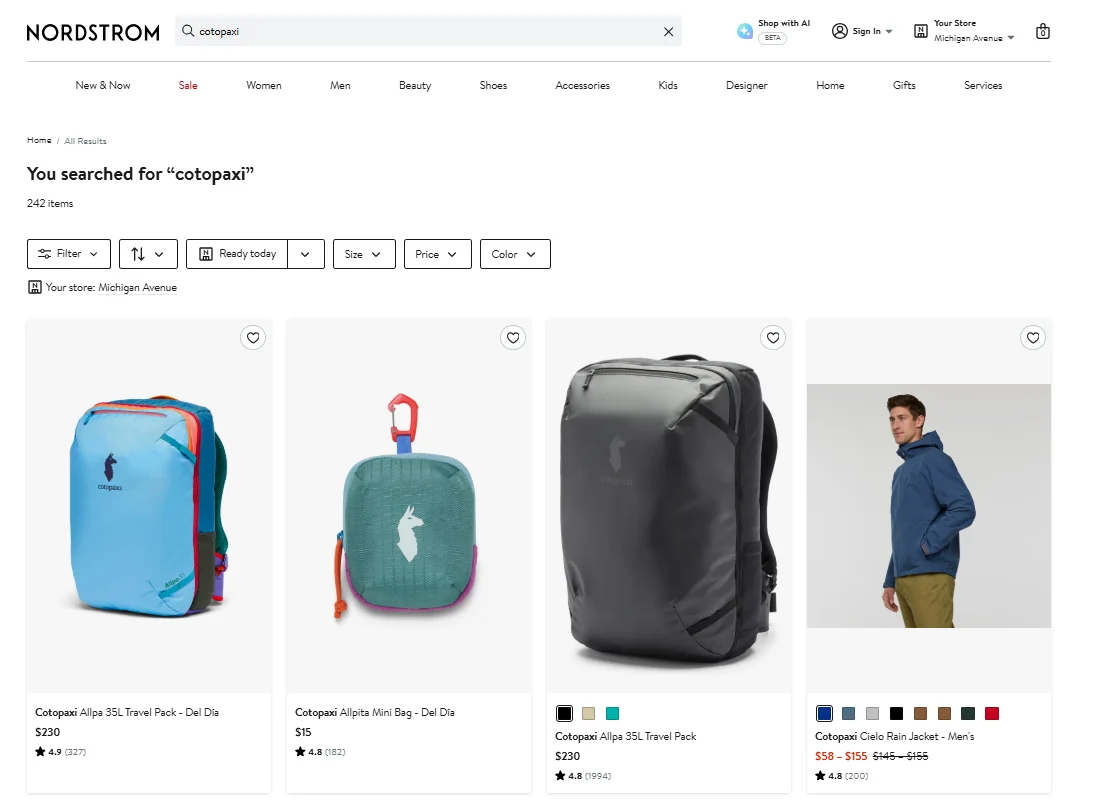
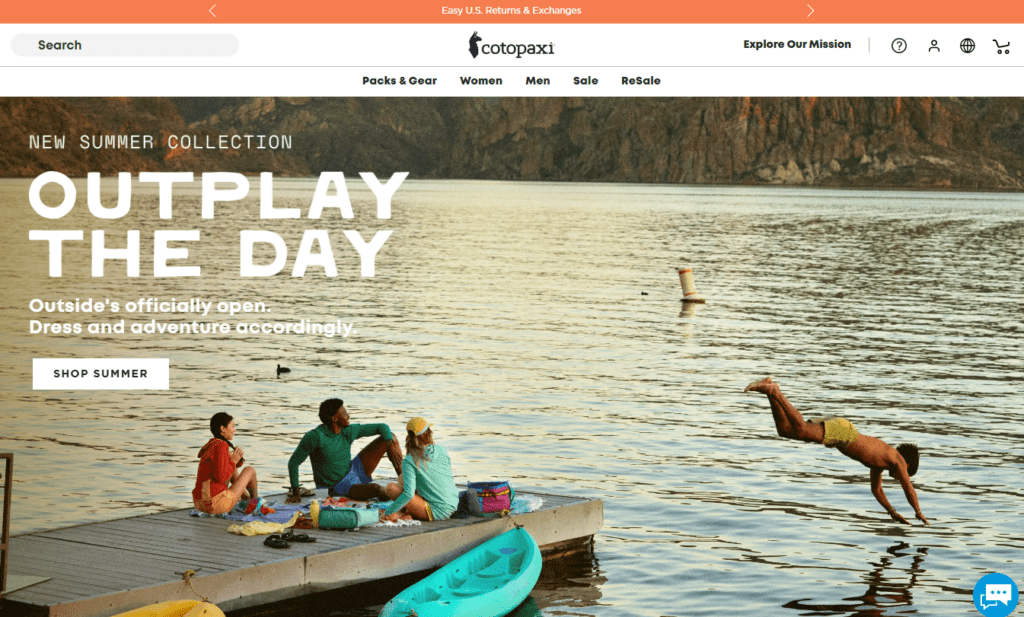
Outdoor apparel and gear brand Cotopaxi has significantly amplified its online sales strategy by integrating its product offerings into two major retail marketplaces: Nordstrom and Bloomingdale’s. This move, facilitated by a technology partnership with Mirakl, marks a pivotal expansion for the company, allowing it to tap into the established customer bases and inherent brand loyalty of these renowned retailers. Previously, Cotopaxi maintained a robust direct-to-consumer (DTC) presence through its own e-commerce website and physical stores, complemented by wholesale partnerships. The addition of Amazon, and now Nordstrom and Bloomingdale’s, diversifies its online footprint, aiming to drive incremental sales and brand discovery.
Stephan Jacob, Chief Global Officer and a co-founder of Cotopaxi, articulated the strategic rationale behind this expansion. "There’s no question that several marketplaces feature a level of loyalty that customers have for that retailer because they’ve shopped there. Their parents shopped there. There’s a generational love relationship that some of these retailers have established. It’s a huge asset to be able to plug into that if it’s done in the right way," Jacob stated in an interview with Digital Commerce 360. This sentiment underscores the value Cotopaxi places on leveraging the deep-seated trust and historical relationships these established retailers have cultivated with their shoppers.
Cotopaxi, currently ranked No. 1,415 in Digital Commerce 360’s Top 2000 Database, which tracks the largest North American online retailers, now finds itself alongside giants like Nordstrom (No. 21) and Bloomingdale’s, a division of Macy’s (No. 18). This strategic placement within prestigious retail environments offers a significant opportunity for brand visibility among a broad and engaged consumer demographic. The integration with Nordstrom and Bloomingdale’s marketplaces was initiated in May 2025, with Cotopaxi reporting that the traffic and conversion rates generated, particularly at full price, exceeded their initial expectations. These new channels have already made a "tremendous contribution" to Cotopaxi’s e-commerce sales, although specific figures remain undisclosed.
A cornerstone of Cotopaxi’s marketplace strategy is its commitment to maintaining a premium brand experience. Jacob emphasized that all marketplace relationships are treated as "100% full-price channels." The company is intentionally avoiding discounts or efforts to liquidate excess inventory. Instead, the focus is on providing a consistent, full-price shopping experience that mirrors their own online offerings. "We’re not discounting," Jacob asserted. "We’re not trying to move distressed inventory or anything. This is a true, full-price experience matching our own pricing online. And then finding ways to add value to these customer streams that otherwise wouldn’t be exposed to the brand." This approach ensures brand integrity and reinforces the value proposition of Cotopaxi products.
The operational benefits of partnering with Mirakl are also significant. Mirakl, a leading provider of marketplace solutions, enables companies to launch and manage their own marketplaces or to sell on existing ones. For Cotopaxi, this partnership has streamlined the process of connecting with multiple marketplaces, reducing the "beneficial operational complexity" that would typically arise from building individual integrations. This middleware solution allows Cotopaxi to efficiently manage its presence across various platforms.
Strategic Marketplace Integration: A Multi-Faceted Approach
Cotopaxi’s entry into the Nordstrom and Bloomingdale’s marketplaces was not a hasty decision but a carefully considered expansion of its e-commerce ecosystem. The brand’s existing presence on Amazon provided a foundational understanding of marketplace dynamics. The subsequent integration with Nordstrom and Bloomingdale’s, however, represents a deliberate move to access marketplaces with a more curated appeal and a strong demographic alignment with the Cotopaxi brand.
The decision to join these specific marketplaces was driven by several factors, chief among them being the established brand affinity and customer loyalty that these retailers command. As Jacob noted, customers often develop a deep-seated relationship with retailers like Nordstrom and Bloomingdale’s, a connection that can span generations. By aligning with these platforms, Cotopaxi aims to capitalize on this existing trust and introduce its products to a receptive audience that may not have previously encountered the brand.
Mirakl’s role in this expansion has been instrumental. The company provides a robust platform that simplifies the complexities of marketplace operations, from product onboarding and inventory management to order fulfillment and customer service. This technology allows brands like Cotopaxi to seamlessly integrate their product catalogs and operational workflows with the requirements of diverse marketplaces.
Scott Eckert, CEO of the Americas at Mirakl, highlighted the importance of curation in the modern marketplace landscape. "The important thing that both sides of these marketplaces are looking for is curation. And that this is often misunderstood about marketplaces that there really are only two – sort of in Amazon and Walmart – that are trying to be really broad reach, all products to all people," Eckert explained. He further elaborated that each marketplace and retailer possesses a distinct brand identity and a compelling reason for its customer base to shop there. Consequently, they meticulously select products that resonate with their specific clientele.
This emphasis on curation means that brands must strategically select marketplaces that align with their brand values and target audience. Cotopaxi’s selection of Nordstrom and Bloomingdale’s reflects this strategic approach, aiming to position its products within environments that complement its own brand image and appeal to consumers who value quality, sustainability, and outdoor adventure.
Data-Driven Success in the Marketplace Arena
Mirakl’s insights, particularly from its 2026 Sellers Report, offer compelling data supporting a multi-marketplace strategy. The report reveals a stark contrast in performance between sellers operating on a single marketplace versus those who embrace a more diversified approach. Sellers engaged on just one marketplace averaged approximately $575,000 in gross merchandise volume (GMV). In contrast, those participating in two or more marketplaces achieved an average of around $10 million in GMV. This significant disparity underscores the substantial revenue-generating potential of a multi-marketplace strategy.
"So there’s a dramatic difference in those that have a more aggressive multi-marketplace approach," Eckert stated. Mirakl’s platform is designed to assist brands in identifying suitable marketplaces, facilitating the necessary connections, and ensuring a curated experience for both the seller and the marketplace. This involves a mutual selection process: the brand must be willing to sell on a particular marketplace, and the marketplace must actively seek to feature that brand.
Cotopaxi’s experience reinforces these findings. The company views its marketplace presence as a "true standalone" channel, distinct from its owned e-commerce operations. While Cotopaxi remains open to exploring additional marketplace opportunities, it maintains a selective approach, recognizing that not all platforms are a strategic fit. The "shotgun" approach is actively avoided in favor of targeted integrations that promise mutual benefit.
Navigating the Nuances of Marketplace Integration
While the strategic advantages of marketplace integration are clear, the operational execution presents its own set of challenges. Jacob acknowledged that the initial connectivity and onboarding processes with Nordstrom and Bloomingdale’s were generally smooth, largely due to Mirakl’s facilitating technology. However, the "devil is in the details," particularly concerning catalog management.
"It’s mainly in the catalog management where the devil’s in the detail," Jacob remarked. "And that’s where it can get a little tricky, mainly driven by marketplace-specific approval processes that you would think are fully automated, but oftentimes it turns out they are not. It introduced delays in terms of getting more product online." These complexities can include navigating unique requirements for image cropping, data formatting, and attribute standardization, which can impede the seamless transfer of product information into new online environments.
The success of marketplace integration hinges on a brand’s ability to provide a product catalog that meets minimum attribute requirements with the highest quality. However, Eckert cautioned against the misconception that simply providing more data is always better. In the age of AI and sophisticated search algorithms, the interpretability of data is paramount. "I don’t believe that more is necessarily more, because there is actually only so much that a search – that AI agent – actually is going to interpret," Eckert explained. "So if you gave it three times as much data for every product, that isn’t going to make it three times better. In fact, it’ll stop reading at some point." This suggests a need for optimized, relevant data rather than sheer volume.
From an operational standpoint, Cotopaxi has ensured that marketplace transactions integrate seamlessly into its existing infrastructure. The company has established a "clean flow-through" for these sales, meaning that orders originating from Nordstrom or Bloomingdale’s are processed identically to those from its own e-commerce channels. This integration extends through its order-management flow, ERP (enterprise resource planning) system, and WMS (warehouse management system), ensuring efficient picking, packing, and shipping. This operational parity is crucial for maintaining scalability and customer satisfaction across all sales channels.
The Broader Implications of Marketplace Expansion
Cotopaxi’s strategic pivot towards marketplace integration reflects a broader trend within the retail industry. As e-commerce continues to evolve, brands are increasingly recognizing the limitations of a solely DTC model. Marketplaces offer unparalleled reach and access to diverse customer segments, providing an avenue for accelerated growth and enhanced brand visibility.
The success of Cotopaxi’s approach—maintaining full-price integrity and focusing on brand alignment—offers a valuable case study for other brands considering similar expansions. It highlights that marketplace participation doesn’t necessitate compromising brand values or engaging in price wars. Instead, it can be a sophisticated strategy to extend reach and acquire new customers while reinforcing brand equity.
The partnership with Mirakl further democratizes marketplace access, enabling brands of various sizes to navigate the complexities of multi-channel selling. As Eckert suggested, the future of retail lies in curated marketplaces where brands and retailers can find synergistic partnerships, creating a more valuable and differentiated shopping experience for consumers.
For Cotopaxi, this expansion is not merely about increasing sales volume; it’s about strategically positioning the brand within environments that resonate with its core values and customer base. By leveraging the trust and reach of established retailers like Nordstrom and Bloomingdale’s, Cotopaxi is poised for continued growth and deeper engagement with outdoor enthusiasts and conscious consumers alike. The ongoing success of this strategy will likely encourage further exploration of complementary marketplaces, solidifying Cotopaxi’s omnichannel presence in the dynamic retail landscape.