
 rifanmuazin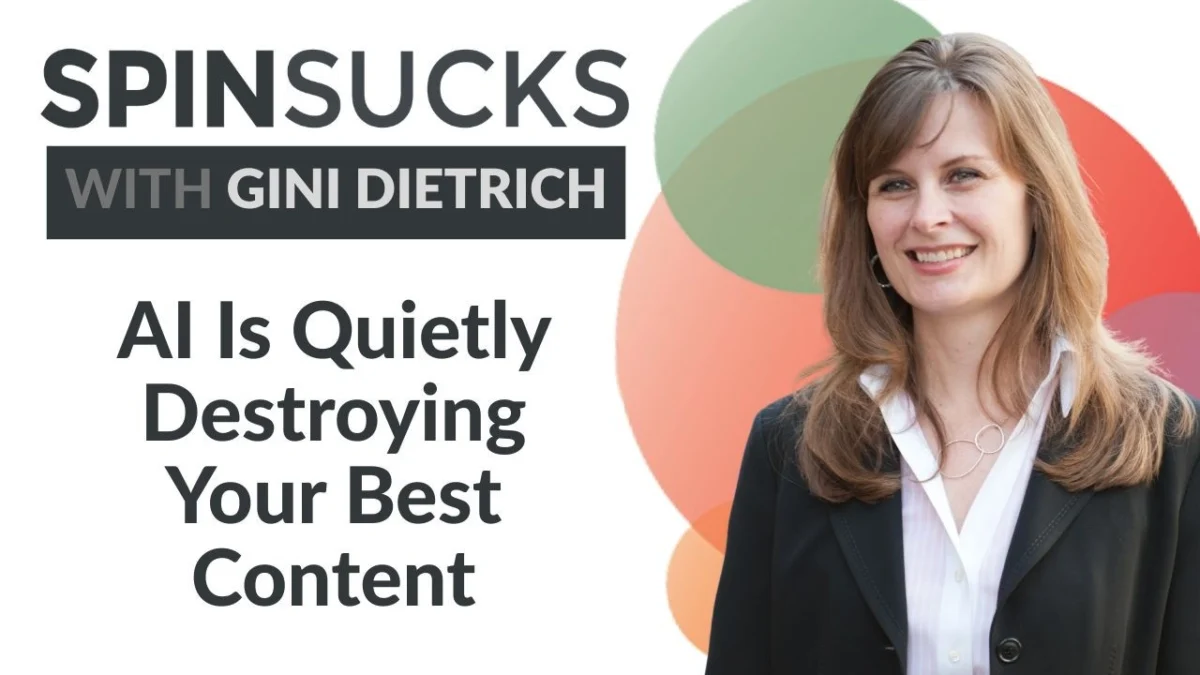
The rapid integration of generative artificial intelligence into corporate marketing workflows has revolutionized the speed of content distribution, yet it has simultaneously introduced a critical risk: the invisible dilution of brand authority. While AI tools allow organizations to transform a single flagship report into dozens of social media posts, emails, and newsletters in seconds, this efficiency often comes at the expense of the specific data points and unique insights that differentiate a brand in a crowded marketplace. As these tools prioritize linguistic fluidity over factual precision, experts warn that the resulting “content slop” is making brands indistinguishable from their competitors and, more importantly, invisible to the next generation of AI-driven answer engines.
The Mechanical Erosion of Brand Differentiation
The current landscape of digital marketing is characterized by a paradox of productivity. Tools such as ChatGPT, Claude, and Gemini have reduced the time required to repurpose long-form content by as much as 90%. A digital marketer who previously spent an entire workday reshaping a white paper into a multi-channel campaign can now execute the same task before completing their morning routine. However, this speed masks a phenomenon known as the “Telephone Game” effect.
In a traditional manual workflow, a human editor retains the core evidence of an argument—specific percentages, case study details, and unique terminology—while adjusting the format for different platforms. In an AI-driven workflow, the model often interprets specificity as “friction.” In its attempt to make a text “punchier” or more “accessible,” the AI tends to strip away the very data points that provide the original claim with its authority.
Consider a flagship claim: “Our integrated communications program reduced churn by 34% across 50 mid-market customers in 18 months.” When processed through multiple rounds of AI-assisted repurposing, this specific, defensible insight is gradually laundered into generic platitudes. By the second iteration, the 34% figure often disappears, replaced by “significant reductions.” By the fourth iteration, the claim often reads as “many organizations find success with our approach.” This homogenization results in what industry analysts call “beige soup”—content that is grammatically correct but functionally useless for building brand preference.
Chronology of the Shift Toward Generative Engine Optimization
The evolution of content distribution has moved through three distinct phases over the last decade, leading to the current crisis of dilution.
- The Manual Era (Pre-2022): Content repurposing was a high-fidelity process. Human creators meticulously ensured that the “voice” and “proof” of a brand remained consistent across owned and earned media. The primary goal was Search Engine Optimization (SEO), focusing on keywords and backlinks to drive traffic to a central website.
- The Proliferation Era (2022–2024): The launch of GPT-3.5 and GPT-4 democratized content creation. Organizations shifted toward a volume-based strategy, using AI to flood social channels. During this phase, the focus was on “virality” and “reach.” However, this led to a massive influx of low-quality, AI-generated content that began to clutter search results and social feeds.
- The Answer Engine Era (2025–Present): Search behavior has fundamentally shifted. Users are increasingly turning to “answer engines”—such as Perplexity, SearchGPT, and Gemini—which provide synthesized answers rather than a list of links. These engines prioritize corroboration and consistency. Brands that have diluted their message through multiple AI iterations now find themselves excluded from these synthesized answers because the AI cannot verify their unique claims against the sea of generic content.
Supporting Data: The High Cost of Inconsistency
Recent industry reports underscore the financial and strategic stakes of this content dilution. According to the G2 2026 AI Search Insight Report, answer engines now account for a meaningful share of how B2B buyers, job candidates, and journalists discover information. Unlike traditional search engines that display ten links and allow the user to choose, answer engines provide a single, authoritative response.
Data suggests that these engines are biased toward corroboration. If a brand’s website claims a 34% improvement, but its LinkedIn posts, guest articles, and newsletters all use different, softer language, the AI engine views this as a lack of authority. A study on Generative Engine Optimization (GEO) principles indicates that AI models trust a brand more when independent and diverse sources reinforce the same specific claims. When a brand’s own repurposing process strips away its evidence, it effectively deletes its own “trust signals,” leading the engine to prioritize a competitor or a generic industry average instead.
The Repurposing Rule: A Framework for Integrity
To combat the erosion of authority, communications experts are advocating for a strict “Repurposing Rule.” This framework dictates that while the format, length, and tone of content may adapt to different platforms, three core elements must remain non-negotiable and constant across every iteration:
- The Claim: The central argument or thesis must not be softened or generalized.
- The Evidence: Specific data points, timeframes, and customer universes (e.g., “34% reduction,” “18 months,” “50 customers”) must be preserved in every draft.
- The Attribution: The source of the insight must remain connected to the claim to ensure the “trail of authority” is visible to both humans and AI crawlers.
Industry leaders suggest treating AI as a “smart junior professional” rather than a strategic lead. In this model, the AI is permitted to handle structural changes—such as turning a blog post into a series of tweets—but it is never given the autonomy to decide which facts are relevant or how the brand’s voice should be expressed.
Broader Impact and Strategic Implications
The implications of content dilution extend beyond marketing aesthetics; they represent a fundamental threat to corporate visibility. The “ChatGPT Test” serves as a diagnostic for this problem: when prompted to explain what a specific organization does differently from its competitors, AI models often return generic descriptions that could apply to any company in the sector. This is a direct result of the AI being trained on a brand’s own diluted, repurposed content.
This shift has elevated the importance of integrated frameworks like the PESO Model (Paid, Earned, Shared, and Owned media). Originally designed as a way to organize communications, the PESO Model has evolved into an “operating system” for brand survival in the AI age. By ensuring that a specific claim is backed by “Earned” media (third-party validation), “Owned” media (the brand’s original site), and “Shared” media (social distribution), organizations create a robust digital footprint that AI engines can easily identify and prioritize.
Analysis of Future Trends
As generative AI continues to evolve, the gap between “commodity content” and “authoritative content” will widen. Organizations that continue to use AI for unchecked, high-volume repurposing will likely see a continued decline in their search visibility and brand recall. Conversely, firms that implement rigorous editorial controls—ensuring that every piece of content, no matter how small, contains specific proof points—will capture the “authority premium” in AI-generated search results.
The transition from SEO to GEO requires a shift in mindset from “how do we get more clicks?” to “how do we become the definitive answer?” This requires a move away from the “Telephone Game” of automated rewriting and toward a disciplined, data-centric approach to distribution. In an era where AI can generate infinite amounts of “fine” content, the only remaining competitive advantage is the specific, hard-won evidence that a machine cannot invent and a lazy competitor cannot replicate.
The strategic imperative for 2026 and beyond is clear: organizations must protect the integrity of their insights at the point of distribution. The ease of AI-assisted repurposing is a trap for those who value speed over substance. To remain visible in an AI-driven world, a brand’s voice must be as sharp in a three-sentence social post as it is in a thirty-page white paper. Anything less is a fast track to digital invisibility.










