

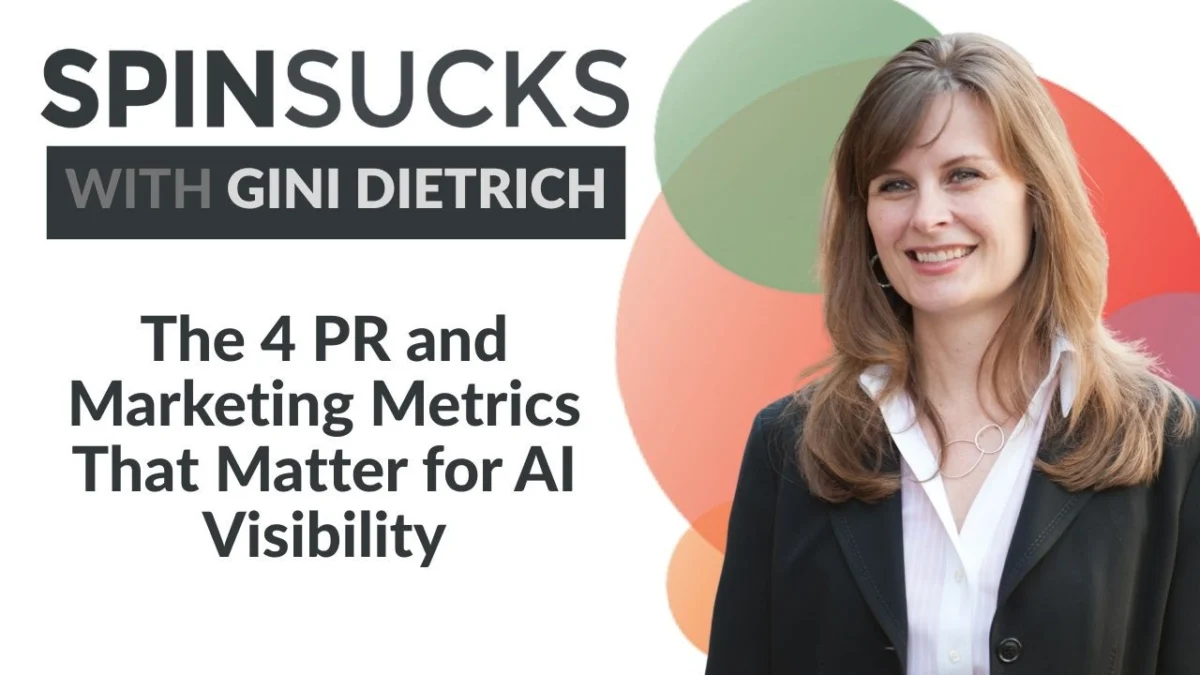
The landscape of professional communications is undergoing a fundamental shift as traditional metrics—long criticized for being "vanity-driven"—are increasingly failing to provide actionable business intelligence in an era dominated by artificial intelligence and synthesized search. As organizations navigate the transition toward more integrated communication frameworks, the PESO Model® (Paid, Earned, Shared, Owned) has emerged as a critical operating system for modern marketing and public relations. However, new data from the PESO Model Diagnostic reveals a significant maturity gap in the industry, with only 7% of organizations currently operating at a fully systemized level. To bridge this gap, industry leaders are identifying four pivotal metrics that will define success by 2026: Large Language Model (LLM) visibility, citation frequency, narrative share of voice, and the credibility loop close rate.
The Obsolescence of Legacy Public Relations Metrics
For decades, the public relations and communications sectors relied on metrics such as impressions, reach, and Advertising Value Equivalents (AVEs). These figures were designed for a media environment where human eyes were the primary consumers of content and distribution was the most significant barrier to entry. In that context, a high volume of media mentions was often equated with brand authority.
However, industry analysts now argue that these metrics are increasingly divorced from business reality. Impressions assume human viewership in an age of bot traffic and algorithmic filtering, while reach assumes that mere exposure leads to awareness. Perhaps most critically, AVEs—which attempt to calculate the value of earned media based on the cost of equivalent advertising space—have been widely discredited by professional bodies such as the International Association for Measurement and Evaluation of Communication (AMEC).
The shift in consumer behavior toward generative AI has further eroded the utility of these legacy numbers. Users are moving away from traditional search engine results pages (SERPs) characterized by "ten blue links" and toward synthesized answers provided by platforms such as ChatGPT, Claude, Gemini, and Perplexity. In this environment, ranking on page one of a search engine is no longer a guarantee of visibility if a brand is not included in the AI’s synthesized response.
Chronology of the Visibility Gap
The transition from traditional search to AI-mediated discovery has created what experts call the "Visibility Gap." This evolution can be traced through three distinct phases:
- The SEO Era (2000–2022): Visibility was defined by keywords and backlink profiles. The goal was to appear at the top of search engine results to capture human clicks.
- The Generative Shift (2023–2024): The launch of Large Language Models changed the interface of information. Users began asking complex questions and receiving direct answers, bypassing the need to visit individual websites.
- The Authority Era (2025 and beyond): Brands must now focus on becoming "load-bearing" sources of information that AI models cite as authorities. This requires a shift from volume-based content to high-authority, structured data that machines can easily interpret and attribute.
As this chronology unfolds, the need for new measurement instruments has become an operational necessity for Chief Communications Officers (CCOs) and Chief Marketing Officers (CMOs) who must justify budgets to skeptical Chief Financial Officers (CFOs).
Metric 1: Large Language Model (LLM) Visibility
LLM visibility is the foundational metric for the 2026 operating system. It measures the frequency and accuracy with which a brand appears in answers generated by AI models when a user asks a question relevant to the brand’s industry or category.
Tracking this metric involves a shift from Search Engine Optimization (SEO) to Generative Engine Optimization (GEO). Organizations are beginning to employ tools such as Brandi to monitor their visibility across various models on a weekly basis. The process involves identifying 20 to 30 "pillar questions" that a target buyer might ask and auditing how different AI models describe the organization in their responses. This metric is essential because if an AI model does not recognize a brand’s existence or expertise, the brand is effectively excluded from the top of the modern sales funnel.
Metric 2: Citation Frequency
While traditional PR tracked "mentions," the 2026 framework prioritizes "citations." A mention simply notes that a brand appeared in a piece of content; a citation indicates that the brand was the primary source or reference for a specific claim, data point, or idea.
In an AI-mediated world, citation frequency serves as a proxy for authority. When a model attributes a specific insight to an organization, it signals to both the user and the algorithm that the organization is a trusted expert. This metric replaces the "clip count" and provides a clearer indication of whether a brand’s intellectual property is being utilized by journalists, AI models, and other industry creators. A rising citation frequency is a leading indicator of long-term reputation and trust.
Metric 3: Narrative Share of Voice
Traditional "share of voice" metrics focused on volume—comparing the number of times a brand was mentioned relative to its competitors. This often rewarded the "loudest" brands rather than the most influential ones.
Narrative share of voice, by contrast, measures the adoption of a brand’s specific framing, language, and category definitions. It assesses whether the industry at large has adopted the brand’s perspective on a problem or solution. For example, if a company introduces a new term to describe a market challenge and competitors, analysts, and customers begin using that same term, the company has achieved narrative share of voice. This metric is difficult to manipulate through paid advertising alone; it requires a consistent and integrated communication strategy across all PESO channels.
Metric 4: Credibility Loop Close Rate
The credibility loop close rate is the most critical metric for demonstrating business impact. it tracks the journey from initial visibility (being seen in an AI answer or media report) to credibility (being cited as an authority) to final action (a lead, a hire, or a conversion).
This metric connects communications efforts directly to the four pillars of corporate value: revenue, reputation, recruiting, and risk. By tracking how reliably a prospect moves through the "system"—from discovering a brand via a citation in an AI response to consuming owned content and eventually engaging with the sales team—organizations can attribute business outcomes to their communication strategies. This provides the "line of sight" to ROI that CFOs require during budget deliberations.
Data Insights: The PESO Model Maturity Gap
Recent data from the PESO Model Diagnostic provides a stark look at the current state of the industry. After assessing nearly 100 organizations, researchers found that two specific dimensions are most closely correlated with overall strategic maturity: integration (0.83 correlation) and measurement (0.68 correlation).
Despite the importance of these factors, the data indicates that:
- Only 7% of organizations have reached the "Systemize" stage of PESO maturity.
- 56% of organizations remain in the "Foundation" or "Pilot" stages, where tactics are often siloed and uncoordinated.
- Measurement is consistently one of the lowest-scoring dimensions across all assessed organizations.
The data shows that as organizations move up the "Maturity Ladder," their measurement scores quadruple—rising from an average score of 19 at the Foundation level to 77 at the Systemize level. This suggests that sophisticated measurement is not just a byproduct of success but a prerequisite for it.
Strategic Implications and Official Responses
Industry experts suggest that these metrics cannot be "bolted on" to existing, fragmented strategies. Instead, they must be the output of an integrated system. LLM visibility and citation frequency are the results of high-quality owned content being amplified through earned and shared channels.
From a management perspective, the shift toward these four metrics represents a move away from "communication as a service" (executing tasks) to "communication as a system" (driving outcomes). CFOs and executive boards are increasingly demanding data that proves communications efforts are "moving the business." The credibility loop close rate, in particular, addresses this demand by providing a structured way to report on how reputation and authority translate into tangible pipeline growth.
Conclusion: The Path to 2026
The transition to the 2026 PESO Model Operating System requires a fundamental reimagining of what "success" looks like in a digital-first, AI-driven economy. The organizations that thrive will be those that stop measuring what is flattering and start measuring what is informative.
By focusing on LLM visibility, citation frequency, narrative share of voice, and the credibility loop close rate, communicators can move beyond the "wall of green arrows" that lacks business context. The low percentage of organizations currently utilizing these metrics presents a significant competitive advantage for early adopters. As the "Visibility Gap" continues to widen, the ability to prove authority through citations and business impact through the credibility loop will be the defining characteristic of the next generation of industry leaders.









