

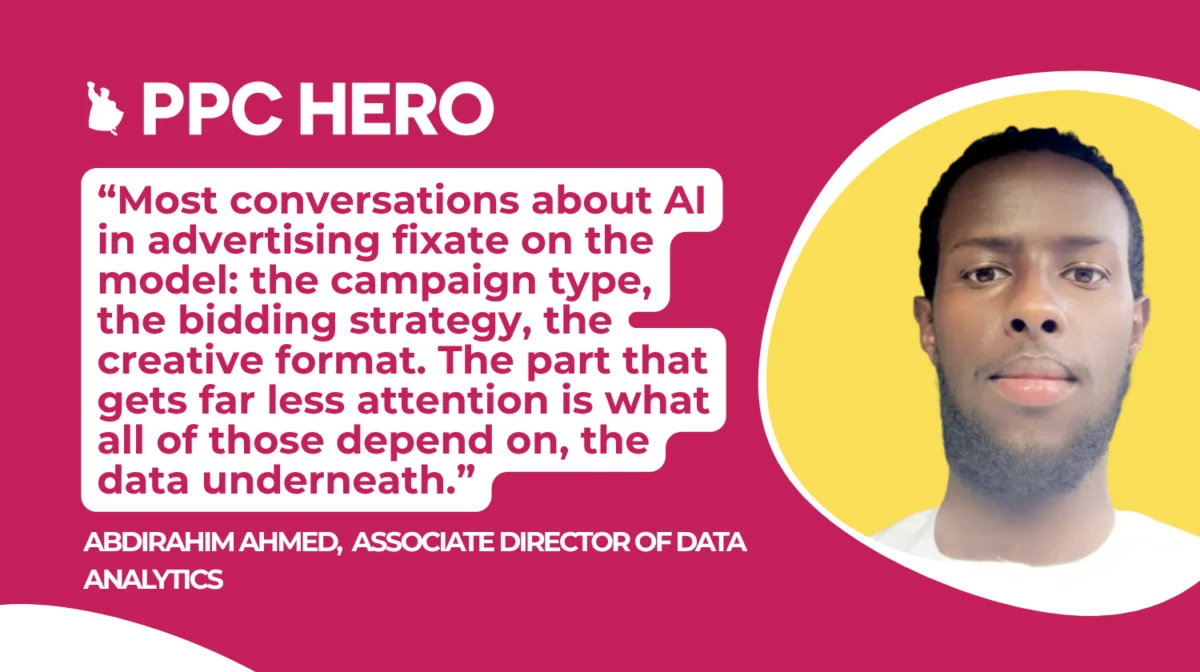
The prevailing discourse surrounding artificial intelligence in advertising frequently centers on the sophisticated models and strategic frameworks that drive campaigns. Discussions typically revolve around specific campaign types, dynamic bidding strategies, and innovative creative formats. However, a critical component, the very foundation upon which these advanced AI systems operate – the data – is often relegated to the sidelines. Google’s suite of automated advertising solutions, including Smart Bidding, Performance Max, and Demand Gen, are fundamentally powered by conversion signals. When these signals are sparse or incomplete, the AI’s ability to optimize effectively is severely hampered, leading to misdirected efforts or a complete lack of progress. This oversight represents a significant "measurement gap" that many advertisers are either unaware of or unable to fully perceive, impacting their ability to leverage AI to its full potential.
The Gradual Erosion of Measurable Data
The decline in data accuracy has not been a sudden event but rather a gradual erosion, making it insidious and easily overlooked. The widespread adoption of privacy-centric browser features and operating system updates has systematically chipped away at traditional tracking mechanisms. Safari and Firefox, for instance, have implemented stringent restrictions on third-party cookies. Collectively, these browsers account for approximately 21% of global internet traffic, a significant portion that is now measured with considerably less precision than just a few years ago.
A pivotal development was the introduction of Apple’s App Tracking Transparency (ATT) framework. Launched with considerable fanfare, ATT requires app developers to obtain explicit user consent before tracking their activity across other apps and websites. The opt-in rates for ATT have generally hovered between 15% and 25%, meaning the vast majority of Apple users remain effectively invisible to standard in-app tracking methods. This has created a substantial blind spot for advertisers relying on app-based conversion data.
Further exacerbating this data deficiency is the proliferation of ad blockers. These tools are designed to intercept and strip tracking tags before they can even fire, preventing the collection of valuable conversion data. Moreover, the default Google Tag, a cornerstone of many tracking implementations, is often hosted on a third-party domain. This makes it a prime target for privacy tools and browser settings designed to intercept requests originating from external domains, further widening the measurement gap.
The consequences of this fragmented data landscape extend far beyond mere reporting inaccuracies. The efficacy of AI-driven bidding strategies, such as Google’s Smart Bidding, is directly proportional to the quality and completeness of the conversion data they receive. When this data is incomplete, the AI struggles to discern which clicks, audience segments, or ad placements are genuinely driving desired outcomes. This forces the system to operate with a partial, and often misleading, understanding of campaign performance. Consequently, campaigns that should be high-performing may begin to drift, and the budget allocated to automation may underperform its true potential, failing to deliver the expected return on investment.
Defining "Data Strength": Fueling the AI Engine
In response to this escalating measurement challenge, Google has been increasingly emphasizing the concept of "Data Strength." This term, often presented in conjunction with acronyms like GTG (Google Tag Gateway), ECW (Enhanced Conversions for Web), ECL (Enhanced Conversions for Leads), and Customer Match, encapsulates Google’s comprehensive approach to bolstering advertisers’ data foundations.
Data Strength can be best understood as the fuel that powers the advertising AI engine. Just as a high-performance engine requires premium fuel to operate at its peak, Google’s automated advertising systems require robust and complete conversion signals to optimize effectively. The stronger and more comprehensive the data signal, the more efficiently and accurately the AI can perform its tasks.
What distinguishes Google’s current messaging on first-party data from earlier initiatives is its profound emphasis on completeness and interconnectedness. The acknowledgment is that relying on a single data product or source is insufficient. Instead, the core principle of Data Strength is to integrate and connect every available data source – whether online or offline – into a unified input stream. This holistic approach provides Google’s AI with the most comprehensive possible view of the customer journey, from initial interaction to final conversion.

Beyond improved performance, there is a distinct competitive advantage to be gained from building strong data foundations. Google’s automation systems are designed to optimize for advertisers who provide them with the highest quality data. Consequently, if a competitor possesses superior measurement capabilities, their campaigns will learn faster and gain a competitive edge over time. An advertiser’s proprietary data, when effectively utilized, acts as a protective moat, shielding their insights from competitors and enabling them to maintain a lead. Google’s own figures suggest that advertisers who invest in building these strong data foundations can observe between 10% and 20% more conversions, a significant uplift that can translate directly into improved ROI.
The Foundational Components of Data Strength
Google’s Data Strength framework is structured into several interconnected components, each building upon the last to create a more robust measurement ecosystem.
The Google Tag and its Evolution: Google Tag Gateway
The foundational element of this framework is the Google Tag (gtag.js). However, the traditional implementation of the Google Tag presents a structural weakness: it is often hosted on a third-party domain. In an era of increasing privacy consciousness and the prevalence of ad blockers, requests originating from third-party domains are often viewed with suspicion and are more likely to be intercepted.
To address this, Google introduced the Google Tag Gateway (GTG). GTG allows advertisers to serve the Google Tag from their own domain. This simple yet effective change makes the tag appear to the browser as a first-party request, significantly increasing its likelihood of loading successfully. Google estimates that this alone can lead to an average uplift of 14% in observed conversions. For organizations utilizing Cloudflare, a popular content delivery network, the implementation of GTG can be remarkably straightforward, often requiring only a few steps and no need for re-tagging the website. This foundational step is crucial for ensuring that basic tracking signals are reliably captured.
Capturing Online Conversions: Enhanced Conversions for Web
The next critical component addresses a common scenario: a conversion occurs, but no persistent cookie is available to identify the user. This can happen due to browser settings, privacy tools, or the ephemeral nature of certain browsing sessions. Enhanced Conversions for Web (ECW) is designed to bridge this gap.
ECW works by capturing consented first-party data at the point of conversion – typically a hashed email address. This hashed data is then used to attribute the conversion even when a direct cookie match fails. Importantly, the data is hashed directly within the user’s browser before it is transmitted, ensuring that Google only ever receives an encrypted identifier, thereby maintaining user privacy. Google reports that ECW can lead to an approximate 8.5% lift in Search conversions and a more substantial 15% lift on YouTube, a platform that has historically presented greater attribution challenges due to its video-centric nature and longer user engagement cycles.
Bridging the Offline Gap: Enhanced Conversions for Leads
For businesses that generate leads through offline channels or whose sales cycles extend beyond the initial online interaction, capturing and attributing these conversions is paramount. Enhanced Conversions for Leads (ECL) extends the principles of Enhanced Conversions to the offline realm.
Traditional offline conversion imports primarily rely on the Google Click ID (GCLID) for attribution. This method is click-based and is increasingly vulnerable to deprecation as link decoration practices evolve. ECL overcomes this limitation by enabling advertisers to upload hashed first-party data alongside the GCLID when importing offline conversions. This dual-identifier approach allows Google to match conversions based on more than one piece of information, significantly improving the accuracy of offline attribution. Google claims that ECL can deliver a 10% lift on Search conversions and an impressive 22% lift on YouTube conversions compared to standard offline import methods. This is particularly valuable for lead generation businesses where the majority of conversions occur offline.
Activating Customer Data: Customer Match
While the previous components focus on measurement, Customer Match shifts the focus to data activation. This feature allows advertisers to upload consented customer data, which is then securely hashed. Google matches this hashed data to signed-in users across its vast network, including Search, Shopping, YouTube, Gmail, and Display.

This capability enables advertisers to precisely target their existing customers with tailored campaigns, exclude them from prospecting efforts to avoid redundant messaging, or create sophisticated lookalike audiences based on their most valuable customer segments. Customer Match transforms raw customer data into a powerful tool for personalized advertising and audience segmentation.
Unifying Data Streams: Data Manager
The Data Manager serves as the central hub where all these disparate data components converge. It is Google’s integrated platform for connecting various data sources, including website activity, app usage, in-store transactions, and CRM data, into a single, unified view.
Google reports that advertisers who leverage Data Manager to connect offline and app data experience an average uplift of 26% in incremental Return on Ad Spend (ROAS). A significant update in 2026 made Data Manager available across Google Ads, Search Ads 360, and Campaign Manager 360, with Analytics support following. Furthermore, integrations with popular platforms like Mailchimp, Klaviyo, and TripleWhale have been introduced, broadening the range of data sources that can feed into the system, making it more accessible and versatile for a wider array of advertisers.
Real-World Impact: A Case Study in Recovery
The effectiveness of the Data Strength framework is not merely theoretical; it is demonstrably impacting advertisers in practical scenarios. Consider the case of a home improvement retailer that was experiencing a significant decline in lead volume directly attributable to signal loss. Through a phased implementation of Google’s Data Strength solutions, the retailer was able to recover approximately 27% of the conversions that had previously been lost.
The initial phase involved a straightforward, one-click integration of the Google Tag Gateway via Cloudflare. This foundational step alone, even before the implementation of other components, delivered a 15% uplift in observed conversions. Subsequently, the retailer integrated Consent Mode, a privacy-centric framework for managing user consent, and Enhanced Conversions. This layered approach allowed for the progressive restoration of lost signals, enabling the AI to gain a more complete understanding of customer behavior and campaign effectiveness.
The Bottom Line: Data as the Cornerstone of AI Advertising
The ongoing debate surrounding AI in advertising often stops at the sophistication of the models themselves, overlooking the fundamental requirement of robust data. The model is, in essence, only half of the equation. The other, equally critical half, is the data that fuels it. For a substantial number of advertisers, this data is currently in a state of leakage. Signals are being blocked, conversions are going unattributed, and the AI is operating with a fragmented and incomplete picture of reality.
This measurement gap rarely manifests in overt dashboard alerts. The missing data, by definition, is not present to be seen, which is precisely why it often goes unaddressed for extended periods. Advertisers may attribute underperformance to campaign strategy or creative, unaware that the root cause lies in the inability of their systems to accurately track and report user interactions.
Data Strength represents a systematic approach to closing this critical gap. It is a process that is built layer by layer, rather than through a single, one-off solution or a brief implementation sprint. Each layer added to the Data Strength framework progressively recovers more of the vital signals that AI systems require to learn, adapt, and bid effectively.
In the current advertising landscape, where automation is increasingly dictating campaign outcomes on a quarterly basis, those advertisers who proactively invest in building strong data foundations today will undoubtedly compound a significant advantage over their competitors who delay. This robust data infrastructure is not merely an incremental improvement; it is the bedrock upon which all future performance rests. As the digital advertising ecosystem continues to evolve, driven by both technological advancements and increasing privacy regulations, the strength and completeness of an advertiser’s data will be the ultimate determinant of their ability to harness the full power of AI and achieve sustainable success.









