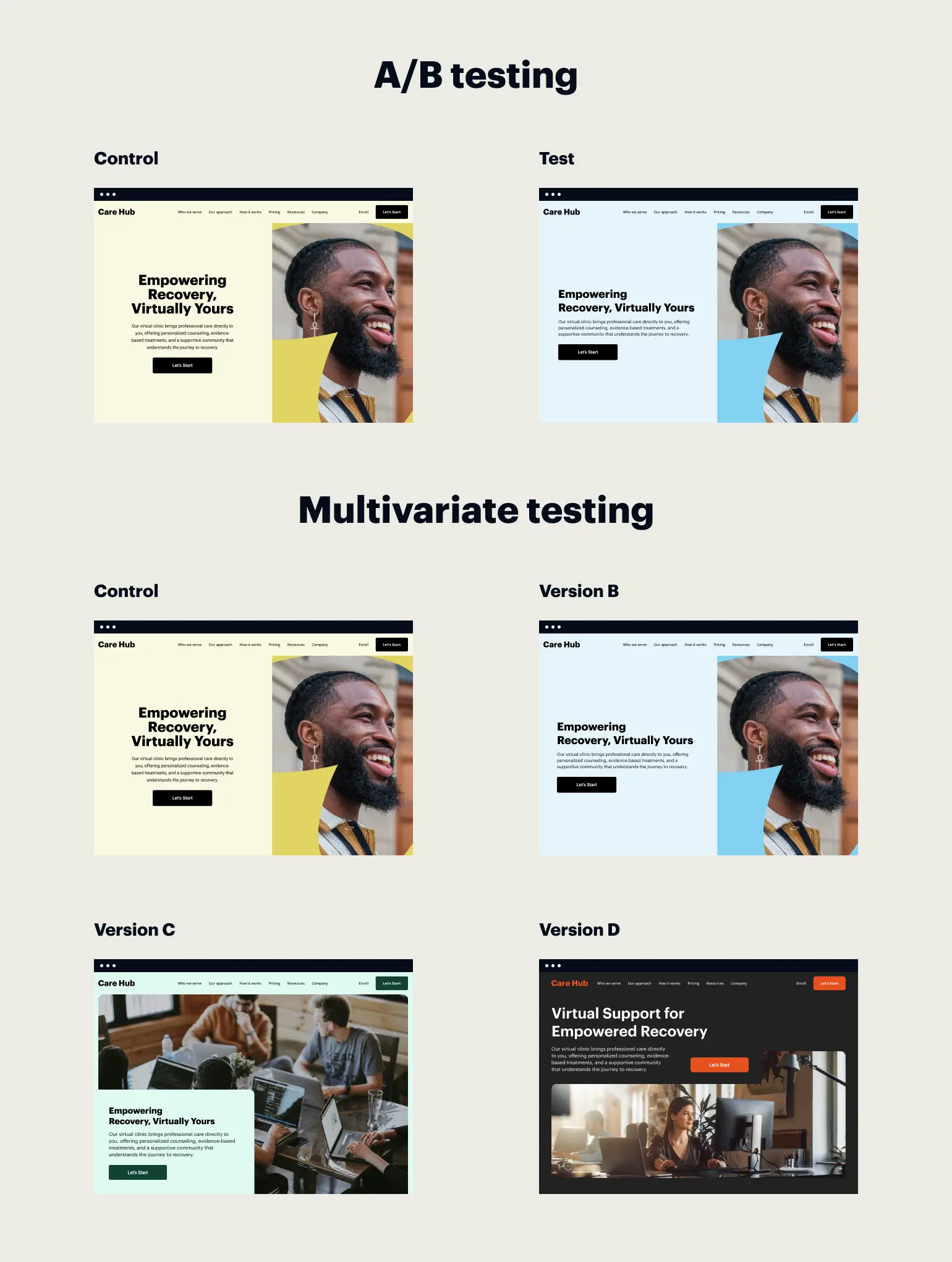
The global digital marketing community recently recognized Katie Faulkner, an Optimisation Strategist at FORJ Digital, as the winner of the 2026 "SpeakUp to Uplevel" competition. This annual event, organized in collaboration with the Women in Experimentation (WiE) organization and Convert.com, serves as a platform to elevate voices within the niche field of Conversion Rate Optimization (CRO) and data-driven testing. Faulkner’s victory underscores a significant shift in the industry: the integration of advanced artificial intelligence (AI) with a strictly human-centric approach to data interpretation.
As organizations increasingly rely on automated tools to drive revenue, Faulkner’s work at FORJ Digital represents a balanced methodology that treats AI as a collaborative team member rather than a total replacement for human intuition. Her recognition comes at a time when the CRO market is evolving from simple A/B testing into a complex ecosystem of real-time behavioral prediction and modular web design.

The Professional Evolution of a CRO Strategist
Faulkner’s entry into the world of digital optimization was not the result of a traditional linear career path. Initially seeking a generalist role within a local marketing agency, her background was a unique synthesis of scientific inquiry, data analysis, fine arts, and customer service. It was this multidisciplinary foundation that led industry mentors to suggest a career in Conversion Rate Optimization—a field that requires the analytical rigor of a scientist and the empathetic understanding of a designer.
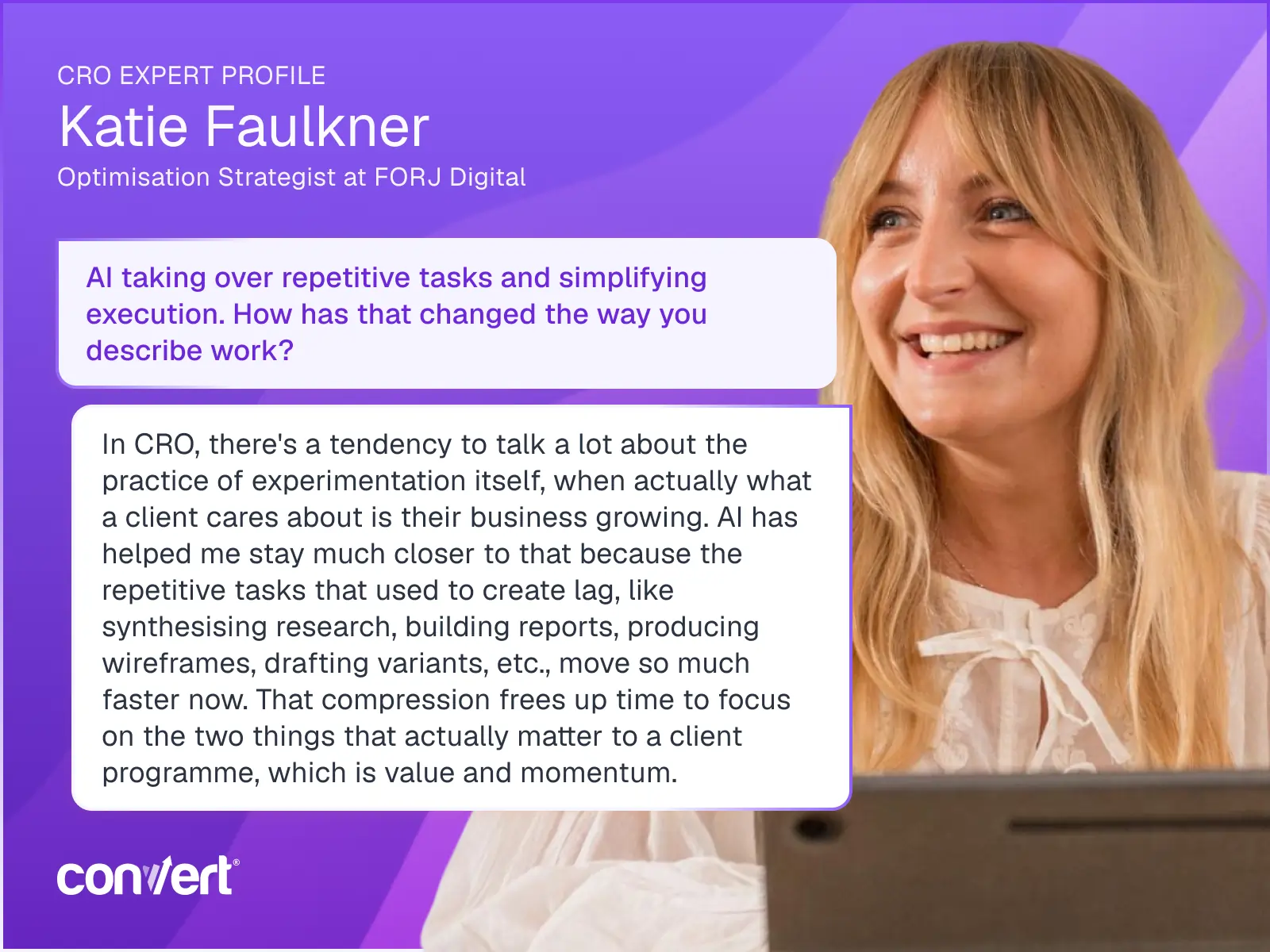
The discipline of CRO, as defined by Faulkner, is centered on the principle of recognizing "a human behind the click." This philosophy shifts the focus from abstract metrics, such as bounce rates and session durations, to the underlying psychological motivations and anxieties of the individual user. By viewing data points as representations of human behavior, practitioners can develop more effective hypotheses that address real-world friction points in the digital experience.
AI Integration: The Shift from Execution to Strategy
A core component of Faulkner’s success in 2026 involves her specific approach to AI implementation within agency workflows. Rather than allowing AI to dictate the direction of an experimentation program, Faulkner and her team at FORJ Digital utilize AI agents to handle the high-volume, repetitive tasks that historically created bottlenecks in the testing cycle.

The integration of AI into the workflow has primarily impacted two areas:
- Data Synthesis and Reporting: Tasks such as analyzing raw qualitative data from user surveys or synthesizing complex research insights into actionable reports have been compressed from days to minutes.
- Asset Production: The generation of initial wireframes and the drafting of variant copy are now facilitated by AI, allowing human strategists to spend more time on high-level hypothesis development and strategic alignment.
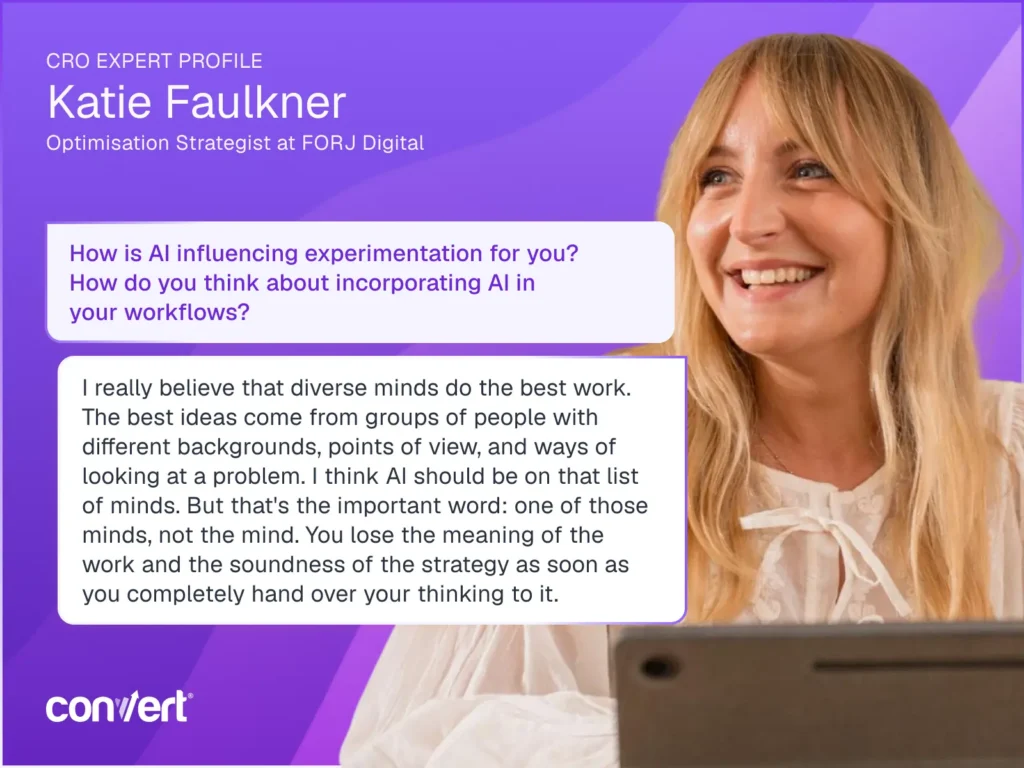
Faulkner describes this relationship as "meeting the AI halfway." By tasking an AI agent with a report or a design direction while a human strategist simultaneously works on the same problem, the team can uncover diverse perspectives and creative angles that might have been overlooked. This "diverse minds" approach posits that AI should be viewed as one of many contributors to a strategy, ensuring that the final output remains grounded in human sound logic and business objectives.
Behavioral Experimentation and the Amusement Park Case Study
Faulkner’s portfolio includes complex experiments that bridge the gap between digital interactions and physical-world outcomes. One notable project involved the development of a dynamic budget planner for a major amusement park. The park had identified a significant drop in customer satisfaction and trust because visitors were frequently surprised by unexpected costs once they arrived on-site.
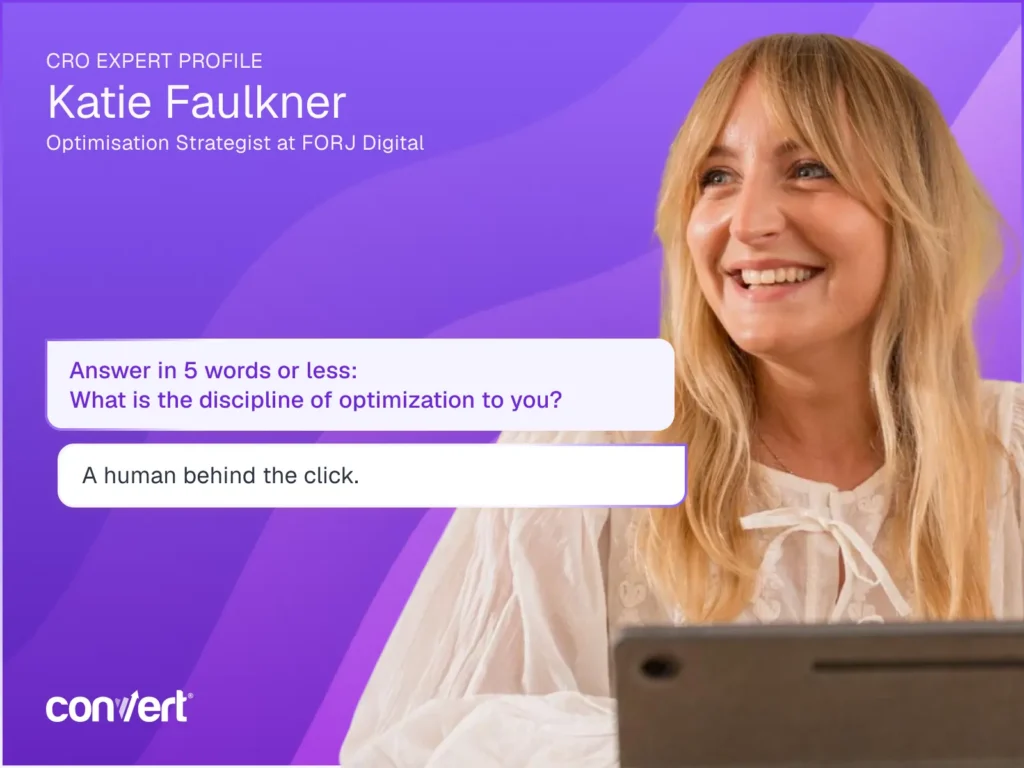
The solution was to move away from a purely transactional e-commerce funnel and toward a "conversational journey." By implementing an online budget planner that asked users honest questions about their needs and provided transparent cost breakdowns, the park was able to align visitor expectations with reality. This transparency built long-term brand trust, illustrating that the most effective CRO strategies often involve solving human problems rather than simply moving a button or changing a color.
Furthermore, Faulkner points to industry leaders like AO, Charlotte Tilbury, and Sézane as examples of behavioral thinking in action. Whether it is a comparison pop-up triggered by a user copying a serial number or a luxury fashion site sorting products by color to reduce cognitive load, these examples demonstrate how optimization is moving toward creating seamless, discovery-based experiences that mimic the helpfulness of an in-person shop assistant.
The Future of Experimentation: Beyond the Static Template
Looking toward the late 2020s, Faulkner predicts a radical shift in how websites are constructed and delivered. The current model of serving a set template to all users—or even segments of users—is likely to be replaced by modular, real-time page construction.
In this projected future, AI will be embedded directly into browsers and web servers, allowing pages to build themselves module-by-module based on a user’s immediate behavioral signals. This means that a website’s layout, content, and calls to action would be generated in the milliseconds before a page loads, informed by the user’s past history and current intent. Under this model, the entire website becomes a continuous, invisible experiment that adapts to the individual.
While this level of automation offers immense potential for efficiency, Faulkner cautions practitioners against overconfidence. The technology is currently advancing faster than the regulatory and ethical frameworks governing its use. Consequently, the industry’s leading strategists are shifting from a posture of "knowing the answers" to one of "informed curiosity," acknowledging that the best way to navigate this transition is through constant learning and adaptation.
Data-Driven Impact: Building Client Value and Momentum
The practical result of these advancements is a change in the way optimization services are communicated to stakeholders. In the past, CRO programs were often judged by the sheer volume of tests run. In 2026, the focus has shifted to "value and momentum."
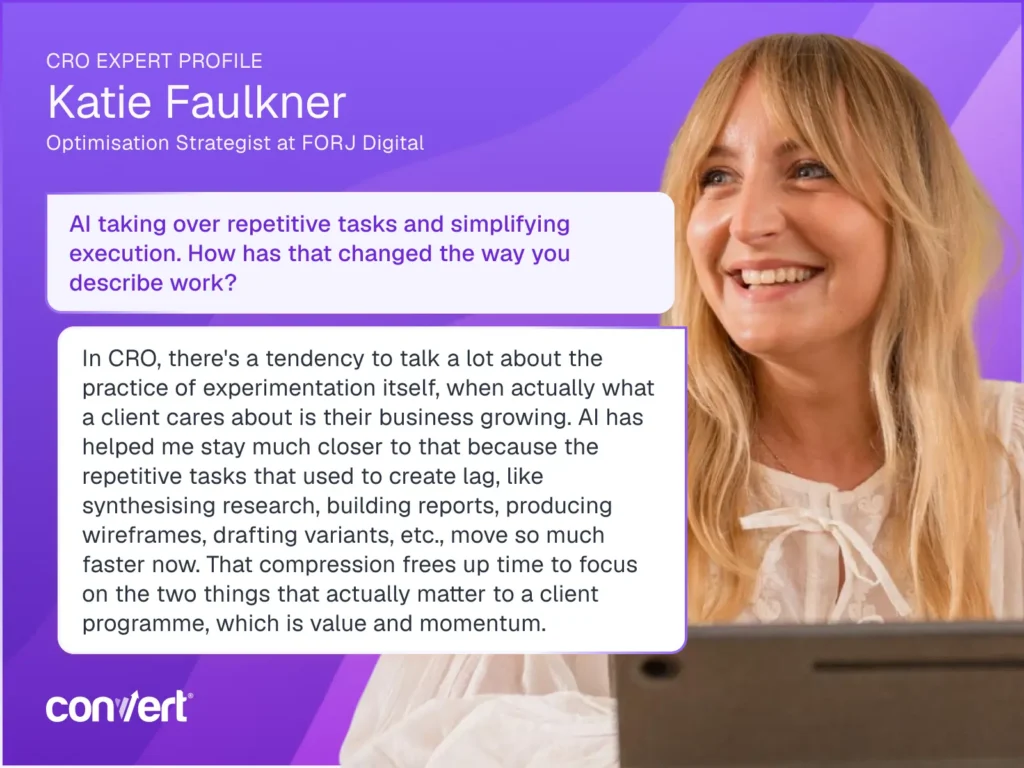
"Value" is derived from the increased time strategists can spend on bold, ambitious hypotheses rather than administrative production. "Momentum" refers to the speed at which an idea can be moved from the research phase to live testing. By using AI to shorten the distance between insight and action, agencies can build greater trust with clients. A program that moves quickly and consistently demonstrates a clear impact on business growth is more likely to secure the "buy-in" necessary for long-term strategic investment.
Professional Credibility and the Human Factor
Despite her recent accolades, Faulkner has been vocal about the challenges of "imposter syndrome" and the pressures of maintaining visibility in a highly competitive, technical field. Her approach to building credibility in 2026 emphasizes authenticity and deep thinking over the "speed and volume" of communication often seen on social media platforms like LinkedIn.
Faulkner advocates for a "quiet leadership" style, where value is provided through the quality of insights rather than the frequency of participation. This human-centric approach to professional branding mirrors her approach to optimization: focusing on the substance of the interaction rather than the metrics of the platform.

The "SpeakUp to Uplevel" award recognizes not just the technical proficiency required to run successful experiments, but the ability to communicate the "why" behind the data. As the field of CRO becomes increasingly automated, the ability to interpret the human motivations behind digital actions remains the most valuable asset a strategist can possess.
Broader Industry Implications
The recognition of Faulkner’s work reflects a broader trend in the global technology sector. As AI simplifies the execution of digital tasks, the premium on human strategy and empathy increases. Organizations that can successfully integrate AI to handle repetitive workflows while retaining human oversight of the "customer journey" are expected to outperform competitors who rely solely on automated optimization.
The partnership between Convert.com and Women in Experimentation continues to highlight the importance of diversity in the field. By encouraging a wide range of voices—including those who may not be the loudest in the room—the industry ensures that its strategies remain reflective of the diverse human population they serve.

In conclusion, Katie Faulkner’s win at the 2026 SpeakUp to Uplevel competition serves as a benchmark for the modern CRO professional. It highlights a future where data is not just a collection of numbers, but a narrative of human behavior, and where AI is not a master, but a tool used to bring that narrative into clearer focus. The discipline of optimization, once relegated to technical departments, is now firmly established as a critical pillar of human-centric business strategy.