The dynamic landscape of e-commerce marketing continually presents businesses with critical decisions regarding their technology stack. Among the most pivotal choices for driving customer engagement and revenue are platforms dedicated to email and SMS marketing. In this competitive arena, Omnisend and Postscript frequently emerge as leading contenders, yet they cater to distinct strategic approaches, a nuance that demands thorough examination for any serious online retailer. While both platforms aim to enhance customer retention and boost sales, their fundamental architectures and feature sets are designed to solve different problems for e-commerce merchants.
The Evolving Landscape of E-commerce Marketing and Customer Retention
![Omnisend vs. Postscript: Which Fits Your Store? [2026 ]](https://www.omnisend.com/blog/wp-content/uploads/2026/07/Channels-and-automation-compared.jpg)
In an increasingly crowded digital marketplace, customer acquisition costs continue to rise, making customer retention more critical than ever. E-commerce businesses are moving beyond transactional interactions, striving to build lasting relationships through personalized and timely communication across multiple channels. Email marketing, a stalwart of digital communication, remains highly effective, but its efficacy is significantly amplified when integrated with other direct channels like SMS and web push notifications. The advent of sophisticated automation, artificial intelligence, and deep integration with e-commerce platforms like Shopify, WooCommerce, Wix, and BigCommerce has transformed marketing from mass broadcasting to highly segmented, personalized customer journeys. This shift underscores the strategic importance of choosing a marketing platform that not only delivers messages but also understands the customer lifecycle.
Against this backdrop, the comparison between Omnisend and Postscript becomes particularly relevant. Omnisend positions itself as an all-in-one marketing automation platform, unifying email, SMS, and web push notifications under a single dashboard. This integrated approach aims to simplify marketing operations and provide a holistic view of customer interactions. Conversely, Postscript has carved out a niche as a specialized SMS marketing solution, offering deep text-message tools primarily for Shopify stores. Its strength lies in its advanced SMS capabilities, but it operates under the assumption that email marketing is handled by a separate, dedicated platform. Understanding these core distinctions is paramount for e-commerce businesses evaluating their marketing technology investments.
Omnisend: The Unified Omnichannel Powerhouse
![Omnisend vs. Postscript: Which Fits Your Store? [2026 ]](https://www.omnisend.com/blog/wp-content/uploads/2026/07/prebuilt-automations.jpg)
Omnisend’s philosophy revolves around providing a comprehensive customer retention platform. It treats text messages as an integral channel alongside email, web push, and versatile sign-up forms, all managed from a single, intuitive dashboard. This allows merchants to construct sophisticated cross-channel campaigns using a unified automation editor, ensuring a cohesive and consistent customer experience.
- Broad Platform Compatibility: Omnisend extends its services beyond Shopify, offering robust integrations with WooCommerce, Wix, and BigCommerce, among others. This multi-platform support makes it an attractive option for businesses operating across various e-commerce ecosystems or those planning future expansion.
- Global Reach: A significant advantage for internationally focused brands, Omnisend’s SMS capabilities span over 200 countries. This global coverage for both SMS and MMS ensures that businesses can effectively reach a diverse customer base, regardless of geographical location.
- Integrated Email Builder: Crucially, Omnisend includes a native email builder and comprehensive email automation flows. This eliminates the need for a separate email marketing tool, consolidating communication efforts and data within one system. Merchants can design visually appealing emails, segment their audiences, and automate complex email sequences without ever leaving the platform.
- Automation and Workflow Simplicity: The platform offers prebuilt automations for common e-commerce scenarios such as welcome series, abandoned carts, birthday messages, and order/shipping confirmations. These ready-to-use workflows significantly reduce setup time, allowing businesses to launch effective campaigns quickly. The drag-and-drop visual builder facilitates easy customization and A/B testing of subject lines and send times, optimizing campaign performance.
- AI-Powered Efficiency: Omnisend leverages artificial intelligence to streamline campaign creation and personalization. Its AI features include an AI Subject Line Generator, AI Writer for crafting compelling copy, and an AI Segment Builder for intelligent audience targeting. The Forms AI assistant further aids in generating effective sign-up forms. These tools empower marketers to create highly personalized and impactful campaigns with greater speed and efficiency.
- Shopify Integration Depth: For Shopify users, Omnisend provides a deep, two-way integration. It seamlessly syncs vital store data, including contacts, products, orders, carts, browsing behavior, tags, and purchase history, often in real-time. This ensures that all segments and personalization efforts are based on the most current customer information. Support for Shopify Flow and Shopify Markets further enhances its utility for advanced automation and international sales.
Postscript: The Specialized Shopify SMS Powerhouse
In stark contrast, Postscript dedicates its expertise entirely to SMS marketing for Shopify stores. Its strategic decision to focus exclusively on this niche allows it to offer unparalleled depth and specialization in text-message marketing tools, albeit within a more constrained operational scope.
![Omnisend vs. Postscript: Which Fits Your Store? [2026 ]](https://www.omnisend.com/blog/wp-content/uploads/2026/07/omnisend-flow.jpg)
- Shopify Exclusivity: Postscript is built solely for Shopify, meaning its features and integrations are hyper-optimized for this specific e-commerce platform. This narrow focus allows for deep native integrations and specialized functionalities that might not be possible in a broader platform.
- Geographic Focus: The platform’s SMS reach is primarily concentrated on the U.S. and Canada. While it excels in these markets, its utility for businesses with a significant international customer base is limited.
- Absence of Native Email: A defining characteristic of Postscript is its lack of an integrated email builder or email automation capabilities. This means that businesses choosing Postscript must pair it with a separate email marketing platform, such as Klaviyo, necessitating a multi-tool approach to their overall marketing strategy. The platform’s own documentation often guides users on how to integrate with external email providers, underscoring this design choice.
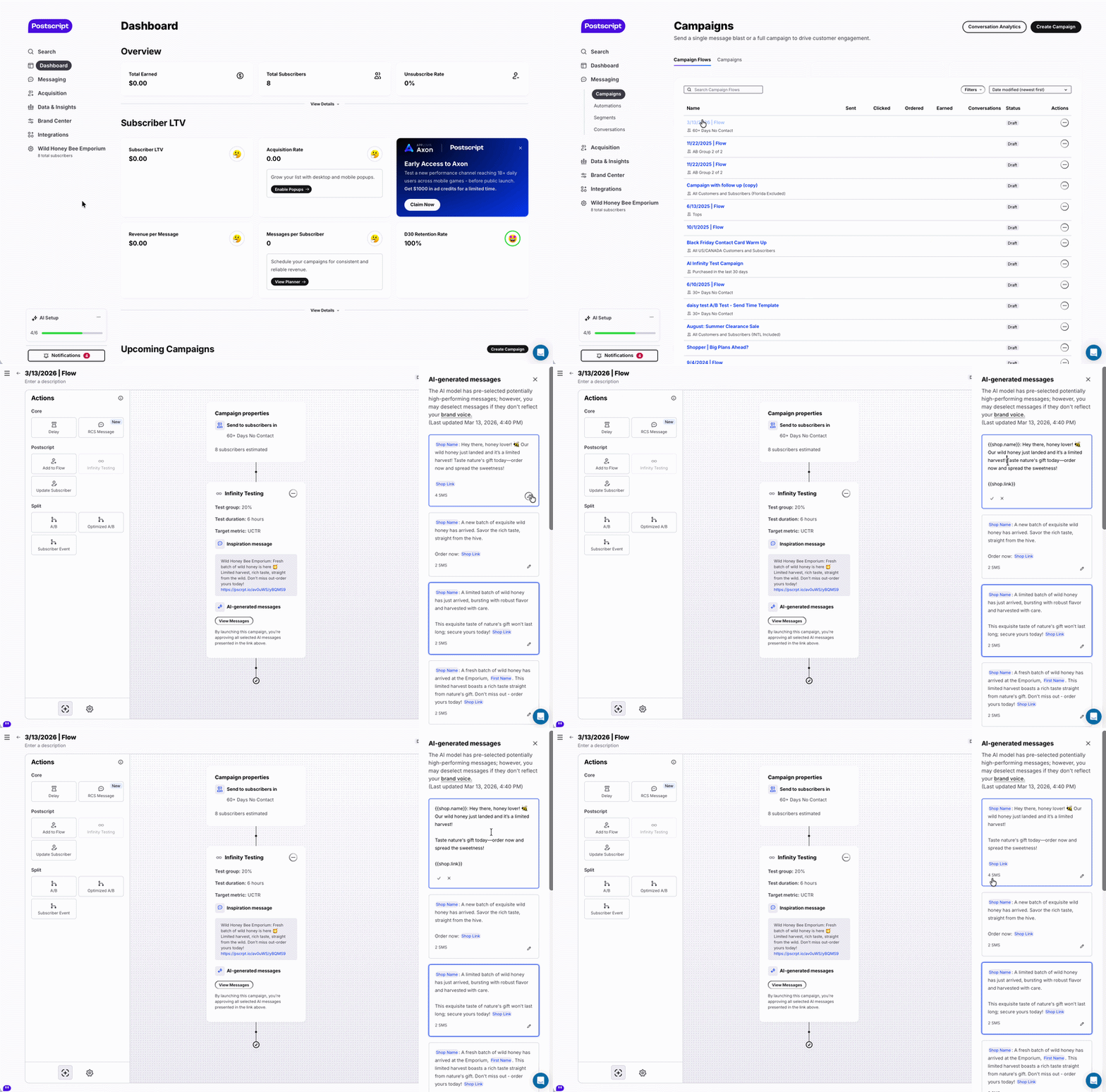
- Advanced SMS Features: Postscript truly shines in its specialized SMS offerings. Features like AI-powered Infinity Testing allow for continuous optimization of SMS variations within workflows, maximizing engagement and conversion rates. Shopper, a conversational AI assistant, handles customer queries via text, routing complex issues to live agents or integrated help desks, thereby enhancing customer service. It also supports robust keyword campaigns for opt-ins and replies, as well as sophisticated broadcast SMS campaigns.
- Built-in Compliance: Given the stringent regulations surrounding SMS marketing, particularly in the U.S. and Canada, Postscript provides built-in compliance tools to help businesses navigate these complexities effectively.
- RCS (Rich Communication Services): Postscript is at the forefront of adopting RCS, offering early access to richer, branded text messages that enhance the interactive experience beyond traditional SMS.
- Deep Shopify SMS Capture: Postscript offers advanced methods for collecting SMS opt-ins, including on-site pop-ups, one-time passcode confirmations, and a dedicated Shopify checkout extension for SMS consent. It boasts over 45 SMS segmentation filters, all leveraging deep Shopify customer data, enabling highly granular targeting.
Channels and Automation: A Comparative Lens
The fundamental difference in channel scope drives the automation capabilities of each platform. Omnisend excels in cross-channel automation, allowing a single workflow to seamlessly integrate email, SMS, and web push. For instance, a sequence could send an automated email first, then follow up with an SMS only if the email remains unread, optimizing spend by using the most impactful channel at the right time. This integrated approach ensures a holistic customer journey.
Postscript, by focusing exclusively on SMS and emerging RCS, offers deeper specialization within this channel. Its Infinity Testing and conversational AI (Shopper) provide advanced tools for optimizing text-message interactions, making it ideal for brands where SMS is a primary communication channel. However, managing email campaigns would require a separate, often manual, integration with another platform, potentially leading to fragmented customer data and reporting. Omnisend’s unified dashboard, conversely, presents email, SMS, and web push metrics side-by-side, offering a consolidated view of campaign performance.
![Omnisend vs. Postscript: Which Fits Your Store? [2026 ]](https://www.omnisend.com/blog/wp-content/uploads/2026/07/klaviyo-welcome-series.jpg)
Pricing Models: The Cost of Integration vs. Specialization
Pricing is often a decisive factor. Omnisend’s model bundles email and SMS into one subscription, potentially offering significant cost savings by replacing the need for multiple tools. It features a free plan for up to 250 contacts and 500 emails per month, making it accessible for startups. Paid plans start at $16/month for Standard, with the Pro tier at $59/month offering unlimited emails. SMS is a metered add-on, starting at $0.007 per message, with rates decreasing with volume. Omnisend also offers discounts for upfront payments and bonus SMS credits on its Pro plan.
Postscript’s pricing, being SMS-only, requires businesses to account for the cost of a separate email marketing platform. It does not offer a free plan, instead imposing a minimum monthly spend on its Starter plan ($49), Growth plan ($100), and Professional plan ($500), in addition to per-message and carrier fees. Its usage-based model means costs scale directly with the volume of messages sent. This structure is more suited for businesses with substantial SMS programs and budgets, who are prepared to manage two distinct marketing platform subscriptions.
![Omnisend vs. Postscript: Which Fits Your Store? [2026 ]](https://www.omnisend.com/blog/wp-content/uploads/2026/07/omnisend-connected-store.jpg)
Customer Support and User Experience
Responsive customer support is crucial for effective platform utilization. Omnisend prides itself on providing 24/7 live chat and email support across all its plans, including the free tier. It boasts an average response time of under three minutes and has received numerous accolades for its customer service, including Stevie Awards. This commitment to accessible support ensures that businesses of all sizes receive assistance with onboarding, campaign launches, and technical issues.
Postscript offers email and chat support during weekday business hours (9 am–8 pm Eastern time) on its paid plans. Its higher-priced tiers (Professional and Enterprise) include more personalized services, such as dedicated success managers and enhanced onboarding assistance. This tiered support structure aligns with its focus on larger, more established Shopify brands running extensive SMS programs.
![Omnisend vs. Postscript: Which Fits Your Store? [2026 ]](https://www.omnisend.com/blog/wp-content/uploads/2026/07/vagari.jpg)
Strategic Implications and Ideal Use Cases
The choice between Omnisend and Postscript ultimately hinges on a business’s specific needs, existing technology stack, and strategic priorities.
-
Choose Omnisend if:
![Omnisend vs. Postscript: Which Fits Your Store? [2026 ]](https://www.omnisend.com/blog/wp-content/uploads/2026/07/omnisend-ai-features.jpg)
- You desire a unified platform for email, SMS, and web push marketing to streamline operations and ensure a consistent customer journey.
- You operate on multiple e-commerce platforms (Shopify, WooCommerce, Wix, BigCommerce, etc.) or anticipate doing so.
- You aim for global reach with your SMS campaigns, targeting customers in over 200 countries.
- You prefer to consolidate marketing costs and avoid managing multiple subscriptions for core marketing channels.
- You are a small to medium-sized business looking for an accessible free plan and comprehensive support from day one.
- You prioritize cross-channel automation and data reporting from a single dashboard.
-
Choose Postscript if:
- You run an exclusively Shopify store and seek the deepest possible specialization in SMS marketing.
- SMS is already your primary or most critical marketing channel, and you require highly advanced text-message features like conversational AI and granular SMS segmentation.
- You are firmly committed to using a separate, established email marketing platform (e.g., Klaviyo) and integrating SMS as a complementary channel.
- Your primary customer base is located within the U.S. and Canada, where Postscript’s compliance and features are optimized.
- You have a substantial marketing budget and are prepared for the combined costs of two specialized platforms.
For a typical Shopify fashion store or any growing e-commerce business that utilizes both email and SMS to engage its customer base, Omnisend presents a practical and often more cost-effective solution. Its ability to manage both channels, along with web push, from a single platform simplifies operations, enhances data consistency, and provides a unified view of customer interactions. The case study of Vagari Bags, a Shopify brand that switched to Omnisend, exemplifies this, reporting a significant return on investment (£121.38 in revenue for every £1 spent) after consolidating email and SMS marketing.
Conversely, for large Shopify Plus merchants with complex, high-volume SMS programs and an existing, deeply embedded email marketing solution, Postscript’s specialized tools offer an undeniable advantage in optimizing SMS performance.
![Omnisend vs. Postscript: Which Fits Your Store? [2026 ]](https://www.omnisend.com/blog/wp-content/uploads/2026/07/omnisend-ai.jpg)
Conclusion
In the final analysis, both Omnisend and Postscript are top-tier marketing platforms, each excelling in its designated domain. Omnisend provides a robust, all-in-one omnichannel solution that simplifies marketing efforts across various e-commerce platforms and geographies, making it ideal for businesses seeking efficiency and a unified customer experience. Postscript, on the other hand, offers unparalleled depth in SMS marketing specifically for Shopify stores in the U.S. and Canada, catering to brands that require highly specialized text-message capabilities and are comfortable with a multi-platform marketing strategy. The decision ultimately rests on a careful evaluation of a business’s unique operational needs, budget, target audience, and long-term marketing strategy.