Email marketing continues to solidify its position as one of the most potent and reliable channels for audience engagement and business growth, even as digital landscapes evolve with increasing velocity. In an era dominated by transient social media trends and complex web development, the fundamental principle of building and nurturing a proprietary email list remains an unparalleled asset for businesses and individual creators alike. This foundational strategy allows direct, unfettered communication with an interested audience, fostering loyalty, driving conversions, and cultivating a community of advocates. The traditional pathway to list building often involved embedding signup forms directly onto a dedicated website. However, a significant shift is underway, driven by technological advancements and the needs of a burgeoning entrepreneurial class: the emergence and widespread adoption of hosted signup forms, enabling robust list growth without the prerequisite of a full-fledged website.
The Enduring Significance of Email Lists in the Digital Age
In 2026, the power of an email list is more pronounced than ever. It represents a curated community of individuals who have explicitly granted permission to receive communications, transforming them from passive observers into active participants in a brand’s journey. Industry data consistently underscores email marketing’s exceptional return on investment (ROI), frequently cited as generating an average of $42 for every dollar spent. This efficacy stems from its directness and personal nature. Unlike social media algorithms that dictate reach, an email list offers direct access to an audience’s inbox, bypassing intermediaries and ensuring messages are delivered.
This direct line of communication facilitates several critical business objectives: informing subscribers about new products or services, sharing valuable content, soliciting feedback, and building deeper relationships. A well-cultivated list acts as a loyal audience base, akin to a room filled with eager listeners. Those who resonate with the message will stay, engage, inquire, and ultimately become customers. A select group will transcend mere customer status, evolving into fervent brand advocates who actively champion the brand and introduce new members to the community. This organic expansion is invaluable, providing a sustainable growth engine that complements paid acquisition strategies.
For many aspiring entrepreneurs, solopreneurs, and small businesses, the initial hurdle of establishing an online presence often involves the daunting task and significant investment of building a comprehensive website. While a website offers a centralized hub for content, commerce, and brand identity, its development can be complex, time-consuming, and costly, posing a barrier to entry for those focused on immediate audience engagement. This is precisely where the innovation of hosted signup forms provides a transformative solution.
What Defines a Hosted Signup Form?
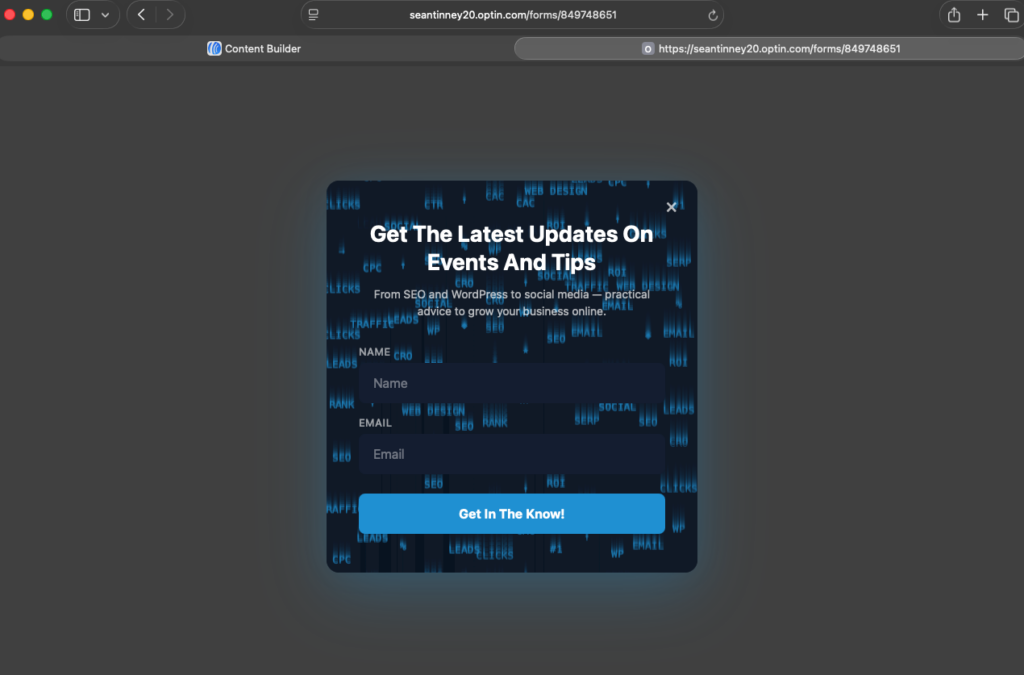
A hosted signup form is a standalone web page specifically designed to capture email addresses and integrate them directly into an email marketing list. Unlike traditional forms that are embedded within a larger website framework, a hosted form “lives on its own,” residing on a dedicated server provided by an email service provider. This independence is its core strength. It possesses a unique, shareable URL that can be disseminated across virtually any digital or even physical touchpoint.
This unique URL can be effortlessly shared on prominent social media platforms such as Facebook, Instagram, X (formerly Twitter), LinkedIn, and TikTok. It can be embedded in messaging apps, included in digital documents, or even printed onto physical materials like business cards, flyers, and product packaging. Its singular purpose – to collect email addresses – ensures a streamlined, distraction-free user experience, maximizing conversion rates.
Beyond serving as a primary list-building tool for those without a website, hosted signup forms offer strategic advantages even for businesses that already possess a robust online presence. They act as a critical backup mechanism; should a primary website experience downtime, the hosted form remains operational, ensuring continuous subscriber acquisition. Furthermore, when the objective is to share a direct, focused link for subscription – devoid of website navigation, advertisements, or other potential distractions – the hosted form is the ideal choice. This focused approach can be particularly effective in specific campaigns or promotions where a clean conversion path is paramount.
The AI Revolution: Simplifying Form Creation
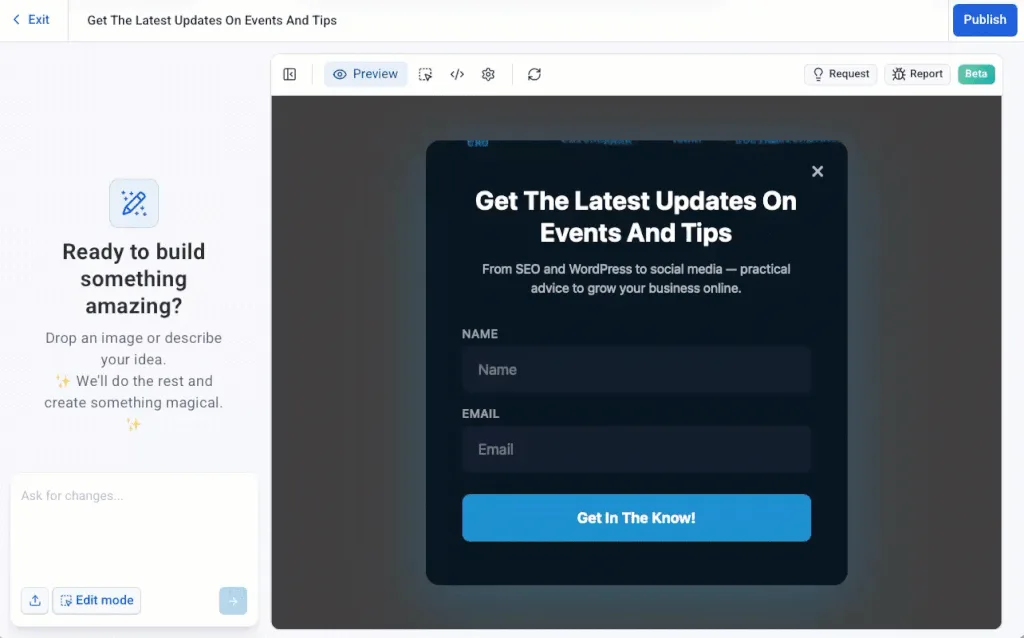
The process of creating a professional and effective hosted signup form has been dramatically simplified by the advent of artificial intelligence (AI) tools. Platforms like AWeber’s AI Signup Form Builder exemplify this revolution, democratizing access to sophisticated web design capabilities for users regardless of their technical proficiency. This AI-powered builder can generate a complete, hosted signup form from a single, descriptive prompt, translating natural language input into a visually appealing and functional digital asset.
The AI’s ability to interpret business descriptions and automatically generate relevant headlines, engaging descriptions, and brand-aligned designs is a significant leap forward. Previously, this process would require either a designer’s expertise, a developer’s coding skills, or a user’s laborious manual customization within a template builder. AI streamlines this, allowing businesses to launch their list-building efforts almost instantaneously.
A Step-by-Step Guide to Creating a Hosted Signup Form with AI
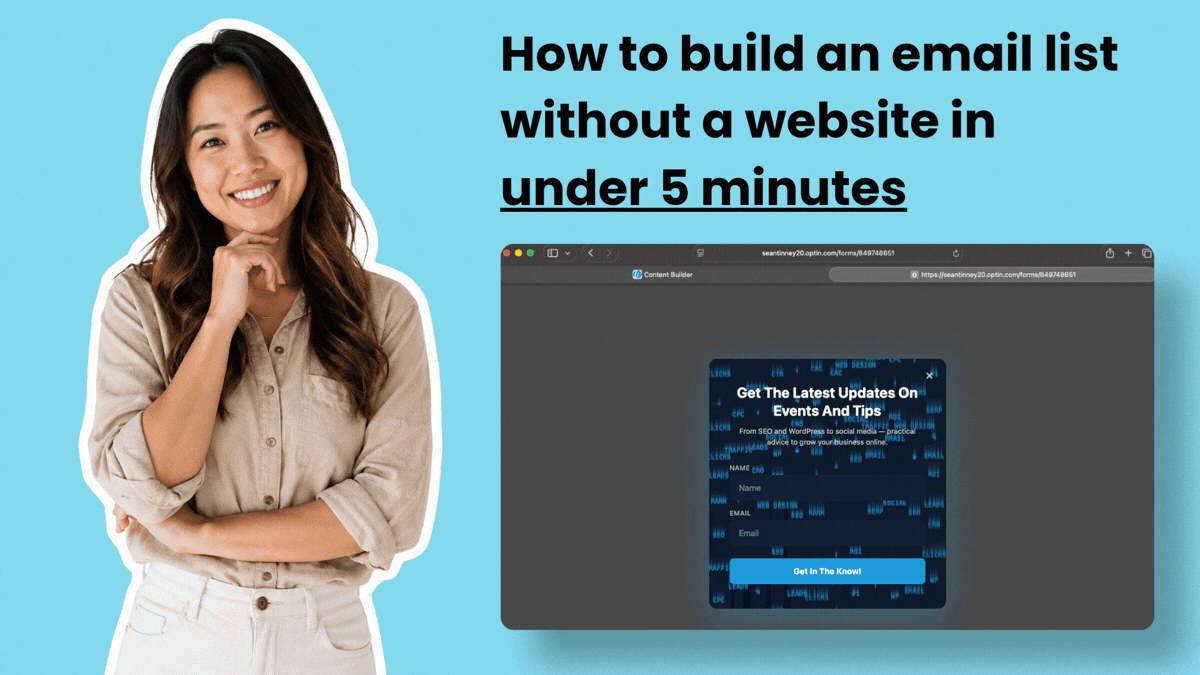
The efficiency and accessibility offered by AI-powered form builders mean that the entire process, from conception to publication, can be completed in mere minutes. This rapid deployment capability is crucial for agile businesses needing to quickly capitalize on marketing opportunities or validate new ideas.
Step 1: Access the AI Signup Form Builder
The journey begins by navigating to the “Pages & Forms” section within the email marketing platform, then selecting the “AI Signup Forms” option. This centralized access point ensures a seamless transition into the AI-powered creation environment.
Step 2: Describe Your Business to the AI
This is the pivotal step where the user provides a natural language description of their business or the specific purpose of the signup form. For instance, a prompt might be: “I sell handmade artisanal candles. I want to build an email list to share new product launches, exclusive discounts, and candle care tips. My brand is rustic, cozy, and eco-friendly.” The more detailed and evocative the description, the better the AI can tailor the output. The AI analyzes keywords, sentiment, and stated objectives to generate content and design suggestions that align with the brand identity and marketing goals.
Step 3: Review and Customize the AI-Generated Form
Upon receiving the prompt, the AI rapidly processes the information and generates an initial draft of the hosted signup form. This draft typically includes a compelling headline, a persuasive description, a standard email input field, and a submit button, all styled with a design palette (colors, fonts, layout) that matches the inferred brand aesthetic. Users then have the opportunity to review this AI-generated content and design. While the AI provides a strong first draft, customization options are readily available. Users can adjust the headline to be more impactful, refine the descriptive text for greater clarity or persuasion, change color schemes to perfectly match branding guidelines, or modify the layout to suit specific preferences. Crucially, this step allows for human oversight and creative input, ensuring the final form is both AI-efficient and authentically reflective of the brand.
Step 4: Retrieve and Share Your Hosted URL
Once the form has been reviewed, customized, and deemed satisfactory, it is published. The email service provider then generates a unique, permanent URL for the hosted signup form. This URL is the digital gateway to the email list and can be immediately deployed across various channels. The speed and simplicity of this entire process – requiring no coding knowledge or extensive design decisions from scratch – underscore the transformative power of AI in democratizing digital marketing tools.
Strategic Deployment: Collecting Emails Without a Website
Possessing a hosted signup form is merely the first step; strategic placement is key to maximizing its effectiveness. The core principle is to place the form’s unique URL where the target audience already congregates, making the subscription process as effortless as possible.
1. Leveraging Social Media Platforms:
Social media serves as a bustling digital marketplace and community hub where potential subscribers are already engaged. Businesses can effectively promote their hosted signup form across platforms like Facebook, Instagram, X, LinkedIn, and TikTok. However, simply dropping a link is insufficient. The promotion must be accompanied by a clear value proposition, articulating the benefits subscribers will receive.
For instance, a creator might post: “I send one email every Tuesday with a new recipe and a grocery list. No spam, no fluff. Sign up here: [Your Hosted Form Link].” This directly addresses potential concerns (spam) and highlights tangible benefits (recipes, grocery list).
Platform-specific strategies enhance reach:
- Instagram & TikTok: The “link in bio” is a prime location for the hosted form URL. Additionally, mentioning the link in Stories with a swipe-up feature (if applicable) or a visual call to action can drive traffic.
- Facebook & LinkedIn: The link can be prominently featured in posts, pinned to the top of profiles or pages, or integrated into call-to-action buttons on business pages. When shared on these platforms, the form name chosen during creation often becomes the preview text, necessitating a clear and enticing title.
- X (formerly Twitter): A pinned tweet featuring the form link and its benefits ensures maximum visibility.
The more strategically and frequently the link appears across these channels, the greater the opportunities for subscription.
2. Integrating into Guest Posts and Collaborations:
Guest blogging and strategic collaborations offer an exceptional avenue for audience expansion. By contributing articles or content to another person’s blog, podcast, or platform, businesses can tap into pre-existing, relevant audiences. Within the guest content itself, or more commonly in the author’s bio or signature, a link to the hosted signup form can be seamlessly included. This allows readers who appreciate the contributor’s expertise or content style to easily subscribe for more. It’s a mutually beneficial arrangement: the host gains valuable content, and the guest gains exposure and potential subscribers.
3. Facilitating In-Person Email Collection:
For businesses with physical presence, events, or direct customer interactions, hosted signup forms, coupled with modern technology, streamline in-person email collection. QR codes have experienced a significant resurgence in utility and popularity, making this process remarkably simple. The hosted signup form’s unique URL can be converted into a QR code and printed on a variety of physical materials:
- Business Cards: A quick scan instantly directs contacts to the signup form.
- Flyers and Brochures: Event attendees or shop visitors can subscribe on the spot.
- Product Packaging: Customers can sign up for updates or exclusive content directly from their purchase.
- Event Signage: At farmer’s markets, trade shows, or pop-up shops, a prominent QR code allows attendees to subscribe to newsletters, special offers, or event updates using their smartphones, eliminating the need for manual data entry or paper sign-up sheets.
This frictionless, mobile-first approach ensures that potential subscribers can join the list before they even walk away from an interaction, capturing interest at its peak without requiring a traditional website interface.
When to Consider Upgrading to a Full Website
While hosted signup forms and dedicated landing pages provide a powerful foundation for audience building and direct engagement, there comes a point in a business’s evolution where a full-fledged website becomes an indispensable asset. This transition is typically prompted by specific strategic objectives and expanding operational needs.
Key indicators for upgrading to a comprehensive website include:
- Extensive Content Publishing: When a business plans to regularly publish long-form content such as blog posts, detailed guides, whitepapers, or resource libraries, a website provides the necessary structure and SEO capabilities for content organization and discoverability.
- Direct Online Sales: Businesses aiming to sell multiple products or services directly online, manage inventory, process payments, and offer a comprehensive e-commerce experience will require a dedicated online storefront.
- Multi-Page Brand Presentation: As a brand matures, the need for multiple distinct pages – such as an “About Us” section detailing the company’s mission and history, dedicated “Services” pages, client “Testimonials,” a “Portfolio,” and a comprehensive “Contact Us” page – becomes crucial for establishing credibility and providing detailed information.
- Advanced SEO and Brand Authority: For businesses where audience members are actively searching for them by name or industry keywords, a website is fundamental for robust search engine optimization (SEO) strategies, establishing online authority, and controlling brand narrative.
Until these advanced requirements materialize, hosted signup forms and simple landing pages effectively serve as a business’s primary digital “home base.” They proficiently handle core functions: collecting email addresses, delivering lead magnets (such as free e-books, checklists, or exclusive content offered in exchange for an email address), and triggering automated email workflows that nurture new subscribers. These tools provide everything necessary to commence building a genuine and engaged audience, proving that sophisticated digital marketing is accessible without the traditional complexities of web development.
The Broader Implications and Future Outlook
The rise of hosted signup forms, particularly those powered by AI, signifies a broader trend in digital marketing: the democratization of powerful tools. This accessibility empowers individuals and small businesses to compete more effectively with larger entities that might have greater resources for web development and design. It levels the playing field, allowing innovation and compelling content to take precedence over technical infrastructure.
This shift also reflects a growing emphasis on direct, permission-based marketing. As consumers become more discerning about their digital interactions, the explicit act of signing up for an email list fosters a higher quality of engagement compared to passive consumption on social media. It cultivates an owned audience, providing a stable foundation less susceptible to the whims of platform algorithms.
The future of marketing infrastructure appears to be increasingly modular, AI-driven, and intensely audience-centric. Hosted forms are not just a temporary solution for those without websites but a versatile tool that can complement existing web presences, offering focused conversion opportunities. They represent an agile approach to audience building, reflecting the dynamic nature of the modern digital economy.
Conclusion
The strategic importance of an email list remains undisputed in the digital landscape of 2026. For businesses and creators seeking to harness this power without the immediate commitment of a full website, hosted signup forms offer an elegant, efficient, and increasingly AI-powered solution. They provide a direct conduit to potential customers, enabling focused communication, audience growth, and ultimately, business success. The ease of creation, diverse deployment options, and strategic benefits position hosted signup forms as a cornerstone of modern, agile digital marketing.
What are you waiting for? Log in to your AWeber account and create your hosted sign up form. Not an AWeber customer yet? Start your free trial today!
Additional contributions by Sean Tinney


 Ammar Sabilarrohman
 Asro
Asro