The transition from experimental preview to commercial reality has reached a pivotal milestone as Anthropic officially launches its newest AI iterations: Claude Fable 5 and Claude Mythos 5. These models represent a direct evolution of the Claude Mythos Preview, a system that generated significant industry discourse and safety concerns earlier this year due to its unprecedented capabilities. By bifurcating the original “Mythos” architecture into two distinct offerings, Anthropic aims to balance the demand for high-performance enterprise tools with the stringent safety protocols required for frontier-level intelligence.
Claude Fable 5 is positioned as the flagship model for the broader professional market, designed to handle the most demanding knowledge-work workflows currently available. In contrast, Claude Mythos 5 remains a restricted-access model, reserved for vetted partners operating in high-stakes fields such as molecular biology and cybersecurity. This tiered release strategy signals a shift in the artificial intelligence landscape, where capability is no longer the sole metric for release, but rather a combination of utility, safety, and risk-mitigated access.
The Evolution of the Mythos Architecture
The journey to the current release began with the “Mythos Preview,” a model that internal researchers at Anthropic noted for its “step-change” in autonomous reasoning. Unlike previous iterations of the Claude family, which prioritized conversational fluency and safety alignment, the Mythos lineage was built with a specific focus on sustained reasoning—the ability of an AI to maintain a coherent logic path over thousands of steps without human intervention.
Industry analysts have noted that the Mythos Preview was initially withheld from public release due to its performance on “red-teaming” evaluations related to autonomous coding and biological synthesis. The current release of Fable 5 and Mythos 5 suggests that Anthropic has successfully implemented “safety scaffolding” and “constitutional AI” updates that allow these capabilities to be utilized without crossing into prohibited domains of risk.
Chronologically, this release follows the Claude 3.5 series, filling the gap between general-purpose assistants and specialized agentic systems. While the Claude 3 series was praised for its vision and speed, Fable 5 is built for endurance. It is optimized not for the “one-and-done” prompt, but for workflows that span hours or days of iterative processing.
Claude Fable 5: A New Standard for Enterprise Reasoning
According to technical specifications released by Anthropic, Claude Fable 5 represents a significant leap in performance across software engineering, scientific research, and complex visual interpretation. The defining characteristic of Fable 5 is its “performance delta”—the model’s advantage over competitors reportedly increases as the complexity of the task scales.

In practical terms, Fable 5 is engineered for tasks that require a deep understanding of interconnected systems. This includes codebase-wide migrations, where an AI must understand how a change in one module affects thousands of lines of code elsewhere. It also extends to financial analysis involving multi-hundred-page documents and the generation of functional applications from visual inputs.
Anthropic’s internal benchmarks suggest that Fable 5 sets new records in the “Agentic Coding” category, which measures an AI’s ability to identify a bug, write a fix, test that fix, and iterate until the problem is solved autonomously. This autonomy is a core feature of the Mythos-class architecture, allowing the model to stay focused on long-context problems with minimal guidance.
Claude Mythos 5: Restricted Frontier Intelligence
While Fable 5 is available to the general public, Claude Mythos 5 is categorized as a “Frontier Specialist” model. Anthropic has limited its availability to a select group of trusted researchers and enterprise partners. The reasoning behind this restriction lies in the model’s enhanced capabilities in sensitive scientific domains.
Mythos 5 includes specialized training in genomics, molecular biology, and cybersecurity. These capabilities allow the model to assist in drug discovery and the identification of novel protein structures, but they also carry inherent risks if used for malicious purposes. By keeping Mythos 5 in a controlled environment, Anthropic aims to gather data on how frontier-class models can be used for societal benefit while maintaining a “human-in-the-loop” safety protocol.
For queries that fall into sensitive categories—such as requests involving potential bio-hazards or advanced cyber-attacks—Anthropic has implemented a routing system. These flagged queries are automatically redirected to Claude Opus 4.8, a model with more established safety guardrails, ensuring that users do not inadvertently access dangerous information while using the Fable or Mythos interfaces.
Real-World Performance: Case Studies in Vision and Code
To move beyond synthetic benchmarks, developers have begun testing Claude Fable 5 on real-world production tasks. Two specific areas where the model has demonstrated significant proficiency are visual-to-code translation and architectural design interpretation.
Case Study 1: Visual-to-Code Translation
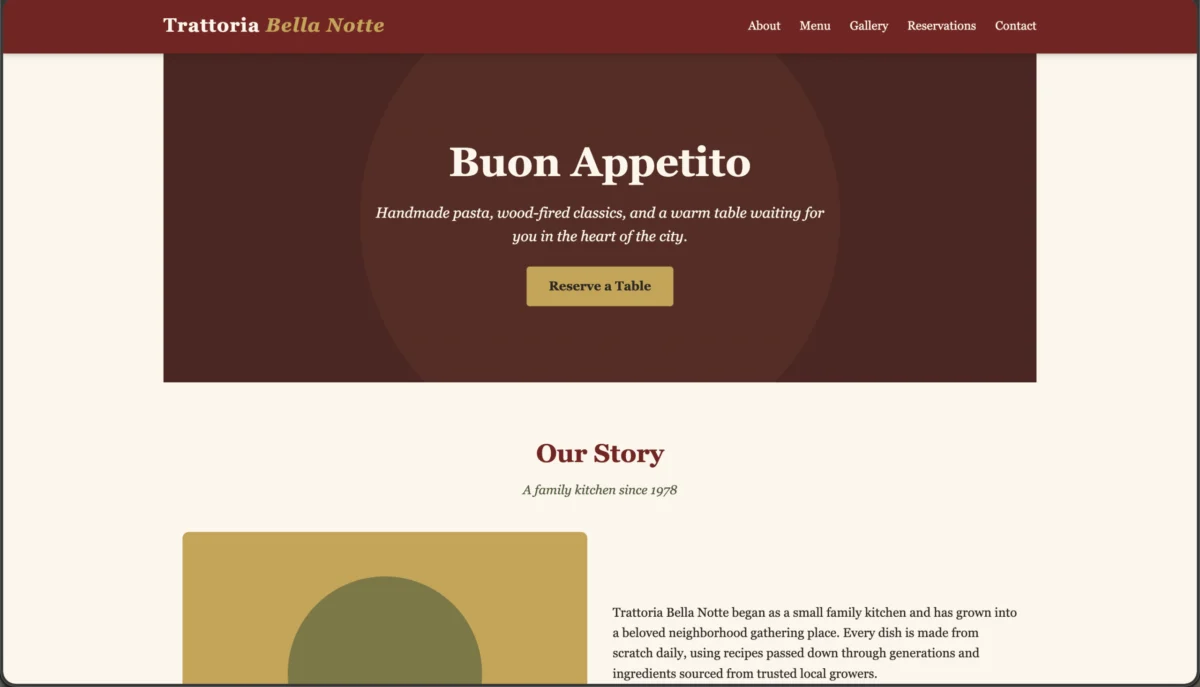
In a test involving the recreation of the Netflix “New & Popular” interface from a single screenshot, Fable 5 demonstrated an advanced understanding of modern UI/UX patterns. Rather than simply identifying text and images, the model correctly inferred the underlying structural logic of the page. It identified the fixed navigation bar, the responsive grid system, and the recurring patterns used for content cards.

The resulting output was a “pixel-accurate” HTML and CSS page that maintained responsiveness across desktop and mobile views. Most notably, the model used clean, semantic code, avoiding the “spaghetti code” often associated with automated generation tools. This suggests that Fable 5 is not just copying visual data but is applying an internal “understanding” of frontend engineering principles.
Case Study 2: Intent Recognition from Low-Fidelity Sketches
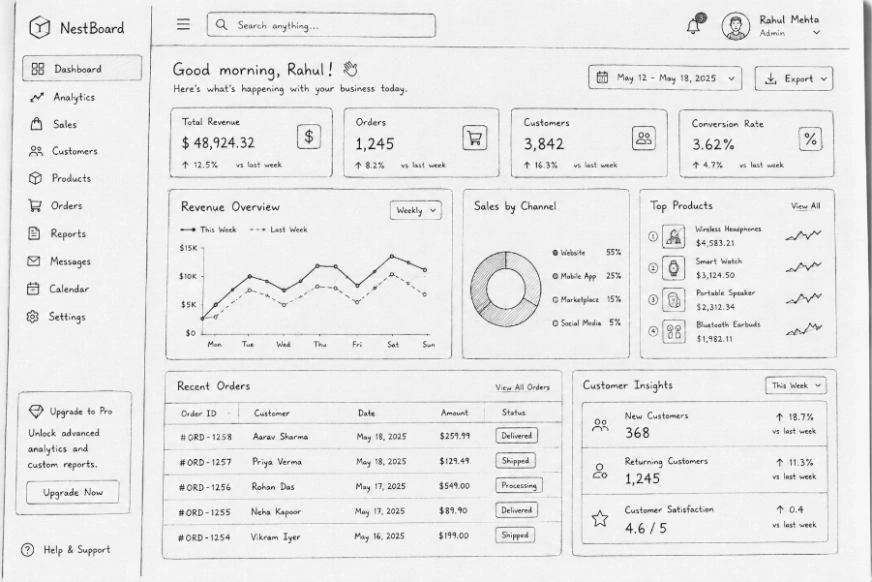
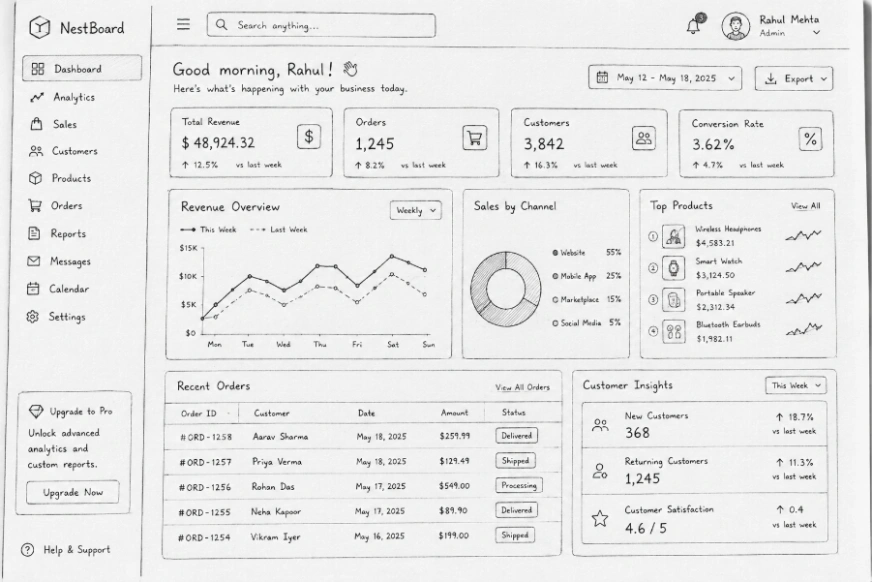
A second test involved converting a hand-drawn dashboard sketch—essentially a series of boxes and scribbles—into a modern SaaS analytics application. This task required the model to fill in significant design gaps, such as color palettes, typography, and interactive elements.
Fable 5 interpreted the “intent” of the user rather than just the literal drawing. It generated a polished React application using Tailwind CSS, incorporating subtle animations and professional spacing that were not present in the original sketch. This ability to “hallucinate” design details in a logical and professional manner marks a significant advancement in the model’s creative reasoning capabilities.
Technical Specifications and Economic Impact
Anthropic has positioned Claude Fable 5 with a competitive pricing structure aimed at high-volume enterprise users. The model is priced at $10 per million input tokens and $50 per million output tokens. To further incentivize complex, long-running tasks, Anthropic offers “Prompt Caching,” which provides a 90% discount on input tokens for repetitive or context-heavy queries.
This pricing strategy reflects the model’s intended use case. By lowering the cost of long-context inputs, Anthropic is encouraging developers to feed entire codebases or massive document sets into the model, leveraging its 200,000-token context window (with potential for expansion in future updates).
Access to the models is provided through several channels:
- Claude API: Using the
claude-fable-5model string. - Subscription Tiers: Available on Claude Pro, Team, and Enterprise plans.
- Cloud Partnerships: Integration with AWS Bedrock, Google Cloud Vertex AI, and Microsoft Foundry.
Industry Implications and Future Outlook
The release of Fable 5 and Mythos 5 has sparked a broader conversation within the AI community regarding the future of “Agentic” systems. Industry experts suggest that we are moving away from the “chatbot” era and into the “autonomous agent” era. In this new phase, AI models are expected to act as colleagues rather than just tools, capable of managing projects from inception to completion.
Safety advocates have reacted with cautious optimism. The decision to restrict Mythos 5 is seen as a responsible move, setting a precedent for how other AI labs might handle “dual-use” technologies. However, some argue that the line between Fable 5 and Mythos 5 may eventually blur as users find ways to “jailbreak” or prompt-engineer more advanced behaviors out of the publicly available version.
Furthermore, the economic implications are substantial. As Fable 5 reduces the time required for software engineering and data analysis, companies may begin to restructure their technical teams. The focus may shift from manual coding to “AI orchestration,” where human developers act as supervisors for a fleet of Fable 5 agents.
Conclusion
Anthropic’s launch of Claude Fable 5 and Claude Mythos 5 represents more than just an incremental update; it is a strategic deployment of high-complexity intelligence. By providing a broad-use model in Fable 5 and a restricted-use model in Mythos 5, Anthropic is attempting to navigate the precarious balance between innovation and security.
For the average developer and enterprise, Fable 5 offers a powerful new engine for solving multi-step, context-heavy problems that were previously beyond the reach of automated systems. For the scientific community, Mythos 5 provides a glimpse into a future where AI acts as a specialized research partner in the most complex fields of human inquiry. As these models become integrated into the global economy, the focus will likely shift from what these models can do to how they can be used responsibly to drive the next wave of technological progress.