The digital marketing landscape has undergone a radical transformation over the last decade, shifting from manual asset creation to data-driven automation. At the center of this evolution is Instapage, a company that has, since its inception in 2012, positioned itself as a leader in landing page technology. In a significant strategic move, the company has announced the launch of an end-to-end, AI-powered marketing platform designed to consolidate the fragmented workflows of modern marketing teams. This latest expansion integrates artificial intelligence across the entire lifecycle of digital campaigns, moving beyond simple page building to encompass AI-driven page generation, automated email sequences, and advanced experimentation suites.
The announcement marks a pivotal moment for the San Francisco-based firm, which initially rose to prominence by offering the industry’s most sophisticated drag-and-drop landing page builder. Over the years, Instapage expanded its footprint into conversion rate optimization (CRO), personalization, and detailed analytics. However, the current release represents a shift in philosophy: rather than acting as one tool in a “martech stack,” Instapage is positioning itself as the central hub where creation, execution, and optimization coexist within a single, AI-enhanced environment.
The Evolution of Instapage: A Chronology of Innovation
To understand the significance of this new AI suite, one must look at the trajectory of Instapage since 2012. The company was founded during an era when creating a high-converting landing page required significant technical overhead, often involving developers and long turnaround times. By introducing a “pixel-perfect” builder, Instapage democratized the ability for marketers to build professional pages without writing code.
By 2015, the company began focusing heavily on personalization, recognizing that a one-size-fits-all approach to web traffic was becoming obsolete. This led to the development of features that allowed marketers to serve different content to different audience segments based on their ad-click source. As the 2020s approached, the company integrated experimentation tools, including A/B testing and heatmaps, directly into the builder.
The transition to a full AI-powered platform has been a multi-year journey. In the early 2020s, Instapage began embedding AI-assisted copywriting tools to help users overcome “writer’s block.” This was followed by AI-driven experimentation features that suggested layout changes based on historical performance data. The current 2024-2026 roadmap culminates in the release of AI Page Generation and AI Email Generation, effectively closing the loop between the initial ad click and the final lead nurture.
Addressing the “Franken-stack” Problem
One of the primary drivers behind Instapage’s new direction is the increasing complexity of the modern marketing department’s toolkit. Industry data suggests that the average enterprise marketing team uses upwards of 90 different software tools. This phenomenon, often referred to as a “Franken-stack,” leads to significant inefficiencies. Marketers find themselves “stitching together” a landing page builder, a separate email service provider (ESP), a third-party AI writing tool, and a standalone analytics suite.
This fragmentation results in “data silos,” where information gathered on a landing page does not communicate effectively with the email follow-up system. Instapage’s new platform aims to eliminate these gaps. By housing pages, leads, and emails in a single ecosystem, the platform ensures that the data collected during the initial interaction informs the automated follow-up, creating a seamless experience for the end-user and a more efficient workflow for the marketer.
AI Page Generation: From Concept to Conversion in Seconds
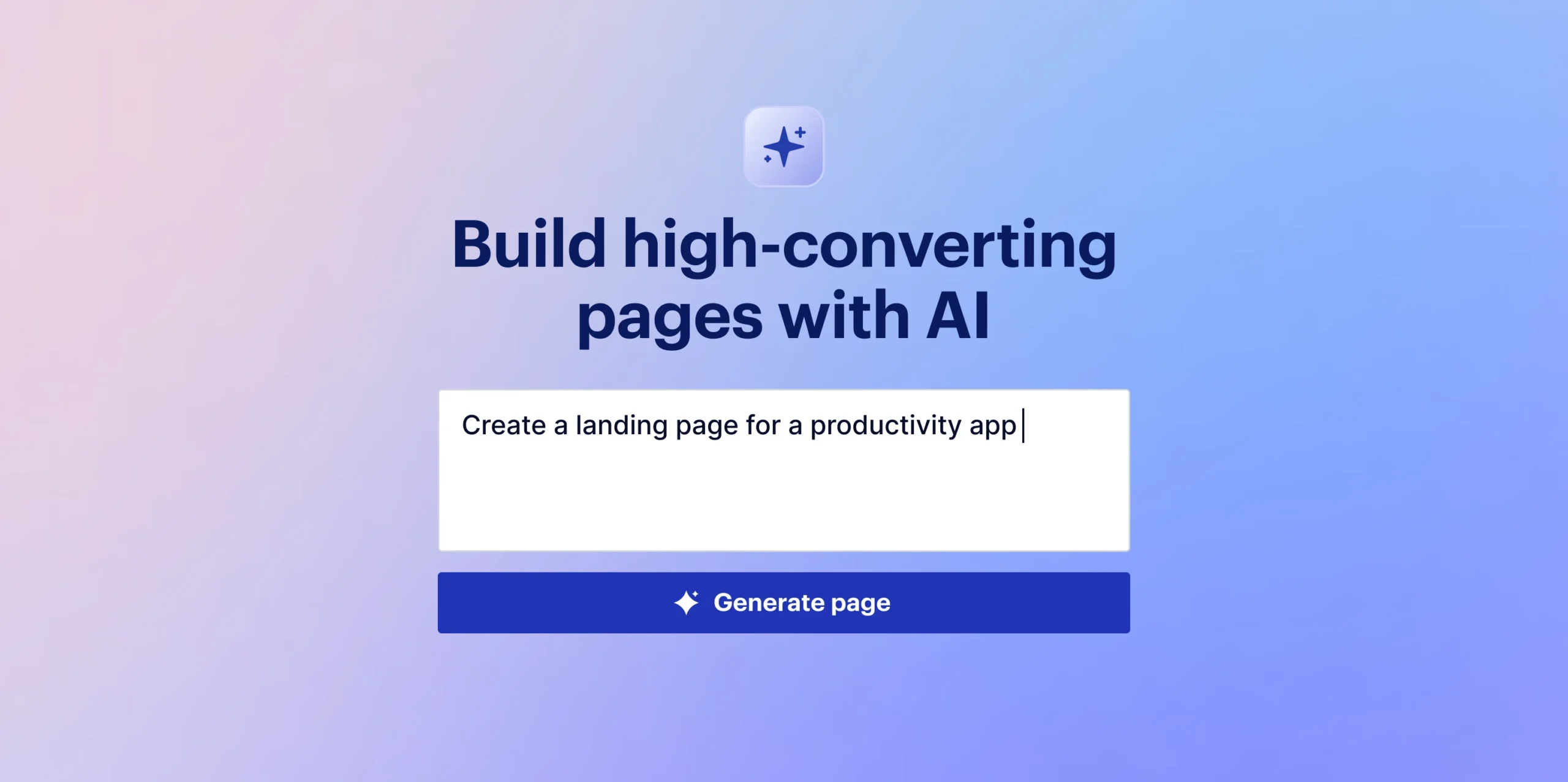
The centerpiece of the new release is the AI Page Generation tool. For many marketers, the “blank page” remains the most significant barrier to launching a campaign. The process of deciding on a layout, drafting copy that adheres to psychological triggers, and ensuring mobile responsiveness can take days or even weeks in a traditional corporate environment.
Instapage’s AI generator utilizes descriptive prompts to build complete, conversion-ready pages. Unlike standalone AI generators that often produce rigid, non-editable templates, Instapage integrates this with its legacy drag-and-drop builder. This distinction is critical for professional designers and brand managers. In many competing AI tools, if a user wishes to move a section or change a design element after the AI has generated it, they are often forced to “re-prompt” and regenerate the entire page, consuming additional tokens and time.
The Instapage model allows for “pixel-perfect” manual refinement. Once the AI provides the foundational structure—complete with tailored messaging and optimized layouts—the user can manually adjust any element. This hybrid approach preserves creative control while leveraging the speed of generative AI.
Bridging the Gap with AI-Powered Email
The secondary pillar of the new platform is AI-powered email generation. In the traditional marketing funnel, the moment a lead is captured on a landing page is the moment of highest intent. However, delays in follow-up are common due to the manual effort required to export leads to an ESP and trigger the correct sequence.

With the new AI email features, Instapage allows teams to set up instant, automated follow-ups. The AI can write tailored messaging based on the specific goal of the campaign, the target audience, and the desired tone. This ensures that every lead receives a relevant response without the need for a manual handoff between platforms. By selecting the audience segment and the desired length of the communication, marketers can deploy complex lead-nurture sequences that are contextually aware of the page the lead just visited.
Supporting Data and Market Implications
The move toward AI-integrated platforms is supported by broader market trends. According to research from Gartner, by 2025, organizations that use AI in their marketing workflows will see a 25% increase in operational efficiency. Furthermore, data from HubSpot suggests that companies that automate their lead nurturing see a 10% or greater increase in revenue in 6-9 months.
In the current economic climate of 2024 and 2025, marketing teams are facing “leaner” budgets and higher performance expectations. The ability to scale production without adding headcount has become a necessity rather than a luxury. Instapage’s internal data indicates that AI-assisted page creation can reduce the time-to-market for a new campaign by up to 80%.
From a competitive standpoint, this move places Instapage in direct competition not just with other landing page builders like Unbounce or Leadpages, but with broader marketing automation platforms like HubSpot and Mailchimp. By focusing specifically on the conversion end of the funnel—the “last mile” of the customer journey—Instapage is carving out a niche as the specialist in high-performance, AI-driven conversion.
Official Perspectives and Strategic Vision
While the company has maintained an objective stance on its technological rollouts, the strategic intent is clear. Leadership at Instapage has previously emphasized that the goal of their AI integration is not to replace the marketer, but to “remove the friction” from the creative process. The vision is to enable a single marketer to do the work that previously required a designer, a copywriter, and a technical lead.
Industry analysts have reacted positively to the “no-gap” philosophy. “The biggest challenge in digital marketing today isn’t a lack of tools; it’s the friction between them,” says one independent marketing consultant. “By embedding AI into a single workflow that spans from page generation to email follow-up, Instapage is addressing the hidden costs of tool switching and manual data migration.”
Broader Impact on the Digital Marketing Industry
The release of these features signals a broader trend in the SaaS (Software as a Service) industry: the transition from “point solutions” to “platform solutions.” As AI becomes a commodity, the value for businesses lies in how that AI is integrated into existing workflows.
For the marketing profession, the implications are profound. As AI takes over the “heavy lifting” of layout and initial drafting, the role of the marketer shifts toward strategy, prompt engineering, and high-level optimization. The democratization of high-end design means that small businesses can now compete with larger enterprises in terms of the visual quality and technical sophistication of their digital presence.
Deployment and Availability
Instapage has announced that the new AI features, including AI Page Generation and AI Email Generation, are currently being rolled out. Some features remain in beta as the company gathers user feedback to refine the machine learning models. The company is offering a 14-day free trial to allow businesses to experience the end-to-end workflow firsthand.
Current customers who do not yet see the AI features in their dashboard have been encouraged to contact the company’s support team for early access. As the rollout continues through the latter half of the year, Instapage expects to introduce further AI-driven enhancements focused on “AI Collections,” a feature designed to help large-scale organizations manage and scale hundreds of pages simultaneously.
In conclusion, Instapage’s evolution into an AI-powered marketing platform reflects a wider industry shift toward integration and efficiency. By tackling the “blank page” problem and the “Franken-stack” inefficiency, the company is positioning itself as an essential partner for businesses looking to navigate the complexities of modern digital advertising. The success of this transition will likely be measured by the conversion gains of its users and the extent to which it can simplify the increasingly crowded martech landscape.


 Asro
Asro
 Dwi Wanna