rifanmuazin
The landscape of B2B marketing is undergoing a seismic shift, driven by the burgeoning influence of Artificial Intelligence. For years, the playbook for digital marketers revolved around optimizing for search engines: meticulously crafting keywords, striving for higher rankings, driving traffic, and refining conversion paths. However, this paradigm is rapidly becoming obsolete. Buyers are no longer primarily engaging with search bars; they are increasingly turning to AI-powered tools to gather information, synthesize solutions, and make critical purchasing decisions. This fundamental change necessitates a new approach to B2B marketing, one where content must not only be discoverable but also understandable to the machines that are now mediating the buyer’s journey.
The Dawn of the AI-Powered Buyer
The transition from traditional search engines to what are effectively "answer engines" represents a pivotal moment for B2B marketers. Instead of presenting a list of links, AI systems are designed to interpret complex queries and generate synthesized responses. This means that a brand’s visibility is no longer solely determined by its ranking on a search results page. Instead, it hinges on whether its content is included, or conversely excluded, from an AI’s generated answer.
A report titled The 2026 State of B2B AI Visibility highlights this evolving dynamic, indicating that a significant portion of buyers are delegating their initial research to AI systems. This shift implies that a brand’s presence in the buyer’s consideration set can be determined before the buyer even encounters traditional marketing materials. In essence, buyers are now asking AI tools to "explain X solution" or "compare Y and Z vendors," rather than simply "search for X solution." The critical challenge for most B2B organizations is their current lack of preparedness for this second, more sophisticated query.
The Narrative Disconnect: Content Optimized for Humans vs. Machines
The core of this challenge lies in how marketing content is currently created. The vast majority of B2B content is meticulously crafted for human consumption, focusing on persuasion, storytelling, narrative building, and emotional connection. While these elements remain crucial for engaging human audiences, AI systems process information fundamentally differently. They prioritize structured data, factual accuracy, logical connections, and the ability to extract specific information without the need for subjective interpretation.
The AI Visibility report identifies this as a "narrative disconnect." Companies are producing content optimized for human readers, while AI systems are attempting to extract factual data. This misalignment can lead to several detrimental outcomes:
- Exclusion from AI-generated answers: If an AI cannot readily extract key information about a product or service, it may simply omit the brand from its responses.
- Misinterpretation of brand value: AI might misunderstand a company’s unique selling propositions or core competencies if the content is too abstract or lacks clear, machine-readable data points.
- Inaccurate representation of solutions: The AI may present a skewed or incomplete picture of a company’s offerings, leading potential buyers to overlook valuable solutions.
- Reduced consideration: Ultimately, this disconnect can result in a brand being overlooked entirely during the crucial early stages of the buyer’s journey, even before a sales pipeline begins to form.
Crucially, these issues often go undetected by traditional analytics. Standard metrics like website traffic, keyword rankings, and conversion rates do not capture the nuances of how AI systems are interpreting and prioritizing information.
The "Authority Trap" and the Illusion of AI Visibility
A particularly intriguing finding from the AI Visibility research is what is termed the "authority trap." Well-established brands often appear in AI-generated answers not because they have specifically optimized their content for AI, but because they were extensively represented in the training data of AI models. This creates a deceptive sense of visibility. While it might appear as though these brands are performing well in an AI-driven environment, this visibility is not controlled or earned through strategic AI optimization. It is an incidental benefit of historical digital prominence.
As AI systems evolve, particularly towards real-time retrieval and agent-based workflows, this passive advantage will inevitably erode. The true differentiator will become a brand’s ability to ensure its content is not only present but also:
- Understandable: Easily parsed and interpreted by AI algorithms.
- Accurate: Providing factual and up-to-date information.
- Contextual: Delivering relevant information that aligns with specific buyer queries.
- Actionable: Enabling AI agents to derive insights and suggest appropriate next steps.
The current state of B2B organizations suggests a significant gap in these areas.
The Hidden Barrier: Websites as AI Roadblocks
A common, yet often overlooked, obstacle to AI visibility is the structure and content of B2B websites themselves. Many organizations, in their pursuit of human-centric conversions, inadvertently create "agent blockades" that hinder AI systems from accessing and understanding their information. Typical issues include:
- Lack of structured data: Websites that rely heavily on unstructured text, images without alt-text, or complex JavaScript rendering can make it difficult for AI to extract key data points.
- Inaccessible content: Content behind paywalls, complex login procedures, or dynamically loaded elements can be inaccessible to AI crawlers.
- Robots.txt and meta tags: Misconfigured robots.txt files or restrictive meta tags can prevent AI from indexing essential pages.
- Poor internal linking: A lack of clear and logical internal linking can make it challenging for AI to navigate the website’s information architecture.
- Focus on "Contact Sales" CTAs: While crucial for human conversion, an over-reliance on generic calls to action without providing machine-readable product details can be a barrier.
The AI Visibility study found that while approximately 90% of websites are optimized for human conversion, they often fail to consider the needs of AI agents. This creates a new form of funnel leakage, not at the point of engagement or conversion, but at the crucial stage of interpretation.
Context: The New Frontier of Differentiation
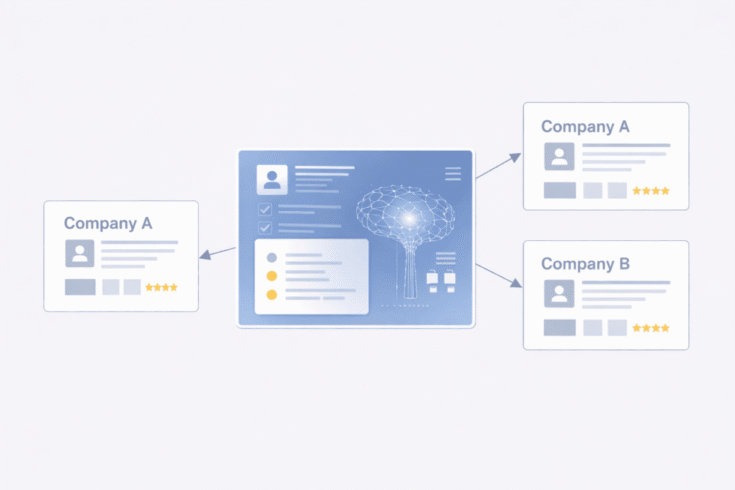
The challenge of AI visibility extends beyond mere content optimization; it delves into the realm of data architecture and the strategic provision of context. As noted in Martech for 2026, "AI is a commodity. Context is differentiation." In a market where AI capabilities are becoming increasingly democratized, the ability to provide rich, accurate, and relevant context to AI systems is what will set leading organizations apart.
The question is shifting from "Do you have AI?" to "What does your AI actually know, and how effectively can it act upon that knowledge?" This emphasizes the need for a robust data foundation and a composable architecture that can support AI-driven experiences. Reports, such as The New Martech Stack for the AI Age, highlight that while many organizations are still in the experimentation phase with AI agents (with only 23% reporting full production use), a significant majority (56%) identify poor data quality as a major impediment to AI success. This directly impacts external visibility; if an organization’s data is not clean, organized, and usable, AI systems will struggle to represent it accurately.
Strategic Imperatives for B2B Teams
Navigating this evolving landscape requires a proactive and strategic approach. B2B teams should consider the following actionable steps:
Audit How AI Describes Your Brand
Begin by actively querying AI tools like ChatGPT, Bard, or Claude about your company, products, and services. Ask specific questions such as:
- "Explain the core offerings of [Your Company Name]."
- "What are the key benefits of [Your Product/Service]?"
- "Compare [Your Company Name] to its main competitors."
Carefully analyze the responses for:
- Accuracy: Is the information factually correct?
- Completeness: Are key aspects of your brand and offerings being overlooked?
- Clarity: Is the AI presenting a coherent and understandable picture?
- Nuance: Does the AI capture your unique value proposition?
- Bias: Are there any unintended biases in the AI’s portrayal?
Enhance Content Extractability
Reframe content creation with a focus on machine readability. This involves:
- Structured Data: Employing structured data markups (e.g., Schema.org) to provide explicit information about products, services, and company attributes.
- Clear Language: Using precise, unambiguous language and avoiding jargon where possible, or clearly defining it.
- Factual Emphasis: Prioritizing factual statements and quantifiable data over purely narrative descriptions.
- Key Terminology: Consistently using industry-standard and product-specific terminology that AI can easily identify.
- Summaries and Key Takeaways: Including concise summaries or bulleted lists of key information at the beginning of content pieces.
Minimize Friction for Machine Access
Ensure AI agents can seamlessly navigate and access your website’s content by:
- Website Performance: Optimizing page load times and overall website speed.
- Mobile Responsiveness: Ensuring content is accessible and well-formatted across all devices.
- Clear Navigation: Implementing intuitive and logical site navigation.
- API Accessibility: For complex data sets, consider providing API access for AI systems.
- Robots.txt and Sitemap: Regularly reviewing and updating robots.txt files and sitemaps to ensure AI can access all relevant content.
Align Messaging Across All Channels
AI systems synthesize information from multiple sources. Therefore, consistency in messaging is paramount:
- Unified Brand Voice: Ensure your brand messaging is consistent across your website, social media, marketing collateral, and sales enablement materials.
- Consistent Terminology: Use the same product names, feature descriptions, and value propositions across all platforms.
- Cross-Channel Verification: If your website describes a product in one way, and your press releases or white papers describe it differently, AI will struggle to form a coherent understanding.
Treat AI Visibility as a Strategic Function
Elevate AI visibility from a tactical SEO or content task to a strategic function that sits at the intersection of several key departments:
- Marketing: Responsible for content strategy and brand messaging.
- Sales: Providing insights into buyer needs and pain points.
- Product: Ensuring accurate and detailed product information.
- IT/Data Science: Managing data infrastructure and AI integration.
This requires orchestration, not merely optimization, to ensure a cohesive and impactful presence in the AI-driven discovery process.
The Broader Impact: Influencing Systems, Not Just People
The fundamental shift in B2B marketing is that marketers are no longer solely influencing individual buyers; they are increasingly influencing the artificial intelligence systems that those buyers rely upon. These systems, by their very nature, do not possess human emotions or subjective interpretations. Their effectiveness hinges on the clarity, accuracy, and accessibility of the data they consume.
The ultimate question for any B2B organization is: "If an AI had to explain your company in one sentence, would it get it right?" This simplified, yet critical, assessment reflects the emerging reality where the AI-generated version of your brand may be the first and most significant impression a potential buyer encounters.
Organizations that proactively address AI visibility will be better positioned to capture attention, build trust, and drive demand in this new era of intelligent discovery. Those that fail to adapt risk becoming invisible to a growing segment of the buyer market, losing consideration before their sales engagement even begins.
For B2B teams recognizing that this challenge transcends content and involves coordination, data management, and go-to-market orchestration, support is available. Heinz Marketing offers GTM orchestration assessments to help B2B teams align messaging, data, and execution, ensuring their strategies are clearly understood by both human buyers and the AI systems guiding their decisions.