


The digital marketing landscape is undergoing a fundamental shift as rising customer acquisition costs (CAC) force organizations to pivot from high-volume traffic generation to the efficiency of Conversion Rate Optimization (CRO). Industry data reveals that the median conversion rate across all industries currently stands at approximately 6.6%, a figure that highlights a significant performance gap for companies relying on traditional, unoptimized landing pages. As digital competition intensifies, the ability to measure and refine user interactions has moved from a secondary administrative task to a primary driver of corporate profitability and market share.
The Evolution of Conversion Measurement and Market Context
The discipline of CRO has evolved from simple A/B testing of cosmetic elements, such as button colors, into a sophisticated data-science workflow. Historically, marketers treated analytics as a post-mortem tool—something reviewed after a campaign concluded to explain failures or successes. However, current industry standards, as championed by growth firms like Backstage SEO and platforms like Unbounce, dictate that measurement must begin before the first visitor arrives. This proactive stance ensures that every interaction is tracked against a specific business outcome, rather than vague metrics like “page views” or “sessions.”
Market analysis suggests that sectors such as SaaS and e-commerce are particularly sensitive to these optimizations. With email traffic converting at an average of 19.3%—significantly outperforming paid social (12%) and paid search (10.9%)—the strategic allocation of optimization resources is becoming increasingly channel-specific. Organizations that fail to implement a structured measurement framework often find themselves “drowning in data but starving for insights,” a common industry pitfall where high volumes of information fail to translate into actionable business intelligence.
A Chronological Framework for Strategic Optimization
To achieve sustainable growth, enterprises are adopting a five-step chronological workflow designed to eliminate guesswork and foster a culture of experimentation.

Phase I: Defining Success through Outcome-Focused Objectives
The initial phase of any robust CRO strategy involves the transition from Key Performance Indicators (KPIs) to outcome-focused goals. While a KPI might track a conversion rate, an outcome-focused goal ties that rate to the sales pipeline. For instance, a strategic objective might be defined as: “Generating 500 qualified leads to support a target of 50 new customers per month, based on a 10% lead-to-close ratio.”
This phase also requires the distinction between macro and micro conversions. While macro conversions (purchases or primary sign-ups) are the ultimate goal, micro conversions provide the early-warning signals of user intent. Critical micro-conversions being monitored by leading firms include:
- Email list sign-ups and newsletter subscriptions.
- Interactions with product demo videos.
- Adding items to a wishlist or shopping cart.
- Progress through multi-step forms.
- Clicks on pricing tiers or “compare features” charts.
By tracking these incremental actions, marketers can identify where friction begins in the conversion funnel long before a total drop-off occurs at the final checkout or sign-up stage.
Phase II: Funnel Analysis and Data Sanitization
The second phase focuses on the “leaky bucket” theory of digital marketing. Funnel reports are utilized to provide a diagnostic view of the visitor journey, identifying specific drop-off points. A common scenario involves a high volume of traffic reaching a pricing page but failing to proceed to the cart. Such data points to a disconnect in value proposition or a lack of transparency in costs, rather than a failure of the initial landing page.
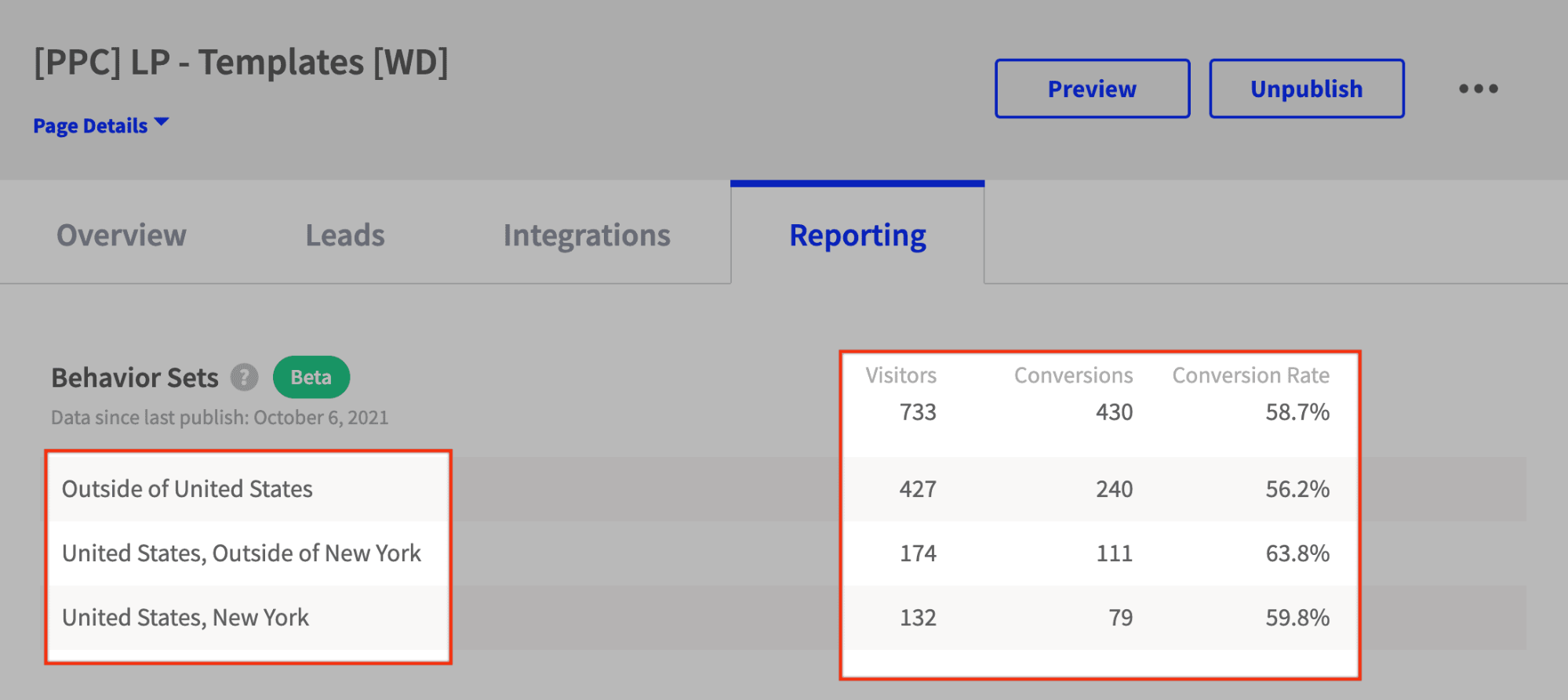
However, industry experts warn against the reliance on “noisy” or misleading data. Metrics such as “Bounce Rate” are often misinterpreted; a high bounce rate on a page designed to provide quick information (like a contact page) may actually indicate success. To counter this, advanced practitioners utilize segmentation to break down data by:

- Device Type: Recent benchmarks indicate that while 83% of landing page visits occur on mobile devices, desktop traffic converts at an 8% higher rate.
- Traffic Source: Distinguishing between organic, paid, and referral traffic to tailor the user experience.
- User Geography and Language: Adjusting for regional preferences that may affect conversion.
Phase III: Integrating Qualitative Context
The third phase addresses the “why” behind the “what.” Quantitative data from tools like Google Analytics can show that users are leaving a page, but qualitative data explains their motivation. The integration of heatmaps and session recordings has become a standard requirement for identifying UI/UX friction.
Visual behavior analysis often reveals “rage clicks”—where users repeatedly click an unlinked element—or “dead clicks” that indicate broken functionality. Furthermore, the use of “Voice of Customer” (VoC) insights through on-page surveys allows organizations to capture real-time feedback. High-impact queries, such as asking what nearly prevented a user from completing a purchase, provide direct insight into conversion barriers that no spreadsheet can replicate.
Phase IV: Hypothesis Development and Prioritization
The fourth phase involves the transition from observation to experimentation. A rigorous CRO program avoids “random acts of testing.” Instead, it relies on hypotheses grounded in behavioral data. A standard professional hypothesis follows a strict logic: “Because we observed [Data Insight], if we [Implement Change], then [Metric] will [Improve] by [X%].”
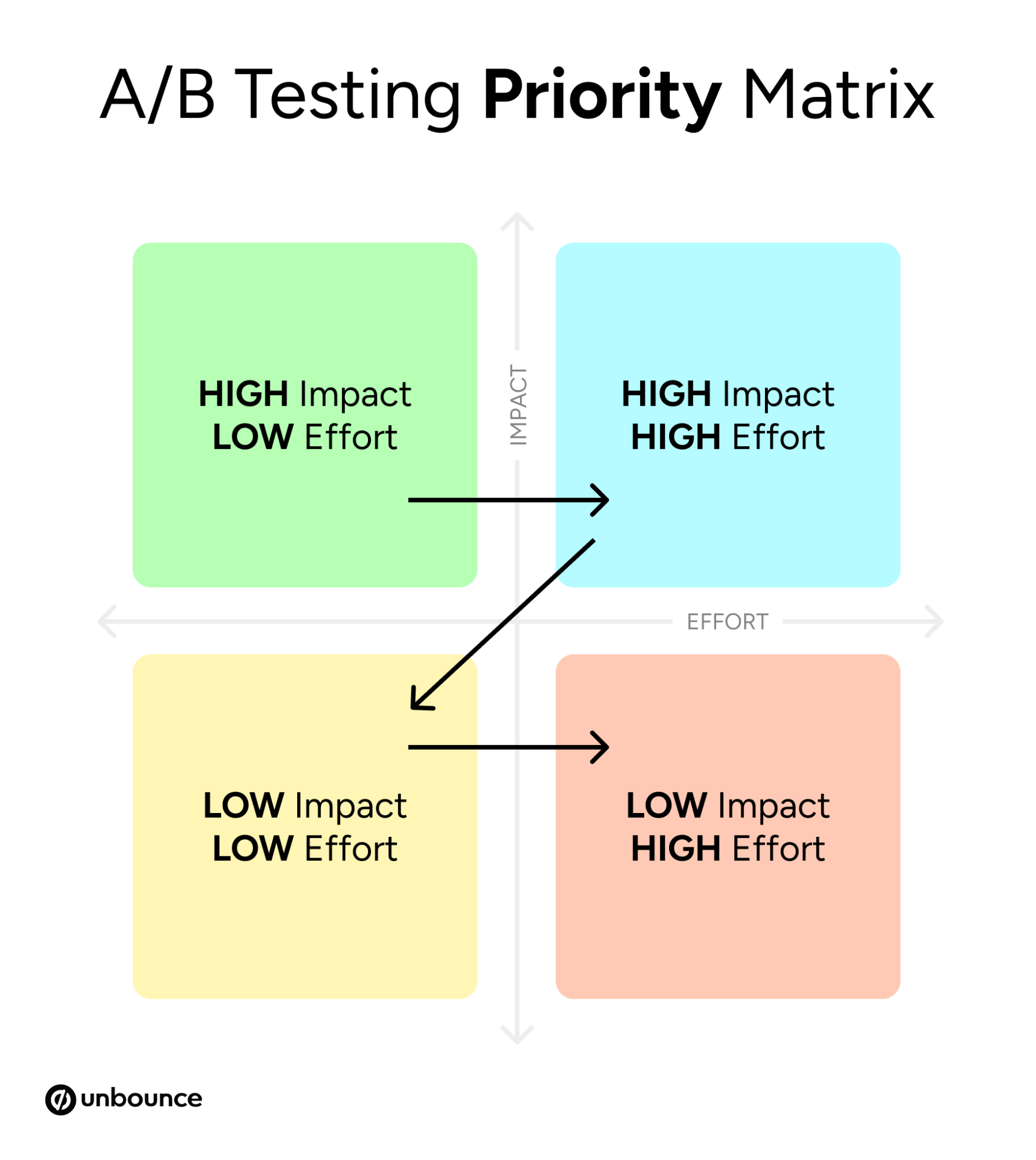
Given the finite resources of most marketing teams, prioritization is managed through an Impact vs. Effort matrix. This framework categorizes potential tests into four quadrants:
- Quick Wins: High impact, low effort (e.g., updating a headline or simplifying a form).
- Big Projects: High impact, high effort (e.g., redesigning the entire checkout flow).
- Fill-ins: Low impact, low effort (e.g., changing button colors).
- Time Wasters: Low impact, high effort (e.g., complex animations with no clear utility).
Phase V: Statistical Rigor and Iterative Growth
The final phase of the chronology is the interpretation of results. A common failure in CRO is the premature declaration of a “winner.” Professional standards require statistical significance—usually a 95% confidence level—to ensure that a lift in conversions is not due to random chance. This requires running tests for a minimum duration (often two full business cycles or 14 days) to account for daily and weekly fluctuations in user behavior.
Supporting Data and Industry Implications
The implications of structured CRO are profound when viewed through the lens of long-term ROI. Analysis from the 2024 Conversion Benchmark Report indicates that word complexity alone has a -24.3% correlation with conversion rates. This suggests that technical jargon and overly dense copy are active conversion killers across almost all B2B and B2C sectors.
Furthermore, the shift toward mobile-first browsing has created a paradox: while the majority of traffic is mobile, the majority of conversions remain on desktop. This suggests a significant opportunity for companies that can bridge the mobile “friction gap” through better responsive design and simplified mobile payment options.
Official Responses and Expert Analysis
Marketing executives at leading SaaS firms have noted that CRO is no longer an optional “extra” but a core component of defensive marketing. “In an era where Google and Meta are increasing ad prices annually, the only way to maintain margins is to convert a higher percentage of the traffic you already paid for,” states one industry analyst.
The consensus among digital strategists is that the most successful companies are those that foster a “culture of experimentation.” This involves not just running tests, but documenting the learnings from every failure. A “losing” test is considered valuable if it proves that a specific element—such as a celebrity testimonial or a specific discount offer—does not resonate with the target audience, thereby preventing future wasted spend.
Broader Impact on the Digital Economy
The broader impact of the CRO movement is a more user-centric internet. As companies strive to increase conversion rates, they are inherently forced to improve site speed, clarify their messaging, and remove intrusive pop-ups and dark patterns that frustrate users.
For the modern enterprise, the toolkit required to compete includes more than just a landing page builder. It necessitates a stack that includes A/B testing engines, AI-driven traffic routing (such as Unbounce’s Smart Traffic), and integrated analytics. The transition from speculative marketing to data-driven optimization represents the professionalization of the digital growth industry, where “magic fixes” are replaced by the compounding interest of dozens of small, data-backed improvements.
In conclusion, the path to sustained conversion growth is not found in a single viral campaign or a redesigned logo. It is found in the disciplined application of the CRO workflow: defining clear outcomes, sanitizing data, understanding user psychology, testing with statistical rigor, and turning every insight into a permanent improvement in the user journey. Organizations that adopt this systematic approach are not merely guessing at growth; they are engineering it.







