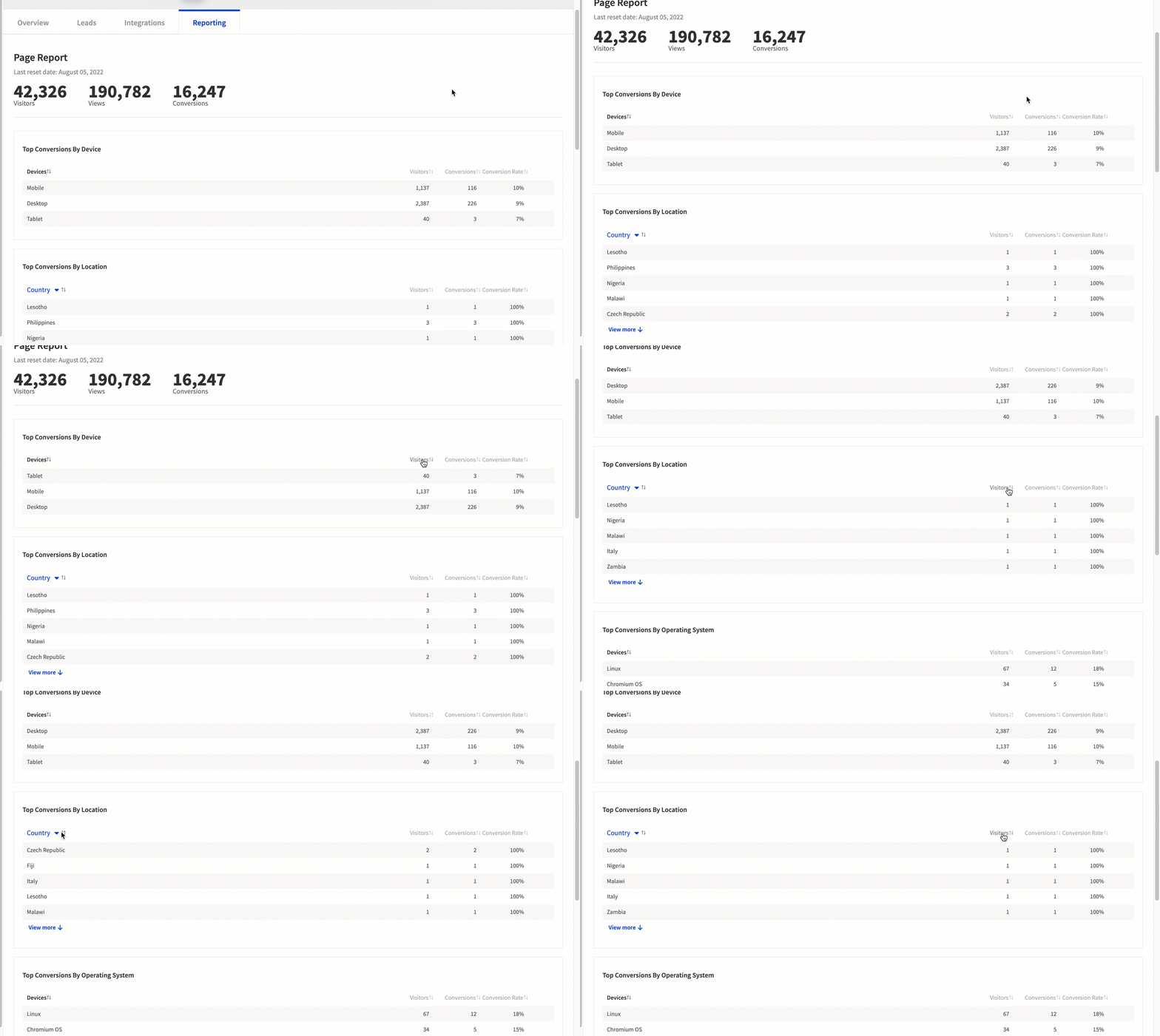
The landscape of digital journalism and data analysis has undergone a significant transformation with the introduction of advanced embedding capabilities within Google Data Studio. As the demand for interactive and real-time data visualization grows, the ability to integrate dynamic reports directly into web environments has become a critical requirement for content creators, analysts, and news organizations. By allowing users to embed live, interactive reports into articles and websites, Google has addressed a long-standing limitation in digital storytelling: the reliance on static screenshots that fail to capture the depth and fluidity of modern datasets. This evolution in the Google Marketing Platform ecosystem empowers professionals to move beyond traditional reporting, fostering a more engaging and informative experience for audiences who seek to explore data independently.
The Shift from Static to Dynamic Data Representation
For years, data journalists and business analysts faced a common hurdle when sharing insights online. While platforms like Google Data Studio allowed for the creation of sophisticated visualizations, the process of sharing those insights often involved capturing static images or providing external links that redirected users away from the primary content. This “click-through” model was frequently suboptimal, as it disrupted the reader’s flow and often led to lower engagement rates. The introduction of the embedding feature allows for the seamless integration of iframes, enabling readers to interact with charts, filter results, and hover over data points without leaving the host page.
This technological advancement is particularly relevant in the context of high-interest topics, such as the ongoing box office and critical performance rivalry between Marvel and DC. By utilizing embedded reports, analysts can present complex comparisons of film franchises—incorporating box office earnings, critical ratings, and audience sentiment—in a format that remains current as new data becomes available. The transition to live embedding ensures that a story published today can remain relevant tomorrow, automatically updating as the underlying data source is refreshed.
Technical Implementation and Best Practices for Embedding
The process of enabling report embedding within Google Data Studio is designed to be intuitive yet robust, catering to both technical and non-technical users. To initiate the process, users must navigate to the “File” menu within their report and select the “Embed report” option. This action generates an HTML snippet—typically an iframe—that can be pasted into the source code of a website or a content management system (CMS).
However, the effectiveness of an embedded report depends heavily on configuration and accessibility settings. A primary consideration is the visibility of the data. For a report to be viewable by a general audience, the sharing settings must be updated to “Public” or “Anyone with the link can view.” Without these adjustments, the embedded frame will appear as a login prompt or a permission error to the end-user. Furthermore, the platform offers “Fit to width” and “Actual size” display modes. For modern, responsive web design, the “Fit to width” setting is generally preferred, as it allows the visualization to scale according to the user’s device, whether they are accessing the content via a desktop monitor, a tablet, or a smartphone.
Case Study: The Marvel vs. DC Cinematic Rivalry
To demonstrate the power of embedded data, analysts have frequently turned to the “Marvel vs. DC” war as a primary case study. This comparison provides a wealth of data points, including production budgets, domestic and international box office grosses, and aggregate scores from platforms like Rotten Tomatoes and IMDb.
Historical Context and Growth
The cinematic battle began in earnest in 2008 with the release of Marvel’s Iron Man, which launched the Marvel Cinematic Universe (MCU). Since then, the franchise has expanded through several “Phases,” consistently increasing its market share. In contrast, DC’s cinematic efforts, spearheaded by Warner Bros., have seen a more varied trajectory, with the DC Extended Universe (DCEU) officially beginning with Man of Steel in 2013.

Data-Driven Insights
Recent updates to comparative visualizations include five new major releases from both studios, highlighting a trend where Marvel continues to lead in cumulative box office revenue and critical consistency. Data indicates that while DC often sees high opening weekend numbers for iconic characters like Batman and Wonder Woman, Marvel’s interconnected storytelling model has historically resulted in higher “multipliers”—the ratio of total box office to opening weekend earnings—suggesting stronger long-term audience retention and repeat viewership.
Granular Analysis through Embedded Tabs
One of the more sophisticated uses of Data Studio embedding is the ability to break down a comprehensive “dataviz” into digestible, page-specific insights. Rather than overwhelming a reader with a single, massive dashboard, creators can embed specific pages of a report to align with different sections of an article. For instance, one section might feature an embedded chart focusing solely on critical reception, while the next focuses on the financial Return on Investment (ROI) for each studio. This modular approach allows for a structured narrative where the data directly supports the surrounding text.
Chronology of Interactive Reporting Milestones
The journey toward fully interactive data journalism has been marked by several key developments in the way tools like Google Data Studio have been deployed:
- 2016: Google Data Studio is launched as part of the Google Analytics 360 Suite, providing a cloud-based solution for data visualization.
- 2017: The introduction of the “Embed” feature allows users to integrate reports into external websites, significantly expanding the reach of the platform.
- 2018-2020: Enhancements in mobile responsiveness and the introduction of community visualizations allow for more creative and flexible data displays.
- 2022: Google rebrands Data Studio as Looker Studio, integrating it more deeply with the Looker ecosystem and expanding enterprise-grade data modeling capabilities.
- Present: The platform now supports advanced embedding options, including URL parameters that allow for pre-filtered views of data based on the specific context of the host webpage.
Industry Implications and the Future of Data Journalism
The ability to embed interactive data has profound implications for the media and corporate sectors. For news organizations, it provides a means to build trust with audiences by allowing them to “see the work.” Instead of trusting a journalist’s summary of a dataset, readers can explore the raw numbers themselves, filtering by year, region, or category. This transparency is vital in an era where data literacy is increasingly prioritized.
In the corporate world, the embedding feature streamlines internal communication. Rather than sending static PDF reports via email, analysts can embed live dashboards into internal company portals or Slack channels. This ensures that stakeholders are always looking at the most recent figures, reducing the risk of decisions being made based on outdated information.
Furthermore, the democratization of these tools means that even smaller publications and independent bloggers can produce high-quality, data-driven content that was once the exclusive domain of major outlets like The New York Times or The Wall Street Journal. The ease of use of Data Studio, combined with its free-to-use tier, has lowered the barrier to entry for professional-grade data storytelling.
Conclusion: The New Standard for Online Engagement
As digital platforms continue to evolve, the expectation for interactivity will only increase. Static content is no longer sufficient to capture the attention of a data-savvy public. The embedding features provided by Google Data Studio (now Looker Studio) represent a significant step toward a more integrated and interactive web, where data is not just a supplement to a story but a central, navigable part of the narrative.
By mastering the technical nuances of embedding—such as managing permissions, ensuring responsiveness, and structuring reports for modular consumption—content creators can ensure their insights are delivered quickly and effectively. Whether analyzing the multi-billion dollar stakes of superhero cinema or reporting on global economic trends, the ability to embed live data ensures that the story remains as dynamic as the world it describes. The “Marvel vs. DC” visualization serves as a testament to this potential, proving that when data is made accessible and interactive, it can transform a simple comparison into a compelling, immersive experience.