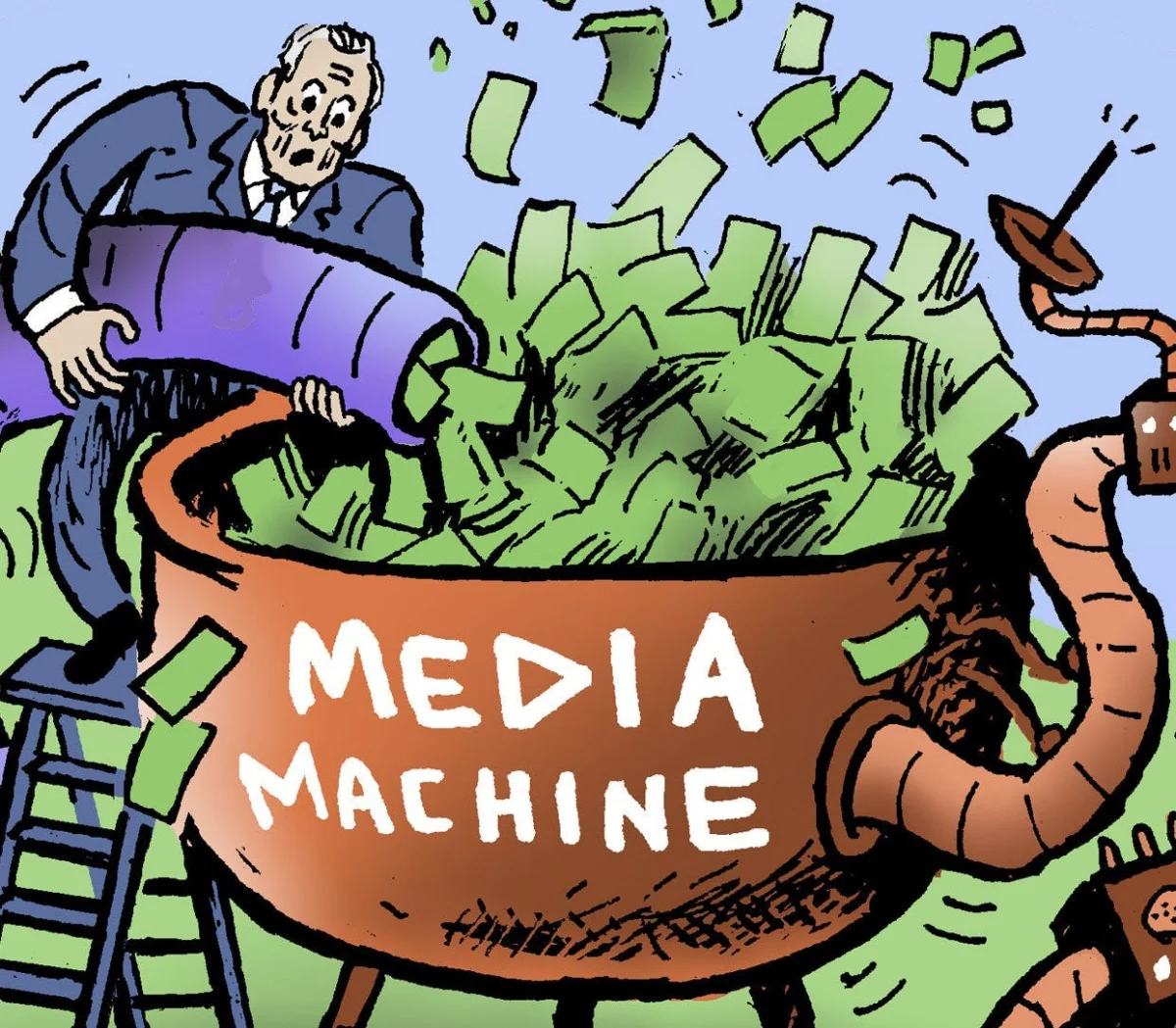
Brian Gleason, who previously served as Chief Revenue Officer and President of Retail Media at Criteo, has transitioned to the role of CEO at contextual advertising platform Seedtag, expressing a newfound conviction that contextual advertising represents an even more significant opportunity than retail media. Gleason, a prominent figure in the ad tech industry known for his enthusiastic advocacy of retail media, now believes that the industry is poised to return to its advertising roots, prioritizing genuine connection with consumers over hyper-focused, cookie-dependent targeting.
“We’ve become so hyper-focused on cookies and targeting that we lost what advertising really was about: connection,” Gleason stated in a recent interview with AdExchanger. He asserts that true audience connection hinges on capturing attention and evoking emotion, elements that traditional targeting methods and basic content taxonomies often fail to grasp. However, Gleason posits that advancements in agentic artificial intelligence are now capable of uncovering deeper insights that can be effectively leveraged by ad tech.
Seedtag’s strategic move to acquire video-focused SSP Beachfront last year underscores this vision. This acquisition empowered Seedtag’s AI agent, Liz, to target audiences across Connected TV (CTV) and the open web, not just based on context, but also on emotional resonance. This represents a significant evolution in contextual advertising, moving beyond keyword matching to a more nuanced understanding of content and its impact on viewers.
The Immense Scale of Contextual Advertising and Seedtag’s Global Reach
The contextual advertising market, according to Gleason, is estimated to be between $250 billion and $350 billion globally. This vast potential, he explained, was a primary driver in his decision to leave the retail media space, which he acknowledged he deeply admires. “It took a lot to rip me away from commerce media, because I love that space, but this was an even bigger opportunity,” Gleason remarked.
Seedtag has already established a significant global presence, operating in 17 markets and connecting with over 16,000 publishers. While the company originated in Madrid, its expansion into the United States two years ago has been met with remarkable success, achieving 120% growth in the US market last year. Furthermore, Seedtag reported over 30% growth in the EMEA region in the last quarter, indicating a robust and accelerating trajectory.
Seedtag’s Strategic Priorities Under New Leadership
Under Gleason’s leadership, Seedtag has outlined several key priorities to solidify its position and drive future growth.
1. Pioneering Neurocontextual Targeting: A central focus is the introduction and widespread adoption of “neurocontextual targeting.” This innovative approach aims to connect with audiences based on emotion, attention, and interest, moving beyond the traditional keyword and category-based methods of contextual advertising. Seedtag, a pioneer in developing solutions for this evolving field, now leverages its advanced artificial intelligence platform, Liz, to unlock these deeper consumer insights.
2. Global Scaling and US Market Expansion: Continuing the impressive growth trajectory, particularly in the United States, remains a critical objective. This involves not only expanding its publisher network but also deepening its relationships with brands and agencies across all operational markets.
3. Cross-Channel Capabilities and CTV Expansion: Recognizing the burgeoning importance of CTV advertising, Seedtag is committed to building out its capabilities in this arena. Gleason acknowledged that current contextual capabilities in CTV are somewhat limited, and enhancing these offerings is crucial for unlocking the full potential of the medium.
A Shift in Strategy: Accelerating Growth Through Existing Strengths
While Gleason emphasizes that there will be no fundamental change in Seedtag’s core direction, his extensive experience is expected to accelerate growth in key areas. His background, which includes a decade at WPP, has endowed him with strong relationships within major agency holding groups like Publicis and Omnicom. A key initiative will be integrating Seedtag’s tools more seamlessly into their planning systems, thereby streamlining the adoption and utilization of its contextual solutions.
Furthermore, strengthening relationships with brands and expanding publisher supply, especially within the CTV ecosystem, are identified as crucial for scaling the business. This strategic focus aims to create a more robust and interconnected advertising environment.
Empowering Publishers Through Enhanced Monetization
Gleason’s own career began in publishing, instilling in him a deep understanding of the publisher’s perspective. His primary goal for publishers is to help them maximize the value of their relationship with consumers. This involves not only employing effective targeting mechanisms but also ensuring that advertising is highly relevant to the content it accompanies. Seedtag’s Liz agent is designed to provide publishers with deeper insights into their content and the emotional connections it fosters, enabling them to monetize their inventory more effectively.
“It’s about understanding the value of the relationship you have with the consumer, then figuring out how to get the maximum value from that relationship,” Gleason explained. “You need to not just have a targeting mechanism based on an audience, but to bring relevancy to the content by understanding it. Our Liz agent will help publishers better understand their content and the emotional connection.”
The Future of Programmatic Advertising: AI Agents and Interconnectivity
The advertising industry is witnessing a nascent vision of programmatic advertising evolving into a scenario where buy-side AI agents communicate directly with sell-side AI agents. Gleason acknowledges this potential but also raises practical considerations. “I don’t know if they’re going to be separate agents on both sides. How many different agents can anybody operate?” he questioned.
He stresses the necessity of seamless connectivity between these evolving AI systems, a challenge that requires significant development. However, he believes a select few players will emerge as leaders in this space. While Meta offers a pathway into social advertising and Google’s Performance Max represents its approach to performance marketing, Seedtag aims to be the connecting pathway between the buy and sell sides, offering intelligence that spans both.
“But how do you create the ability to do that not just in isolation on one channel, but with scale that really matters? That’s what makes this opportunity so exciting,” Gleason articulated.
Addressing the “Black Box” Problem with Transparency and Education
Concerns about the opaqueness of “black-box” systems and unaccountable algorithms in advertising are persistent. Gleason acknowledges the risk that the adoption of agentic AI could exacerbate these issues. He firmly states that transparency, brand safety, and privacy must serve as the foundational pillars of any AI-driven advertising solution.
“It’s absolutely true. Transparency, brand safety and privacy have to be the basic foundations for anything we do,” Gleason asserted. “Be completely transparent with the inventory and where ads are running, and also in how you show outcomes.”
He emphasizes that the interaction between AI systems should not be purely technological. Instead, there needs to be a concerted effort to educate and involve human stakeholders. “We have to bring people along the journey and help clients understand AI: Here are the models, how they work, how you can customize them and how they surface the emotional connection,” he added. This commitment to transparency and education is crucial for building trust and ensuring responsible AI deployment in advertising.
Seedtag’s Position in a Blurring Marketplace
The lines between Demand-Side Platforms (DSPs) and Supply-Side Platforms (SSPs) are increasingly blurring, leading to questions about Seedtag’s role in this evolving landscape. Gleason clarifies that Seedtag is not aiming to become an end-to-end platform. Instead, it focuses on making its intelligence accessible across various buying paths.
“No. We have an exchange where our inventory is available, and we’re going to continue to build that out,” he stated. “However anybody wants to buy, we want to make our intelligence accessible to that buying path. The agentic frontend with Liz will be the main point of activation, but if you want to use a traditional DSP to activate campaigns through our exchange, there’s a pathway to do that.”
This approach positions Seedtag as a valuable intelligence layer, adaptable to different buying methodologies and platforms, rather than a proprietary walled garden.
Exploring Synergies with Retail and Commerce Media
Given Gleason’s extensive experience in retail media, the question of potential collaborations with retail and commerce media platforms, including his former employer Criteo, is pertinent. He sees significant potential in combining the power of emotion with contextual targeting and purchase intent.
“If I’m thinking about commerce and neurocontextual, well, emotion is brand recall. Imagine taking an emotional signal, marrying that to a contextual target and purchase intent, and then moving that up and down the funnel,” Gleason elaborated.
This suggests a future where advertising can tap into deeper consumer psychology, creating more impactful campaigns that resonate across the entire customer journey. Seedtag is open to exploring such integrations: “We’d love to have that conversation with everybody, including Criteo.” This forward-looking perspective indicates Seedtag’s readiness to collaborate and innovate at the intersection of contextual advertising, emotional intelligence, and commerce.
The interview, edited and condensed for clarity, highlights Brian Gleason’s strategic vision for Seedtag and his conviction in the enduring power of contextual advertising, now amplified by the capabilities of advanced AI and a deeper understanding of human emotion.