Tuesday, November 18th, 2025 – 1:13 pm
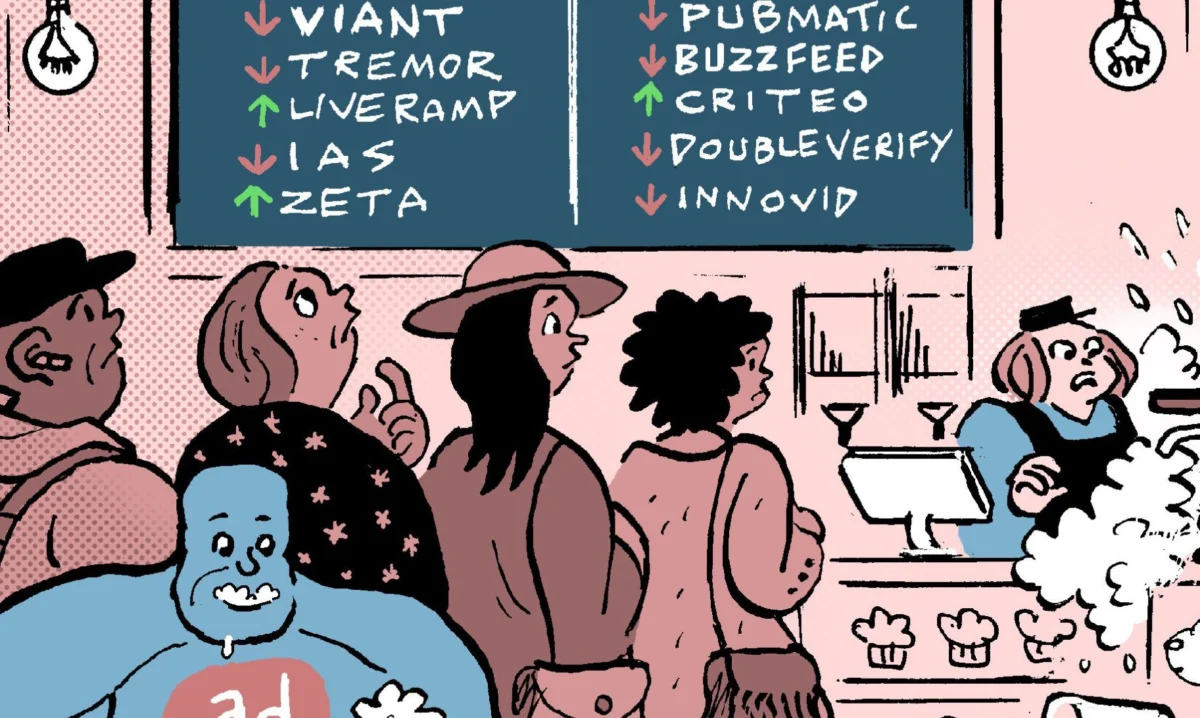
The digital advertising technology sector is currently embroiled in a period of intense competition and dramatic shifts, characterized by escalating tensions between key players and significant upheaval in how programmatic advertising operates. This year has seen a marked increase in friction between Demand-Side Platforms (DSPs) and Supply-Side Platforms (SSPs), primarily concerning access to valuable bidstream data. Concurrently, major technology providers and industry consortiums are navigating complex challenges, leading to a turbulent environment for advertisers, publishers, and investors alike.
The recent wave of earnings reports from public ad tech companies has brought these underlying conflicts into sharp focus, revealing a tangible impact on revenue and strategic positioning. The optimistic era of third-party programmatic vendors collectively aligning against Google and readily benefiting from the growth driven by platforms like The Trade Desk appears to be drawing to a close. Instead, a more fragmented and adversarial landscape is emerging, where companies are increasingly prioritizing their own financial health and market share.
The Economic Undercurrent: Declining Revenue and Shifting Spend
At the heart of the current ad tech drama lies a fundamental economic reality: many players are making less money. This is not merely a matter of philosophical debates about data transparency or the intricacies of the ad supply chain, but a direct consequence of reduced spending by key demand-side entities.
Magnite, PubMatic, and Nexxen, prominent SSPs, have all disclosed in their third-quarter earnings calls a significant and unexpected decrease in ad spend from unnamed DSPs. This downturn has directly impacted their revenue streams and prompted a reevaluation of market dynamics.
PubMatic CEO Rajeev Goel, while not explicitly naming The Trade Desk, alluded to shifts in spending patterns. He described The Trade Desk’s new ad-buying platform, Kokai, as operating “differently from what we have seen,” a sentiment that echoed earlier observations by PubMatic leadership regarding a sudden decrease in spend from a particular DSP.
Magnite’s CEO, Michael Barrett, was more direct in his commentary. He explicitly stated that The Trade Desk had implemented a change that “prioritized OpenPath as a default path for supply.” This strategic decision by The Trade Desk, a major source of demand for Magnite’s programmatic supply, led to a tangible impact on Magnite’s revenue. Barrett noted that Magnite had to engage directly with major agency buyers to re-establish a “preferred supply path” due to this shift.
Nexxen, a company that operates both a DSP and an SSP, revised its financial forecast downwards for the remainder of the year. CEO Ofer Druker attributed this adjustment to an absence of the anticipated surge in growth typically observed in October, just before the holiday season. Druker indicated that this was not an isolated incident with a single DSP but rather a programmatic-wide reduction plateau. This suggests a broader economic slowdown or a reallocation of advertising budgets across the digital ecosystem.
Adding to the market’s turbulence, System1 CEO Michael Blend reported that an unnamed programmatic vendor in their demand channel had exposed the company to “significant invalid or nonhuman” traffic. System1 is actively seeking reimbursement for these fraudulent impressions and has indicated a potential for legal action. This highlights ongoing concerns about ad fraud and the integrity of programmatic transactions, further complicating the financial outlook for various stakeholders.
Strategic Maneuvering and Shifting Narratives
Beyond the immediate financial pressures, the heightened antagonism within the programmatic ecosystem is also a reflection of companies strategically positioning themselves and attempting to influence the perceptions of investors and marketers regarding the ideal structure of programmatic advertising.
The Trade Desk CEO Jeff Green, in a notable statement to investors, questioned the nature of Amazon’s operations, stating, “I don’t think Amazon has a DSP as we define it.” This comment appears to be a strategic move to delineate The Trade Desk’s offerings and potentially cast doubt on the competitive landscape for platforms that operate integrated supply and demand functions.
In response, Viant, an independent DSP, has sought to define its competitive set by emphasizing its focus on “truly objective buy-side-only platforms.” CEO Tim Vanderhook framed The Trade Desk as “no longer independent or objective” due to its prioritization of its own OpenPath supply integrations. This commentary suggests a narrative that positions Viant as a pure-play DSP, unencumbered by supply-side interests, and implicitly criticizes The Trade Desk’s perceived conflict of interest.
Nexxen’s CEO, Ofer Druker, further elaborated on the trend of DSPs venturing into the supply side, citing The Trade Desk’s expansion as an example. He posited that “Big DSPs in the future will have to build their own end-to-end solutions in order to increase their margins.” This perspective suggests a belief that vertical integration is becoming a necessity for DSPs seeking to control their costs and enhance profitability in a challenging market. The divergence in these viewpoints from independent DSPs underscores the lack of a unified vision for the future of programmatic architecture.
The SSP Response: Navigating the “Reseller” Label
The discourse surrounding the designation of SSPs as “resellers” by The Trade Desk has also caused considerable consternation among investors and within the SSP community. This label implies a diminished role and potentially lower margins for SSPs that do not directly control their own inventory or supply.
PubMatic CEO Rajeev Goel has firmly refuted the “reseller” designation for his company. He emphasized PubMatic’s role as a strong partner of The Trade Desk and stated that the company is not embittered by the decrease in spend or the broader “noise that’s out there” regarding the reseller issue. Goel characterized the ecosystem as “multifaceted, certainly complex,” suggesting a nuanced view that acknowledges the challenges without conceding to a simplified or negative categorization.
Similarly, Magnite’s Michael Barrett asserted that the “reseller” label does not apply to his company. He expressed Magnite’s commitment to “cleaning up the system” by actively working to remove duplicate bids and low-quality impressions. Barrett reiterated, “Let’s be clear, we don’t believe Magnite is a reseller. I think the term applies to others,” drawing a clear distinction between Magnite’s operational model and that of other entities in the space.
Background Context and Industry Evolution
The current friction points are not entirely new but represent an escalation of long-standing tensions within the programmatic advertising ecosystem. The increasing consolidation of power within a few major platforms, coupled with the ongoing deprecation of third-party cookies and the industry’s transition towards privacy-centric solutions, has created a fertile ground for conflict.
For years, the industry has grappled with the opaque nature of the programmatic supply chain. Concerns about data leakage, excessive intermediaries, and the equitable distribution of advertising spend have been persistent. The Chrome Privacy Sandbox initiative, aimed at enhancing user privacy, has been a particularly contentious area, with various stakeholders investing significant resources only to find their efforts seemingly undermined by platform-specific changes. Google’s own role in this ecosystem has often been a subject of scrutiny, with accusations of self-preferencing and leveraging its dominant position.
The rise of The Trade Desk as a dominant independent demand-side platform has fundamentally altered the power dynamics. Historically, many third-party programmatic companies found common ground in their opposition to Google’s perceived market dominance. However, as The Trade Desk has grown and developed its own suite of tools and initiatives, such as OpenPath for direct supply access, it has increasingly become a central figure in industry disputes. OpenPath, designed to streamline the path from publisher to buyer and reduce intermediary fees, has been met with mixed reactions. While proponents argue it enhances efficiency and transparency, critics, particularly SSPs, view it as a move that could consolidate power and potentially disadvantage those not directly integrated into its preferred pathways.
The Prebid Summit and the IAB Tech Lab have become crucial forums for these discussions. Industry bodies like Prebid.org, an open-source framework for header bidding, and the IAB Tech Lab, which sets industry standards, are constantly navigating the complexities of evolving technologies and competing interests. Recent events and pronouncements from these organizations suggest they are at a critical juncture, needing to define their roles and ensure they serve the interests of a broad range of industry participants rather than a select few. The “spilling tea” mentioned in the original context refers to the public airing of grievances and strategic disagreements at these industry gatherings.
Data and Supporting Evidence
While specific financial figures beyond the general statements of reduced spending are not publicly detailed in the earnings calls, the collective impact is significant. The programmatic advertising market is a multi-billion dollar industry, and any significant disruption in spending by major DSPs can have cascading effects.
For instance, ad spend on programmatic channels globally was projected to reach over $150 billion in 2024, with further growth anticipated. A material decrease in spending from key players, even if affecting only a portion of this market, can translate into hundreds of millions of dollars in lost revenue for SSPs and other intermediaries. The reliance of companies like Magnite and PubMatic on a concentrated number of DSP partners means that shifts in strategy by even one or two major platforms can have a disproportionate impact.
The complexity of the programmatic supply chain, often involving multiple intermediaries between the advertiser and the publisher, is a recurring theme. Each intermediary adds a layer of cost and potential for inefficiency. The Trade Desk’s OpenPath initiative, and similar moves by other large platforms, are partly driven by the desire to reduce these costs and increase the efficiency of the transaction. However, the challenge lies in ensuring that these efficiency gains are shared equitably and do not lead to the marginalization of certain market participants.
Broader Implications and Future Outlook
The current ad tech turmoil has several significant implications for the broader digital advertising landscape:
- Increased Consolidation: The financial pressures and strategic maneuvering may accelerate consolidation within the ad tech industry. Companies struggling to maintain profitability or adapt to changing market dynamics might become acquisition targets for larger, more financially stable players.
- Shift Towards Direct Integrations: The emphasis on preferred supply paths and end-to-end solutions suggests a trend towards more direct integrations between buyers and sellers, potentially bypassing some traditional intermediaries. This could lead to a more fragmented but potentially more efficient ecosystem, provided transparency is maintained.
- Heightened Scrutiny on DSPs and SSPs: The ongoing debates about roles, data access, and transparency will likely lead to increased scrutiny from regulators and advertisers. There will be a greater demand for clarity on how ad dollars are spent and the value delivered by each component of the supply chain.
- Innovation in Privacy-Preserving Technologies: The push for greater privacy, coupled with the decline of third-party cookies, will continue to drive innovation in areas like identity solutions, contextual advertising, and data clean rooms. Companies that can effectively navigate this privacy-first future will be best positioned for long-term success.
- Impact on Publishers: Publishers, who ultimately rely on programmatic advertising for revenue, will be impacted by these shifts. Reduced advertiser spend or increased fees from intermediaries could affect their ability to invest in content and maintain their operations. The drive for direct publisher-to-advertiser relationships or more transparent supply chains could benefit publishers in the long run if implemented effectively.
The ad tech industry is at a critical juncture. The coming months will likely see further strategic realignments, potential partnerships, and continued debate as companies grapple with reduced revenues, evolving privacy regulations, and the fundamental question of how programmatic advertising should operate in an increasingly complex digital world. The current “drama” is not merely a series of interpersonal disputes but a reflection of profound structural changes occurring within one of the most vital sectors of the digital economy.