The digital landscape for content creators and businesses reliant on organic search traffic has once again been rattled, as Google’s search rankings experienced significant and unconfirmed volatility starting Saturday, August 1st, and persisting through Monday, August 3rd, 2026. This latest period of fluctuation, widely observed by third-party tracking tools and discussed across the SEO community, adds to a turbulent summer marked by frequent algorithmic shifts and growing apprehension among publishers regarding their diminishing traffic from the search giant. The phenomenon, while not officially confirmed by Google, indicates an ongoing adjustment to its core ranking algorithms, forcing webmasters and SEO professionals into a constant state of vigilance and adaptation.

The Latest Surge in SERP Instability
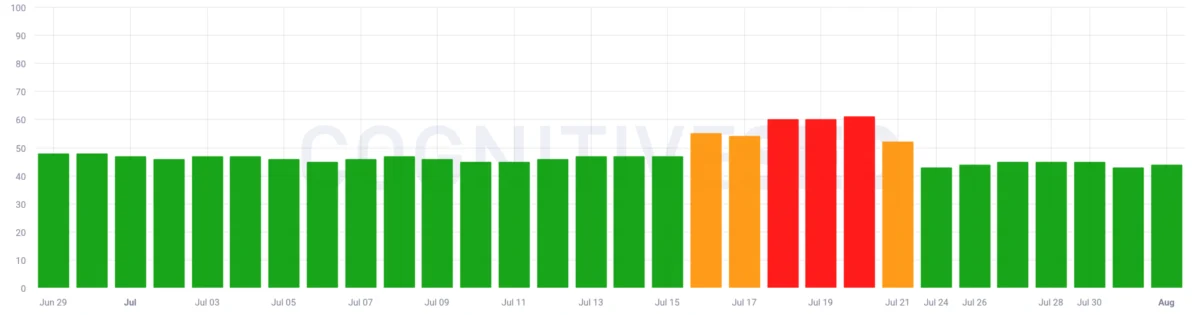
The current wave of ranking turbulence commenced at the start of the month, exhibiting pronounced swings across various search engine results pages (SERPs). Webmasters and search engine optimization (SEO) experts reported seeing their positions for critical keywords shift dramatically, impacting visibility and, consequently, traffic. This instability is a hallmark of an unconfirmed Google algorithm update, where changes are rolled out without explicit notification from Google itself, leaving the industry to deduce patterns and potential causes from observed effects. The intensity of the current flux has led many to speculate about the nature and scope of these adjustments, with some noting radical changes in the competitive landscape for specific queries. The aggregate volatility charts from multiple monitoring services showcased a clear upward trend, culminating in a significant spike on August 3rd, signaling a widespread disturbance across Google’s index.
Understanding Google’s Algorithmic Evolution
Google’s search algorithm is a complex and constantly evolving system designed to deliver the most relevant and high-quality results to users. Updates are an inherent part of this evolution, ranging from minor daily tweaks to major "core updates" that can profoundly reshape the search ecosystem. Core updates, typically announced by Google, involve broad changes to how the system assesses content overall. Spam updates, on the other hand, target specific manipulative tactics. However, many fluctuations, like the current one, remain "unconfirmed," meaning Google has not publicly acknowledged a specific update. This often points to smaller, more frequent adjustments, or the gradual rollout of components of a larger update, making diagnosis and adaptation challenging for webmasters. The underlying goal of these changes is consistently framed by Google as an effort to improve search quality, enhance user experience, and combat spam or low-quality content. For the SEO community, each period of volatility represents a critical opportunity to analyze directional shifts in Google’s preferences and adjust strategies accordingly.

A Recent Chronology of Google’s Ranking Shifts
The August 2026 volatility does not occur in isolation but follows a pattern of frequent shifts throughout the summer, indicating a period of significant algorithmic refinement by Google. This recent history provides essential context for the current situation:
- July 24th, 2026: Just a week prior to the current event, SEO professionals observed unconfirmed ranking volatility, leading to noticeable shifts for many websites. This served as a precursor, suggesting ongoing testing or incremental rollouts.
- July 18th & 19th, 2026: Earlier in July, another significant period of unconfirmed volatility occurred, which some reported to have lingered and impacted rankings for the remainder of that week. The sustained nature of this event hinted at deeper, more persistent changes rather than transient anomalies.
- Early July 2026 ("Google 7-Eleven Update"): This informal moniker was given to an earlier period of volatility in July, reflecting the community’s attempt to categorize and track the frequent, unannounced movements. While the exact nature of this update remains speculative, it contributed to the general sense of instability.
- June 2026 Spam Update (June 14th – June 26th): This was a confirmed Google update specifically targeting spam. It commenced on June 14th and concluded on June 26th. Such updates are designed to penalize sites employing manipulative tactics, often leading to significant drops for those violating Google’s guidelines. The community observed notable shifts as a result, particularly impacting sites with questionable link profiles or content practices.
- May 2026 Core Update (May 21st – June 2nd): Preceding the spam update, Google rolled out a major confirmed core update. This update, which began on May 21st and concluded on June 2nd, typically involves a broad reassessment of content quality and relevance signals across the entire web. Core updates often lead to substantial ranking changes for a wide array of websites, rewarding those deemed to offer superior content and user experience.
This sequence of events underscores a summer of intense activity from Google, keeping webmasters and SEOs on high alert and highlighting the continuous need for adaptability and adherence to best practices.

Third-Party Tracking Tools Confirm the Shift
The widespread nature of the August 2026 volatility is corroborated by numerous independent SEO tracking tools designed to monitor fluctuations in Google’s SERPs. These tools analyze millions of keywords and websites daily, identifying significant deviations from baseline ranking stability. Their collective readings serve as a crucial early warning system for the SEO community.
The aggregate volatility chart, which synthesizes data from various sources, showed a distinct and sharp increase on August 3rd, indicating a broad systemic change rather than isolated incidents. Individual tools echoed this sentiment:

- Sistrix: Reported a substantial spike in its visibility index, particularly for mobile search results in the US, indicating heightened instability.
- Wireboard: Its aggregated report, designed to consolidate signals from multiple tools, also showed a noticeable increase in volatility, aligning with the general trend.
- AccuRanker Grump: This tool, known for its "grumpiness" score reflecting SERP agitation, registered elevated levels, suggesting considerable movement in keyword rankings.
- Zutrix Tension: Indicated increased "tension" in the SERPs, signifying a departure from normal stability.
- CognitiveSEO: Its signals tracker showed heightened activity, consistent with an algorithmic adjustment.
- Wincher: Reported elevated volatility, with its metrics reflecting significant shifts across tracked keywords.
- Serpstat: Though its data was from slightly earlier (July 30th), it showed an underlying level of instability that foreshadowed the subsequent surge.
- DataForSEO SERP Volatility: This index registered notable changes, reinforcing the observations of increased unpredictability.
- SimilarWeb: Showed a moderate but discernible rise in its SERP volatility metrics.
- Algoroo: Displayed a distinct increase in its "roo score," indicating greater algorithmic flux.
- Mozcast: The "weather report for the Google algorithm" also registered hotter temperatures, signaling increased volatility.
- AWR (Advanced Web Ranking): Showed significant fluctuations in its algorithm change index, corroborating the broad impact.
- SEMRush Sensor: While sometimes slower to react to unconfirmed updates, its sensor also reflected some level of increased agitation.
- Mangools SERPWatcher: Reported increased movement, contributing to the consensus of widespread instability.
The consensus among these diverse tracking services underscores the undeniable presence of an algorithmic shift, even in the absence of an official Google announcement. These tools provide essential, data-driven insights for SEO professionals to react and adapt.
The SEO Community Reacts: A Blender of Results
The immediate aftermath of such volatility is often characterized by a flurry of discussion and shared observations within the SEO community. Forums like Black Hat World and WebmasterWorld, along with comment sections on industry blogs, became active hubs for webmasters to report their experiences. The sentiment was largely one of confusion, frustration, and a sense of constant adjustment.

Common themes emerged from the chatter:
- "Analytics dancing this weekend…" – A succinct expression of the erratic traffic and ranking movements observed.
- "Definitely something happening again on my side – even though ‘something happening’ seems to be a constant." – This highlights the ongoing nature of Google’s changes, creating an environment where stability is increasingly rare.
- "Ranking spikes are crazy. Yesterday before the June update I was on cushy Rank 6-7, yesterday I was almost 12 with 1.7 CTR, today back at 9 with 2.3. They lost the plot." – This user’s experience perfectly illustrates the dramatic, unpredictable swings in individual keyword rankings and click-through rates, suggesting a less predictable algorithm.
- "Does anyone else see the shuffling of results in the SERP today? It’s like it’s in a blender!" – The "blender" analogy vividly captures the disorienting nature of rapid, frequent shifts in search results.
- "The event started exactly on 1-Aug-2026 coinciding with previous traffic drops on 1-Jun and 1-Jul. So, I’ve noticed a pattern in my traffic drops and it may not be a coincidence. Some of my sites lost rankings and one site almost disappeared from SERPs. I’ve manually checked SERPs and found that there is a lot of shuffling and Youtube videos are getting high preference." – This detailed observation points to a potential pattern of monthly drops and, critically, highlights a perceived preference for YouTube videos in the SERPs, a significant concern for traditional publishers.
- "I have seen positive results for my adult sites, not so sure about the update. Nowadays Google tweak algo almost every day and throw sites out of index for no good reason. Do you see any warning or updates in Google webmaster or semrush for your sites?" – While some reported positive outcomes, the underlying sentiment often reflects a perceived lack of transparency and frequent, seemingly arbitrary de-indexing.
- "Our traffic is all over the place. One second looks normal ish (but low), the next second we have random articles from 2021 getting Discover traffic. I have to imagine there is an unconfirmed update happening." – The erratic nature extends beyond core search, affecting Google Discover and bringing older content back into prominence, further complicating analysis.
This collective feedback paints a picture of an industry grappling with constant change, attempting to decipher Google’s evolving signals and maintain digital visibility.

Broader Implications for Publishers: A Flipped Value Exchange
Beyond the immediate ranking shifts, the August 2026 volatility brings into sharper focus a much larger, systemic issue that has been increasingly worrying publishers: the perceived decline in organic search traffic from Google. For years, Google has been the primary conduit for many publishers to reach audiences, driving traffic to their content in exchange for the ability to crawl and index their websites. However, the balance of this "value exchange" is increasingly seen as skewed.
Publishers report that Google is sending "less and less traffic," even as it continues to extract value from their content by displaying it directly in SERP features (e.g., featured snippets, knowledge panels, direct answers) or prioritizing its own properties (like YouTube) and large aggregators. This practice, often referred to as "zero-click searches," means users find answers directly on Google’s results page without needing to click through to the original source.

The economic implications for publishers are severe. Reduced organic traffic translates directly into lower advertising revenue, fewer subscriptions, and diminished brand engagement. For many, this threatens their business models and sustainability. The frustration is palpable, leading to serious discussions among major publishers about drastic measures, including the "consideration of blocking Google Search from their websites completely." Such a move would be unprecedented and signal a profound breakdown in the symbiotic relationship that has defined the internet for decades. It reflects a growing belief that the cost of allowing Google to crawl and leverage their content now outweighs the diminishing returns in traffic.
Strategic Responses for Webmasters and SEOs
In this climate of continuous algorithmic shifts and evolving search dynamics, webmasters and SEO professionals must adopt agile and resilient strategies:

- Continuous Monitoring and Analysis: Rather than reacting to isolated events, a systematic approach to monitoring ranking fluctuations, traffic patterns, and user behavior is crucial. Tools that track SERP volatility, keyword positions, and site analytics should be used diligently.
- Focus on Core Web Vitals and Technical SEO: Google consistently emphasizes technical excellence. Ensuring fast loading times, mobile-friendliness, and a robust technical foundation remains paramount, as these are often baseline factors that prevent a site from being disproportionately impacted by updates.
- Prioritize High-Quality, User-Centric Content: The enduring advice from Google remains to create content that genuinely serves user intent, is authoritative, comprehensive, and trustworthy. Sites that focus on delivering exceptional value to their audience, rather than chasing algorithmic loopholes, tend to be more resilient over time.
- Diversify Traffic Sources: Over-reliance on Google Search is proving increasingly risky. Publishers and webmasters should actively cultivate other traffic channels, including social media, email marketing, direct traffic, paid advertising, and partnerships, to mitigate the impact of search volatility.
- Analyze SERP Features and Competitors: Understanding how Google is presenting results for target keywords – including the prevalence of featured snippets, "People Also Ask" boxes, and video carousels – can inform content strategy. Observing who ranks well after an update can provide clues about Google’s evolving preferences.
- Engage with the Community: Sharing observations and collaborating with other SEO professionals can provide valuable insights and help identify broader patterns or specific impacts of unconfirmed updates.
The Future of Search and Content
The August 2026 volatility, coupled with the ongoing concerns from publishers, highlights a pivotal moment in the relationship between Google and the content ecosystem. As Google continues to refine its algorithms, possibly to integrate more AI-driven search experiences or to provide more direct answers within the SERPs, the challenge for content creators will only intensify.
The debate over the "value exchange" is not merely theoretical; it has tangible economic consequences for millions of websites. If large publishers begin to block Google, it could fundamentally alter the nature of search itself, forcing Google to find new ways to source quality information or compelling it to re-evaluate its relationship with content creators.

For now, the digital marketing world remains in a state of flux, with webmasters and SEOs continually adjusting their sails to navigate the ever-changing currents of Google’s search algorithm, all while grappling with the broader implications for the future of online content and its monetization. The August 2026 volatility serves as another potent reminder of the dynamic and often unpredictable nature of the internet’s most powerful gatekeeper.

 Jia Lissa
 Siti Muinah