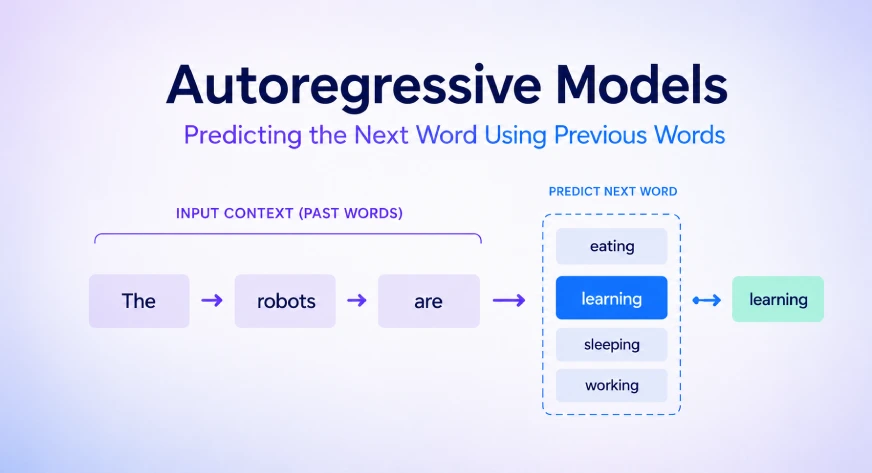
Autoregressive models represent a cornerstone of modern statistical analysis and machine learning, providing the fundamental framework for predicting future events based on historical data. While the terminology may appear daunting to the uninitiated, the underlying logic is elegantly simple: the past serves as a reliable architect for the future. By analyzing sequential data points—whether they be daily stock prices, hourly temperature readings, or the sequence of words in a sentence—autoregressive models identify patterns and dependencies that allow for sophisticated forecasting. In the contemporary landscape of technology, these models have transitioned from niche statistical tools used in econometrics to the driving force behind Large Language Models (LLMs) such as GPT-4, fundamentally altering how humans interact with machines.
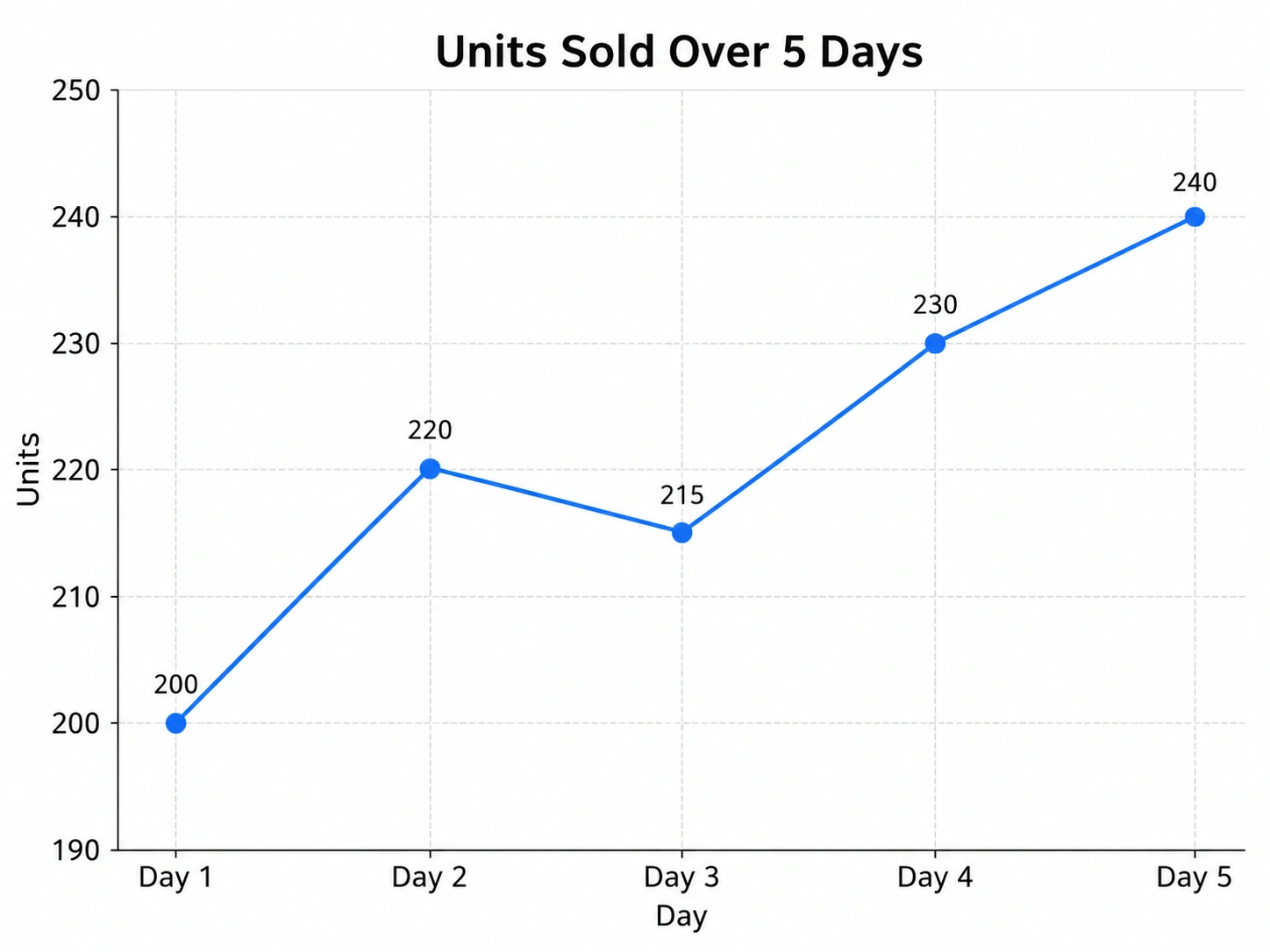
The term “autoregressive” is derived from two distinct concepts: “auto,” meaning self, and “regressive,” referring to the statistical process of predicting a variable based on other variables. Consequently, an autoregressive (AR) model is a system that predicts a variable using its own previous values. This self-referential nature makes it uniquely suited for time-series analysis, where data points are naturally ordered by time. For instance, in the context of retail, a model might predict next week’s sales of a specific product by analyzing the sales figures from the preceding four weeks. If a steady upward trend is detected, the model quantifies this momentum to provide a data-driven estimate for the upcoming period.
The Mathematical Framework of Autoregressive Modeling
To understand the mechanics of these models, one must examine the mathematical foundation upon which they are built. The most basic iteration is the AR(1) model, or a first-order autoregressive model. In this configuration, the current value ($xt$) is calculated as a function of the immediately preceding value ($xt-1$), a constant ($c$), a coefficient ($phi$), and a random error term ($epsilon_t$). The formula is expressed as:
$x_t = c + phi1 xt-1 + epsilon_t$
The coefficient ($phi$) is critical, as it determines the strength and direction of the relationship between the past and the present. If $phi$ is close to one, the process has a “long memory,” meaning past values heavily influence current ones. If $phi$ is zero, the model suggests that the past has no bearing on the future, rendering the process essentially random.
As complexity increases, data scientists utilize the AR(p) model, where “p” represents the number of lagged observations included in the calculation. An AR(3) model, for example, would use the three most recent data points to predict the next value. This allows the model to capture more nuanced trends, such as cyclicality or multi-day dependencies. By incorporating multiple lags, the general formula expands to:
$x_t = c + phi1 xt-1 + phi2 xt-2 + … + phip xt-p + epsilon_t$
This mathematical structure ensures that the model remains interpretable. Unlike “black box” neural networks where the reasoning behind a prediction can be obscured, AR models allow analysts to look at the specific coefficients for each lag to understand exactly how much weight the model is giving to yesterday’s data versus the data from a week ago.
A Chronology of Development: From Sunspots to Transformers
The history of autoregressive modeling is a narrative of increasing computational power and theoretical refinement. The roots of the concept can be traced back to the early 20th century.
- The Early 1920s: Statistician Udny Yule pioneered the use of autoregressive structures to analyze sunspot cycles. He proposed that the number of sunspots in a given year was not random but was related to the numbers in previous years, albeit with some “shocks” to the system.
- 1970 – The Box-Jenkins Era: George Box and Gwilym Jenkins published “Time Series Analysis: Forecasting and Control,” which formalized the ARIMA (AutoRegressive Integrated Moving Average) methodology. This became the gold standard for economic and industrial forecasting for decades.
- The 1980s and 90s: Econometricians like Robert Engle (who won the Nobel Prize for his work on ARCH models) expanded autoregressive concepts to account for volatility clustering in financial markets, recognizing that “risk” itself could be autoregressive.
- 2017 – The Transformer Revolution: The publication of the paper “Attention is All You Need” by Google researchers introduced the Transformer architecture. While Transformers are more complex than traditional AR models, many of them—specifically the “decoder-only” variants like the GPT family—operate on an autoregressive principle to generate text.
- 2020 and Beyond: Autoregressive models became the primary engine for generative AI. The ability to predict the “next token” in a sequence allowed machines to write code, compose poetry, and engage in human-like conversation.
Industry Applications and Supporting Data
The utility of autoregressive models spans across diverse sectors, each leveraging the “memory” of data to optimize operations.
Financial Markets and Econometrics:
In the world of finance, AR models are used to predict stock returns and market volatility. According to research from the Journal of Financial Economics, autoregressive conditional heteroskedasticity (ARCH) models are essential for pricing options and managing portfolio risk. By acknowledging that periods of high volatility tend to be followed by further high volatility, these models provide a more accurate picture of market danger than simple averages.
Energy and Utilities:
Grid operators utilize AR models to forecast electricity demand. Data from the International Energy Agency (IEA) suggests that accurate short-term forecasting can reduce operational costs by up to 5% by allowing providers to balance supply and demand more efficiently, preventing both blackouts and wasteful over-generation.
Supply Chain and Logistics:
Retail giants like Amazon and Walmart use sophisticated versions of autoregressive forecasting to manage inventory. By analyzing past purchase cycles, these models predict when a surge in demand for specific items will occur, ensuring that warehouses are stocked appropriately. This “predictive shipping” capability is a direct evolution of the simple AR models used in the mid-20th century.
Autoregressive Principles in Natural Language Processing
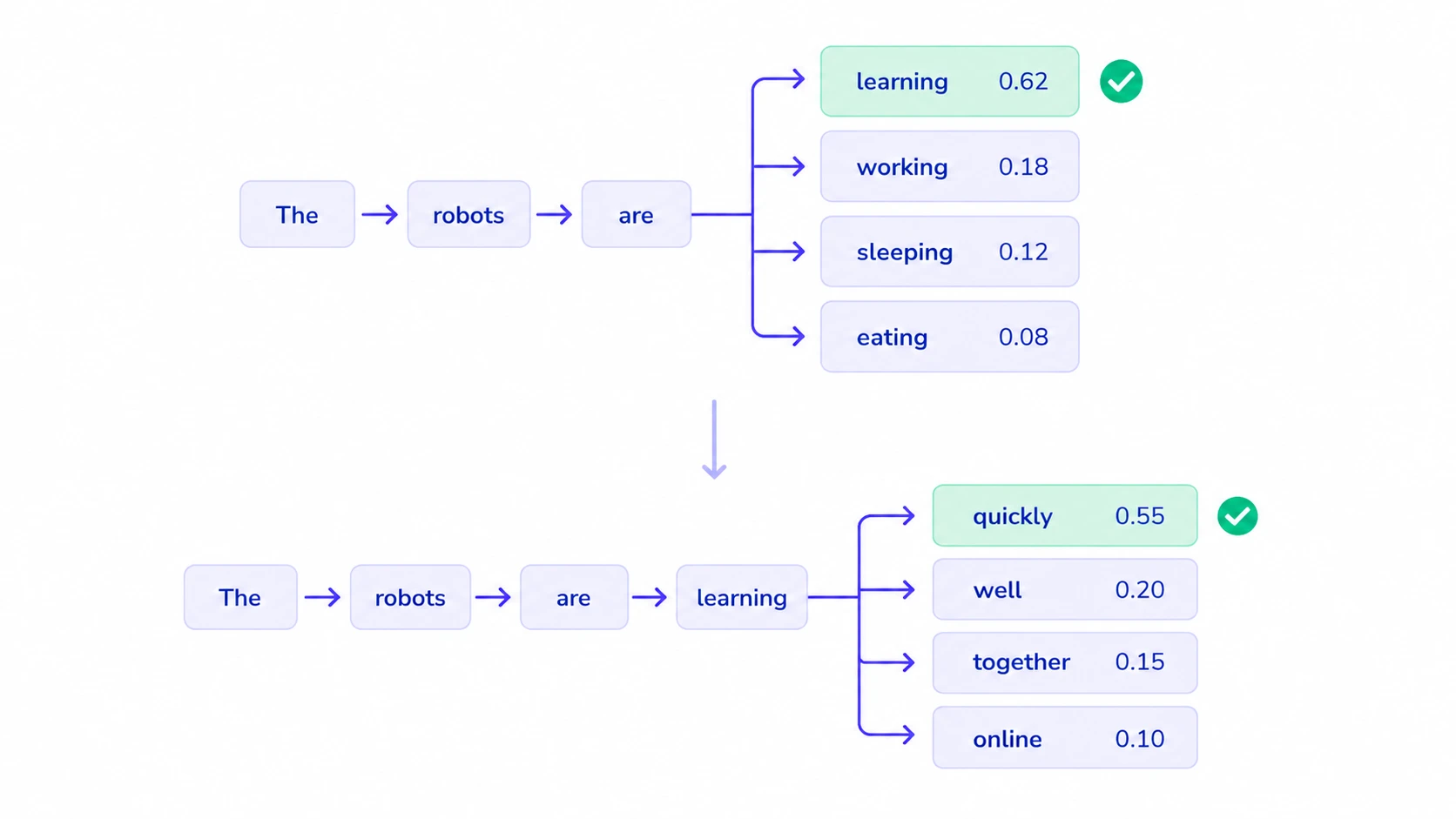
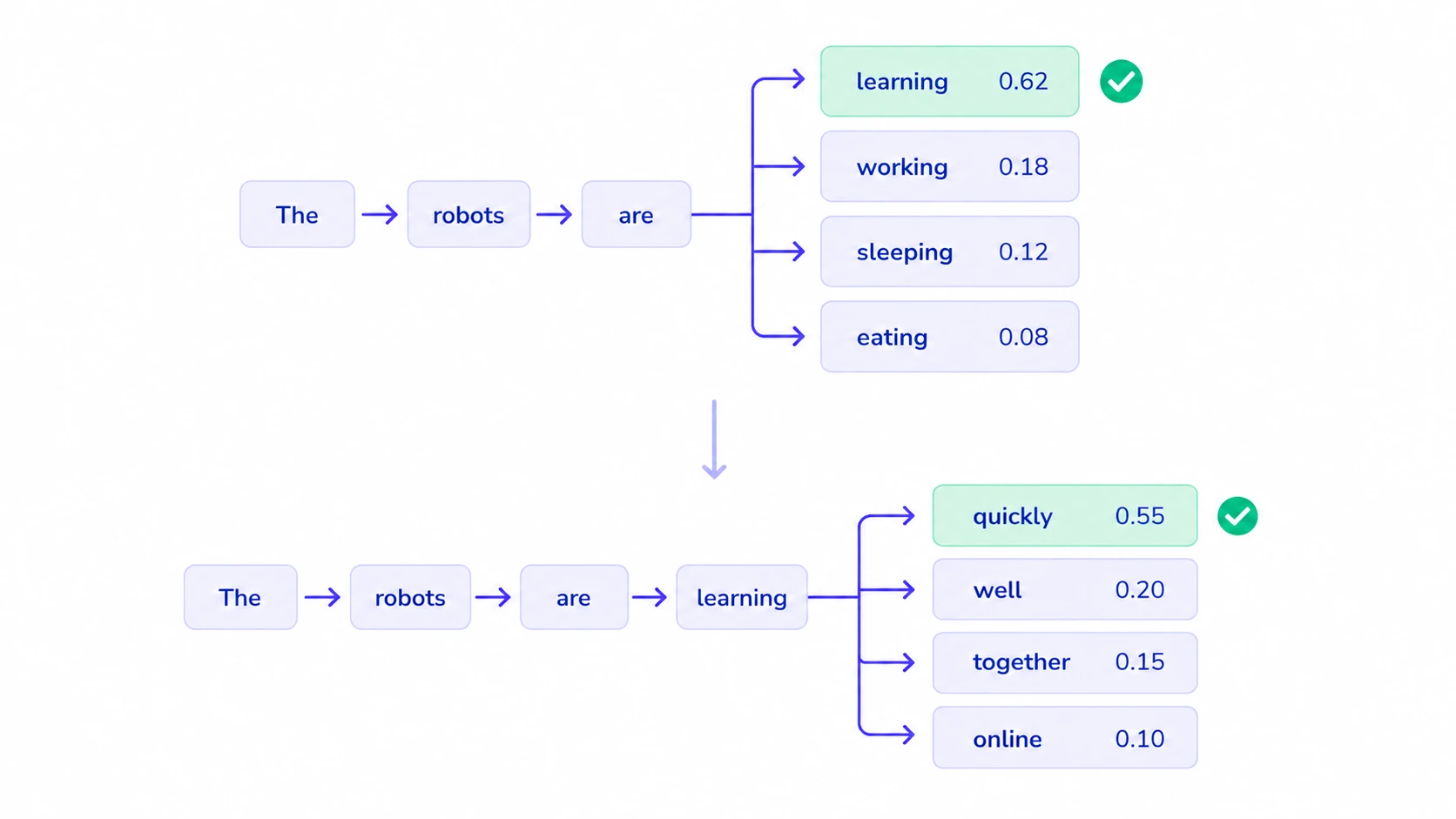
Perhaps the most visible application of autoregressive logic today is in the field of Natural Language Processing (NLP). When a user prompts an AI, the model does not generate the entire response instantaneously. Instead, it operates sequentially.
For example, if the model is completing the sentence “The capital of France is…”, it calculates the probability of the next word based on the previous five. It identifies “Paris” as the most likely candidate. Once “Paris” is generated, the model then uses the entire string—”The capital of France is Paris”—to predict the next token, which might be a period or a follow-up fact.
This is represented by the probability chain rule:
$P(w_1, w_2, …, w_n) = prod P(w_i | w1, …, wi-1)$
This sequential generation is what gives modern AI its “conversational” feel, but it is also the reason why AI can sometimes “hallucinate.” If the model predicts one incorrect word, that error becomes part of the “past” for all future predictions, potentially leading the model down a path of increasing inaccuracy.
Comparative Analysis: Autoregressive vs. Non-Autoregressive Models
While autoregressive models are dominant, they are not the only approach to sequence generation. Non-autoregressive models (NARs) have emerged as a faster alternative, particularly in machine translation.
- Generation Speed: AR models generate one token at a time, which can be slow for very long documents. NAR models attempt to generate all tokens in parallel, significantly increasing speed.
- Dependency: AR models excel at capturing the logical flow and grammatical consistency of a sequence because each word is informed by what came before. NAR models often struggle with “multimodality,” where the model might produce a sentence that is a mix of two different valid thoughts because it didn’t look at its own previous output.
- Use Cases: AR models remain the standard for creative writing and complex reasoning (like GPT-4), while NAR models are increasingly used in real-time speech translation where millisecond latency is critical.
Official Perspectives and Expert Analysis
Leading figures in the AI community have expressed both praise and caution regarding the reliance on autoregressive architectures. Andrej Karpathy, a founding member of OpenAI, has frequently described the “next-token prediction” paradigm as surprisingly powerful, noting that to predict the next word perfectly, a model must essentially develop an internal understanding of the world’s logic.
However, critics like Yann LeCun, Chief AI Scientist at Meta, argue that autoregressive models are inherently limited. LeCun has stated that because AR models are “probabilistic,” they lack a true “world model” or the ability to reason and plan in the way humans do. He suggests that while they are excellent at mimicking language, they may hit a plateau in their path toward Artificial General Intelligence (AGI) because of their inability to handle “out-of-distribution” events—shocks to the system that the past cannot predict.
Broader Implications and Future Outlook
The continued reliance on autoregressive models has significant implications for the future of the digital economy. As these models become more integrated into decision-making processes, the quality of “past data” becomes paramount. We are entering an era where “data provenance”—the history and origin of data—is as important as the data itself.
Furthermore, the limitation of “error propagation” remains a primary hurdle. In a financial AR model, a single “Black Swan” event (an unpredictable, rare occurrence) can render the model’s predictions useless for a significant period. Similarly, in AI, the accumulation of small probabilistic errors can lead to total system failure in complex tasks like legal document review or medical diagnosis.
Despite these challenges, the autoregressive framework remains the most successful attempt to quantify the flow of time and the structure of information. Whether it is predicting the next thousand visits to a website or the next word in a Shakespearean-style sonnet, the ability to look backward to move forward remains the most potent tool in the data scientist’s arsenal. As computational power grows, we can expect these models to become even more granular, moving from predicting the “next word” to predicting complex multi-modal sequences including video frames and physical robotic movements, further blurring the line between mathematical forecasting and true machine intelligence.