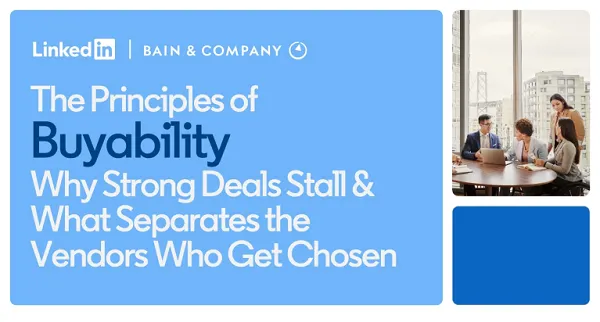
A groundbreaking report, born from a strategic partnership between LinkedIn and Bain & Company, has illuminated a critical, yet often overlooked, dimension of Business-to-Business (B2B) purchasing decisions: the concept of “buyability.” The comprehensive study, titled “The Principles of Buyability: Why Strong Deals Stall and What Separates the Vendors Who Get Chosen,” challenges conventional wisdom that often prioritizes rational factors like value and practicality, instead positing that the emotional threshold of “defensibility” is the paramount driver of B2B sales. This deep dive into the B2B buying group dynamic reveals that marketers must recalibrate their strategies to align with decision-makers’ inherent need for justification and self-preservation, moving beyond mere product superiority or competitive pricing to foster an environment of confidence and social proof.
The Evolving Landscape of B2B Purchasing: A Contextual Shift
The B2B buying environment has undergone a profound transformation over the past decade, becoming increasingly complex and multifaceted. What was once often a singular decision-maker or a small committee now frequently involves a sprawling “buying group” that can include anywhere from six to ten individuals, each representing different departments, priorities, and risk tolerances. This fragmentation of decision-making power, coupled with an unprecedented deluge of information available online, has complicated the sales cycle significantly. According to Gartner, the typical B2B buying journey involves buyers completing nearly 70% of their research independently before engaging with a sales representative. This self-service research phase, while empowering buyers, also introduces a greater potential for internal misalignment and decision paralysis within buying groups.
The rise of remote work models, accelerated by recent global events, has further amplified these challenges. Interactions that were once facilitated by in-person meetings and informal corridor conversations now rely heavily on digital communication channels, making it harder for vendors to build rapport and for buying groups to achieve consensus. In this intricate ecosystem, the traditional B2B marketing playbook, focused predominantly on showcasing product features, technical specifications, and return on investment (ROI), often falls short. The LinkedIn and Bain & Company report serves as a timely and crucial intervention, offering a new framework for understanding and navigating this evolved landscape.
Unpacking “Buyability” and the Imperative of Defensibility
At the heart of the new report lies the concept of “buyability” – defined not as a rational assessment of a product’s merits, but as the strategic model for B2B marketing and sales that prioritizes the realities of B2B buying groups. LinkedIn explicitly states that “Buyability is a strategic model for B2B marketing and sales that puts the reality of B2B buying groups first and recognizes that Buying Groups are the unit of decision making in B2B.” Crucially, it emphasizes that “Being ‘Buyable’ is about reaching an emotional threshold, not a rational one.” This revelation fundamentally shifts the focus from what a product does to how a decision-maker feels about advocating for it internally.
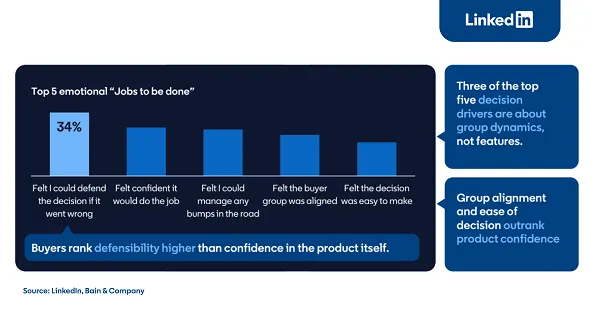
The study posits that “defensibility,” rather than sheer value or practicality, is the primary consideration for B2B decision-makers. In essence, buyers are not just looking for the best solution; they are looking for the solution they can most effectively justify to their peers, superiors, and internal stakeholders, thereby safeguarding their own professional standing. This reflects a deep-seated human psychology where self-preservation plays a significant role in high-stakes decisions. A poor buying decision can have repercussions for an individual’s career, reputation, and even job security. Therefore, the ability to articulate and defend a choice, both logically and emotionally, becomes paramount.
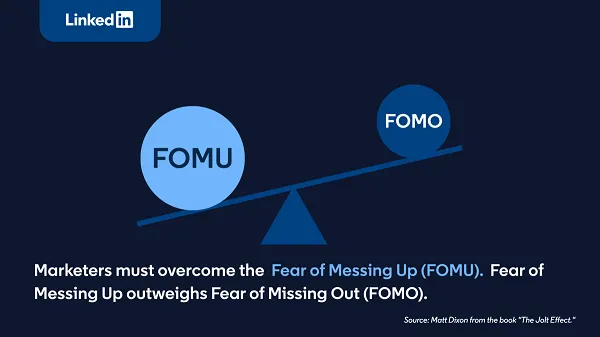
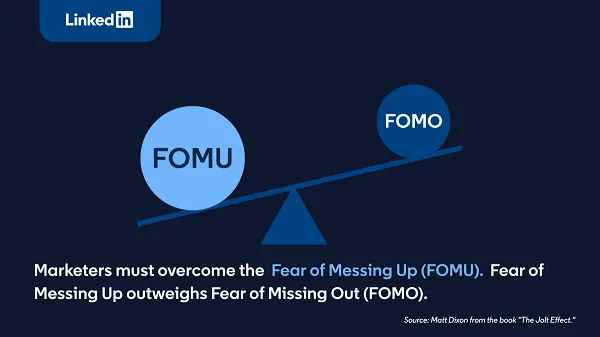
This focus on defensibility explains why a staggering 40% of B2B deals reportedly stagnate not because a competitor won, but because the buyer group simply cannot agree. As LinkedIn starkly puts it, “Buyers would rather do nothing than risk a decision that damages their career.” This inertia, driven by fear of making the wrong choice, represents a massive missed opportunity for vendors. It underscores the fact that even if a product offers superior features, a lower price, or demonstrably higher ROI, it will fail to close if the buying group lacks the collective confidence and justification to move forward.
The Power of Advocacy: Shifting from Rationality to Social Proof

The report strongly advocates for a strategic pivot towards customer advocacy, identifying it as the “highest-leverage asset” in a B2B marketing strategy, particularly in the critical final stages of decision-making. The data is compelling: buyers are three times more likely to choose a vendor heavily recommended by peers or existing customers than one promising a better product or lower price. This statistic is a powerful indictment of product-centric marketing and a robust endorsement of relationship-driven strategies.
Furthermore, the report highlights the potent impact of past personal experience. Buyers are four times more likely to choose a vendor they have had direct success with previously, because, as LinkedIn aptly observes, “past experience is, in effect, a recommendation from themselves.” This underscores the importance of not only delivering exceptional service but also meticulously tracking and leveraging existing customer relationships. Repeat business isn’t just a sign of customer loyalty; it’s a powerful indicator of inherent buyability, reducing perceived risk for the decision-maker.
This emphasis on advocacy moves beyond mere testimonials or case studies. It speaks to a deeper need for validation and social proof. In an environment where internal consensus is difficult to achieve, external validation from trusted sources – particularly peers within the same industry or professional network – provides the much-needed ammunition for decision-makers to defend their choice. It helps mitigate the inherent risk associated with any significant B2B investment, offering a sense of collective approval that individual rational arguments might lack.
Strategic Implications for B2B Marketers and Sales Teams
The findings of this LinkedIn and Bain & Company report carry profound implications for how B2B organizations structure their marketing and sales efforts:
-
Re-evaluating Content Strategy: Marketers must shift from purely informational content (features, specs, pricing) to content that facilitates justification and builds confidence. This means creating more content around success stories, peer reviews, industry-specific use cases, and perhaps even internal communication templates that buying groups can use to present their case. The focus should be on how the solution solves problems for people like them and how it aligns with their strategic objectives and reduces personal risk.
-
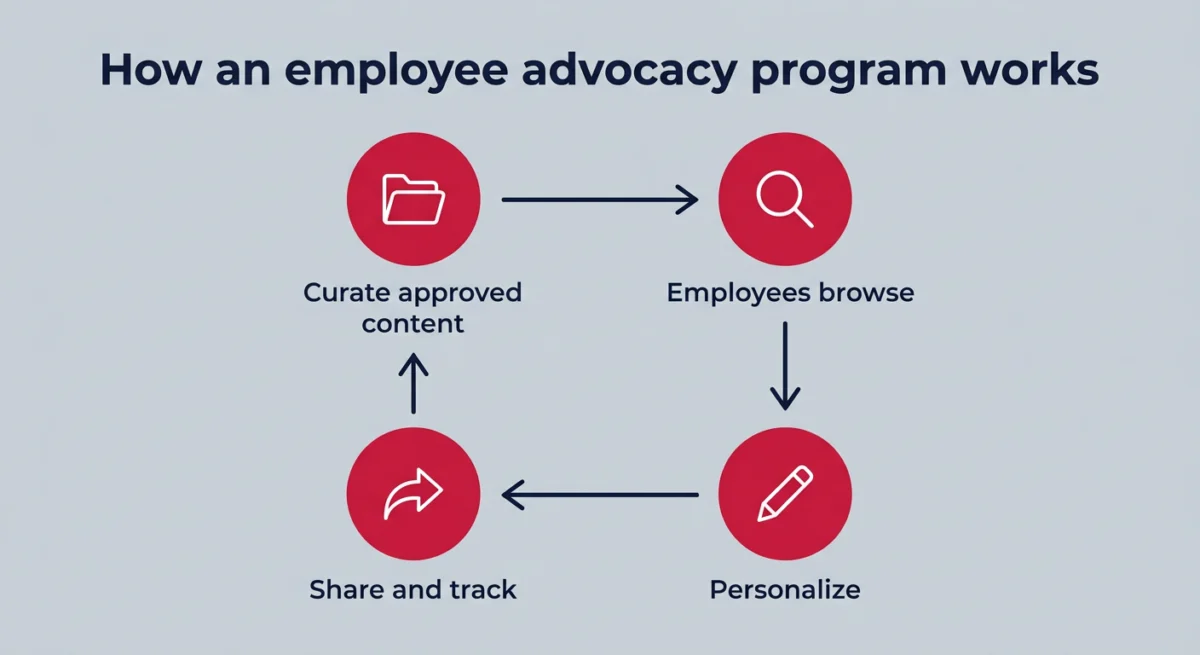
Amplifying Customer Advocacy: Customer advocacy is no longer a “nice-to-have” add-on; it’s a strategic imperative. B2B brands need to invest in robust programs to identify, nurture, and leverage their most satisfied customers. This could involve formal advocacy programs, incentivized review generation, customer advisory boards, and proactive outreach to facilitate peer-to-peer connections. The goal is to make positive customer feedback highly visible and easily accessible throughout the entire buyer’s journey.
-
Empowering Sales Teams for Consensus Building: Sales professionals need to evolve from product pushers to consensus builders. This involves understanding the internal dynamics of the buying group, identifying key stakeholders, and anticipating potential objections related to defensibility. Equipping sales teams with compelling advocacy materials, case studies, and even scripts for internal justification discussions will be crucial. The sales process must become less about convincing an individual and more about enabling a group decision.
-
Prioritizing Social and Emotional Attributes: The report explicitly states that “socially oriented attributes, including working style alignment and peer recommendations, outperform rational attributes like being a category leader or being recommended by experts.” This highlights the importance of fostering strong relationships, demonstrating cultural fit, and ensuring that a vendor’s team is perceived as collaborative and trustworthy. Personal connections and shared values can significantly influence the emotional threshold of buyability.
-
Investing in Customer Success: Given the finding that past success with a vendor dramatically increases buyability, strong customer success programs are more vital than ever. Ensuring existing customers achieve tangible, measurable success not only drives renewals and expansions but also cultivates a powerful base of advocates for future sales. Customer success becomes an integral part of the marketing and sales funnel, generating invaluable social proof.
The Broader Impact: A Paradigm Shift in B2B Engagement
The insights from this report represent a significant paradigm shift in how B2B companies should approach their market. It moves beyond the purely transactional view of B2B sales to one that acknowledges the complex interplay of professional ambition, personal risk, and social influence within organizational purchasing. This human-centric approach to B2B marketing and sales is not entirely new – the concept of emotional selling has long been discussed – but this report provides concrete data and a clear framework (“buyability” and “defensibility”) to articulate and operationalize it.
For companies grappling with stalled deals, long sales cycles, and fierce competition, these findings offer a clear pathway forward. By understanding that decision-makers are primarily seeking reassurance and justification, B2B vendors can tailor their entire go-to-market strategy to address these fundamental human needs. This means moving beyond product demonstrations to demonstrating how a solution will empower an individual, bolster their team’s reputation, and ultimately, be a decision they can confidently champion.
In an increasingly crowded and noisy B2B marketplace, simply having the best product or the most competitive price is no longer sufficient. The ability to win the hearts and minds of an entire buying committee, by providing them with the emotional and social leverage to defend their choice, will be the true differentiator for sustained revenue growth. The LinkedIn and Bain & Company report serves as a definitive call to action for B2B marketers and sales leaders to embrace this new reality and strategically build “buyability” into the very fabric of their commercial operations.