The landscape of open-source artificial intelligence underwent a significant transformation on June 3, 2026, as Google DeepMind officially announced the release of Gemma 4 12B Unified. This mid-sized multimodal model represents a strategic expansion of the Gemma 4 family, specifically engineered to bridge the gap between low-power edge computing and high-resource server environments. By integrating text, image, audio, and video processing into a single, encoder-free architecture, Google aims to provide developers with a highly capable, “laptop-friendly” model that supports complex agentic workflows without the latency or privacy concerns associated with cloud-based APIs.
The release of the 12B Unified variant follows the initial launch of the Gemma 4 series earlier in the year, addressing a critical demand for models that offer sophisticated reasoning while remaining small enough to run on consumer-grade hardware. With a 256K context window and a dense 11.95-billion parameter count, the model is positioned as the primary choice for local intelligence, offering a significant leap over its predecessors in terms of multimodal cohesion and architectural efficiency.
Architectural Innovation: The Shift to Encoder-Free Design
The most striking technical advancement in Gemma 4 12B Unified is its departure from traditional multimodal architectures. Most previous-generation models, including earlier versions of Gemma and many of its contemporaries, utilized a “modular” approach. In such systems, separate, specialized encoders—such as a CLIP-based vision encoder or a Conformer-based audio encoder—would process sensory data before passing those representations to a central large language model (LLM).
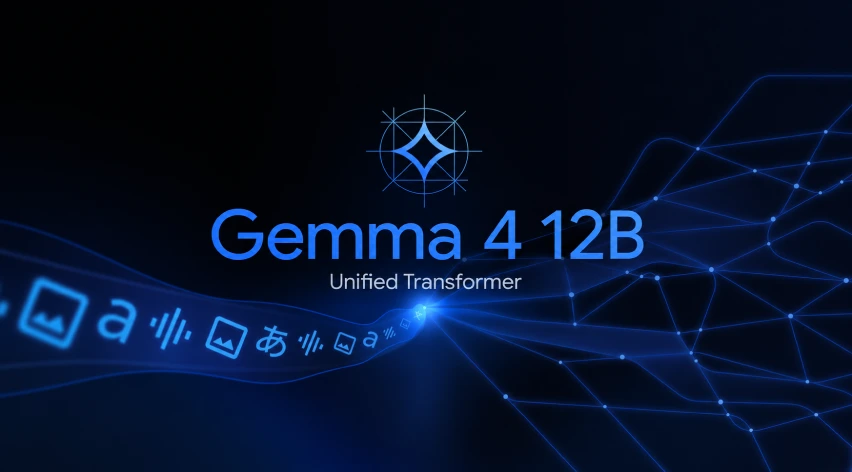
Google DeepMind has replaced this fragmented pipeline with a unified, encoder-free design. In this new framework, raw image patches and audio waveforms are projected directly into the LLM’s embedding space. For vision tasks, a 35-million parameter vision embedder replaces the bulky multi-layer encoders found in other models. Raw 48×48 pixel patches are projected into the LLM’s hidden dimension through a single matrix multiplication. Spatial data is maintained via factorized coordinate lookup matrices, allowing the model to “see” the image as a sequence of tokens rather than a separate data stream.
The audio processing follows a similar logic. The model removes the need for a separate audio encoder by slicing raw 16 kHz audio into 40-millisecond frames. These frames are linearly projected directly into the input space of the LLM. This architectural streamlining reduces the computational overhead typically required to synchronize different encoders and allows for a more fluid “unified token loop” during fine-tuning. For developers, this means that the entire multimodal capability can be fine-tuned in a single pass, drastically simplifying the optimization process for specific industrial or creative use cases.
The Evolution of the Gemma 4 Family: A Chronological Context
The arrival of the 12B Unified model is the latest milestone in a rapid-fire release cycle from Google DeepMind. To understand its significance, one must look at the timeline of the Gemma 4 ecosystem throughout the first half of 2026:
- March 31, 2026: Google introduced the foundational Gemma 4 family, featuring the E2B and E4B models for mobile and edge devices, alongside the larger 31B and 26B A4B (Mixture-of-Experts) variants for workstations.
- April 16, 2026: The release of Gemma 4 Multi-Token Prediction (MTP) drafters. This was a critical infrastructure update, providing smaller “drafting” models that predict future tokens to accelerate inference speeds in the larger models through speculative decoding.
- June 3, 2026: The launch of Gemma 4 12B Unified.
The 12B variant was notably absent from the initial March launch, creating a performance vacuum. While the E4B was efficient for basic mobile tasks, it lacked the reasoning depth required for complex coding or agentic behavior. Conversely, the 26B and 31B models, while powerful, often required multi-GPU setups or significant quantization to run on high-end laptops. The 12B Unified fills this “middle ground,” offering a dense model that fits comfortably within the 16GB to 32GB RAM range common in professional-grade laptops while delivering a significant portion of the larger models’ intelligence.
Benchmark Performance and Comparative Analysis
In the official model card released by Google, Gemma 4 12B Unified demonstrates a commanding lead over previous generations and sits comfortably between its edge and server-class siblings. The benchmarks highlight the model’s strengths in reasoning, mathematics, and vision-language tasks.
On the MMLU Pro (Massive Multitask Language Understanding) benchmark, the 12B Unified model scored 77.2%. This is a substantial improvement over the 67.6% achieved by the Gemma 3 27B model, effectively proving that architectural efficiency can outperform raw parameter count. In more specialized tests, such as the AIME 2026 (American Invitational Mathematics Examination), the 12B model achieved a 77.5% success rate without the use of external tools, vastly outperforming the E4B edge model’s 42.5%.
Coding and agentic reasoning also show strong results. On LiveCodeBench v6, the 12B Unified model reached 72.0%, trailing the flagship 31B model (80.0%) by a narrow margin but significantly leading the smaller E4B (52.0%). In terms of multimodal capabilities, the MMMU Pro (Massive Multi-discipline Multimodal Understanding) score of 69.1% indicates that the unified encoder-free approach is highly effective at interpreting complex visual data, such as charts, diagrams, and scientific notation.
Perhaps most importantly for local deployment, the model supports FLEURS (Few-shot Learning Evaluation of Universal Representations of Speech). With a score of 0.069 (where lower is better), it demonstrates native audio proficiency that was previously unavailable in mid-sized open-weight models.
Ecosystem Integration and Developer Accessibility
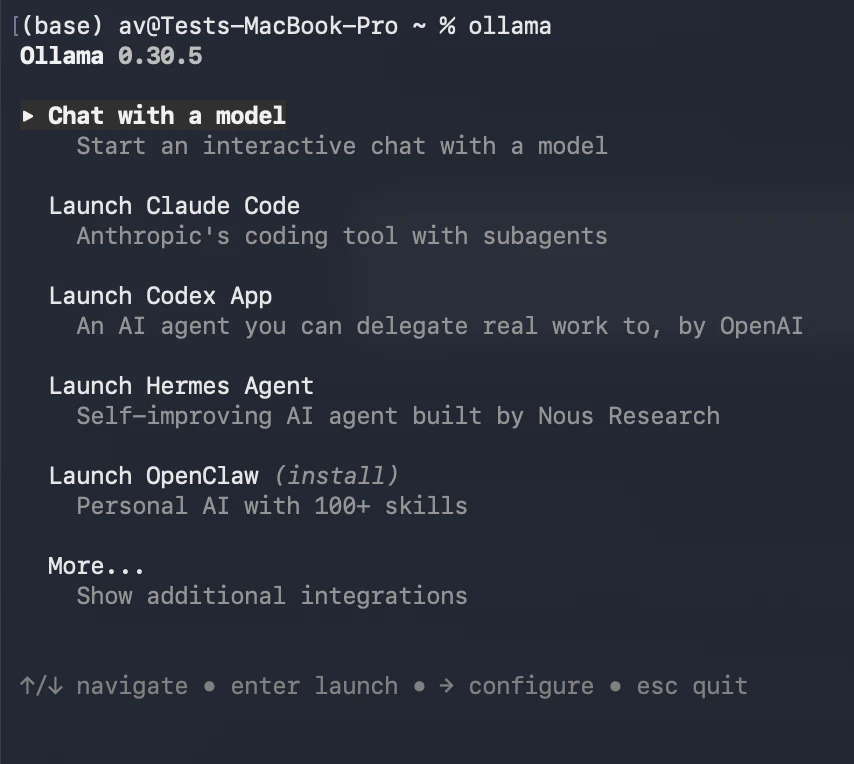
Google has ensured that Gemma 4 12B Unified is integrated into the open-source ecosystem from day one. The model weights are available on Hugging Face and Kaggle, and support has been confirmed for a wide array of deployment tools. These include:
- Local Inference Engines: Ollama, LM Studio, and llama.cpp.
- Optimization Frameworks: Unsloth, vLLM, and SGLang.
- Hardware-Specific Toolkits: MLX (for Apple Silicon) and LiteRT-LM.
For developers, the multimodal integration is handled through standardized prompts. Google’s developer guidelines recommend a “vision-first” or “audio-first” prompting strategy, where image or audio content is placed before the text instructions to optimize the model’s attention mechanism.
The inclusion of MTP drafter support is another highlight. By using speculative decoding, the 12B model can achieve much lower latency on consumer hardware. The drafting model predicts several potential future tokens, and the 12B target model verifies them in a single parallel step. This technology is essential for “agentic” use cases—such as real-time voice assistants or autonomous coding agents—where responsiveness is as critical as accuracy.
Strategic Implications: Local AI vs. The Cloud
The release of Gemma 4 12B Unified signals a broader shift in Google’s AI strategy. While the Gemini series remains the flagship for cloud-based, massive-scale enterprise applications, the Gemma series is becoming the standard-bearer for “Sovereign AI” and local development.
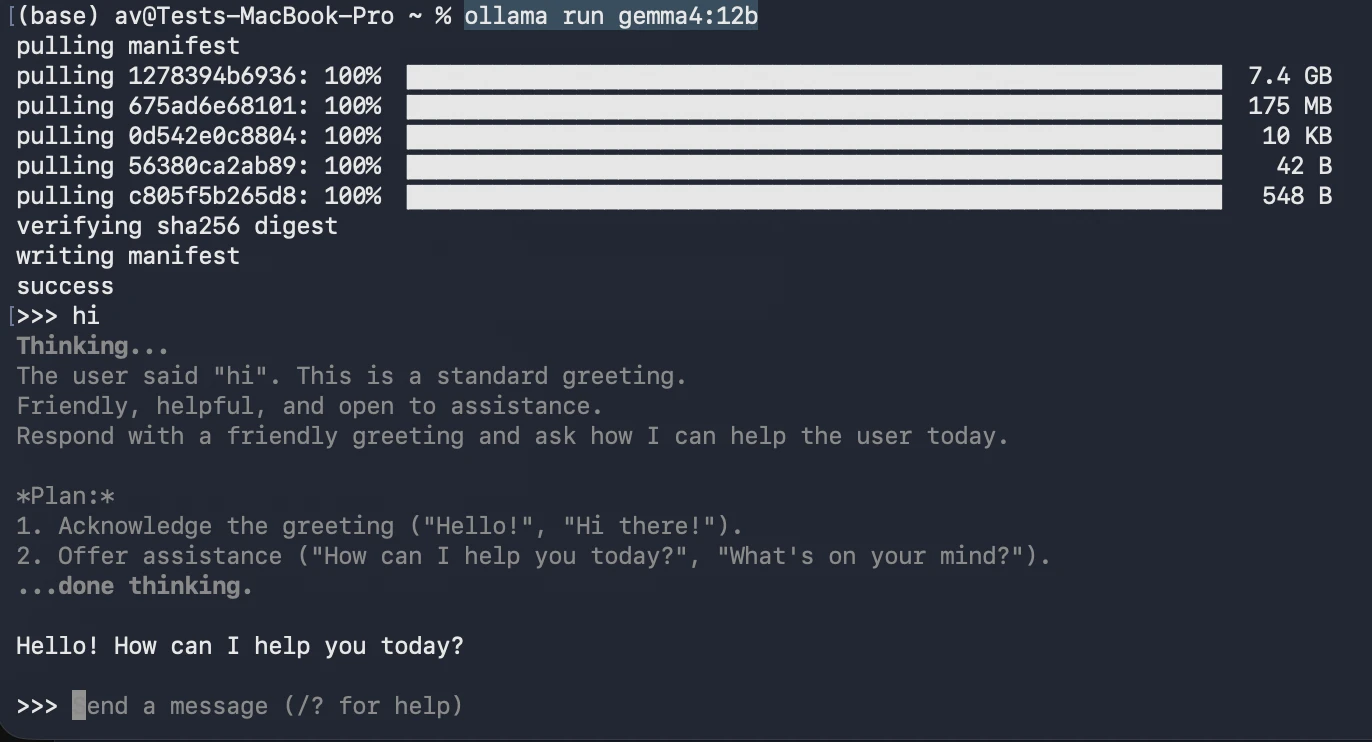
By providing a model that is natively multimodal and small enough for a laptop, Google is directly challenging the dominance of Meta’s Llama series and Mistral’s open-weight offerings. The “unified” nature of the 12B model gives it a unique edge; whereas other open-source models often require users to manage separate vision adapters or audio components, Gemma 4 12B offers a “plug-and-play” experience for all modalities.
Industry analysts suggest that this release is a response to growing concerns over data privacy and the rising costs of API-based intelligence. For sectors like healthcare, law, and finance, the ability to process sensitive documents, audio recordings of meetings, and visual charts locally—without ever sending data to a third-party server—is a compelling proposition. Furthermore, the 256K context window allows the model to “remember” and analyze entire books or long technical manuals, making it a potent tool for local Retrieval-Augmented Generation (RAG).
Conclusion and Future Outlook
Gemma 4 12B Unified represents a maturation of the open-source AI movement. It is no longer enough for a model to be “open”; it must also be efficient, versatile, and easy to deploy. By eliminating the complexity of separate multimodal encoders and focusing on a dense, high-reasoning architecture, Google has provided a blueprint for the next generation of local AI agents.
As the AI community begins to integrate the 12B Unified model into daily workflows, the focus will likely shift toward fine-tuned “specialist” versions. Given the ease of tuning the unified token loop, we can expect a surge in domain-specific models for medical imaging, legal transcription, and automated video analysis. For now, the 12B Unified stands as a versatile “Swiss Army Knife” for the modern developer, proving that high-tier multimodal intelligence is no longer the exclusive domain of the cloud.