
 rifanmuazin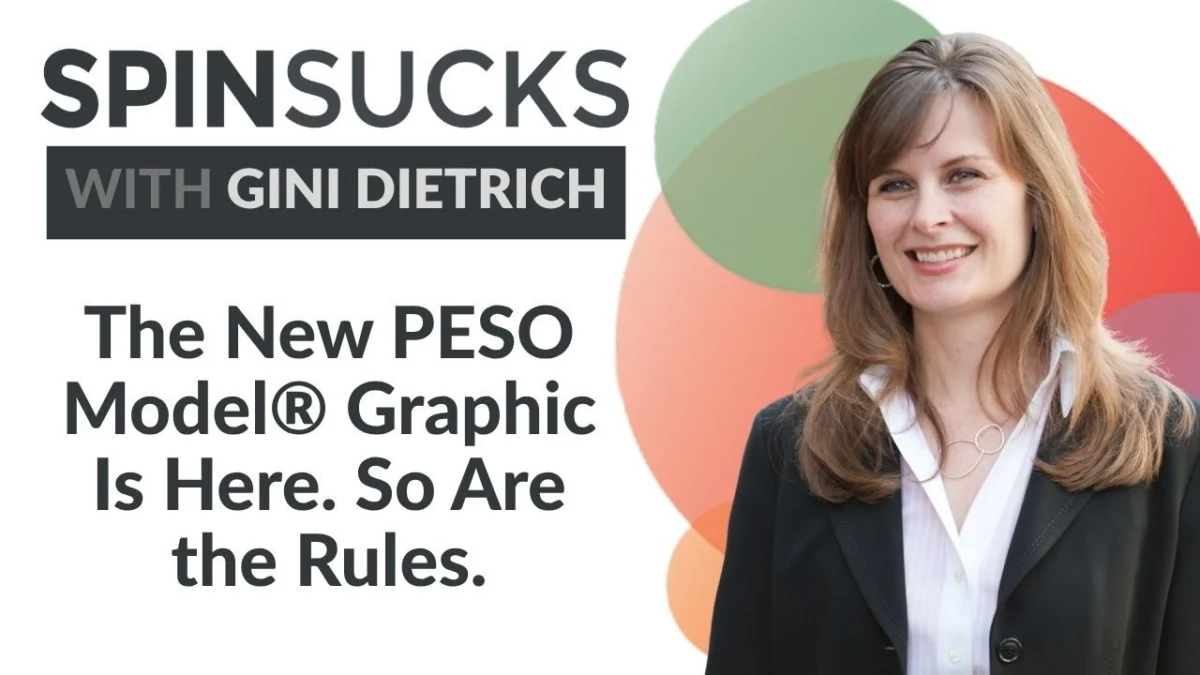
The communications industry is witnessing a significant shift in its foundational frameworks as Gini Dietrich, the creator of the PESO Model® and founder of Spin Sucks, announced a comprehensive update to the industry-standard graphic. Marking 12 years since its inception, the 2026 refresh transitions the model from a strategic overview of media types into a functional “operating system” focused on measurable outcomes. This evolution comes at a critical juncture for the public relations and marketing sectors, which are currently navigating the complexities of AI-driven search, fragmented media landscapes, and increasing pressure to demonstrate contribution to corporate valuations.
The PESO Model®—which stands for Paid, Earned, Shared, and Owned media—has served as the blueprint for integrated communications since the publication of Dietrich’s book, Spin Sucks, in 2014. The latest iteration moves beyond tactical lists and strategic alignments to focus on four primary pillars: Authority, Credibility, Discovery, and Growth. According to the announcement, the model is no longer just a way to categorize work but a methodology for how those categories compound to produce business results such as pipeline development and customer retention.
A Twelve-Year Chronology: From Tactics to Outcomes
The trajectory of the PESO Model® mirrors the broader evolution of the digital economy. When the first graphic was introduced over a decade ago, it was primarily tactical. It functioned as a directory of platforms and activities, including now-defunct services like Google+ and Vine. At that time, the industry’s primary challenge was simply understanding “what was in the box” of digital communications.
By the mid-2010s, as social media matured and content marketing became a standard corporate function, the model was updated to remove specific platforms in favor of broader tactics. This version focused on the integration of the four media types, teaching a generation of professionals that PR was not a siloed discipline but one that reinforced—and was reinforced by—paid advertising and shared social engagement.
The 2026 refresh represents the third major stage of this evolution. Dietrich notes that while the previous versions focused on “what we do” (tactics) and “how we think” (strategy), the current environment demands an answer to “what we produce” (outcomes). This shift is driven by a change in the boardroom, where executives are less interested in “share of voice” in the traditional sense and more concerned with how a brand appears in AI-generated answers and how communications activities contribute to the bottom line.
The Architecture of the New Outcome-Based Graphic
The new PESO Model® graphic is structured around four interlocking circles, each assigned a specific objective that defines its role within a modern communications department.
The Four Pillars
- Owned Media (Authority): This pillar focuses on the content a brand creates and hosts on its own properties. The goal is to establish the brand as the definitive source of information in its niche.
- Earned Media (Credibility): Traditional media relations and third-party validation remain the core here. The outcome is the “halo effect” of trust that comes when an external, objective source validates a brand’s claims.
- Shared Media (Growth): Moving beyond simple “likes,” shared media is now viewed through the lens of community building and distribution, driving the expansion of the brand’s reach.
- Paid Media (Discovery): In an era of “pay-to-play” algorithms, paid media is the engine of discovery, ensuring that a brand’s authority and credibility are seen by new, targeted audiences.
Compound Outcomes and Overlaps
The true sophistication of the new model lies in the overlaps between these circles. The graphic identifies six specific compound outcomes that occur when two media types are integrated effectively:
- Trust: The intersection of Owned and Earned media.
- Influence: The intersection of Earned and Shared media.
- Engagement: The intersection of Shared and Paid media.
- Search: The intersection of Paid and Owned media.
- Recognition: The intersection of Owned and Shared media.
- Visibility: The intersection of Paid and Earned media.
At the center of the graphic, where all four circles converge, is the “Operating System.” This center point represents the compounding effect of a fully integrated campaign, where the sum of the parts becomes greater than the individual tactical executions.
Intellectual Property and the New Licensing Standards
A significant portion of the update involves the formalization of intellectual property (IP) rights. For years, the PESO Model® has been widely adopted by agencies, universities, and internal communications teams. However, Dietrich highlighted a growing trend of “IP dilution,” where the model is repackaged into paid courses, plagiarized in books, or used by large agencies in client pitches without attribution or licensing.
To protect the integrity of the framework, Spin Sucks has introduced a dual-track usage policy.
Non-Commercial Use
The model remains free for non-commercial educational purposes, provided there is proper attribution to Spin Sucks and a link to the original source. This includes:
- Internal team training.
- Academic classroom slides and research.
- Non-paid conference presentations.
- Journalism and blog posts.
- Social media mentions.
Users are now required to download the graphic through an official portal, agreeing to terms that include using the registered trademark symbol (®) on first mention and refraining from modifying the graphic’s design.
Commercial Use
For the first time, the organization is strictly enforcing licensing for commercial applications. A paid license is now required for:
- Paid courses or certifications.
- Books and e-books.
- Software products that incorporate the model.
- Paid workshops or training programs.
- Paid speaking engagements where the model is the primary teaching tool.
The “cleanest path” for commercial use, according to the announcement, is through the PESO Model Certification®, a program credentialed by the Newhouse School of Public Communications at Syracuse University. This certification automatically grants the rights to use the model commercially while ensuring the practitioner understands how to execute the “operating system” correctly.
Supporting Data and Industry Context
The move to an outcome-based model is supported by current trends in the marketing and PR sectors. According to recent industry reports, 72% of CMOs are under increased pressure to demonstrate ROI on “brand-building” activities that were previously considered unmeasurable. Furthermore, the rise of Search Generative Experience (SGE) and AI answer engines like Perplexity and OpenAI’s SearchGPT has changed the value of content.
Data suggests that AI engines prioritize “authoritative” and “credible” sources—the very outcomes highlighted in the new PESO graphic. When a brand’s Owned and Earned media are integrated, they create a digital footprint that AI models are more likely to synthesize and present to users. Conversely, “diluted” content—where multiple versions of a framework or idea exist without a clear source—can lead to a brand being excluded from AI-generated answers.
Broader Impact and Implications for the Industry
The formalization of the PESO Model® as an operating system has several long-term implications for the communications profession.
First, it raises the bar for professional standards. By requiring a license for commercial use, Spin Sucks is treating communications frameworks with the same legal rigor as software or proprietary manufacturing processes. This encourages agencies and consultants to invest in official certifications rather than “winging it” with repurposed slides.
Second, it addresses the “Telephone Game” effect in digital marketing. When a framework is copied and changed multiple times, the original strategic intent is often lost. By centralizing the distribution of the graphic and the training behind it, the industry can maintain a unified language. This is particularly important for junior professionals who rely on these frameworks for career development.
Finally, the focus on “Growth” and “Discovery” as measurable outputs helps PR professionals move away from outdated metrics like Advertising Value Equivalency (AVE). Instead, they can point to the “Operating System” as a driver of business infrastructure.
The 2026 update to the PESO Model® is more than a visual refresh; it is a reassertion of the value of integrated communications in a high-stakes, AI-driven economy. As Gini Dietrich and the Spin Sucks team roll out the subsequent parts of this series throughout the second quarter, the industry will likely see a renewed focus on the legal and strategic protections of intellectual property in the creative services sector.










