rifanmuazin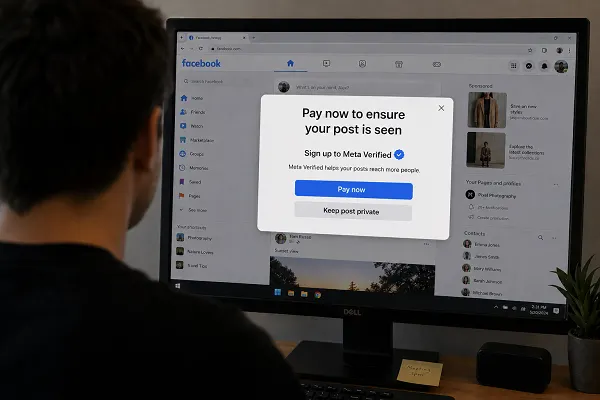
Following Meta’s recent announcement of a suite of new add-on subscription packages, a critical debate has resurfaced concerning the long-term viability of free social media and whether ubiquitous paid access is an inevitable future for these digital platforms. This development, coupled with the escalating costs associated with advanced Artificial Intelligence (AI) development, is forcing a re-evaluation of the foundational business models that have defined social networking for decades.
For much of their existence, major social media platforms like Facebook, Instagram, and Twitter (now X) have operated on a seemingly simple premise: provide a free service to users, accumulate vast quantities of user data, and then monetize that data through highly targeted advertising. This model, famously encapsulated by the adage, “If you’re not paying for the product, you are the product,” has allowed these companies to achieve unprecedented global reach, connecting billions of people and building multi-billion-dollar empires. Meta, for instance, generates approximately 98% of its annual income from advertising, a testament to the effectiveness of this model when deployed at scale, boasting over 3 billion active users across its family of apps.
However, this reliance on advertising revenue and user data has not been without its challenges. Privacy concerns have mounted steadily over the past decade, leading to significant regulatory scrutiny and the implementation of landmark data protection laws such as Europe’s General Data Protection Regulation (GDPR) and the Digital Services Act (DSA). These regulations have begun to chip away at the unfettered use of personal data for advertising, forcing platforms to consider alternative monetization strategies, including ad-free subscription options, particularly in the European Union.
The Rising Tide of Bots and Scammers: A Call for Paid Access
Beyond regulatory pressures, another significant impetus for considering paid social media stems from the persistent and growing problem of spam, scams, and malicious bot activity. The ability for bad actors to create millions of fake profiles for free has plagued platforms, degrading user experience, spreading misinformation, and facilitating various forms of online fraud.
In 2023, just months after acquiring Twitter, X owner Elon Musk became a prominent advocate for mandatory paid access, suggesting his platform might soon be compelled to charge all users, even a nominal amount, specifically to combat this issue. Musk argued that the rapid advancements in AI had made it “impossible to keep out bot armies,” stating that it was “trivial to spin up 100k human-like bots for less than a penny per account.” His proposed solution centered on paid verification, which he claimed would increase the cost for bot operators by approximately 10,000% and significantly simplify the identification of bots through phone and credit card clustering. Expanding on this, Musk famously predicted that paid social media would eventually become “the only social media that matters,” implying that platforms unable or unwilling to implement such measures would be overrun by digital detritus.
The rationale is straightforward: by introducing a financial barrier, even a small one, platforms could deter automated bot networks, which thrive on the ability to operate at zero or near-zero cost per account. A verified payment method, tied to a unique individual, could serve as a stronger “proof of humanity” than current captcha systems or AI-based detection, which are increasingly bypassed by sophisticated AI tools.
Meta’s Historical Stance and Current Hybrid Approach
In contrast to Musk’s more radical pronouncements, Meta CEO Mark Zuckerberg has historically maintained a staunch commitment to keeping his company’s core applications free. During a congressional hearing in 2018, Zuckerberg famously assured lawmakers that “there will always be a version of Facebook that is free.” This commitment reflects Meta’s deep-seated business model, where its immense global user base is its primary asset for attracting advertisers. Forcing all users to pay would represent an enormous risk, potentially alienating billions and dramatically shrinking the audience pool that makes Meta so valuable to marketers.
Despite this long-standing commitment, Meta has begun to explore hybrid models. The introduction of “Meta Verified” offers users a subscription service that includes a verified badge, enhanced impersonation protection, direct account support, and increased visibility for creators. While this is not a mandatory payment for access, it signals a move towards offering premium features for a fee. The uptake of Meta Verified, while significant in raw numbers (potentially around 35 million Facebook and Instagram users thus far), still represents a tiny fraction—approximately 0.98%—of Meta’s massive global audience. This modest penetration underscores the general reluctance of users to pay for what they perceive as fundamental social media features.
A notable exception to Meta’s free-access philosophy exists in Europe. Driven by stringent privacy regulations, Meta has been compelled to offer an ad-free subscription option to users in the EU as a way to avoid using their personal data for targeted advertising. This regional development illustrates how regulatory environments can directly influence monetization strategies, potentially serving as a precedent for other markets if privacy laws become more widespread and robust.
User Adoption and Market Realities: The Limited Appeal of Paid Social
The broader landscape of social media subscriptions reveals a consistent trend: user uptake remains relatively low across most platforms. This data strongly suggests that, while users appreciate enhanced features, they are generally unwilling to pay for services they have historically received for free.
Consider these examples:
- YouTube Premium: Approximately 4.5% of YouTube’s user base pays for its premium offering, which includes ad-free viewing, background play, and offline downloads. While a significant number in absolute terms, it’s a small percentage of its global audience.
- X Premium (formerly Twitter Blue): Fewer than 1% of X users pay for X Premium. Benefits include longer posts, editing capabilities, fewer ads, and access to the Grok AI chatbot. The low adoption rate highlights the challenge of convincing users to pay for features they previously had (or didn’t feel were essential) or to pay for a service they already perceived as having declining utility.
- Snapchat+: Considered a relative success, Snapchat+ has been adopted by around 2.6% of the platform’s total monthly audience. This service offers exclusive features like custom app themes, priority story replies, and unique badge displays.
- Meta Verified: As noted, estimates suggest around 0.98% of Meta’s audience has subscribed.
The outlier in this trend is LinkedIn Premium, which reportedly sees around 18% of its member base paying for its add-on features. This higher adoption rate is crucial to understand. LinkedIn is primarily a professional networking platform, and its premium features (e.g., advanced job search filters, direct messaging to recruiters, detailed analytics, online learning courses) offer clear, tangible career and business benefits. Users perceive a direct return on investment for these features, unlike the more general social interaction benefits offered by platforms like X or Facebook. This distinction highlights that users are more likely to pay when a subscription directly enhances their professional lives or offers a significant competitive advantage.
Overall, the data underscores a fundamental challenge: convincing a user base accustomed to free services to suddenly open their wallets. For general-purpose social media, the value proposition for paid subscriptions needs to be exceptionally compelling, offering features that genuinely transform the user experience beyond what the free tier provides.
The AI Imperative: A New Driver for Subscriptions
Perhaps the most significant and rapidly evolving factor pushing social media platforms towards new monetization models is the astronomical cost of developing, training, and maintaining Artificial Intelligence. AI is no longer just a futuristic concept; it’s being integrated into every aspect of platform operations, from content moderation and personalization algorithms to sophisticated chatbots and generative tools.
The financial burden of AI is staggering. Reports last year indicated that xAI, Elon Musk’s AI venture, was burning through an estimated $1 billion per month in development and maintenance costs. Similarly, Meta is sinking hundreds of billions of dollars into AI data centers, alongside additional billions annually for ongoing maintenance and operations. Every interaction with an AI chatbot, every generated image, every AI-powered search query consumes vast computational resources, and these costs are projected to escalate exponentially as AI usage becomes more widespread and complex.
To put this into perspective, even if Meta were to generate $100 billion per year purely from AI subscriptions, it would still take over a decade just to break even on its initial AI infrastructure investments, let alone ongoing operational costs. In 2025, Meta’s non-ads income—which includes revenue from data sales, AI glasses, and VR hardware—totaled only $4.8 billion. This stark contrast highlights the immense financial gap that needs to be bridged to make AI investments sustainable.
Consequently, platforms are increasingly viewing AI-powered features as prime candidates for subscription models. Advanced generative AI tools, sophisticated analytical capabilities, or highly personalized AI assistants represent significant value additions that are costly to provide. Charging for these premium AI features allows platforms to recoup some of their massive investments and build sustainable business models around this transformative technology. This approach aligns with the “freemium” model, where core services remain free, while advanced, resource-intensive AI capabilities are placed behind a paywall.
Economic Implications and Future Outlook
The trajectory for social media monetization appears to be a complex blend of established advertising models, evolving subscription offerings, and AI-driven premium services. For platforms like Meta and X, a complete shift to a fully paid model for basic access remains highly improbable. Their business models are intrinsically linked to massive user bases, which are most effectively built and maintained through free access, which in turn fuels their advertising revenue. The risk of alienating billions of users and ceding market share to free alternatives is simply too high.
Instead, the most likely future involves a more nuanced approach:
- Continued Free Core Services: The fundamental functionalities of social media – connecting with friends, sharing updates, consuming content – will largely remain free, subsidized by advertising.
- Expanded Premium Add-ons: Platforms will continue to roll out and refine subscription tiers that offer enhanced features, exclusive content, improved support, and possibly reduced ad exposure. These will primarily cater to power users, creators, or those seeking specific benefits.
- AI-Centric Subscriptions: The significant investments in AI will necessitate the monetization of advanced AI tools. Users seeking sophisticated AI chatbots, generative art and text tools, or highly personalized AI-driven experiences will increasingly find these behind a paywall. This strategy allows platforms to fund their AI research and development while offering cutting-edge capabilities.
- Region-Specific Models: Regulatory environments, particularly in regions like Europe, will continue to drive variations in monetization, potentially forcing platforms to offer ad-free paid alternatives as a compliance measure. This could lead to a fragmented global market where the same platform operates under different financial rules depending on the jurisdiction.
- Bot Mitigation Efforts: While a universal paywall is unlikely, platforms may continue to explore forms of paid verification or tiered access to combat bots and improve content quality, perhaps as optional upgrades rather than mandatory requirements.
The delicate balance lies in providing sufficient value in the free tier to maintain a vast user base for advertisers, while simultaneously creating compelling premium offerings that users are willing to pay for. The success of platforms in this evolving landscape will depend on their ability to innovate, manage costs, and effectively communicate the value proposition of their paid services. As AI becomes more integral and expensive, the pressure to find sustainable monetization strategies will only intensify, reshaping the economics and user experience of social media for years to come.