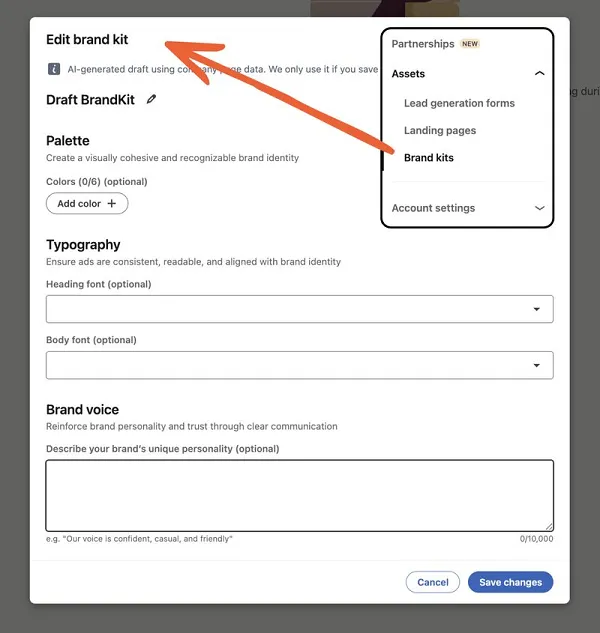
LinkedIn has been systematically developing and rolling out its new “brand kit” feature, a significant stride in its ongoing integration of artificial intelligence into its platform’s marketing capabilities. This innovative tool empowers marketers to define core brand assets, including color palettes, font preferences, and even a nuanced brand voice, which LinkedIn’s proprietary AI system then leverages to generate future promotions, advertisements, and content with unparalleled consistency. The initiative underscores a broader industry trend towards AI-assisted content creation, simultaneously posing opportunities for efficiency and challenges concerning content authenticity and oversight.
The Mechanics of LinkedIn’s Brand Kit: A Deep Dive
Currently accessible to a select cohort of users, the brand kit is designed to serve as a centralized repository for a brand’s visual and textual identity within the LinkedIn ecosystem. As demonstrated in examples shared by users like Anthony Blatner, the interface allows for the meticulous input of specific brand guidelines. Marketers can designate official brand color palettes, often using precise hexadecimal or RGB codes to ensure exact reproduction. Similarly, font preferences can be established, guiding the AI on typographical choices that align with the brand’s visual language. Perhaps most notably, the feature allows for the description of a brand voice, moving beyond mere visual elements to encompass the tone, style, and semantic characteristics that define a brand’s communication. This could involve defining preferred vocabulary, avoiding certain jargon, or emphasizing specific emotional registers (e.g., authoritative, empathetic, innovative).
Upon the initial setup, LinkedIn’s system intelligently begins to assemble an inferred brand voice by analyzing a company’s existing digital footprint on the platform. This includes scrutinizing past content, company page updates, and other public-facing communications to identify recurring themes, linguistic patterns, and overall tone. This automatic assembly acts as a foundational layer, which marketers can then refine and customize, ensuring the AI’s understanding of the brand’s persona is as accurate and comprehensive as possible. The system’s ability to extrapolate a brand’s essence from existing data highlights the sophistication of LinkedIn’s AI infrastructure, moving beyond simple rule-based generation to a more adaptive, learning model.
A Strategic Evolution in LinkedIn’s AI Journey
The introduction of the brand kit is not an isolated development but rather a calculated advancement within LinkedIn’s overarching strategy to infuse artificial intelligence across its professional networking and marketing tools. For several years, LinkedIn has incrementally rolled out AI-powered functionalities aimed at enhancing user experience and optimizing business outcomes. Early applications included AI-driven job recommendations, personalized feed content, and intelligent search filters. More recently, the platform has ventured into generative AI, offering tools to assist users in drafting posts, optimizing professional profiles, and generating insights for sales and recruitment through platforms like Sales Navigator.
This brand kit represents a pivotal shift, moving beyond mere assistance to a more integrated, proactive role in content creation and governance. It positions LinkedIn as a more potent advertising platform by addressing a core pain point for marketers: maintaining brand consistency at scale. In a competitive landscape where platforms like Meta and Google are also heavily investing in AI for advertisers, LinkedIn’s move solidifies its commitment to providing sophisticated tools tailored to the professional marketing environment. It acknowledges that for B2B brands, precision in communication and a consistent professional image are paramount, and AI can play a crucial role in achieving this efficiency.
The Imperative of Brand Consistency in the Digital Age
The value proposition of LinkedIn’s brand kit is deeply rooted in the widely acknowledged importance of brand consistency in modern marketing. In an increasingly fragmented digital landscape, where consumers interact with brands across myriad touchpoints—from social media feeds and email campaigns to websites and physical advertisements—maintaining a unified brand identity is more critical than ever. Research consistently demonstrates that strong brand consistency significantly impacts key business metrics. A study by Lucidpress, for instance, found that consistent brand presentation can increase revenue by up as much as 33%. Similarly, consistent branding has been shown to boost brand recognition by up to 80% and foster greater trust and loyalty among consumers.
Marketers have long grappled with the challenges of enforcing brand guidelines across diverse teams, global markets, and an ever-expanding array of content formats. Manual oversight is labor-intensive and prone to human error, leading to “off-brand” content that can dilute brand messaging, confuse audiences, and erode brand equity. The sheer volume of content required to maintain a vibrant online presence further exacerbates this challenge. LinkedIn’s brand kit directly addresses this by embedding brand guidelines directly into the AI-powered content creation workflow, aiming to standardize outputs from the outset. This move is particularly relevant for B2B brands on LinkedIn, where professionalism, credibility, and a clear brand message are essential for building trust with potential clients and partners.
Chronology: LinkedIn’s Iterative Approach to AI Integration
LinkedIn’s journey with AI has been characterized by an iterative and strategic rollout.
- Early 2010s: Initial AI applications focused on data analysis for personalized job recommendations and feed content algorithms.
- Mid-2010s: Expansion into AI-driven insights for sales and recruitment (e.g., Sales Navigator features suggesting leads or candidates).
- Late 2010s: Introduction of AI for profile optimization, resume analysis, and skill matching.
- Early 2020s: Integration of generative AI tools for content creation assistance, such as drafting posts and summarizing articles.
- 2023: Accelerated rollout of generative AI features, including AI-assisted writing for posts and messages, alongside the increasing awareness of the need to manage AI-generated content quality.
- 2024 (Ongoing): The quiet development and selective rollout of the “brand kit” feature, observed through user reports like Anthony Blatner’s. This marks a significant step towards governed AI content creation, indicating a maturity in LinkedIn’s AI strategy where control and consistency are prioritized alongside generation.
This timeline illustrates a deliberate progression from analytical AI to generative AI, culminating in features like the brand kit that seek to harness generative capabilities while maintaining brand integrity.
Industry Context: AI’s Growing Footprint in Marketing
The integration of AI in marketing is not unique to LinkedIn but reflects a broader industry-wide transformation. According to a report by Statista, the global artificial intelligence in marketing market size was valued at USD 13.9 billion in 2022 and is projected to reach USD 107.5 billion by 2032, growing at a compound annual growth rate (CAGR) of 22.8%. This explosive growth underscores the perceived value of AI in enhancing various marketing functions, from audience targeting and personalization to content creation and performance analytics.
Major marketing technology providers and social media platforms are all heavily investing in AI. Google’s Performance Max campaigns leverage AI to optimize ad delivery across its vast network, while Meta’s Advantage+ suite uses AI to automate and enhance campaign creation and targeting. The “brand kit” from LinkedIn positions the platform squarely within this competitive landscape, offering a specialized solution for B2B marketers who prioritize professional brand presentation and consistency. It caters to the specific demands of a platform where credibility and corporate image are paramount, distinguishing it from more consumer-centric platforms.
LinkedIn’s Stated Advantages and the Promise of Efficiency
LinkedIn explicitly highlights the practical benefits of its brand kit, primarily focusing on efficiency and error reduction. As stated by LinkedIn, “Brand kits can save you time and reduce off-brand mistakes by ensuring AI-drafted ads and assets are on-brand without manual rework.” This promise resonates deeply with marketers who are constantly under pressure to produce high volumes of engaging content while adhering to strict brand guidelines. The ability for AI to generate initial drafts of ads, promotions, or even regular posts that already conform to established color schemes, typography, and tone can drastically cut down on production cycles.
Beyond mere generation, the brand kit has the potential to act as an intelligent feedback mechanism. By providing more specific guidance to LinkedIn’s AI creation tools, marketers can expect more relevant concepts as starting points, reducing the need for extensive revisions. Furthermore, the system could potentially offer real-time recommendations or flags within the content creation process, alerting marketers if their manual inputs deviate from established brand guidelines. This proactive guidance could serve as a “smart assistant” embedded directly into the workflow, transforming the role of the marketer from a content generator to a strategic editor and guide for AI.
Navigating the AI Paradox: Quality Control vs. Content Generation
Despite the clear advantages, LinkedIn’s brand kit also highlights a fundamental dichotomy inherent in the current wave of AI adoption across social platforms. On one hand, LinkedIn is actively developing tools that leverage generative AI to create content and promotions. On the other hand, the platform has also recently announced new measures to crack down on low-quality, AI-generated content in the feed, aiming to limit its reach. This creates a perplexing situation for users: “So on one hand, LinkedIn is telling users not to post AI-generated junk, but on the other, it’s also saying, ‘press this button here to generate postable AI junk.’”
This paradox is not unique to LinkedIn. Social platforms and AI developers universally seek to encourage the adoption of AI tools to enhance productivity and content creation. However, unchecked proliferation of AI-generated “slop”—content that is unoriginal, repetitive, or factually inaccurate—risks alienating users, reducing trust, and ultimately diminishing engagement. The true value of AI lies in its capacity for assistance, providing prompts, refining drafts, and offering guidance to human creators, thereby elevating the quality of their work. Yet, the allure of the “easier option”—allowing AI to do the entire job—often leads to the unchecked output of content that offers little value and can even be harmful through misinformation or “hallucinations.”
The brand kit attempts to address this tension by providing proactive guidance for AI tools, thereby imposing a layer of control and quality assurance from the outset. By defining parameters for brand identity, LinkedIn aims to ensure that any AI-generated content, while efficient, remains on-brand and professional, thus mitigating some of the risks associated with generic AI output. However, the ultimate challenge remains: preventing over-reliance on these tools, which could still lead to a homogenization of content or the occasional damaging result if human oversight is neglected.
Implications for Marketers: Efficiency, Strategy, and Skill Shifts
The widespread adoption of features like LinkedIn’s brand kit will have profound implications for marketers.
- Increased Efficiency and Scalability: Marketers will be able to produce a higher volume of branded content more quickly, enabling them to execute more frequent campaigns and test various messages without a proportional increase in manual effort. This scalability is particularly beneficial for large organizations managing multiple brands or for smaller businesses with limited resources.
- Democratization of Sophisticated Branding: The brand kit can level the playing field, allowing small and medium-sized businesses (SMBs) to maintain a highly professional and consistent brand presence that previously required significant investment in design agencies or in-house creative teams.
- Shift in Marketer’s Role: The job of a marketer will increasingly pivot from manual content creation to strategic oversight, prompt engineering, and critical refinement of AI outputs. Marketers will need to become adept at defining precise brand guidelines, evaluating AI-generated content for accuracy and tone, and providing nuanced feedback to optimize AI performance. This necessitates a new skill set focused on AI literacy and critical thinking.
- Importance of Initial Brand Definition: The effectiveness of the brand kit hinges entirely on the quality and specificity of the initial brand guidelines provided. Marketers will need to invest significant effort upfront in clearly articulating their brand’s visual identity, voice, and messaging principles.
- Mitigation of “Off-Brand” Errors: By embedding brand rules directly into the AI’s generation process, the likelihood of producing content that deviates from brand standards is significantly reduced, saving time and resources typically spent on corrections and approvals.
Broader Ecosystem Impact: Platform Value and User Experience
For LinkedIn itself, the brand kit feature could significantly enhance its value proposition for B2B marketers and advertisers. By making it easier and more efficient to create high-quality, on-brand content, LinkedIn could attract more advertising spend and increase engagement from businesses. This, in turn, strengthens its position as a premier platform for professional networking and business development.
From a user perspective, the impact is twofold. On one hand, a greater prevalence of consistently branded content could lead to a more professional and aesthetically pleasing feed, reinforcing LinkedIn’s reputation as a credible business environment. Users might experience less visual clutter and more coherent brand messaging. On the other hand, there is a risk of content homogenization. If too many brands rely excessively on AI templates guided by the brand kit, the platform could become saturated with content that, while technically “on-brand,” lacks originality, creativity, or a distinct human touch. This could lead to a more sterile user experience, where content feels generated rather than genuinely created.
Ethical Considerations and the Future of AI-Assisted Branding
The deployment of AI tools like the brand kit also brings forth several ethical considerations. Transparency in AI-generated content remains a crucial debate. While the brand kit is designed for internal generation, the output is consumed by external audiences. The question arises whether platforms should mandate disclosure for AI-assisted content, even when it’s heavily guided by human input.
Data privacy implications also warrant attention, particularly how LinkedIn utilizes existing company page data to infer a brand’s voice. While this process is designed to assist the brand, the underlying data analysis must be transparent and compliant with privacy regulations.
The “dichotomy” of encouraging AI use while simultaneously cracking down on AI “slop” underscores a fundamental tension that social platforms are still grappling with. The goal is to leverage AI for augmentation, not automation that diminishes quality. This requires a sophisticated approach to content moderation and a clear delineation of acceptable AI use.
Finally, the potential for “AI hallucinations”—where AI generates factually incorrect or inappropriate content—remains a concern. While brand kits aim to constrain AI within specific parameters, they cannot entirely eliminate the risk of errors. This emphasizes the enduring importance of human oversight and the development of “AI-savvy” marketers who can critically evaluate and refine AI outputs, ensuring accuracy, ethical compliance, and genuine resonance with their target audience. The future of AI-assisted branding will undoubtedly lie in this collaborative dance between intelligent machines and human creativity, guided by well-defined brand principles.
Conclusion: The Evolving Landscape of Digital Brand Governance
LinkedIn’s brand kit represents a significant step forward in the evolution of AI-powered marketing tools, promising unprecedented levels of brand consistency and efficiency. It reflects a maturing understanding within the tech industry of how AI can move beyond simple automation to become a sophisticated assistant in creative and strategic tasks. However, its success, and indeed the success of AI in marketing generally, will hinge on a delicate balance: harnessing the power of artificial intelligence while safeguarding against its pitfalls. For marketers, this means embracing new tools with strategic foresight, ensuring human creativity and oversight remain paramount in shaping a brand’s authentic voice in an increasingly AI-driven digital world. The journey towards fully integrated and responsible AI branding has only just begun, and LinkedIn’s brand kit is a notable milestone along that path.