
 rifanmuazin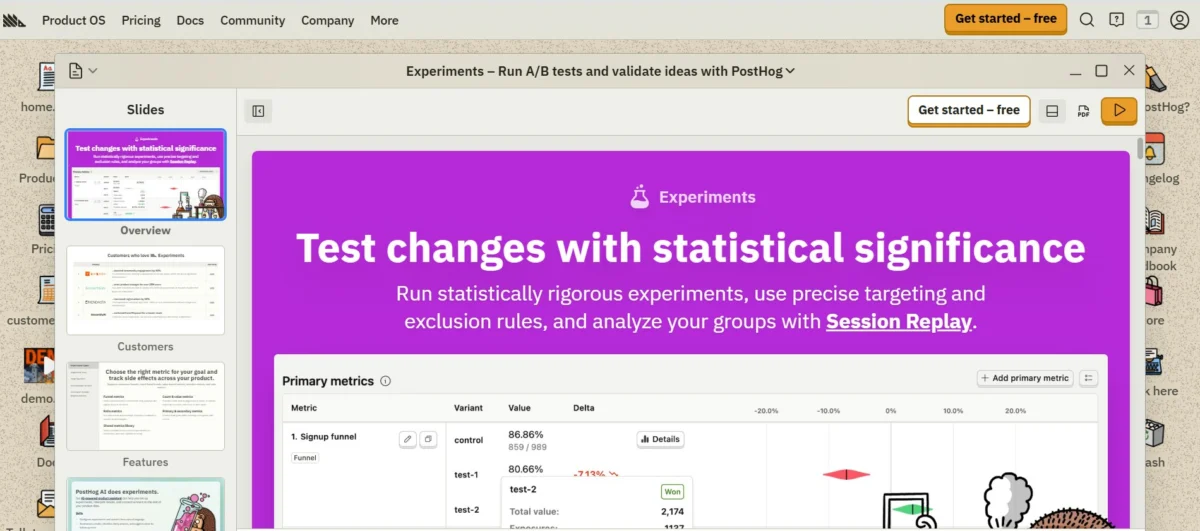
The digital landscape of 2026 has witnessed a fundamental shift in how enterprises approach product optimization and user experience. As the “SaaS tax” continues to squeeze corporate budgets, enterprise A/B testing platforms, which once commanded fees upwards of several thousand dollars per month, are facing stiff competition from a robust ecosystem of open-source alternatives. This transition is not merely a cost-saving measure but a strategic move toward data sovereignty and infrastructure control. Open-source tools have democratized the ability to validate hypotheses, allowing organizations to scale their experimentation maturity without the prohibitive upfront costs traditionally associated with top-tier proprietary platforms.
The Strategic Pivot Toward Open Source Experimentation
For over a decade, the experimentation market was dominated by a handful of proprietary giants. However, the maturation of the “Modern Data Stack” has fundamentally altered the requirements for A/B testing. Today’s experimentation platforms are increasingly defined by their ability to integrate with existing data warehouses like Snowflake, BigQuery, and Redshift. Open-source tools have led this “warehouse-native” revolution, offering transparency that proprietary codebases cannot match.
In a climate where data privacy regulations such as GDPR, CCPA, and evolving HIPAA standards have become more stringent, the ability to self-host testing infrastructure has become a primary requirement for many CTOs. By utilizing open-source frameworks, companies ensure that sensitive user data never leaves their secure environment, mitigating the risks associated with third-party data processing. Furthermore, the developer-centric nature of these tools—relying on Software Development Kits (SDKs) and feature flags rather than brittle visual editors—aligns more closely with modern DevOps and CI/CD (Continuous Integration/Continuous Deployment) workflows.
A Chronology of Open Source Maturity
The evolution of these tools can be traced through a clear timeline of technological milestones:
- 2015-2018: The Era of Script-Based Testing. Early tools focused on simple front-end injections, often suffering from “flicker” effects and limited server-side capabilities.
- 2019-2022: The Rise of Feature Management. Platforms began to merge the concepts of feature flagging and A/B testing, recognizing that a “kill switch” for a new feature is the first step toward measuring its impact.
- 2023-2025: The Warehouse-Native Shift. The focus shifted from collecting data within the testing tool to running statistical models directly on top of the company’s existing “source of truth” in the data warehouse.
- 2026: The Integrated Experimentation Ecosystem. Current open-source tools now offer sophisticated Bayesian and Frequentist engines, AI-assisted hypothesis generation, and seamless integration across web, mobile, and server-side environments.
The 2026 Open Source Power Players
The current market features several key players, each catering to specific organizational needs and technical architectures.
GrowthBook: The Warehouse-Native Leader
GrowthBook has emerged as a dominant force for teams that prioritize data integrity. By connecting directly to a company’s data warehouse, it eliminates the need for a separate analytics silo. In 2026, its ability to support both Bayesian and Frequentist statistical models using a company’s own SQL definitions has made it a favorite among data scientists. Its pricing model—offering a robust free self-hosted version alongside managed cloud tiers—provides a clear path for scaling.

PostHog: The All-in-One Product OS
PostHog represents the convergence of product analytics and experimentation. It is designed for teams that want a “single pane of glass” to view session recordings, heatmaps, and A/B test results. While the open-source version provides the core functionality, its modular nature allows enterprises to add advanced features as needed. Industry analysts note that PostHog’s strength lies in its ability to provide immediate context to why a test succeeded or failed through its integrated session replay features.
Unleash and Flagsmith: Governance and Feature Control
For organizations where release management is as critical as experimentation, Unleash and Flagsmith provide enterprise-grade feature flagging. These tools are built with a “privacy-first” mindset, ensuring that flag evaluations happen locally on the server rather than through a third-party API call. This architecture is essential for high-latency environments and highly regulated industries like fintech and healthcare.
Mojito and FeatBit: The Engineering-Led Choice
Mojito offers a lightweight, Git-based workflow that appeals to teams with high technical proficiency. It treats experiments as code, allowing for version control and peer reviews through standard CI/CD pipelines. FeatBit, on the other hand, focuses on staged rollouts and real-time updates, allowing teams to test changes in production with the safety net of instant rollbacks.
Comparative Analysis of Open Source Platforms
| Tool | Primary Focus | Data Ownership | Best For |
|---|---|---|---|
| GrowthBook | Warehouse-Native | Full (Warehouse-based) | Data-heavy organizations |
| PostHog | Full Product Analytics | High (Self-hosted options) | Growth and Product teams |
| Unleash | Feature Management | Full | Security-conscious enterprises |
| Flagsmith | Multi-platform Flags | Full | Cross-platform applications |
| Mojito | Code-driven Testing | Full | Engineering-centric teams |
| FeatBit | Controlled Rollouts | Full | DevOps-focused teams |
The Total Cost of Ownership (TCO) Analysis
While the lack of licensing fees is a significant draw, a professional journalistic analysis must account for the “hidden” costs of open-source software. According to recent industry surveys, companies opting for self-hosted open-source solutions spend approximately 30% to 50% of their “saved” licensing fees on infrastructure maintenance and engineering overhead.
“The tool is free, but the engineer’s time is not,” says Sarah Chen, a Lead DevOps Architect in the fintech sector. “When we moved to an open-source stack, we gained incredible flexibility and met all our compliance hurdles, but we had to dedicate 15% of a developer’s time to maintaining the testing infrastructure. For us, the trade-off was worth it because we no longer have a ‘per-event’ cost that penalizes us for growing.”
Addressing the Challenges of Open Source
Despite the advantages, open-source testing is not without its hurdles. The absence of “What You See Is What You Get” (WYSIWYG) visual editors remains a barrier for non-technical marketing teams. This often creates a bottleneck where every minor copy change or button color test requires a developer ticket.
Furthermore, the statistical rigor of an experiment is only as good as the data fed into it. Open-source tools require a disciplined approach to data standardization. Without a consistent event-tracking schema, teams risk the “garbage in, garbage out” syndrome, leading to statistically significant but practically meaningless results.

Best Practices for the Modern Experimenter
To succeed with open-source A/B testing in 2026, organizations are encouraged to adopt the following frameworks:
- Standardize the Hypothesis: Every test must begin with a documented “If/Then” statement, identifying the primary metric, secondary guardrail metrics, and the minimum detectable effect (MDE).
- Implement Flag Hygiene: Feature flags should be treated as temporary debt. Successful organizations implement “cleanup sprints” to remove flag code once a test has reached a conclusion.
- Invest in Education: Since open-source tools are more technical, companies must invest in training product managers and designers on the basics of statistical significance and experimental design.
Broader Impact and Industry Implications
The rise of open-source experimentation is forcing proprietary vendors to rethink their value propositions. We are seeing a “race to the top” where enterprise platforms like VWO and Optimizely are pivoting toward advanced AI personalization and sophisticated “Copilot” features that open-source communities may take longer to develop.
The democratization of these tools also means that even early-stage startups can now run sophisticated multivariate tests that were previously reserved for the Fortune 500. This has accelerated the pace of digital innovation globally, as the cost of being “wrong” about a new feature has plummeted.
Conclusion: The Threshold of Maturity
As an experimentation program matures, some organizations may find they outgrow open-source setups. When the complexity of managing 500+ concurrent experiments across multiple time zones and business units becomes too great, the integrated support and advanced visualization of enterprise platforms become attractive again.
However, for the vast majority of digital-native companies in 2026, open-source A/B testing tools represent the optimal balance of power, privacy, and price. They have transformed experimentation from a luxury “add-on” into a fundamental utility of the modern software development lifecycle. Whether through the warehouse-native precision of GrowthBook or the all-encompassing analytics of PostHog, the future of the web is being tested, one open-source flag at a time.








