rifanmuazin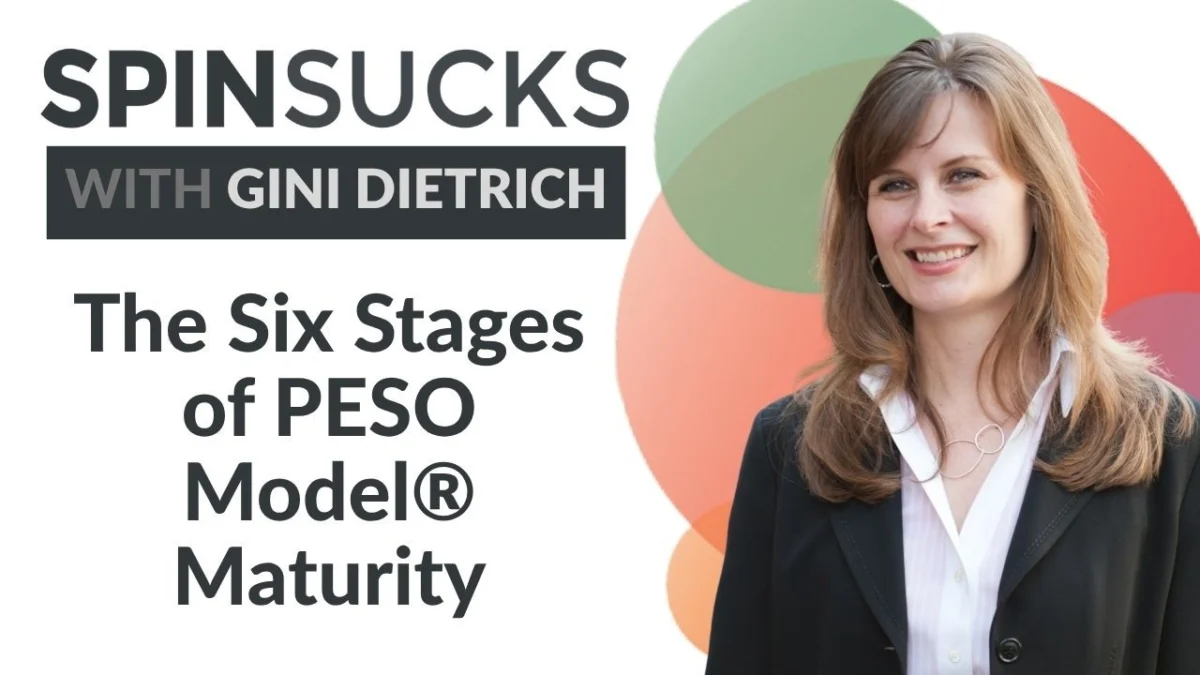
New industry data derived from the recently launched PESO Model Diagnostic has uncovered a substantial disconnect between how marketing and communications teams perceive their operational integration and how they actually function in practice. According to the findings, 91% of teams are currently positioned in the bottom half of the PESO Model maturity ladder, despite nearly half of those surveyed describing their operations as “integrated.” This discrepancy highlights a critical “perception gap” that experts suggest is the most significant data point to emerge in the communications industry this year.
The PESO Model, a strategic framework that integrates Paid, Earned, Shared, and Owned media, has served as a industry standard for over a decade. However, the transition from using the model as a simple graphic to implementing it as a comprehensive “Operating System” (OS) has proven difficult for even the most well-resourced brands. The diagnostic data suggests that while the conviction to integrate is high, the actual execution remains largely tactical and siloed.
The Disconnect Between Perception and Practice
The data collected from senior leaders, mid-market marketers, agency principals, and in-house teams across B2B financial services, nonprofits, and consumer brands reveals a stark reality. While 68% of respondents claimed to run the PESO Model as a system, the diagnostic scoring placed every one of those respondents in the bottom two stages of the maturity ladder: Foundation or Pilot.
Furthermore, 47% of participants identified their teams as being integrated across all four media types. However, their actual operational metrics placed them at the earliest stages of development. Most notably, of the 31% who rated themselves at the top of the self-rating scale for integration, only two respondents actually scored above the “Scale” level. To date, exactly zero organizations have reached the “Leadership” stage, the highest rung of the maturity ladder.
Industry analysts suggest that this gap is not necessarily an indictment of talent or intent. Rather, it indicates that “integration” is often viewed as a binary state—something a team either does or does not do—rather than a multi-stage evolutionary process. Understanding these stages is essential for organizations looking to move beyond tactical execution and toward a system that provides a measurable competitive advantage.
Chronology of the PESO Model Evolution
To understand the current state of maturity, it is necessary to trace the evolution of the PESO Model from its inception to its current iteration as an operating system.
- The Framework Era (2014–2020): Introduced by Gini Dietrich, the model provided a visual representation of how different media types overlap. During this period, the focus was on breaking down silos between PR (Earned), Marketing (Paid), and Social Media (Shared).
- The Integration Push (2020–2023): As digital landscapes became more crowded, brands began attempting to coordinate campaigns across channels. This era saw the rise of “integrated marketing communications” (IMC) as a standard job requirement, though most efforts remained campaign-specific rather than operational.
- The Operating System Era (2024–Present): In the current AI-driven landscape, the PESO Model has graduated from a framework to an operating system. This shift requires discipline and a structured approach to content distribution and measurement to prevent AI-generated noise from diluting brand authority.
The launch of the PESO Model Diagnostic represents the latest step in this chronology, providing a data-driven method for teams to benchmark their progress against a standardized maturity scale.
The Six Stages of PESO Maturity
The maturity ladder consists of six distinct stages, ranging from basic execution to industry-leading systemic integration. Each stage is defined by specific behaviors, organizational structures, and measurement capabilities.
Stage 0: Foundation
At the Foundation level, channels exist but operate in complete isolation. Teams are execution-led and channel-organized. In this stage, the Paid, Earned, Shared, and Owned functions often run on separate calendars with different KPIs. A primary example cited in industry analysis is Oracle. Despite having significant market share in enterprise AI and cloud deals, the brand often operates with siloed media types: Paid runs independently, Earned reacts to executive movements, and Owned focuses on technical documentation. Integration at this stage would require a unified narrative where each channel reinforces a single brand thesis.
Stage 1: Pilot
In the Pilot stage, an organization successfully runs a single integrated campaign, but the discipline has not yet generalized to the rest of the marketing function. McDonald’s is frequently used as a case study for this stage. When the brand launches high-profile collaborations, such as the Travis Scott Meal or the Grimace Shake, every channel—Paid, Earned, Shared, and Owned—works in perfect harmony for a limited window. However, once the “moment” ends, the brand reverts to separate teams and regional calendars with disconnected KPIs.
Stage 2: Scale
At the Scale level, integration becomes a recurring behavior rather than a one-off event. Teams run multiple integrated campaigns per year and have established cross-functional planning sessions. Dove’s “Real Beauty” campaign is a prime example of Scale. For two decades, the brand has launched integrated efforts that align all four PESO pillars around a central thesis. The limitation at this stage is that while the campaigns are integrated, the function is not; standard product pushes and performance media between major launches still operate in silos.
Stage 3: Systemize
Integration becomes a formal function at the Systemize level. This stage is characterized by the presence of a dedicated PESO integrator, shared performance dashboards, and cross-channel attribution that influences budget allocation. Sephora exemplifies this stage through its “Beauty Insider” loyalty program, which serves as a data layer connecting digital, in-store, and creator partnerships. The challenge at this stage is agility; the system is robust for planned initiatives but may not be nimble enough to react to real-time cultural shifts or social trends.
Stage 4: Real-Time
At the Real-Time level, the operating system is capable of pivoting within hours or days based on integrated performance data. Decisions regarding budget reallocation across Paid, Earned, Shared, and Owned are made in-flight. Netflix is a notable example of this maturity, as the brand can reorganize its entire homepage (Owned), creator activations (Shared), and talent circuits (Earned) within days of a show becoming a viral hit.
Stage 5: Leadership
At the highest level of maturity, the PESO operating system itself becomes a competitive moat. The way the company integrates its communications is a primary reason for its market success and is studied by external parties. Liquid Death is cited as a brand that has reached this level by making its marketing operation the actual product. Every channel feeds into a provocative, cohesive brand voice that competitors find impossible to replicate piecemeal.
Analysis of Implications for the Communications Industry
The data from the diagnostic tool suggests that the primary obstacle to reaching higher maturity stages is a “discipline problem” exacerbated by the AI era. With the ease of content production increasing, many teams have prioritized volume over the structural coordination required for a true operating system.
The “perception gap” identified in the study has several practical implications for business strategy:
- Resource Misallocation: Teams that believe they are at the “Scale” or “Systemize” level may invest in advanced tools or high-cost campaigns without the foundational integration needed to support them, leading to diminished ROI.
- Measurement Inaccuracy: Without a systemic approach, measurement remains fragmented. Teams may report high engagement on Shared media without understanding how it drives Earned coverage or Owned conversions.
- Vulnerability to Market Shifts: Organizations at the Foundation or Pilot levels are less equipped to handle rapid shifts in consumer behavior or search engine algorithms, as their response mechanisms are siloed.
Experts argue that the goal for most brands should not necessarily be to reach the “Leadership” stage, which requires an extraordinary level of cultural and financial commitment. Instead, the focus should be on moving one rung up the ladder—from Pilot to Scale, or Scale to Systemize—through small, structural changes.
Future Outlook and Recommendations
The findings of the PESO Model Diagnostic indicate that the path forward for communications professionals involves a move toward “ruthless honesty” regarding their current operational status. Industry leaders recommend two primary methods for identifying a team’s true position on the maturity ladder.
First, internal audits should focus on “tells” rather than aspirations. If a team cannot name a single integrated campaign from the last six months, they are likely at the Foundation level, regardless of their budget size. Second, the use of objective diagnostic tools can help bridge the gap between self-perception and reality by scoring specific metrics across measurement, integration, and channel performance.
As the industry moves toward 2026, the successful organizations will likely be those that treat the PESO Model not as a creative framework, but as a disciplined operating system. By implementing small, structural moves—such as a single weekly cross-channel standup or one shared KPI—teams can begin the transition toward a more integrated and effective communications future. The data confirms that while the industry has a long way to go, the roadmap for progress is now clearly defined.