rifanmuazin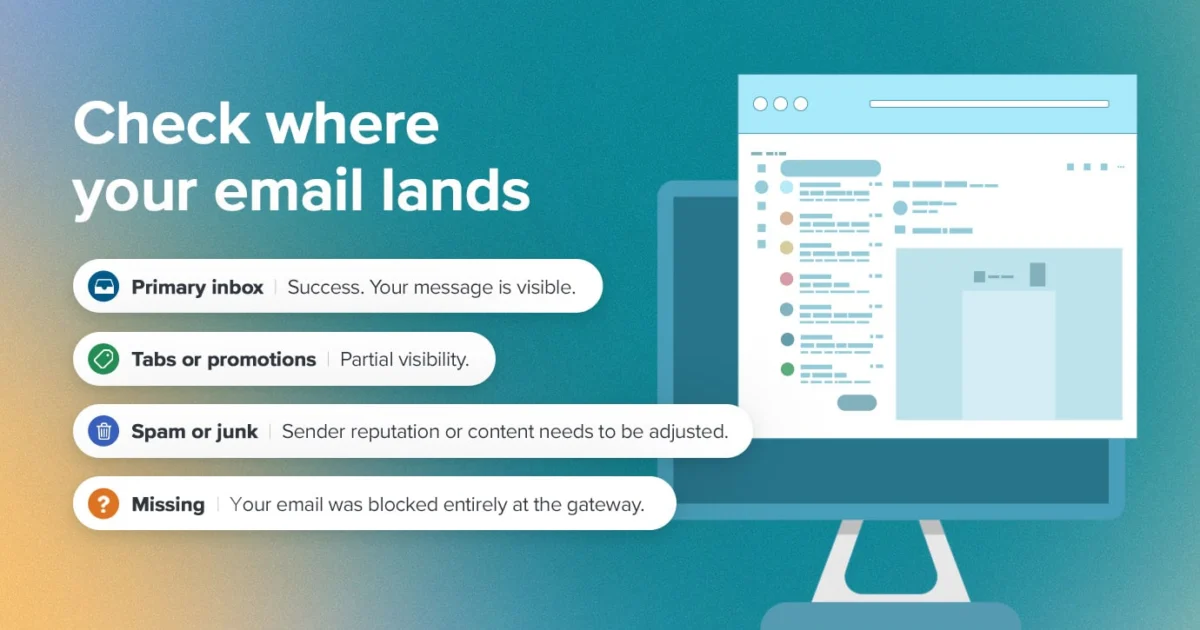
For too long, marketers have celebrated high email delivery rates as a definitive measure of campaign success, often under the mistaken belief that an email accepted by a server automatically translates to visibility. This widespread misconception, however, overlooks a crucial distinction in the intricate world of email marketing: the profound difference between an email being “delivered” and an email actually landing in the recipient’s primary inbox. The latter, known as inbox placement, is the true barometer of an email campaign’s reach and effectiveness, directly influencing engagement, conversions, and ultimately, revenue. In an increasingly competitive digital landscape, understanding and optimizing for inbox placement has become an imperative for any organization aiming to maximize its email marketing investment.
Unpacking the Misconception: Delivery Versus Placement
At its core, the delivery rate simply indicates whether an email has been accepted by the recipient’s mailbox provider (e.g., Gmail, Outlook, Yahoo). If an email is not delivered, it is categorized as a “bounce.” Hard bounces signify a permanent failure, such as an invalid or non-existent email address, while soft bounces denote temporary issues, like a full inbox or a server outage. A high delivery rate, while a positive indicator of a relatively clean email list, merely confirms that the message reached the digital doorstep of the recipient’s server. It offers no assurance that the email bypassed the myriad of filters designed to protect users from spam, promotions, or less relevant content.
Inbox placement, on the other hand, measures the percentage of emails that, having been accepted by the mailbox provider, successfully land in the recipient’s primary inbox—the coveted destination where messages are most likely to be seen and acted upon. This critical metric reflects the sophisticated filtering decisions made by mailbox providers, which weigh a multitude of factors to determine an email’s trustworthiness and relevance. These factors include the sender’s reputation, the content of the email, and crucially, the recipient’s past engagement with messages from that sender.
The distinction is stark and carries significant implications for marketing strategy. An email with a 99% delivery rate might still have a dismal inbox placement rate if a substantial portion of those “delivered” emails are shunted into spam folders or promotional tabs, effectively rendering them invisible. Data from industry sources often reveals a considerable gap between reported delivery rates and actual inbox placement, with some estimates suggesting that up to 20% or more of commercially delivered emails may never reach the primary inbox. This ‘dark zone’ of emails, though technically delivered, represents wasted effort and lost opportunities, directly impacting a campaign’s return on investment.
The Evolving Landscape of Deliverability: A Timeline of Challenges
The challenge of achieving optimal inbox placement is not static; it is constantly evolving, driven by mailbox providers’ relentless efforts to combat spam, enhance user experience, and protect against phishing and malicious content. The sheer volume of email traffic—estimated to be well over 300 billion emails sent daily worldwide—necessitates increasingly sophisticated filtering mechanisms.
A pivotal development in this ongoing evolution occurred in early 2024, when two of the world’s largest email providers, Google and Yahoo, implemented stringent new authentication requirements for bulk senders. These mandates, which took effect in February 2024, represent a significant shift, transforming what were once considered best practices into non-negotiable standards. For senders dispatching over 5,000 emails per day to Gmail or Yahoo addresses, these new rules require:
- Email Authentication: Senders must implement robust authentication protocols, specifically SPF (Sender Policy Framework), DKIM (DomainKeys Identified Mail), and DMARC (Domain-based Message Authentication, Reporting, and Conformance). DMARC, in particular, must be configured to an enforcement policy (quarantine or reject) rather than a monitoring-only policy.
- Easy Unsubscription: Senders must provide a one-click unsubscribe option, and process unsubscribe requests within two days.
- Low Spam Rate: Senders must maintain a spam complaint rate below 0.3% (ideally below 0.1%).
These requirements were not merely suggestions but enforceable policies, with non-compliant emails facing increased filtering, delayed delivery, or outright rejection. Industry experts, including those from leading email deliverability platforms, swiftly warned marketers about the immediate and long-term implications, emphasizing that failure to adapt would directly result in plummeting inbox placement rates and severe damage to sender reputation. This collective move by major ESPs underscored their commitment to user safety and inbox quality, effectively raising the bar for legitimate email marketers worldwide. The implication is clear: email marketing is no longer a game of simply “sending”; it is a sophisticated discipline of “earning the inbox.”
The Algorithm’s Eye: Why Engagement is Paramount for ESPs
Mailbox providers like Gmail and Outlook are not just passive conduits for email; they are active arbiters of inbox quality. Their algorithms are constantly learning and adapting, with user behavior serving as a primary signal for filtering decisions. This explains why engagement is paramount. When subscribers consistently open, read, click links within, and reply to your emails, it signals to the ESP that your content is valued and relevant. This positive interaction directly contributes to a healthy sender reputation, increasing the likelihood that future emails will land in the primary inbox.
Conversely, negative engagement signals can severely harm sender reputation. Emails that are routinely left unopened, deleted without being read, or worse, marked as spam, tell ESPs that your messages are either irrelevant or unwelcome. Each spam complaint, for instance, acts as a significant negative vote against your sender reputation, triggering filters that can redirect subsequent emails to the spam folder for other recipients on your list, even those who have previously engaged positively. This creates a continuous feedback loop: positive user interaction strengthens your sender score, leading to better inbox placement, which in turn can lead to more engagement, while negative interactions lead to the opposite spiral.
Research consistently highlights the impact of engagement. Studies show that emails with higher open rates and click-through rates are significantly more likely to bypass spam filters. For example, a benchmark study might reveal that the average email open rate across industries hovers around 20-25%, but achieving consistently higher rates (e.g., 30%+) can dramatically improve deliverability. The average spam complaint rate should ideally be kept below 0.1%, with anything approaching 0.3% or higher signaling serious issues that require immediate attention. These metrics are not just vanity figures; they are direct indicators of your digital trustworthiness in the eyes of the ESPs.
Measuring the Invisible: Tools and Techniques for True Inbox Visibility
Given the opacity of ESP filtering mechanisms, simply relying on an Email Service Provider’s (ESP) “Delivered” metric is akin to navigating blindfolded. To gain true visibility into where emails actually land, marketers must adopt proactive testing strategies.
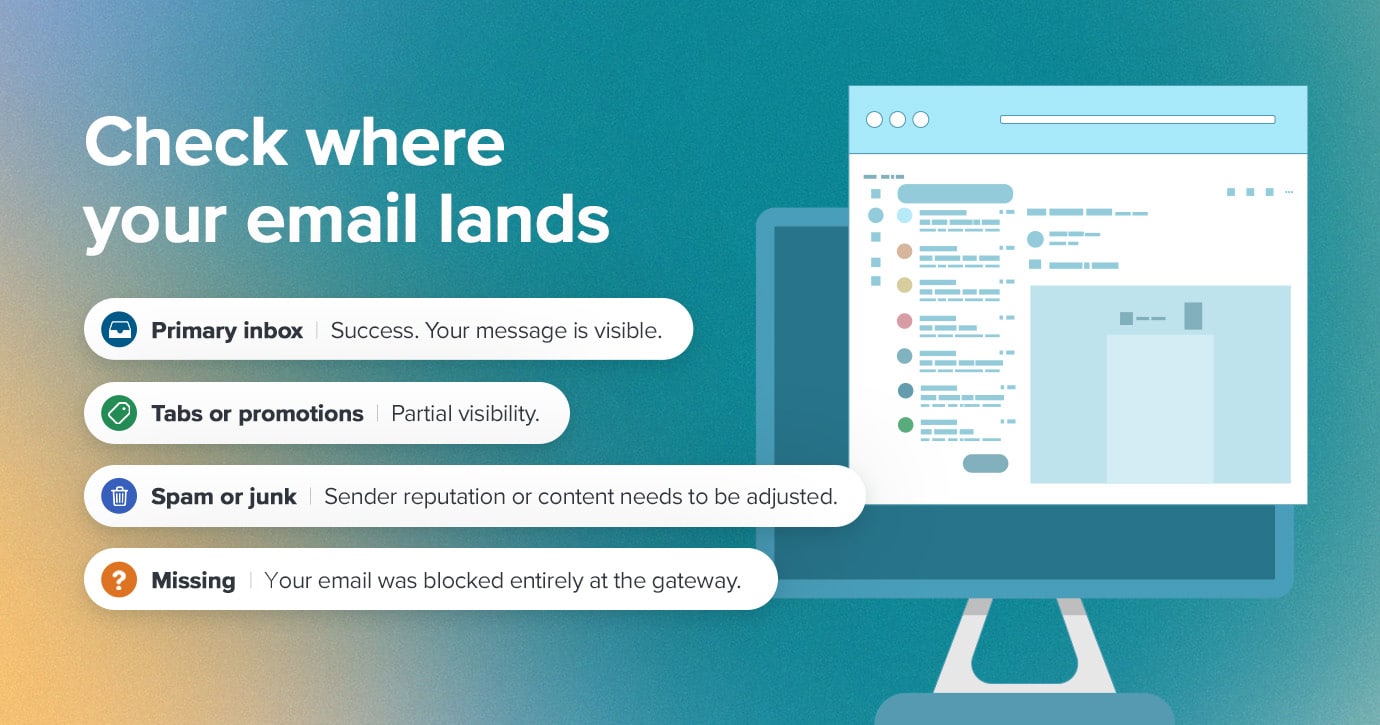
- Deploy a Seed List Test: The industry standard for measuring inbox placement is the seed list test. This involves sending your actual campaign content to a carefully curated list of test email addresses spanning all major mailbox providers (e.g., Gmail, Yahoo, Outlook, AOL, Apple Mail). These seed addresses are specifically designed to replicate real-world subscriber environments, allowing marketers to observe precisely how different ESPs handle their emails. By sending the identical message intended for subscribers to this seed list, marketers can obtain an unbiased, real-time snapshot of deliverability performance.
- Analyze Folder Placement: Upon sending to the seed list, diagnostic tools are used to analyze the folder placement for each test mailbox. This analysis reveals whether the email reached the primary inbox, was relegated to a secondary tab (like Gmail’s Promotions or Social tabs), or, most critically, was filtered into the spam folder. This granular view allows marketers to identify specific mailbox providers or email client behaviors that may be impacting their reach. For instance, if emails consistently land in the Promotions tab for Gmail users, it indicates a need to review content, subject lines, and sender reputation signals for that particular ESP.
- Calculate Your Inbox Placement Rate (IPR): From the data gathered through seed list testing, marketers can accurately calculate their IPR. This percentage—the number of emails that successfully reached the primary inbox divided by the total number of seed emails—is the most reliable metric for understanding actual audience reach. It shifts the focus from the simplistic “did it get there?” to the more meaningful “did it get seen?” This IPR should become the primary KPI for evaluating email campaign performance, offering a precise view of true visibility and guiding strategic adjustments.
Strategic Imperatives: Enhancing Inbox Placement
Improving inbox placement requires a multi-faceted approach, integrating technical best practices with audience-centric content strategies.
-
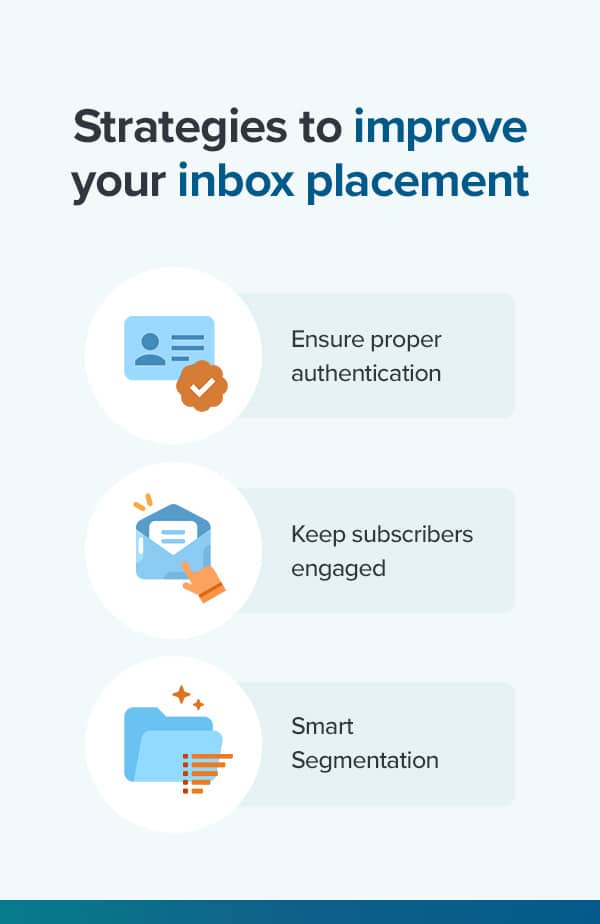
Ensure Proper Authentication: As highlighted by the 2024 Google and Yahoo mandates, robust email authentication is no longer optional.
- SPF (Sender Policy Framework): Authorizes which mail servers are permitted to send email on behalf of your domain.
- DKIM (DomainKeys Identified Mail): Provides a cryptographic signature, allowing the recipient’s server to verify that the email was indeed sent by the domain it claims to be from and that the content hasn’t been tampered with.
- DMARC (Domain-based Message Authentication, Reporting, and Conformance): Builds upon SPF and DKIM, instructing receiving servers on how to handle emails that fail authentication checks (e.g., quarantine or reject) and providing feedback to the sender. Implementing these correctly is the foundational step to building trust with mailbox providers and ensuring basic deliverability. Without them, emails from bulk senders are highly likely to be flagged as suspicious and diverted to spam.
-
Cultivate Subscriber Engagement and Maintain List Hygiene: Your email list is a living entity, and its health directly correlates with your sender reputation.
- Regular List Cleaning: Inactive subscribers (those who haven’t opened or clicked in 6-12 months) can harm your reputation. Mailbox providers often convert old, dormant addresses into “spam traps” to catch senders who aren’t managing their lists. Hitting a spam trap is a severe blow to reputation. Regularly removing inactive subscribers or running re-engagement campaigns (e.g., “Do you still want to hear from us?”) is crucial. If subscribers don’t respond to re-engagement efforts, it’s best to remove them to protect your list’s overall health.
- Verification Tools: Employing email verification tools at the point of signup can prevent invalid or misspelled email addresses from entering your database, proactively reducing future bounce rates and protecting your sender reputation from the outset.
- Provide Value: The most effective way to foster engagement is to consistently deliver valuable, relevant content. If subscribers perceive your emails as useful, informative, or entertaining, they are more likely to open and interact with them.
-
Smart Segmentation and Personalization: A generic “one-size-fits-all” approach to email marketing is increasingly ineffective. Modern email users expect personalized experiences.
- Behavioral Segmentation: Divide your audience based on their past interactions, purchase history, website behavior, and expressed preferences. For example, instead of sending a product update to your entire list, target it only to active users who have previously engaged with that specific product or feature.
- Content Relevance: Tailor your messages to reflect the actual interests of each segment. This dramatically increases open and click-through rates, sending strong positive engagement signals to mailbox providers. A targeted campaign to 10,000 highly engaged users will yield far better inbox placement and ROI than a broad blast to 50,000 less relevant recipients. The higher engagement metrics, in turn, reinforce your positive sender reputation across the board.
Advanced Strategies for Enterprise-Level Deliverability
For organizations with high sending volumes, complex global footprints, or particularly stringent deliverability requirements, more advanced strategies are necessary to maintain pristine inbox placement and drive scalable growth.
-
Sender Certification: This represents an elite tier of deliverability. Certification programs, such as Validity Sender Certification, are whitelist initiatives where vetted senders undergo a rigorous auditing process to confirm adherence to best practices. Certified senders essentially receive “VIP treatment” from participating mailbox providers, bypassing certain filters and enjoying enhanced deliverability. Benefits include:
- Higher Inbox Rates: Certified senders consistently achieve superior inbox placement, with some studies showing them getting 27 million more emails to the inbox annually compared to non-certified peers.
- Faster Delivery: Messages from certified senders are often processed with higher priority.
- Brand Protection: Certification signals credibility and trust, safeguarding the brand’s reputation against phishing and spam associations. This offers a significant competitive advantage in a crowded digital space.
-
Brand Indicators for Message Identification (BIMI): BIMI is an emerging standard that allows a brand’s verified logo to appear next to the sender’s name in the recipient’s inbox. This visual confirmation of brand identity provides an immediate trust signal, crucial in an era plagued by email fraud and phishing attempts.
- Enhanced Trust: Seeing a familiar logo instills confidence in recipients, making them more likely to open the email, knowing it’s legitimate.
- Increased Visibility: In a sea of text-only subject lines, a distinctive brand logo helps emails stand out, capturing user attention and encouraging higher open rates.
- Technical Requirement: To implement BIMI, a strong DMARC enforcement policy (quarantine or reject) is mandatory. This ensures that only brands with robust email authentication and anti-spoofing measures in place can leverage BIMI, reinforcing its status as a powerful trust indicator.
-
Real-Time Feedback Loops (FBLs): FBLs are essential tools offered by major mailbox providers (e.g., Google Postmaster Tools, Microsoft SNDS). These services provide senders with real-time reports when their emails are marked as spam by recipients.
- Proactive Reputation Management: FBLs enable marketers to identify specific email addresses that are generating complaints. This crucial insight allows for immediate action, such as removing those users from the mailing list, thereby preventing further negative signals to the ESPs.
- Content Optimization: High complaint rates for particular campaigns can also signal issues with content relevance, frequency, or messaging, prompting marketers to refine their strategy. By actively monitoring and responding to FBL data, organizations can maintain a healthy sender reputation and optimize deliverability for the majority of their audience.
Broader Impact and Implications: Visibility is Revenue
The implications of prioritizing inbox placement extend far beyond mere email metrics; they directly impact an organization’s bottom line and brand equity.
- Direct Revenue Generation: Emails that consistently land in the primary inbox are exponentially more likely to be opened, clicked, and acted upon. This translates directly into higher conversion rates for sales, sign-ups, downloads, or any other campaign objective. Conversely, emails trapped in spam folders generate zero revenue, rendering marketing efforts and budget utterly ineffective.
- Enhanced Brand Reputation and Trust: Reliable inbox placement builds a consistent, positive brand experience. When subscribers routinely receive and engage with your emails, it fosters trust and reinforces your brand’s authority and professionalism. Conversely, frequent filtering to spam can erode trust, leading subscribers to perceive your brand as unprofessional or even suspicious.
- Competitive Advantage: In a crowded digital marketplace, strong deliverability becomes a significant differentiator. Brands that consistently reach the inbox gain a competitive edge in capturing audience attention and driving engagement over those whose messages are routinely filtered.
- Data-Driven Strategic Adjustment: Tracking IPR provides invaluable data for continuous improvement. By understanding where emails land, marketers can make informed, data-driven decisions to refine content, adjust sending frequencies, optimize authentication, and personalize messages, ensuring an agile and high-performing email program.
In conclusion, the era of celebrating simple “delivery rates” is over. Modern email marketing demands a sophisticated understanding of inbox placement—the true measure of whether messages connect with their intended audience. By implementing robust authentication, rigorously managing subscriber engagement, embracing smart segmentation, and leveraging advanced strategies like sender certification and BIMI, marketers can transcend the limitations of traditional metrics. The shift towards prioritizing inbox placement is not merely a technical adjustment; it is a fundamental reorientation towards maximizing email’s impact, driving higher visibility, stronger engagement, and ultimately, sustained revenue growth. Tools that provide deep insights into email deliverability are no longer luxuries but necessities, empowering businesses to refine their strategies with confidence and ensure their carefully crafted messages truly reach their mark.