rifanmuazin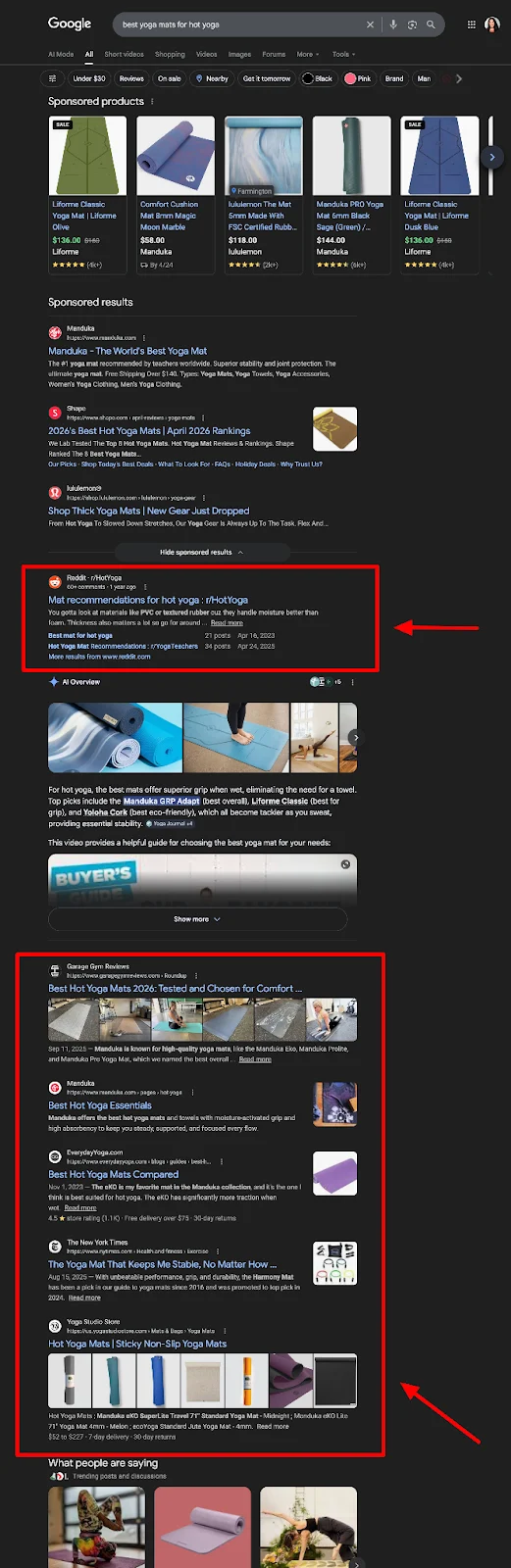
Over the past year, marketing teams globally have grappled with a significant disconnect: surging organic traffic reports often fail to align with pipeline growth. This emerging disparity points to a critical blind spot in traditional digital analytics, one that AI search analytics tools are specifically designed to address. As artificial intelligence fundamentally reshapes how consumers and B2B buyers discover information and make purchase decisions, understanding brand visibility within AI-powered answer engines has become an urgent strategic priority for growth-focused organizations.
The Paradigm Shift: From Blue Links to Generative Answers
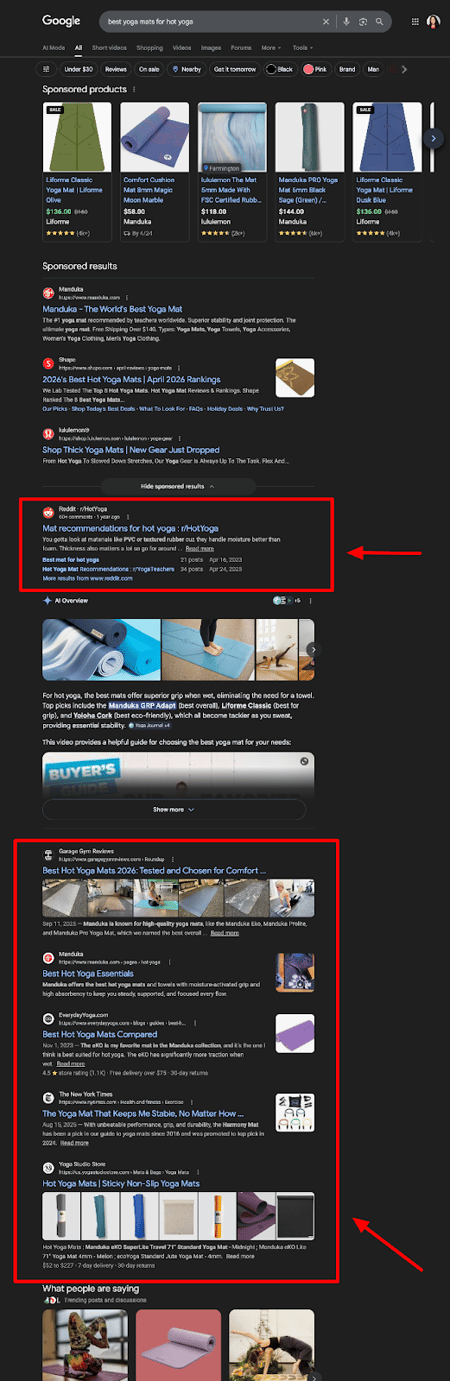
For decades, digital marketing, particularly Search Engine Optimization (SEO), revolved around achieving top rankings in Google’s “blue-link” search results. Marketers meticulously optimized content for keywords, built backlinks, and tracked metrics like organic clicks and impressions. However, the advent of sophisticated generative AI models, such as OpenAI’s ChatGPT, Google’s Gemini, Perplexity, and Google AI Overviews (formerly Search Generative Experience or SGE), has introduced a fundamentally different search paradigm.
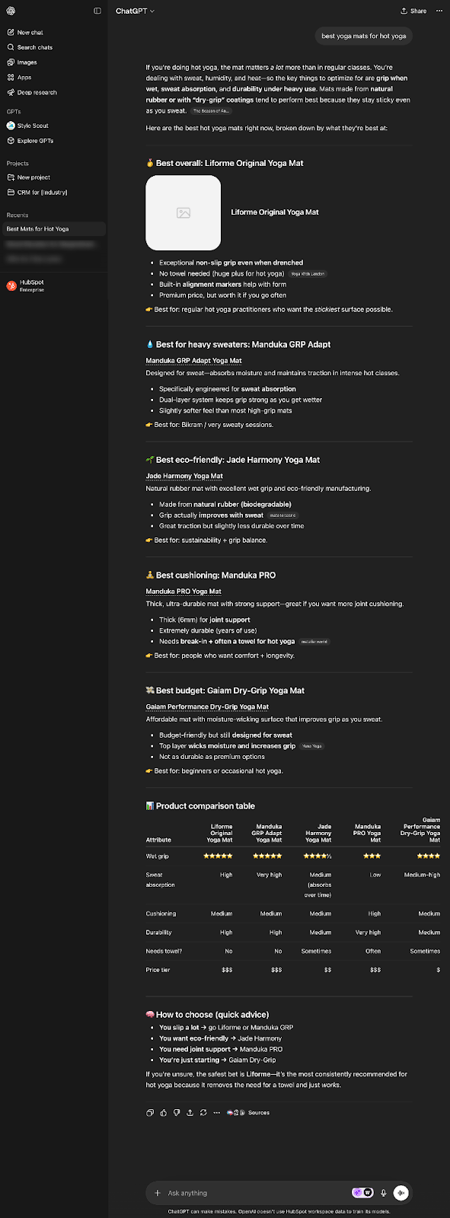
In this new landscape, users often bypass traditional search result pages, instead posing complex queries directly to AI chatbots or receiving synthesized answers within search engines. For instance, when a prospect queries ChatGPT with “What’s the best CRM for a mid-sized SaaS company?” the AI model provides a direct, often personalized, recommendation. If a brand is absent from such an answer, conventional SERP rank trackers, which measure positions on a list of links, offer no insight into this critical visibility gap. This shift from a “click-and-choose” model to an “ask-and-receive” generative answer model necessitates a new suite of analytical tools.
The Rapid Rise of AI Search and Its Impact

The proliferation of AI-powered search has been swift and profound. ChatGPT, launched in November 2022, rapidly surpassed 100 million active users by January 2023, and by early 2026, it had exceeded 800 million weekly active users, according to industry reports. Google’s integration of AI Overviews, initially rolled out more broadly in May 2024, has seen rapid adoption, appearing in approximately 25% of searches as of Semrush’s analysis in March 2025, a significant increase from 13% just months prior. These generative answers are known to significantly compress click-through rates (CTR) for traditional organic results listed below them, redirecting user attention directly to AI-curated information.
Moreover, the B2B sector has embraced AI tools with remarkable speed. A March 2026 synthesis of 680 million AI citations revealed that 73% of B2B buyers now leverage AI tools in their purchase research processes. This widespread adoption underscores that AI is not merely a consumer trend but a foundational shift in how businesses gather intelligence and evaluate solutions. The implications for marketing are stark: AI-referred visitors already convert at 4.4 times the rate of organic visitors from traditional search and spend 68% more time on websites, according to studies by Semrush and SE Ranking. This heightened engagement and conversion potential make AI visibility a high-stakes arena for market share and revenue growth.
Despite these compelling statistics, a substantial gap exists in current marketing practices. Industry data indicates that only 22% of marketers actively track their AI visibility. This low adoption rate signifies a wide-open competitive window for early movers who invest in understanding and optimizing their presence in AI answer engines.
Core Functions of AI Search Analytics Tools
AI search analytics tools are specialized software platforms designed to monitor and analyze how a brand appears in responses generated by various AI-powered answer engines and chatbots. Unlike traditional SEO tools that focus on blue-link rankings, these tools track:
- Brand Mentions: How often a brand is directly referenced in an AI-generated answer.
- Citation Sources: Which specific URLs and content pieces are used by AI models to inform their responses.
- Share of Voice: The percentage of AI responses in a given category that include a brand compared to its competitors.
- Sentiment Analysis: The positive, negative, or neutral tone associated with brand mentions.
These platforms address four critical marketing workflows that traditional analytics cannot:
- Measuring AI visibility: Quantifying a brand’s presence in AI-generated answers.
- Competitive Benchmarking: Comparing AI visibility against key competitors to identify opportunities and threats.
- Content Strategy Adaptation: Guiding content creation and optimization efforts to improve AI retrievability and citation.
- Reputation Management: Monitoring sentiment and identifying potential brand risks within AI responses.
Essential Features for Effective AI Search Analytics
The rapidly evolving landscape of AI visibility has led to a diverse range of tools, with varying levels of maturity. When evaluating these platforms, marketers should prioritize both core visibility capabilities and operational needs.
Core Visibility Features:
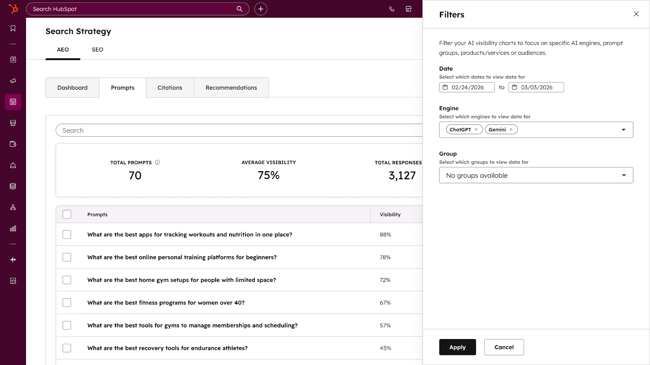
- Multi-Platform Coverage: A brand’s visibility can vary significantly across different AI models. Comprehensive tools should, at a minimum, track ChatGPT, Gemini, and Perplexity, given their substantial user bases and impact on purchase research. Coverage for Google AI Overviews, Microsoft Copilot, and Claude further broadens signal capture, especially if these platforms are relevant to the target audience. For instance, HubSpot AEO tracks ChatGPT (including the free tier), with Perplexity and Gemini available in paid accounts, and plans for further expansion.
- Prompt Tracking and Management: The ability to define, monitor, and organize specific conversational prompts is fundamental. Effective tools allow users to input custom queries, suggest relevant prompts based on industry and competitive analysis, and group prompts by product line or customer segment for granular performance analysis. This ensures that the tracked data directly reflects actual buyer queries.
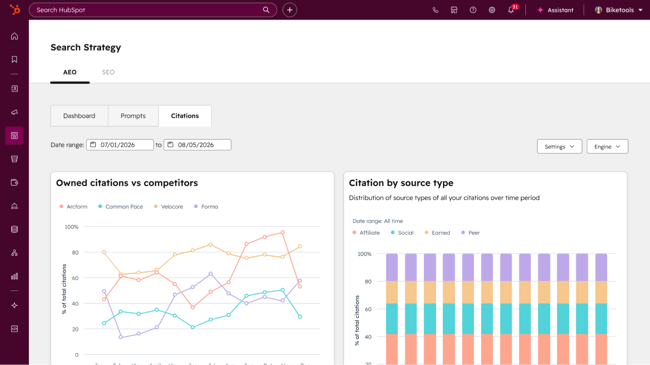
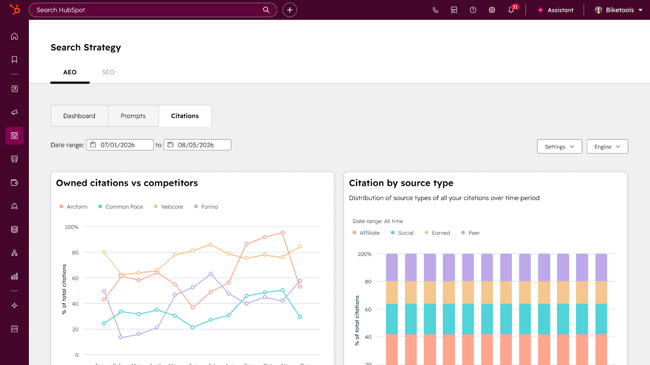
- Citation and Mention Analysis: Beyond simple brand appearance, marketers need to understand what AI systems are citing. This includes identifying specific URLs, frequency of citation, and position within the AI response. Tools should differentiate between linked citations (direct hyperlinks) and unlinked mentions (textual references without a link), as both influence brand perception. Detailed reports on content types (e.g., listicles, blog posts, product pages), channels (e.g., owned website, earned media, review sites, user-generated content like Reddit), and specific domains are crucial for strategic content planning.
- Sentiment Analysis: AI systems can describe brands positively, negatively, or neutrally. Sentiment scoring, often on a scale from -100% to +100%, reveals the emotional tone of AI mentions. This feature helps marketers proactively identify reputational issues before they impact conversion metrics or brand equity.
- Competitor Benchmarking: Share of voice is a key performance indicator in AI search. Tools that enable tracking of a defined competitor set and provide insights into where a brand is gaining or losing ground are invaluable for competitive intelligence.
Operational Imperatives:
- Historical Data: AI visibility is dynamic, influenced by model updates, changes in training data, and seasonal trends. Tools offering at least 90 days of historical data (ideally more) are essential for distinguishing genuine improvements from transient model volatility and for understanding long-term trends.
- Alerting Capabilities: Significant shifts in visibility can occur rapidly due to competitor activity or major model updates. Robust alerting systems, notifying teams of sudden mention gains, citation losses, or competitive overtakes, enable near real-time reaction rather than retrospective analysis. HubSpot AEO, for example, provides weekly score tracking and trend alerts.
- Exports and Integrations: AI visibility data gains significant value when integrated with existing marketing stacks. Native CSV exports or direct integrations with platforms like Google Analytics, Search Console, Slack, Looker Studio, and Content Management Systems (CMS) facilitate seamless incorporation into existing reporting workflows. HubSpot AEO, for instance, integrates fully with HubSpot’s own Content Hub and Marketing Hub, as well as third-party platforms like Reddit and TikTok.
- Governance and Access Control: For larger organizations managing multiple brands, regions, or teams, features such as workspace separation, role-based permissions, and compliance certifications (e.g., SOC 2 Type II) are non-negotiable. These ensure data security, organizational clarity, and controlled access to sensitive insights.
Leading Platforms in the AI Search Analytics Landscape
The market for AI search analytics tools is expanding, with several strong contenders catering to different organizational needs and budgets.
-
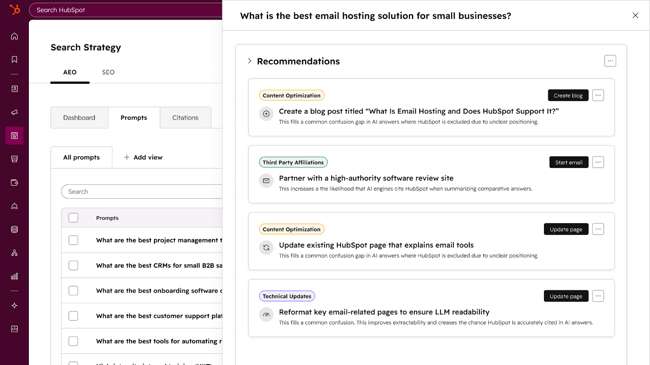
HubSpot AEO: Best for marketing teams seeking ongoing AI visibility tracking, competitive benchmarking, and prioritized recommendations across ChatGPT, Perplexity, and Gemini. HubSpot AEO offers daily tracking, detailed citation and sentiment analysis, and crucial action-oriented recommendations, often integrating with HubSpot’s content tools. Its CRM-connected prompt suggestions enhance relevance from the outset. A free 28-day trial is available, with paid plans starting at $50/month, or included in Marketing Hub Pro and Enterprise.
-
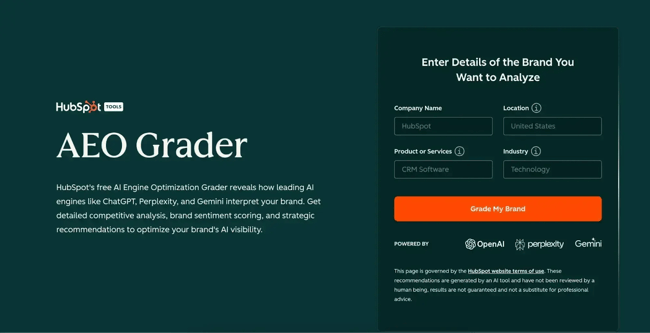
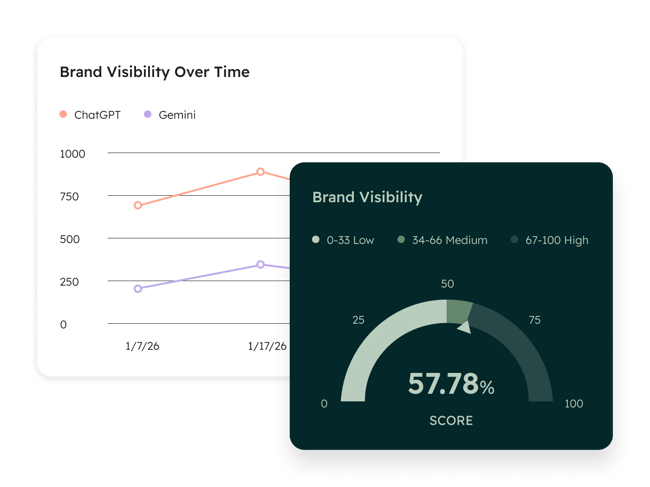
HubSpot AEO Grader: An excellent starting point for teams new to AI visibility, offering a free, no-setup audit across ChatGPT, Perplexity, and Gemini. The AEO Grader provides a one-time snapshot, evaluating a brand across five dimensions (Brand Visibility, Narrative Cohesion, Citation Authority, Sentiment Score, Competitive Edge), cross-validating results for a composite score. It includes narrative theme analysis, source quality assessment, and competitor comparison, with an exportable report. This tool serves as a strong foundation before committing to ongoing paid monitoring.
-
Semrush AI Visibility Toolkit: Ideal for teams already embedded in the Semrush ecosystem, seeking to consolidate SEO and AI visibility tracking. This toolkit monitors brand mentions across ChatGPT, Google AI Overviews, AI Mode, Perplexity, and Gemini. Its primary advantage is the seamless integration with Semrush’s comprehensive SEO suite, allowing marketers to view traditional SEO rankings and AI visibility within a single platform. The AI Visibility Score and Brand Performance reports provide actionable insights into sentiment shifts, source attribution, and competitive positioning. Bundled with Semrush One Starter ($199/month), or available as a standalone for $99/month per domain (with prompt limits).
-
Otterly.AI: Recognized for its accessibility and broad platform coverage, Otterly.AI caters to marketing teams and agencies needing fast, affordable brand monitoring. It covers six AI platforms: ChatGPT, Google AI Overviews, Google AI Mode, Perplexity, Gemini, and Microsoft Copilot. Its prompt-based workflow automatically tracks brand mentions, citation URLs, share of voice, and sentiment over time. The Brand Visibility Index and weekly citation alerts are particularly useful for proactive competitive monitoring. While strong on monitoring, it is primarily a monitoring-first tool and requires separate solutions for content creation/optimization. Pricing starts at $29/month (15 prompts), with higher tiers at $189/month and $989/month for increased prompt volume.
-
Profound: Positioned for enterprise marketing teams with stringent compliance requirements (SOC 2 Type II, HIPAA) and Fortune 500 brands needing extensive multi-model coverage, including Claude, Grok, and DeepSeek. Profound distinguishes itself with its Conversation Explorer, offering real-time insights into user queries across AI platforms, providing previously invisible search volume data. It also includes AI Agents for content creation, closing the loop between insight and execution. Pricing starts at $99/month (ChatGPT only), scaling to enterprise custom plans.
-
Peec AI: Suited for content-led SaaS and B2B teams requiring granular visibility, segmentation by model, region, and audience persona. Peec AI offers daily prompt runs across ChatGPT, Perplexity, and DeepSeek, with filtering capabilities that provide highly specific insights for multi-market or multi-persona strategies. This granular control makes it a strong fit for structured Answer Engine Optimization (AEO) programs. Pricing starts at €89/month with a free trial.
-
SE Visible by SE Ranking: An affordable and user-friendly AI visibility add-on, particularly beneficial for existing SE Ranking users. It tracks brand visibility across ChatGPT, Perplexity, Google AI Mode, and Gemini, with intuitive dashboard filters for various parameters. SE Visible excels in sentiment tracking, providing clear net scores and breaking down positive, negative, or neutral mentions. Its accessible interface and strong source analysis make it suitable for agencies integrating AI visibility into their services. Pricing starts at $49/month with a free trial.
Establishing a Baseline and Driving Actionable Insights
A common pitfall for new adopters is to immediately attempt optimization without first establishing a baseline. Without a clear starting point, it is impossible to differentiate genuine progress from inherent model volatility or to demonstrate ROI to stakeholders. The recommended approach involves a structured, two-week baseline workflow:
Week 1: Establish Your Prompt Library
- Identify Core Business Queries: Brainstorm 20-50 high-intent questions buyers ask about your products/services.
- Competitor Prompt Analysis: Use a tool’s suggestions or manual research to identify common queries where competitors are visible.
- Categorize Prompts: Group queries by product, customer segment, or funnel stage for structured analysis.
Week 2: Conduct a Citation Gap Analysis
- Run Initial Visibility Audit: Utilize a tool like HubSpot’s free AEO Grader to get a composite score and detailed report across key AI platforms. This serves as your T0 benchmark.
- Document Citation Sources: For each key prompt, identify which of your content assets (or competitor assets) are being cited. Note content type, channel, and domain.
- Identify Gaps: Pinpoint prompts where your brand is absent or poorly cited, especially where competitors appear prominently.
Ongoing: Weekly Review and Optimization
- Monitor Core Metrics: Regularly track brand visibility score, share of voice, average citation position, and net sentiment.
- Analyze Trend Alerts: Investigate significant changes flagged by the monitoring tool.
- Review New Prompts and Citations: Incorporate new, relevant queries into your library and analyze new citation patterns.
- Update Content Backlog: Prioritize content creation and optimization based on identified gaps and opportunities.
The goal of this weekly cadence is not to react to every minor fluctuation, as AI models are inherently dynamic. Instead, it’s to identify directional trends over four-to-eight week windows, allowing for strategic, informed optimization.
Strategic Initiatives for Enhancing AI Visibility
Translating AI search analytics into actionable marketing strategies is where the true value lies. Insights from these tools should drive a multi-faceted approach to content and distribution.
- Content Updates based on Citation Gap Analysis: If a competitor is cited for a key prompt where your brand is absent, audit your existing content. Ensure it directly addresses the prompt, is structured for AI retrievability (clear headings, concise summaries, FAQs), and is kept up-to-date with factual information.
- New Content Assets Targeting High-Value Prompts: AirOps research indicates certain structured content formats significantly boost AI citation rates. These include comparison guides, “best of” lists, and detailed how-to guides. Prioritize creating new content specifically designed to answer high-volume, high-intent queries comprehensively and clearly, using these AI-favored structures.
- Authoritative Citation Building: AI systems learn from the web sources in their training data. Focus on building brand presence and authority on domains AI trusts: high-authority publications, relevant industry forums, reputable review platforms, and “Best X” listicles. Targeted media outreach and guest contributions to these sources can significantly enhance your brand’s perceived authority by AI models.
- Structured Data and Technical AI Readiness: Implementing schema markup (e.g., FAQPage, HowTo, Article, Organization schema) improves the likelihood that AI systems can accurately extract and attribute your content. Additionally, ensure that AI crawlers (like GPTBot, ClaudeBot, PerplexityBot) have unrestricted access to your critical web pages. Blocked crawlers are a common and easily rectifiable cause of low AI visibility.
- Cross-Channel Distribution to Expand the AI Training Signal: AI trust is built on a multi-source consensus. Consistent brand messaging and presence across various trusted platforms—industry publications, social media (YouTube, LinkedIn), and review sites—signal to AI systems that your brand is a reliable and widely recognized entity. AI visibility data can pinpoint which channels are most effective in generating brand citations, guiding distribution efforts for maximum impact.
Addressing Common Questions on AI Search Analytics
- Which AI platforms should marketing teams monitor first? Prioritize platforms where target buyers are active. For most B2B teams, ChatGPT and Google AI Overviews are paramount, as ChatGPT drives a significant portion of AI referral traffic (87.4% according to Superlines.io) and Google AI Overviews impact a large percentage of Google searches. Perplexity is valuable for technical or research-oriented audiences, while Gemini is important for consumer brands and those invested in Google’s ecosystem.
- When to invest in an AI visibility platform versus building in-house? Building a basic in-house prompt-tracking system is technically feasible but often incurs engineering, maintenance, and data acquisition costs that quickly outweigh a purpose-built platform’s subscription. Furthermore, homegrown systems typically struggle with native Google AI Overviews integration. The recommendation is to buy before you build, starting with free tools like HubSpot’s AEO Grader for initial audits, then transitioning to a paid monitoring tool once core platforms and prompts are identified.
- How to prove ROI from AI visibility improvements? Begin by segmenting AI referral traffic in Google Analytics 4. Platforms like HubSpot AEO automatically categorize AI referrals, allowing for dedicated reports on conversion rates, time on site, and pipeline attribution for AI-sourced visitors. Given that AI search visitors convert at significantly higher rates and engage more deeply, even modest improvements in AI share of voice can yield disproportionate revenue impact.
- How to keep up with model updates and volatility? AI model updates are a primary source of short-term volatility. Maintain a change log correlating model updates with visibility metric shifts to understand external causes. Leverage monitoring platform alerts for sudden changes in brand mention volume, sentiment, or competitive positioning, allowing for timely investigation.
AI Search Visibility: A New Frontier of Opportunity
The shift towards AI-mediated search is not a distant future but a present reality, fundamentally reshaping how buyers engage with brands. Organizations that proactively invest in AI search analytics now will gain invaluable months of baseline data, refine their prompt libraries, and develop robust optimization playbooks. This early adoption will provide a significant competitive advantage as the market matures. Regardless of budget or team size, the fundamental principle remains: you cannot improve what you do not measure. Starting with a free tool like the AEO Grader, benchmarking against competitors, and building from there is the most prudent path to navigating and capitalizing on this new frontier of digital visibility.