rifanmuazin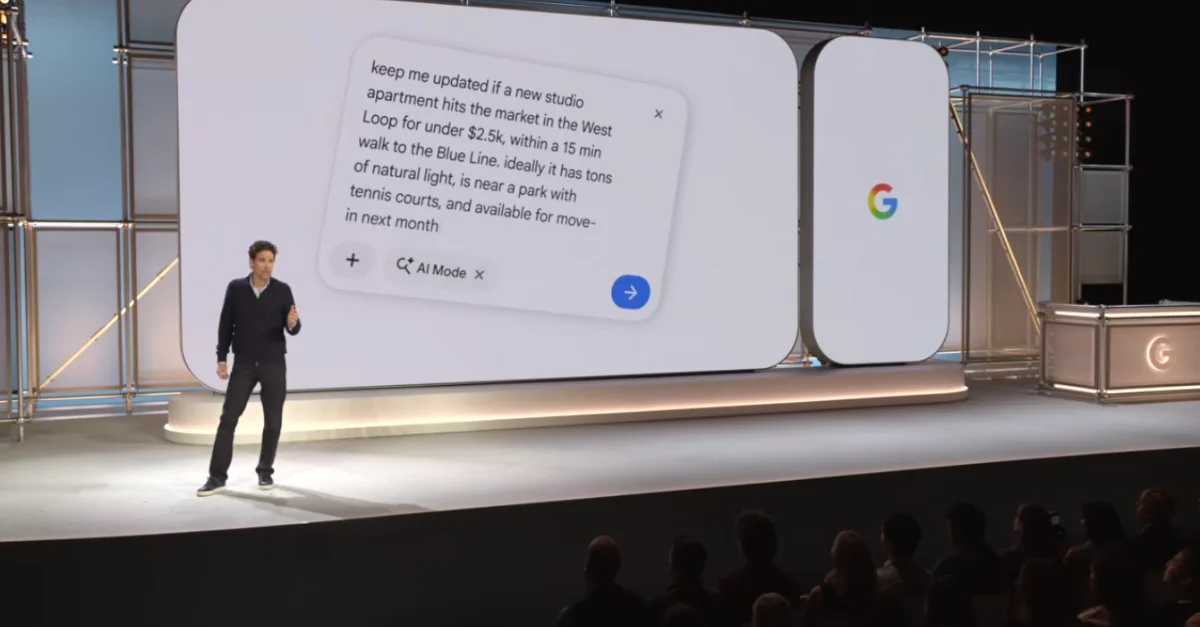
MOUNTAIN VIEW, CA – Google Marketing Live 2026 marked a significant pivot for the tech giant, moving away from siloed feature announcements towards a deeply integrated, AI-driven marketing ecosystem. For eight years, Google has consistently introduced innovations at its annual flagship event, ranging from creative production tools and dynamic ad formats to enhanced analytics. However, this year’s iteration, held in May 2026, was defined by a singular, overarching theme: the seamless integration of artificial intelligence across Google’s diverse properties to foster a more fluid and intuitive marketing experience.
The keynote address, delivered by Google’s top marketing executives, highlighted the introduction of “agentic commerce tools” designed to follow shoppers across various Google surfaces, a universal analytics experience capable of generating actionable insights from disparate data sources, and a suite of other AI-powered advancements. This strategic shift signals Google’s ambition to consolidate its vast array of services under a unified AI umbrella, aiming to streamline workflows and empower marketers with more intelligent, interconnected solutions. The implications of this integrated approach are far-reaching, promising to redefine how businesses engage with consumers in an increasingly AI-centric digital landscape.
A New Era of AI-Driven Advertising
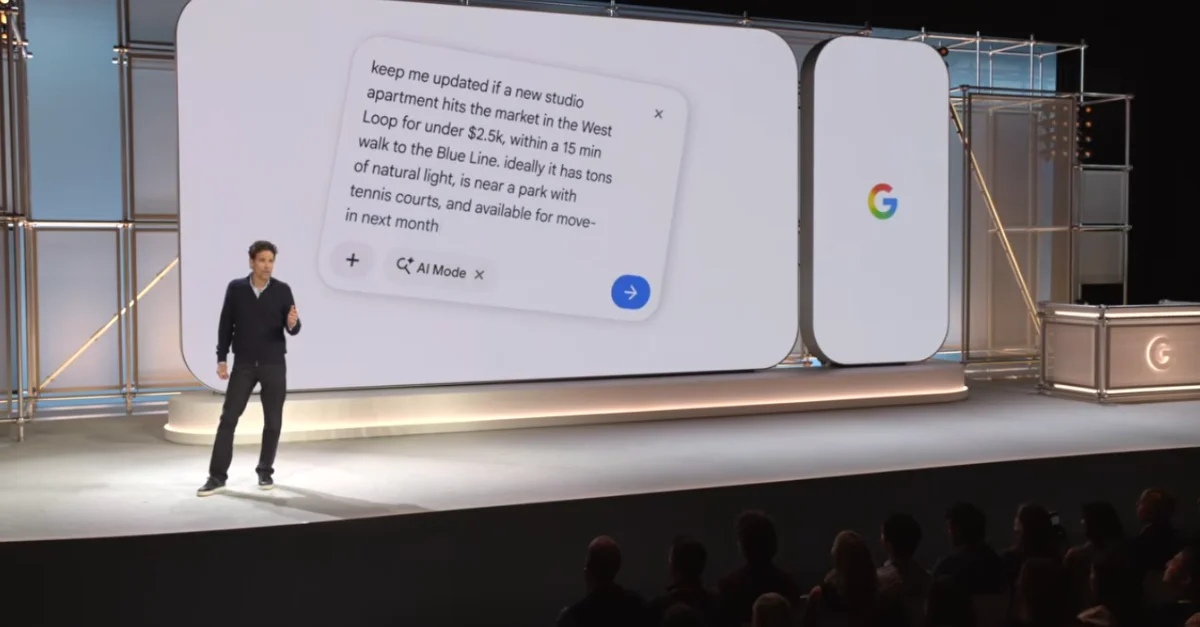
At the heart of Google Marketing Live 2026 was the unveiling of several new and enhanced advertising tools powered by Gemini, Google’s advanced AI model. These innovations are designed to make advertising more contextual, conversational, and effective, particularly within the emerging AI Mode environments.
1. Enhanced Contextual Ad Formats for AI Mode
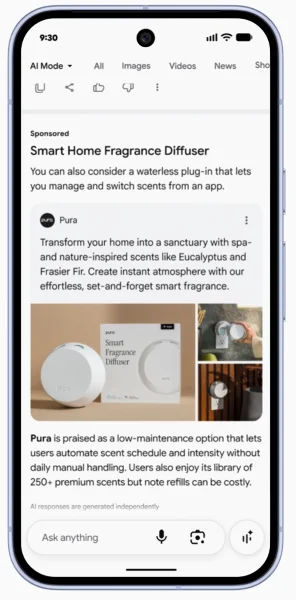
Google introduced two novel ad formats specifically designed to function within its AI Mode, a conversational search interface. These formats aim to seamlessly integrate promotional content into user interactions, ensuring relevance and minimizing disruption.
-
Conversational Discovery Ads: These ads are crafted to appear as natural extensions of AI Mode responses, providing answers to user queries rather than interrupting them. Leveraging Gemini’s capabilities, Google can now match ad creative and copy to both the user’s query and the AI-generated context surrounding it. For instance, if a user inquires about fragrances to create a spa-like ambiance at home, Gemini can generate an ad that highlights relevant product features, such as diffusers or essential oils, directly within the conversational flow. This approach promises to increase ad engagement by ensuring immediate relevance to the user’s immediate need or interest.
-
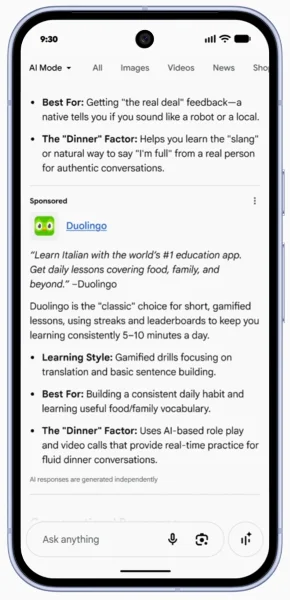
Highlighted Answers: In AI Mode, when users seek recommendations – for example, “best apps for learning Spanish before a trip” – Google now presents a curated list of suggestions. Advertisers whose products or services are a strong fit can now have their ads appear directly within this list, rather than in traditional ad slots above or below the organic results. This direct placement within a recommendation context significantly enhances visibility and credibility, as the ad is presented as a validated option. This move is expected to drive higher click-through rates and conversion intent from users actively seeking solutions.
2. Next-Generation Gemini-Powered Search Ads
Beyond AI Mode, Google also announced significant upgrades to its core search advertising products, further integrating Gemini’s generative capabilities.
-
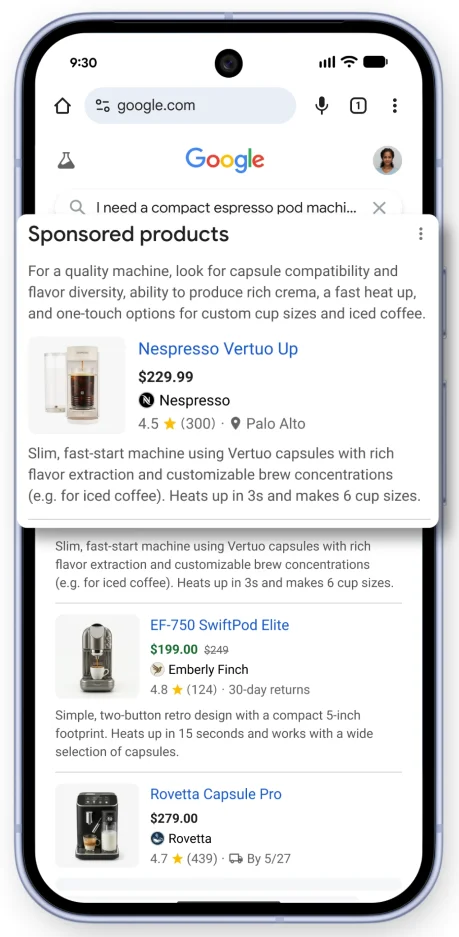
AI-Powered Shopping Ads: These enhanced shopping ads feature product descriptions written by Gemini, offering clear, helpful explanations tailored to the user’s specific search query. Instead of generic titles and prices, these ads highlight the precise attributes most relevant to the user’s intent. For instance, when searching for an espresso machine, a user might see an ad that custom-crafts a description focusing on features like brewing pressure, milk frothing capabilities, or programmability, directly addressing why a particular model might be ideal for their needs. This personalization is expected to boost conversion rates by providing immediate, relevant product information.
-
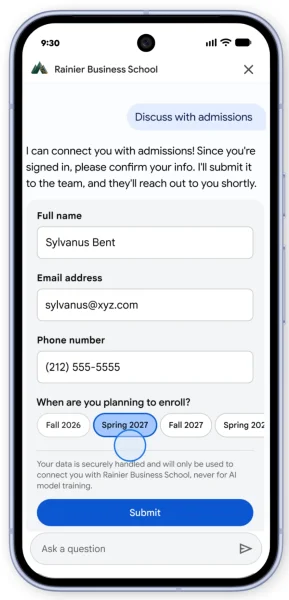
Business Agent for Leads: This innovative feature embeds a custom AI agent directly within an ad. Users can interact with the agent within the ad unit itself, asking questions and receiving answers pulled directly from the advertiser’s website. Following this engagement, users can submit a pre-filled lead form, with their information already populated. This process allows for a higher degree of self-qualification, ensuring that leads reaching advertisers have already engaged with their brand and demonstrated a certain level of interest. Google is currently piloting this format in key sectors such as education, automotive, and real estate, with early indications suggesting a significant improvement in lead quality.
3. Direct Offers: Expanded Functionality and Reduced Friction
Google is expanding its Direct Offers pilot program, launched in early 2026, with three key upgrades designed to highlight promotions at critical high-intent moments during a search session. These enhancements aim to empower brands with more flexible offer types and simplify the path to purchase for consumers.
The expanded features allow brands to incorporate a wider array of offer types, such as percentage discounts, buy-one-get-one deals, and free shipping thresholds. Crucially, these offers can now be more dynamically presented, appearing at various points in the user’s journey. For instance, a consumer browsing product pages might see a time-sensitive discount offer appear, or a shopper nearing checkout could be presented with a free shipping incentive.
4. The Universal Cart: A Persistent Shopping Experience
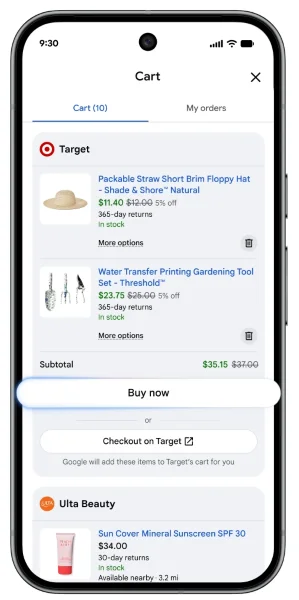
A cornerstone of Google’s vision for agentic commerce is the Universal Cart, powered by the Universal Commerce Protocol (UCP). UCP is an open industry standard that facilitates seamless communication between agents, merchants, and payment providers without the need for custom integrations. This protocol allows critical data, including inventory levels, pricing, loyalty program benefits, and customer account information, to flow effortlessly between various Google applications and surfaces.
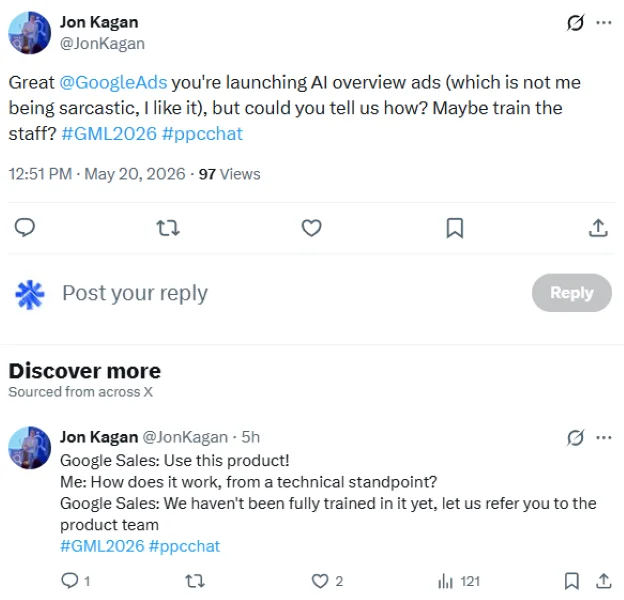
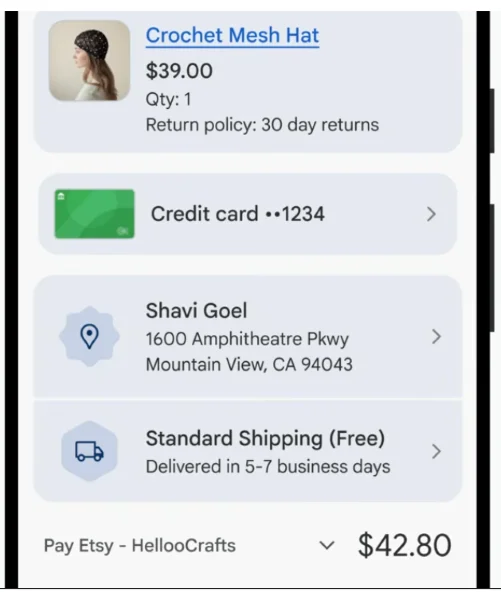
The Universal Cart, announced at Google Marketing Live 2026, functions as a persistent shopping cart accessible across Google Search, the Gemini app, YouTube, and Gmail. Shoppers can add items from any of these platforms, and the cart automatically tracks price drops and back-in-stock alerts. Upon readiness to purchase, users can complete the transaction directly on Google or be seamlessly redirected to the retailer’s website. This unified experience promises to significantly reduce cart abandonment by offering a continuous and convenient shopping journey. Google has confirmed integrations with leading financial services like Klarna and Affirm, providing shoppers with “Buy Now, Pay Later” options directly within the cart. Future expansions are planned for hotel bookings and local food delivery, allowing direct purchases from AI Mode and Google Maps, respectively.
5. Integrated YouTube Creator Partnerships in Demand Gen Campaigns
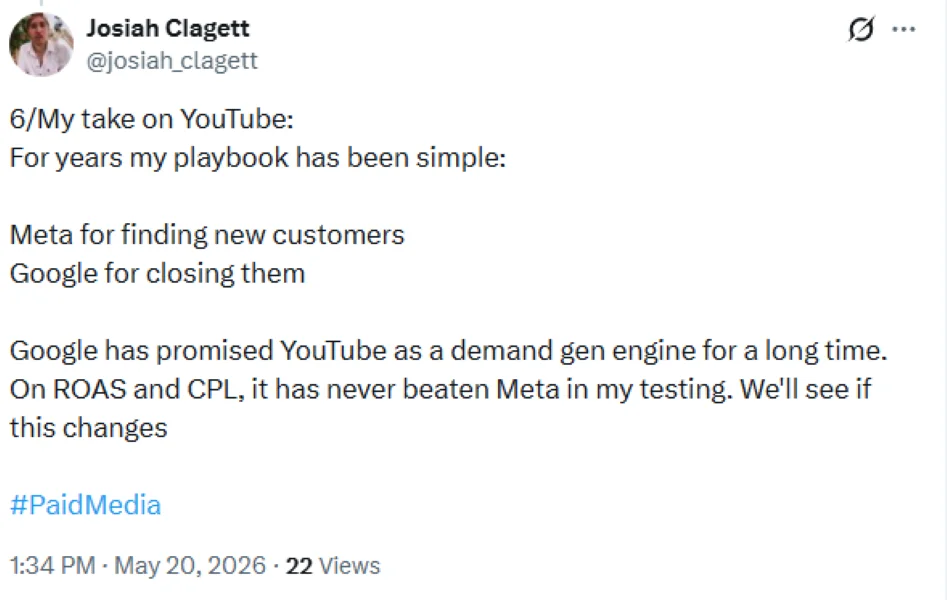
Google is enhancing its Demand Gen campaigns by integrating YouTube creator content directly into the campaign setup process. Advertisers can now discover and add relevant creator videos featuring their brand, including affiliate partnership content, without leaving the Google Ads platform. Data presented at the event indicated that incorporating creator assets into Demand Gen campaigns can boost conversion lift by an average of 20%. This integration streamlines the process for brands that have already invested in influencer marketing but have struggled to connect those assets to paid advertising efforts. This move is part of Google’s ongoing strategy to solidify YouTube’s position as a robust conversion channel.
6. Asset Studio Updates: Streamlined Creative Production
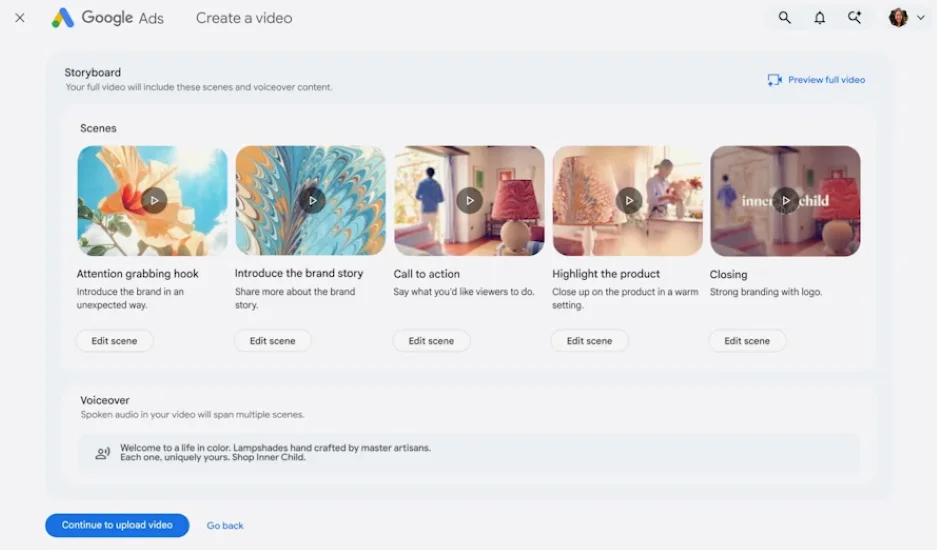
Asset Studio, Google Ads’ central creative hub, has been significantly updated to incorporate Gemini, Veo (Google’s advanced video generation model), and the new Gemini Omni model. This integration provides a centralized library for creative assets, connecting directly with popular tools like Adobe, Canva, and YouTube Studio. Existing assets from these platforms will now automatically appear within Asset Studio, simplifying creative management.
A notable new feature is built-in A/B testing for creatives. This allows marketers to swap different ad variations and measure their incremental performance without the need to duplicate entire campaigns. This capability is particularly beneficial for lean marketing teams, addressing a critical production bottleneck by enabling image and video variation generation, resizing for various formats, and performance testing, all within the Google Ads interface.
7. AI Brief: Enhanced Creative Control
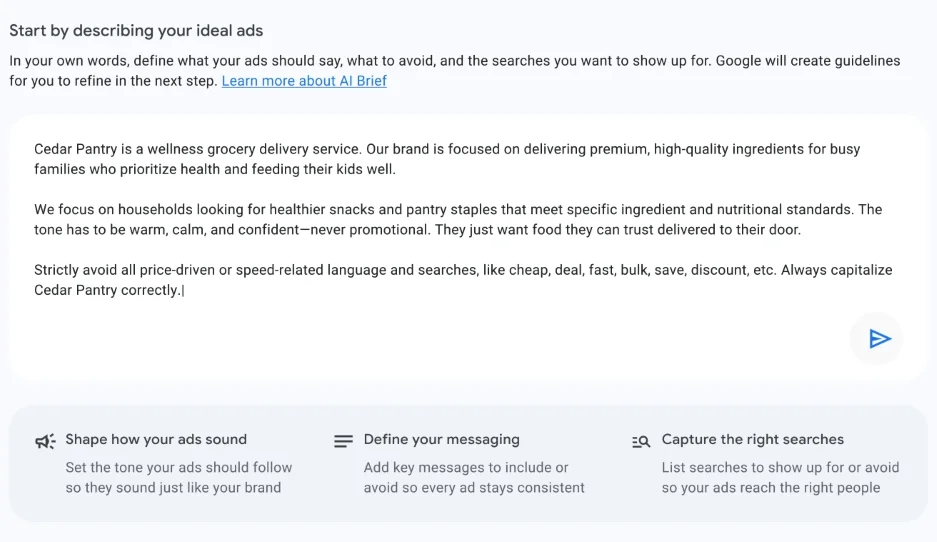
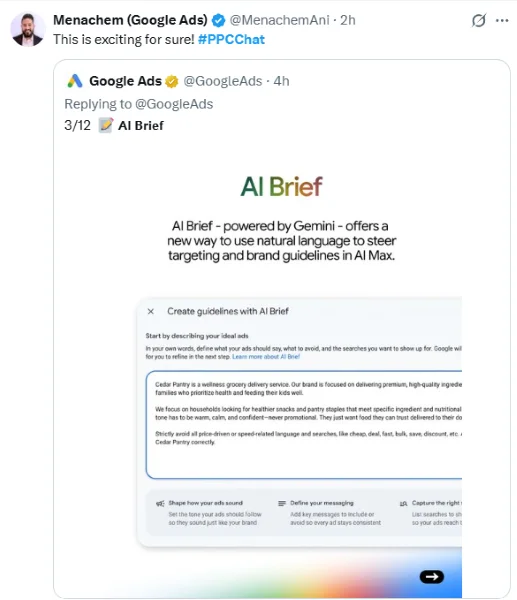
AI Brief represents a new feature designed to give advertisers greater control over AI-generated ad creative. This tool allows marketers to provide Google’s AI with a creative brief in plain language, specifying brand voice, target audiences, messaging guidelines, and brand guardrails. The AI then interprets these inputs to generate ad guidelines, complete with previews that advertisers can review and refine before deployment. This announcement was met with significant enthusiasm, as it directly addresses a primary concern regarding AI-generated ads: the potential loss of brand control. While advertisers won’t approve individual ads, they will be setting the foundational rules for AI-driven creative development.
8. New Metric: Qualified Future Conversions (QFC)
Google is introducing Qualified Future Conversions (QFC), a new metric designed to predict profitable conversions up to six months in advance. QFC analyzes signals such as branded searches, video views, and site visits following ad exposure. This metric will operate alongside attributed branded searches, which track near-term intent signals, as an always-on feature within the Google Ads UI. Google positions QFC as a crucial tool for businesses with longer sales cycles, enabling them to better defend upper-funnel spending, particularly on platforms like YouTube, by providing a forward-looking view of potential conversion value before the sale is finalized. While the metric’s effectiveness is still subject to real-world testing, it aims to provide a more comprehensive understanding of long-term campaign impact.
9. Campaign Type Attribution for Demand Gen
To provide clearer insights into the performance of its Demand Gen campaigns, Google is launching campaign type attribution. This feature will isolate and display conversions specifically attributed to Demand Gen efforts, distinguishing them from those generated by other campaign types. Previously, Google’s de-duplication process could obscure the precise contribution of Demand Gen. This new attribution model offers a direct, apples-to-apples comparison, addressing a long-standing need for clarity regarding Demand Gen ROI for marketers who may have been hesitant due to ambiguous performance data.
10. Google Analytics 360: The Unified Measurement Hub
Google Analytics 360 is undergoing a significant transformation, being rebuilt as a cross-channel measurement command center powered by Meridian, Google’s open-source marketing mix modeling solution. The enhanced platform now aggregates performance data from various sources, including TikTok, Pinterest, and Snap, into a single dashboard. It also features scenario-planning tools and conversational query support. This consolidation aims to eliminate the need for marketers to juggle multiple dashboards, providing a unified view of cross-channel performance directly linked to budget planning. Google’s stated intention is to reduce technical friction, enabling marketers to leverage data more effectively for strategic decision-making. This move is expected to reshape the competitive landscape, with experts suggesting that marketers adept at utilizing this integrated data will gain a significant advantage.
11. Ask Advisor: A Unified AI Assistant
Google is consolidating its various in-platform AI agents into a single, unified experience called Ask Advisor. This new assistant operates across Google Ads, Merchant Center, Google Analytics, and Google Marketing Platform. Ask Advisor is designed to retain context across user sessions and can perform actions on the user’s behalf, including launching campaigns, generating creative assets, and identifying optimization opportunities. The primary benefit of this consolidation is the reduction of tool-switching required for campaign management. For small businesses lacking dedicated operational support, Ask Advisor functions as an always-available, knowledgeable assistant capable of identifying issues and surfacing opportunities that might otherwise be missed due to time constraints.
The Pervasive Influence of AI
The overarching message from Google Marketing Live 2026 was unequivocal: artificial intelligence is no longer a supplementary feature but the foundational element of Google’s marketing ecosystem. Every announcement, from ad formats to analytics platforms, was deeply infused with agentic or generative AI capabilities. This pervasive integration underscores the industry’s rapid evolution toward AI-centric strategies.
While the potential benefits are substantial – particularly in making complex data more accessible and actionable for a broader range of marketers – challenges remain. Consumer adoption of AI-generated creative is still evolving, and many industry professionals express reservations about fully embracing 100% agent-driven marketing strategies. The coming months will be crucial as Google rolls out these innovations, and the industry observes how marketers adapt to this new AI-powered landscape, navigating both the opportunities and the inherent complexities. The focus now shifts to how these powerful new tools will be implemented and their long-term impact on marketing effectiveness and consumer engagement.